Five Artworks, Five Space Keys, One Deconstructed Ultimae
Lamborghini has built its collector mythology on a simple formula: take something already rare, layer on a narrative that cannot be replicated, and let scarcity do the rest. The Reventón, Sesto Elemento, and Centenario all followed that logic. With Space Time Memory, the company’s first NFT collection, Lamborghini applies the same discipline to a medium where most brands were content to mint thousands of algorithmically shuffled tokens and hope for the best.
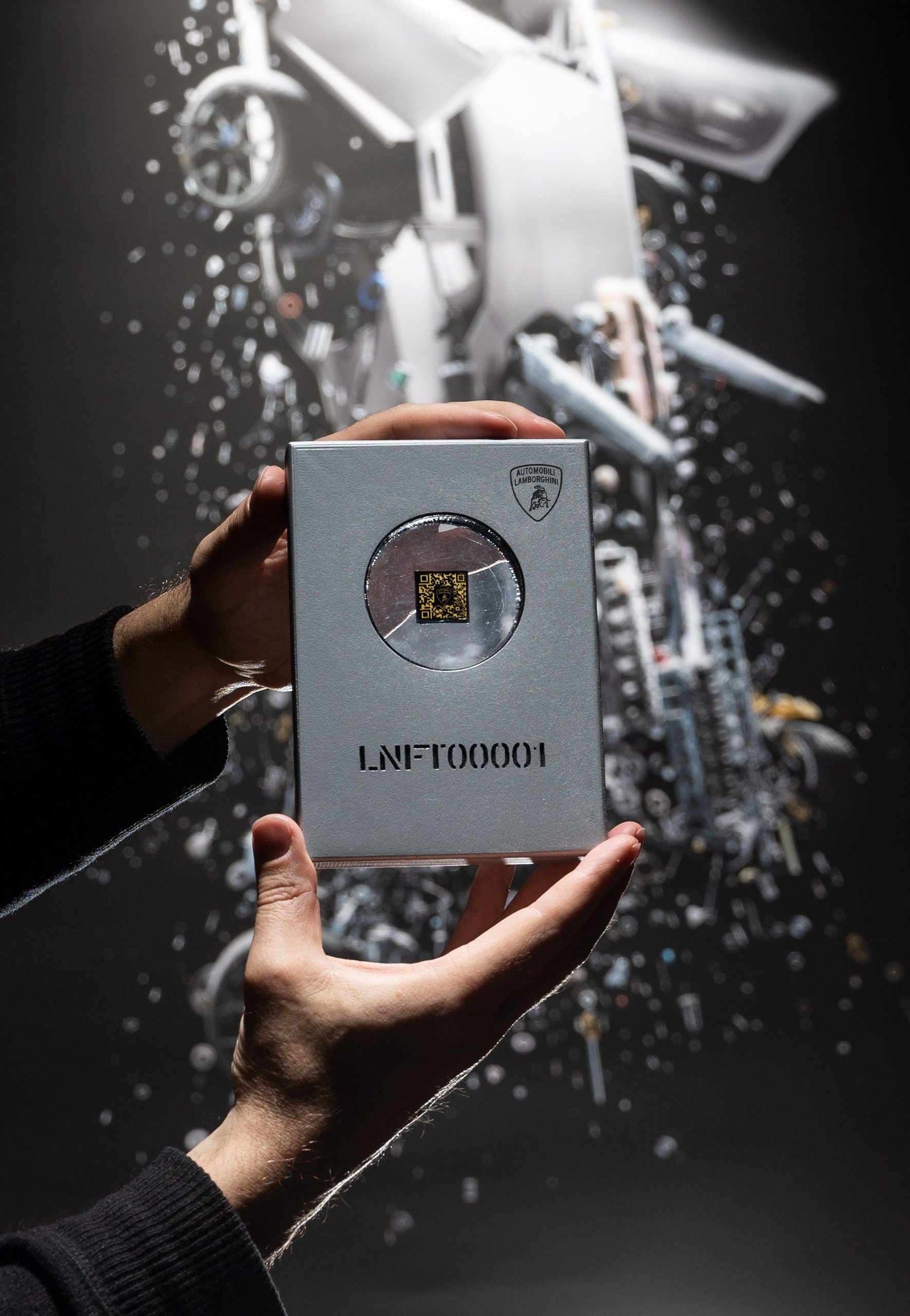
The collection consists of five lots, each pairing a physical object called the “Space Key” with a digital artwork by Swiss artist Fabian Oefner depicting the Aventador Ultimae apparently launching into orbit and shedding its components like rocket exhaust. Created in collaboration with NFT PRO and RM Sotheby’s, the pieces go to auction on nft.lamborghini.com beginning February 1, timed to coincide with the start of the lunar new year. The first auction opens at 4:00 pm CET, with each subsequent lot starting and ending 15 minutes after its predecessor.
Every auction runs for exactly 75 hours and 50 minutes, a deliberate nod to the time Apollo 11 needed to leave Earth and enter lunar orbit. The physical Space Keys contain carbon fiber composites that Lamborghini sent to the International Space Station in 2020 as part of a joint research program, and each key is engraved with a unique QR code linking it to the corresponding digital piece. The car depicted, the Aventador Ultimae, is the final and most powerful naturally aspirated V12 Lamborghini ever produced. The material embedded in the physical key traveled to space. The digital images themselves are not renders but composites of real, individually photographed parts. Rarity stacked on rarity, which is exactly the playbook the company uses for its most exclusive physical cars.
How Oefner Built an Explosion from 1,500 Real Parts
That layered rarity only works if the art at its center holds up to scrutiny, and Oefner’s process is where Space Time Memory separates itself from the flood of digital collectibles that defined the NFT market in 2021 and 2022.
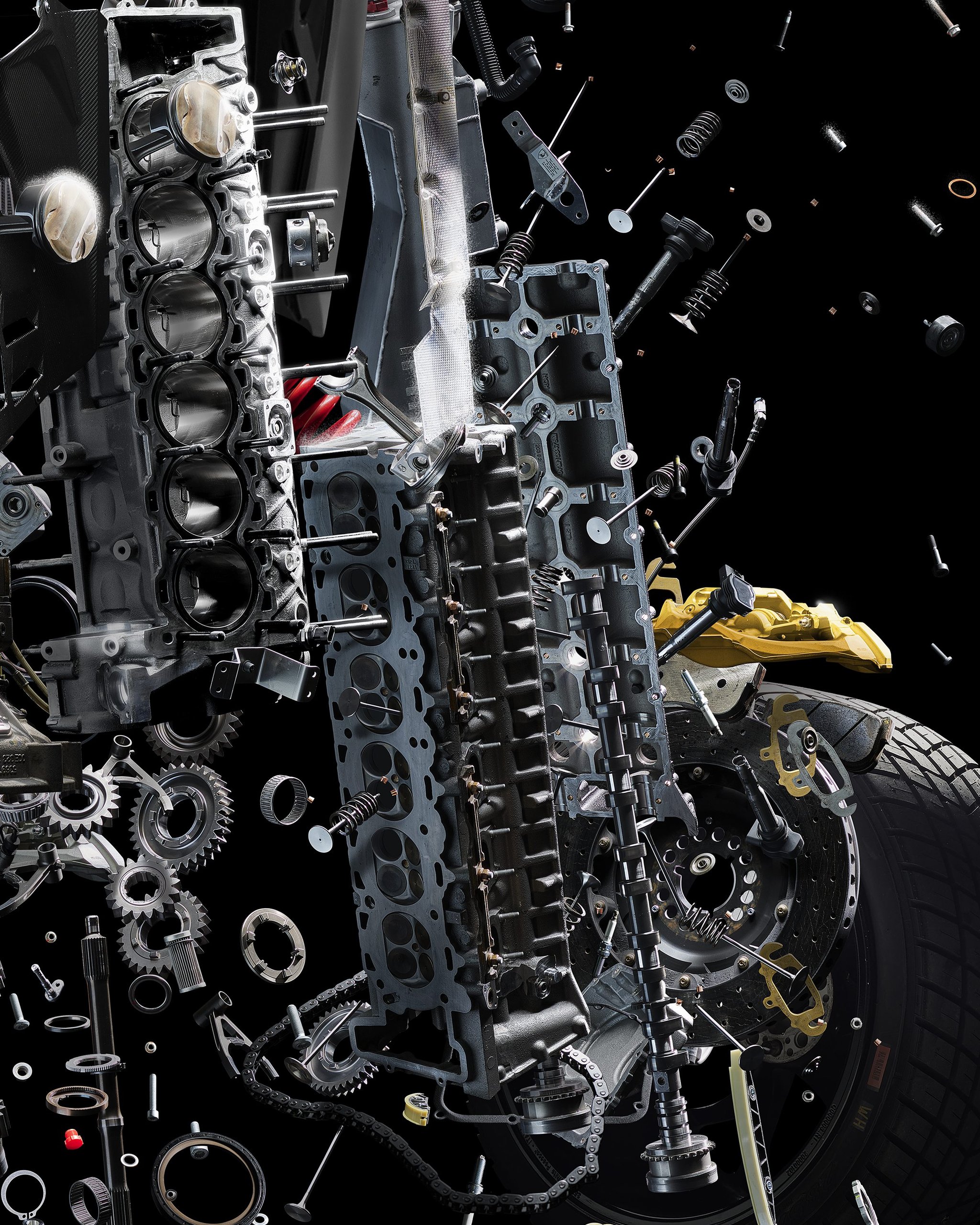
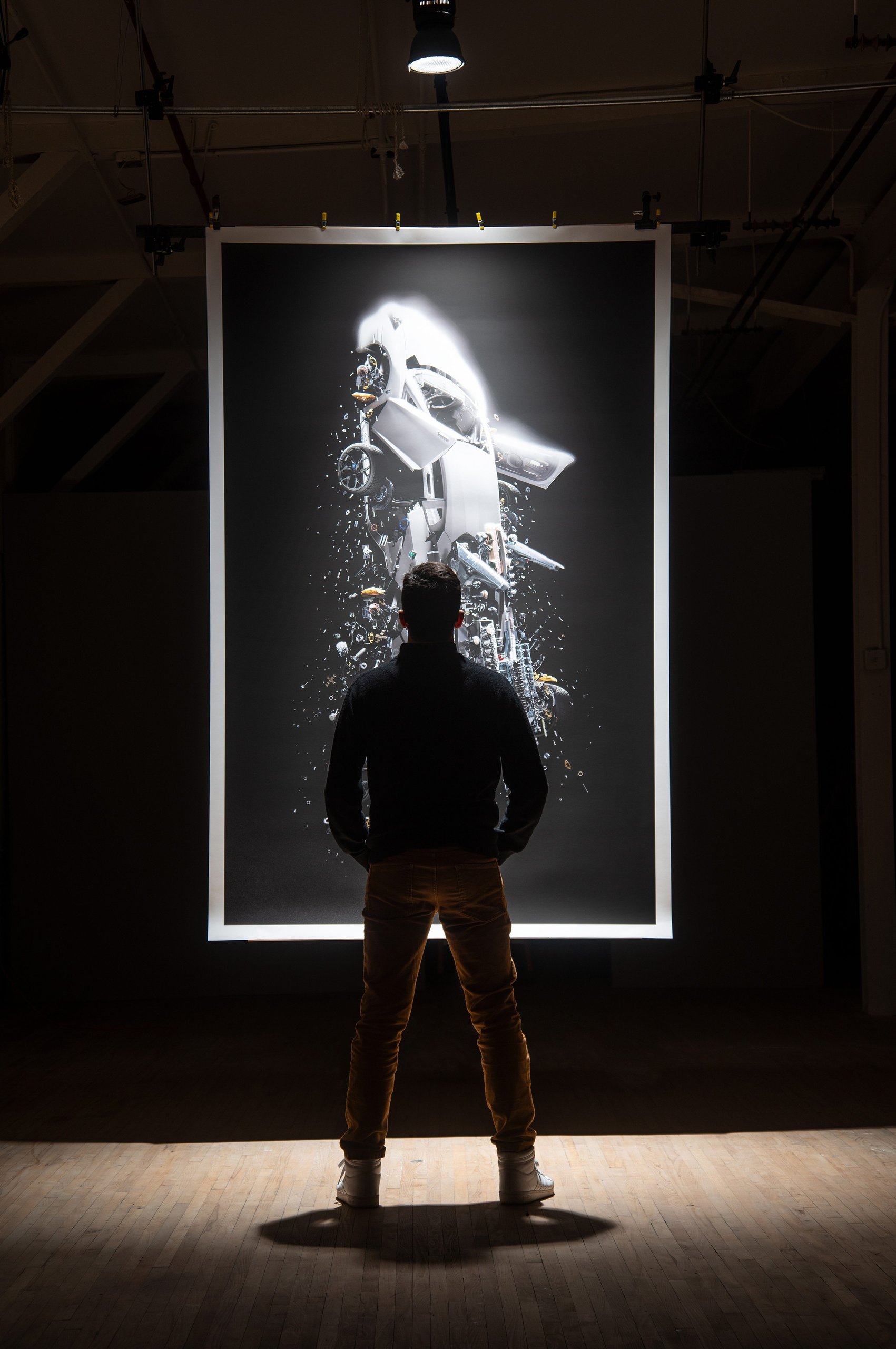
Oefner, who according to one report maintained a working relationship with Lamborghini for nearly a decade before this project, started by studying the engineering plans of the Aventador Ultimae and producing an accurate sketch of the final composition. Lamborghini then prepared all the necessary parts and components from a production-ready Ultimae, and Oefner’s team photographed them in a makeshift studio adjacent to the production line at Sant’Agata Bolognese. Lamborghini says the team captured more than 1,500 individual components. The photograph of Earth’s curvature was obtained separately by sending a camera-equipped weather balloon to the edge of the stratosphere.
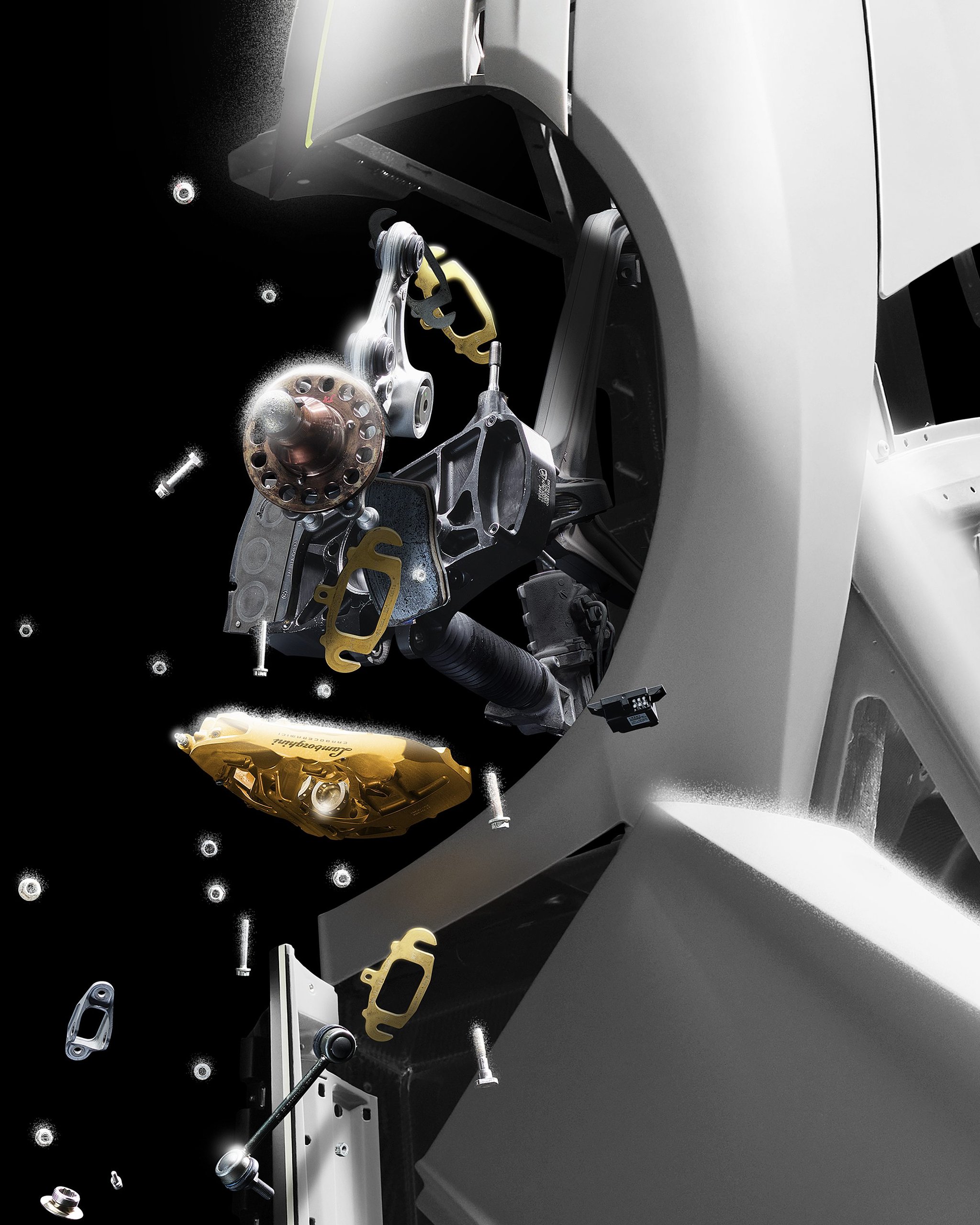
Back in his studio near New York City, Oefner assembled these countless images into a single artificial moment: a white Ultimae body shedding its engine, transmission, suspension, and hundreds of fasteners against the blackness of space. The process took over two months to produce a scene that, in its fictional timeline, lasts less than the blink of an eye. Every bolt, every gear tooth, every milling pattern on a transmission cog exists because someone pointed a camera at the real thing. That commitment to physical authenticity is what gives the digital artwork its weight and what justifies Lamborghini’s decision to route the sale through RM Sotheby’s rather than a typical crypto drop.

A conceptual image depicts a vehicle deconstructing into its constituent parts, soaring above the Earth's horizon.
600 Million Pixels and the Details They Reveal
The resolution of each artwork exceeds 600 million pixels, extreme enough that zooming in reveals details invisible at normal viewing distance. Lamborghini says viewers can read tiny markings on the V12 engine’s firing order or examine the distinct milling patterns on transmission cog wheels. For enthusiasts who care about the mechanical specifics of the Aventador’s naturally aspirated 6.5-liter V12, the art functions as a kind of technical document, one that celebrates engineering by literally blowing it apart.
Oefner describes Space Time Memory as an analogy for how memories work. Experiences are rooted in the physical world, then stored in what he calls the “digital world” of the brain. He poses the question of whether the actual moment or the memory of it holds more value, a philosophical framing that maps neatly onto the physical-digital pairing of the Space Key and its linked artwork. Whether collectors buy into that framing or simply want a piece of ISS-flown carbon fiber with a Lamborghini shield on it, the project gives both camps something to hold onto. The rarity argument does not depend on the philosophy; it depends on the materials, the craftsmanship, and the fact that only five sets will ever exist.

A detailed exploded view reveals the heart of a high-performance engine, showcasing its intricate components and golden accents.
Ownership, Scarcity, and the Collector Calculus
The practical question for prospective bidders is what ownership actually means. The digital artwork lives on the blockchain, authenticated and trackable. The physical Space Key is a tangible object with embedded ISS carbon fiber. Lamborghini confirmed no additional details about pricing expectations, reserve levels, or whether winning bidders receive any further brand access or privileges. For anyone considering a bid, the value proposition rests entirely on the rarity of the physical materials, the artistic merit of Oefner’s work, and whatever secondary market develops for these pieces over time.
Collectors who follow Lamborghini’s limited editions closely will recognize the pattern. The company does not typically explain the investment case for its rarest products. It presents the object, establishes scarcity, and lets the market decide. Space Time Memory follows the same discipline, transposed into a medium where most competitors took a very different approach.

Hands present a physical Lamborghini NFT box alongside a smartphone displaying its corresponding digital artwork, bridging physical and digital realms.
Lamborghini’s Digital Play in Context
Rather than minting a large quantity of tokens, Lamborghini chose five unique artworks with a genuine physical component, sold through RM Sotheby’s, the world’s largest collector car auction house by total sales. The partnership with RM Sotheby’s, which Lamborghini says expanded into NFTs in 2022, lends auction-world credibility that a standalone crypto drop would lack.
Ferrari, by contrast, arrived later. According to Road & Track, Ferrari’s F76 NFT “Hypercar” was received with skepticism, described as feeling both “pointless” and “late” to the market. Lamborghini’s timing and its decision to anchor the project in a real artist’s multi-month creative process, real car components, and real space-flown materials gave it a different foundation. Whether that foundation holds long-term value depends on the broader NFT market, which cooled considerably after its 2021-2022 peak. Online discussion around automotive NFTs remains mixed, with multiple enthusiast communities expressing skepticism about digital ownership in general.
Lamborghini followed Space Time Memory with additional NFT releases later in 2022, including a monthly series featuring iconic vehicles in legendary locations. The company also partnered with artists Krista Kim and Steve Aoki to create a one-of-one NFT auctioned alongside the very last Aventador Ultimae Coupé produced. That trajectory suggests Lamborghini viewed digital collectibles as a sustained brand extension, not a one-off experiment.

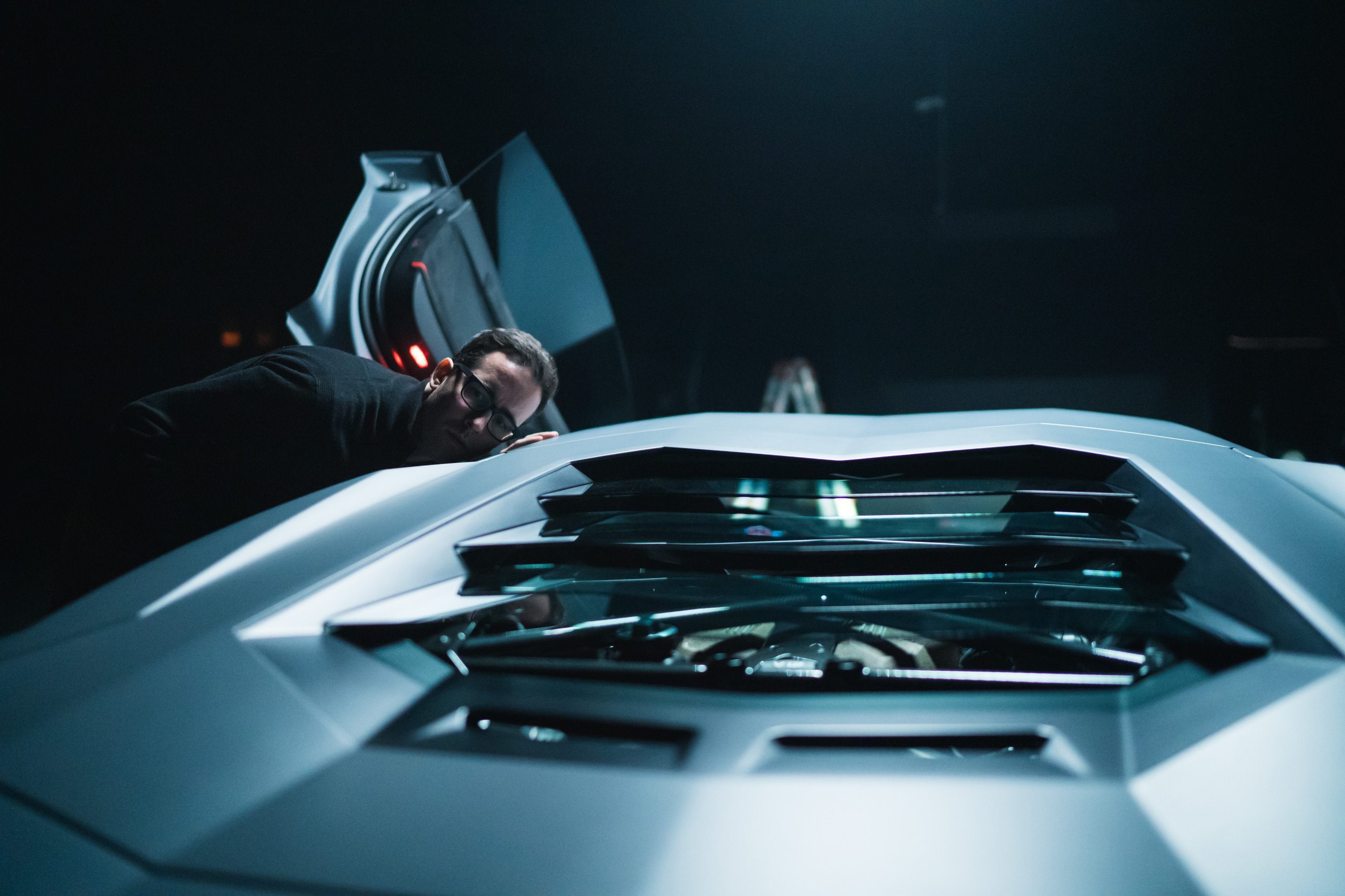
A man observes a striking artwork depicting a deconstructed Lamborghini, highlighting the intricate components of the vehicle.
What Bidders Should Know
Lamborghini confirmed no reserve prices or estimated sale ranges for the five lots. The auction window is narrow: 75 hours and 50 minutes per piece, with staggered start times across February 1 through February 4. Bidding takes place exclusively on nft.lamborghini.com.
For collectors evaluating the opportunity, the core question is straightforward. Do you believe a physical artifact containing ISS carbon fiber, paired with a hyperrealistic 600-million-pixel artwork of the last naturally aspirated V12 Lamborghini, will appreciate or at least hold cultural significance over time? Lamborghini is betting that the answer, for at least five people in the world, is yes. Given the company’s track record with physical limited editions, that bet looks reasonable, even if the broader NFT market remains volatile and unpredictable.
Gallery