A New Face for Lamborghini’s Second-Biggest U.S. Market
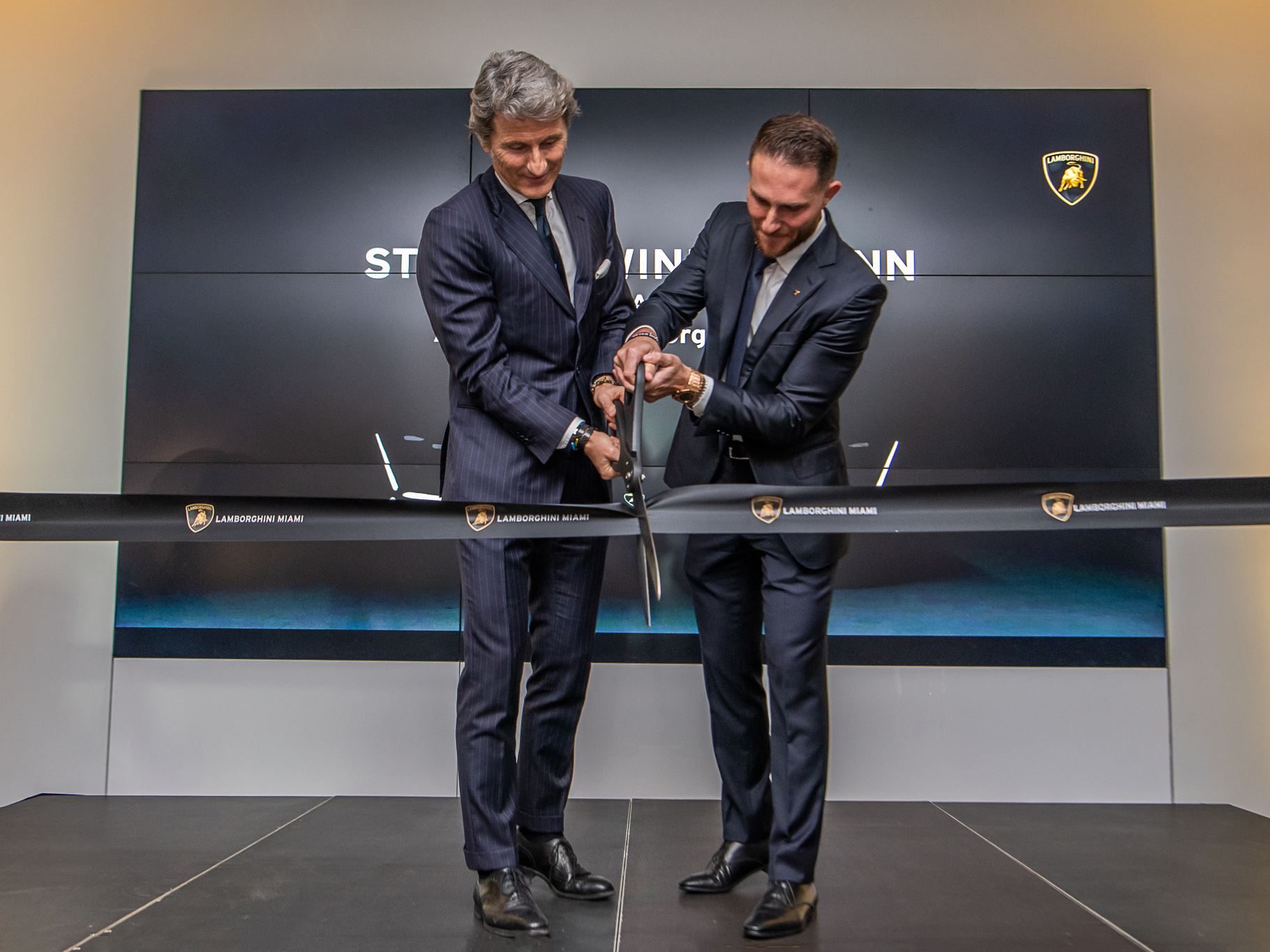
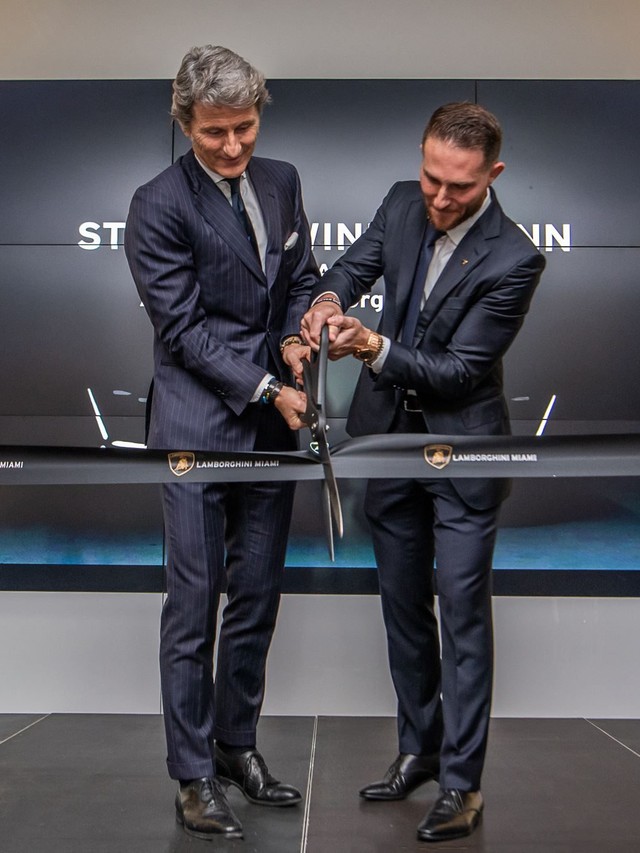
On the evening of January 27, 2022, Lamborghini Chairman and CEO Stephan Winkelmann stood alongside dealer principal Brett David inside a completely remodeled showroom at 14780 Biscayne Blvd in North Miami Beach and cut a black ribbon bearing the Lamborghini Miami logo. The facility behind them looked nothing like the dealership it replaced. Angular surfaces, polygonal wall treatments, and a deliberate interplay of diffused light and saturated color had transformed the space into something closer to a design gallery than a traditional car showroom.
This was not a cosmetic refresh. Lamborghini says the remodeled space introduces a new corporate design identity intended to roll out across its global dealer network. The decision to debut it in Miami carries strategic weight: Florida accounts for 19% of all U.S. Lamborghini sales, making it the second-largest state market behind California. Choosing this location to launch a new retail template signals that the company views South Florida not merely as a sales stronghold but as a stage for the brand’s next act. Winkelmann explicitly linked the new corporate identity to the company’s transition to electrified cars beginning in 2023, which means the showroom was designed less to celebrate the current lineup than to prepare the ground for its successors. Every angular surface and controlled lighting cue in the building anticipates a product range that will look and feel different from the naturally aspirated cars displayed on opening night.

Three stunning Lamborghini supercars are proudly displayed outside the newly opened Lamborghini Miami showroom.
Sharp Forms and Polygons: Reading the Design Language
Walk through the images of the new Lamborghini Miami interior and a visual vocabulary emerges quickly. Hexagonal frames house alloy wheels on display walls. Material samples are arranged in tessellated patterns. Surfaces alternate between raw, matte finishes and polished accents, and the lighting avoids the flat, even wash typical of most luxury retail spaces in favor of directional, almost theatrical illumination.
Lamborghini describes this language as “polygons, sharp forms, raw surfaces, and a diffusion of light and color.” Strip away the marketing cadence and the logic is clear: these are the same geometric principles that define the company’s car design, from the faceted bodywork of the Aventador to the Y-shaped lighting signatures that run through the entire lineup. The showroom is meant to feel like the inside of a Lamborghini before you ever sit in one.
What makes this interesting beyond interior decoration is the timing. The 2023 electrification timeline Winkelmann cited pointed to what would become the Revuelto, Lamborghini’s first series-production hybrid, and eventually the Temerario and the electrified Urus successor. The showroom redesign functions as a kind of architectural prologue. Its sharp, faceted surfaces and controlled lighting are brand-centric rather than model-specific, which means they can present a plug-in hybrid V12 supercar just as effectively as a naturally aspirated Aventador Ultimae. Lamborghini is training its customers’ eyes before the cars arrive.
Why Miami Matters More Than the Sales Numbers Suggest
The United States remained Lamborghini’s largest global market in 2021, with 2,472 vehicles delivered, an 11% increase over 2020. California led all states at 26% of that total. Florida’s 19% share translates to roughly 470 cars, a figure that would represent a meaningful standalone market for many manufacturers.
Yet the numbers only tell part of the story. Miami occupies a unique position in the Lamborghini ecosystem. The city functions as a year-round showcase for the brand in ways that seasonal markets cannot. Lamborghini owners in South Florida drive their cars visibly and frequently, and the region’s culture of conspicuous automotive enthusiasm generates organic brand exposure that no advertising budget can replicate. Art Basel, the boat shows, the steady flow of international wealth through Brickell and Miami Beach: all of it creates an environment where a Lamborghini showroom operates as much as a brand embassy as a point of sale.
Dealer principal Brett David acknowledged as much when he framed the reopening as continuing his father’s legacy. The David family’s relationship with the Lamborghini brand predates the Urus, the Aventador, and even the Gallardo. That kind of generational dealer continuity is rare in the supercar world and gives Lamborghini Miami a degree of institutional knowledge that newer franchise operations simply lack. When a client walks in to spec a car through Ad Personam, the staff behind the consultation table brings decades of accumulated understanding about what South Florida buyers actually want. In a market where the showroom itself now serves as a preview of the brand’s electrified direction, that depth of relationship becomes even more valuable. The David family is not just selling the current cars; they are guiding long-standing clients toward a fundamentally different product future.

A speaker addresses the audience while another presents a striking yellow model car at the grand opening event.
Inside the Ad Personam Studio: Where the Real Selling Happens
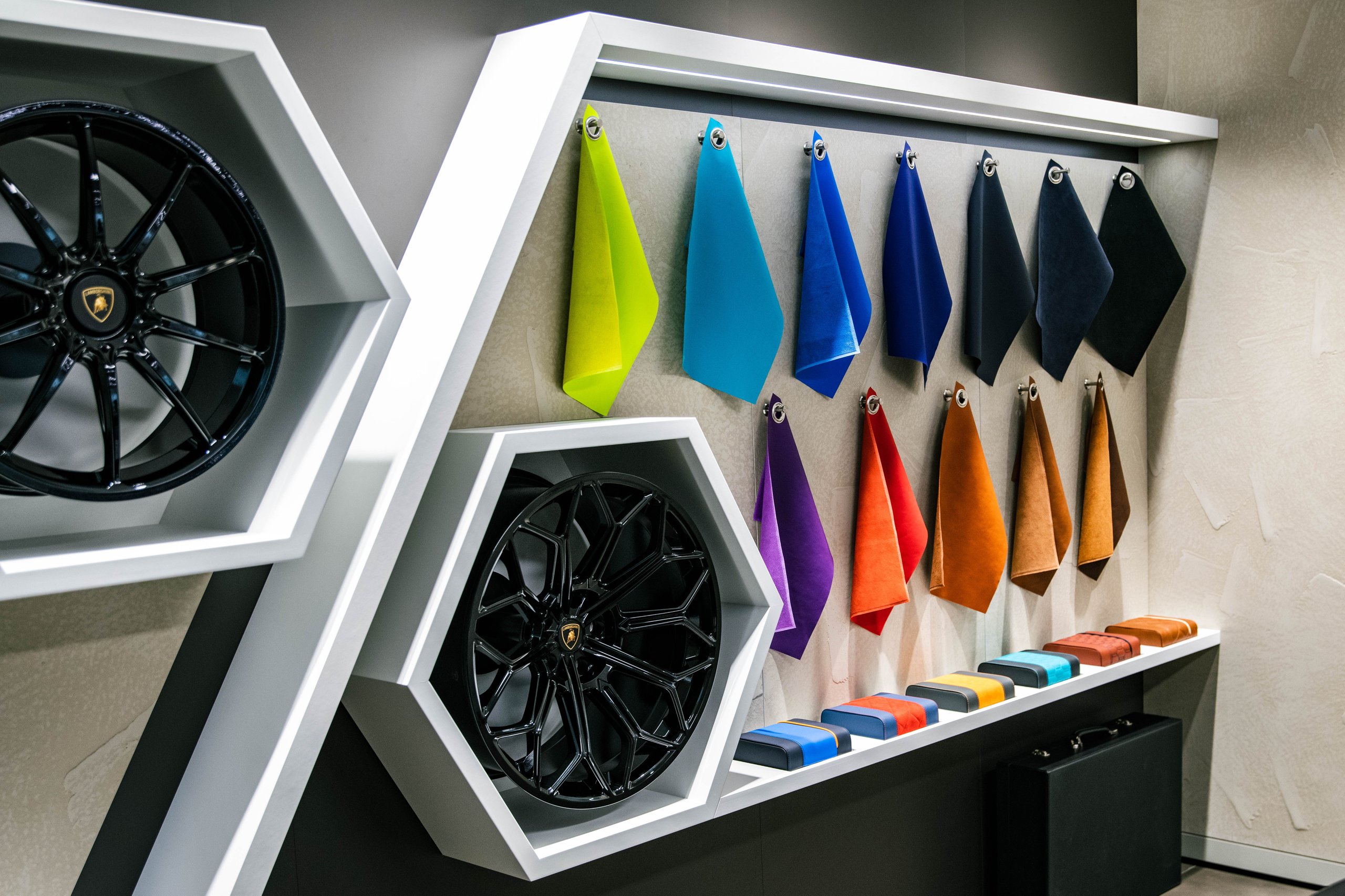
The most commercially significant room in the new Lamborghini Miami is not the main showroom floor. It is the dedicated Ad Personam customization studio, a space furnished with a consultation table, large display screens, and walls lined with hexagonal color swatches, leather samples, carbon fiber accents, and wheel options.
Lamborghini’s Ad Personam program allows buyers to move well beyond the standard configurator. Soft leathers in non-catalog colors, bespoke exterior paint matched to a client’s specification, stitching patterns, interior trim materials: the menu is deliberately open-ended. For a brand whose average transaction price already places it firmly in the ultra-luxury segment, this kind of in-person customization experience represents a significant revenue opportunity. The margin on a bespoke paint color or a unique interior leather is substantially higher than on the base vehicle, and the experience of choosing those options in a purpose-built studio reinforces the emotional justification for spending the money.
The studio’s design reinforces the same thesis as the showroom at large. Its angular geometry and saturated color palette feel distinctly Lamborghini, and the environment is built around the brand’s visual DNA rather than any single model’s styling. That matters because the customization choices a buyer makes today for a Revuelto or a Temerario will happen in a room conceived alongside those cars’ development. Configurator screens are useful tools, but they cannot replicate the experience of holding a leather swatch against a carbon fiber sample under controlled lighting. That tactile decision-making process is where six-figure customization choices become real, and Lamborghini clearly wants it to happen in a room that feels worthy of the investment.

The sophisticated 'Ad Personam' studio provides a dedicated space for clients to personalize their dream Lamborghini.
How Lamborghini’s Retail Investment Stacks Up Against Rivals
Lamborghini is not the only supercar manufacturer pouring money into its physical retail presence. Ferrari overhauled its showroom standards in recent years, emphasizing warmer, more residential-feeling spaces that echo the brand’s heritage. McLaren invested in standalone brand centers designed to feel like technology showcases. Porsche, operating at higher volume, built branded experience centers that combine retail with driving programs and hospitality.
What distinguishes Lamborghini’s approach, at least based on the Miami template, is the degree to which the showroom environment deliberately echoes the cars themselves. The polygonal surfaces and sharp forms are not generic luxury cues borrowed from high-end hotel design. They are direct translations of Lamborghini’s automotive design language into an architectural context. Ferrari achieves something similar with its heritage-inflected Atelier spaces, and McLaren’s MSO studios lean clinical and technical, consistent with that brand’s engineering-first identity. Lamborghini’s version is more aggressive, more angular, and more willing to use bold color.
The deeper strategic question is whether this kind of retail investment pays off as the industry shifts toward electrification. Hybrid and eventually electric Lamborghinis will sound different, feel different, and require different ownership infrastructure than the naturally aspirated V10s and V12s that currently anchor the brand’s identity. A showroom designed to immerse buyers in Lamborghini’s visual and emotional world before they experience the car itself could prove especially valuable during a transition period when the cars themselves are changing faster than buyer expectations. The showroom becomes a bridge between what Lamborghini was and what it intends to become.
CarBuzz noted that a similar design overhaul at Lamborghini’s Geneva showroom followed shortly after, suggesting that the Miami template was indeed the beginning of a broader rollout rather than a one-off renovation.

The 'Ad Personam' studio offers a diverse palette of colors and wheel designs for ultimate personalization.
Preparing the Showroom for Cars That Do Not Exist Yet
We now know what followed Winkelmann’s 2023 electrification timeline: the Revuelto arrived as the Aventador’s V12 hybrid successor, the Temerario replaced the Huracan with a twin-turbo V8 hybrid architecture, and the Urus is moving toward its own electrified variant. The entire lineup is in the process of being remade.
Viewed from that vantage point, the Miami showroom redesign looks less like a routine dealer upgrade and more like infrastructure preparation. A design language built around the brand’s visual DNA rather than any single model’s styling gives it longevity through product cycles. Dealers who renovated around the aesthetic of a specific car generation often found themselves needing another refresh within five or six years. A space conceived around Lamborghini’s geometric identity should age more gracefully, carrying the brand through the most significant product transition in its history.
Lamborghini confirmed record global sales for 2021, and some reports indicate the company continued setting records through 2024, delivering more than 10,000 vehicles. That sustained commercial momentum gives the dealer network confidence that investments like the Miami renovation will generate returns. For current owners and buyers on allocation lists, the upgraded showroom experience is a tangible reminder that the brand is reinvesting its profits into the ownership ecosystem, not just the cars themselves.
The Lamborghini Miami reopening, in the end, accomplished something that a standard dealer renovation rarely does. It made the retail space itself an argument for where the brand is headed. The Urus, Aventador Ultimae, and Huracan STO that filled the floor on opening night were the last generation of their respective lines. The room they stood in was built for whatever comes next.
Gallery