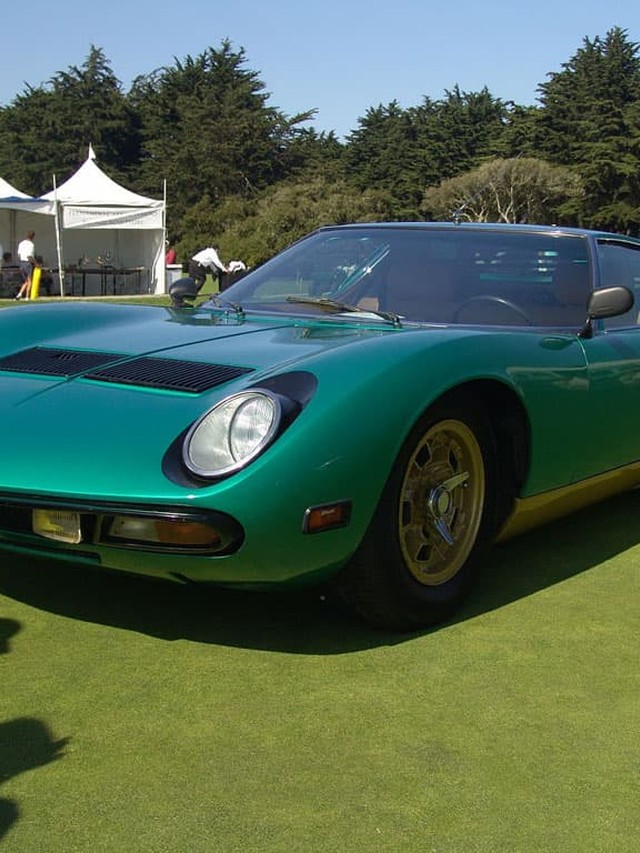
A Dedicated Home for Lamborghini’s Rarest Cars
When Lamborghini opened its new Polo Storico facility inside the main entrance of the Sant’Agata Bolognese headquarters, the gesture was deliberate: the brand’s heritage division now occupies the first space visitors encounter, not some back lot. The center handles restoration, certification, archive preservation, and original spare parts supply for classic Lamborghinis produced between 1963 and 2001, covering every model from the 350 GT to the Diablo. Alongside the facility opening, Lamborghini confirmed the formation of a two-tier expert committee called the Comitato dei Saggi, tasked with ensuring historical accuracy across every restoration and certification the division undertakes.
Polo Storico itself was founded in 2015, but this dedicated space and governance structure signal something more consequential than a rebrand. The facility receives classic owners from around the world, managing international transport for cars that can spend between six and 24 months in Italy during a full restoration. For collectors who treat these cars as rolling investments, factory access of this caliber is the difference between a six-figure car and a seven-figure one, and the committee structure behind it is what makes the promise credible.
Why Factory Certification Changes the Equation for Owners
Central to Polo Storico’s offering is its Certification of Authenticity, designed to verify that a classic Lamborghini matches its original factory specifications. Every car entering the facility undergoes an originality assessment. If it passes, the owner receives a certificate. If it does not, Lamborghini provides a full report detailing discrepancies, according to one specialist account.
In the classic car world, provenance documentation from the factory carries weight that no independent specialist can replicate, no matter how skilled. A Miura with Polo Storico certification is a fundamentally different proposition on the market than one without it. The division has digitalized over 30,000 historical documents, and its archive holds detailed build records covering chassis numbers, engine and gearbox codes, original paint colors, trim, and optional equipment. That depth of factory data is what makes the certification credible rather than ceremonial.
For prospective buyers of classic Lamborghinis, the practical takeaway is straightforward: before closing any deal on a 350 GT through Diablo, ask whether the car carries Polo Storico certification. If it does not, factor in the time and cost of obtaining one, or the risk that the car may not qualify.
The Comitato dei Saggi: Original Engineers as the Final Authority
The committee’s senior tier is named in memory of Paolo Stanzani, the engineer who co-created the Miura in 1966 alongside Giampaolo Dallara and designer Marcello Gandini. Its three members carry a combined weight of institutional knowledge that no competitor can easily assemble.
Maurizio Reggiani, Lamborghini’s Director of Research and Development since 1998, represents the company’s current engineering leadership. Giampaolo Dallara, who served as technical director from 1963 to 1969 and oversaw the birth of the 350 GT, the Miura, the Marzal, and the Espada, brings firsthand knowledge of the cars that defined the brand’s earliest identity. Mauro Forghieri, Technical Director of Lamborghini Engineering in the late 1980s and a towering figure in motorsport engineering, serves as the committee’s reference on competition topics.
Below them sits the Comitati Tecnici, composed of internal R&D, design, and production teams supplemented by external specialists. This group handles the actual research and documentation: tracking down technical drawings, production sheets, supplier records, and historical photographs. Their first four projects involve establishing bills of materials for authentic spare parts reproduction, researching historical images, certifying exact production numbers for each model and variant, and defining original color codes for classic interiors and exteriors.
The Dallara connection deserves particular attention. One of Polo Storico’s most celebrated restorations involved a Miura P400 (chassis #3165) that was completed and delivered to Dallara himself for his 80th birthday. When the man who engineered the original car receives a factory restoration of it as a personal gift, the authenticity argument becomes difficult to challenge.

A Lamborghini Miura body shell in grey primer sits on a dolly in a modern workshop, awaiting further restoration.
Restoration Scale and the Parts Question
Lamborghini says its spare parts warehouse covers more than 65% of classic Lamborghini components, with additional parts available on request. That figure deserves context. Early Lamborghinis were produced in tiny numbers with hand-formed panels and components sourced from small Italian suppliers, many of which no longer exist. Reproducing a missing part for a 350 GT is a fundamentally different challenge than stamping out a replacement fender for a mass-produced car.
Polo Storico combines traditional craftsmanship with modern tools to reconstruct components that are no longer in production, and each restoration project begins with an exhaustive dive into the archive. Since its founding, the division reports completing more than 40 restorations and issuing over 200 certifications. Among its most ambitious projects was the reconstruction of the 1971 Countach LP 500 prototype, the original of which was destroyed during crash testing. That rebuild reportedly consumed 25,000 hours and relied on archival documents and firsthand accounts from the engineers who built the original.
Lamborghini does not publish official pricing for Polo Storico restorations. One report suggests a full restoration can cost around €300,000 and take approximately 18 months, though an earlier 2016 estimate placed the average closer to €200,000. These figures remain unconfirmed by Lamborghini, and the actual cost will vary dramatically depending on the model, condition, and scope of work. The important point for owners is that this is factory-grade work with factory-grade documentation, not a boutique shop operating from memory.
How Polo Storico Compares to Rival Heritage Programs
Ferrari Classiche, Porsche Classic, and Mercedes-Benz Classic all offer factory-backed restoration, certification, and parts supply for their respective heritage fleets. Ferrari Classiche, in particular, set an early standard for how factory certification could influence auction values, and its Red Book certification is widely recognized by collectors and insurers.
Polo Storico’s differentiator lies in the intimacy of Lamborghini’s production history. Ferrari produced tens of thousands of cars during the period Polo Storico covers; Lamborghini produced hundreds. That scarcity means the archive records are more granular per chassis, and the engineers who built the originals can still, in some cases, inspect the restorations personally. Former employee Giancarlo Barbieri, who worked at Lamborghini from 1965 to 2005, is regularly consulted for his expertise. When your heritage program can call on someone who personally assembled cars in the 1960s, the provenance chain is as tight as it gets.
The competitive implication for Lamborghini collectors is encouraging. The brand now offers the same institutional infrastructure that Ferrari and Porsche owners take for granted, applied to a much smaller and arguably more exclusive pool of cars. Whether that translates into stronger auction premiums over time remains to be seen, but the structural ingredients are in place.
What This Means for Lamborghini’s Identity Going Forward
Stefano Domenicali, then Chairman and CEO of Automobili Lamborghini, framed Polo Storico as essential to the company’s future direction, not merely a backward-looking exercise. That framing makes sense. As the brand transitions its current lineup toward hybrid powertrains and eventually electrification, anchoring its identity in the V12 era becomes strategically important. A company that visibly invests in preserving its Miuras and Countachs sends a clear message: the engineering philosophy that made those cars legendary still matters, even as the technology evolves.
Collectors and enthusiasts who own classic Lamborghinis from the 350 GT through the Diablo now have a factory-backed resource that did not exist a decade ago. The cars covered by Polo Storico’s mandate represent the foundational chapters of the brand’s story, and their long-term value depends on exactly the kind of meticulous documentation and authentic restoration this facility provides. The real test will be measured in decades, not press cycles, but the commitment of resources and expertise is concrete.


