Supercars on Via Tortona: Lamborghini’s Fashion Week Debut
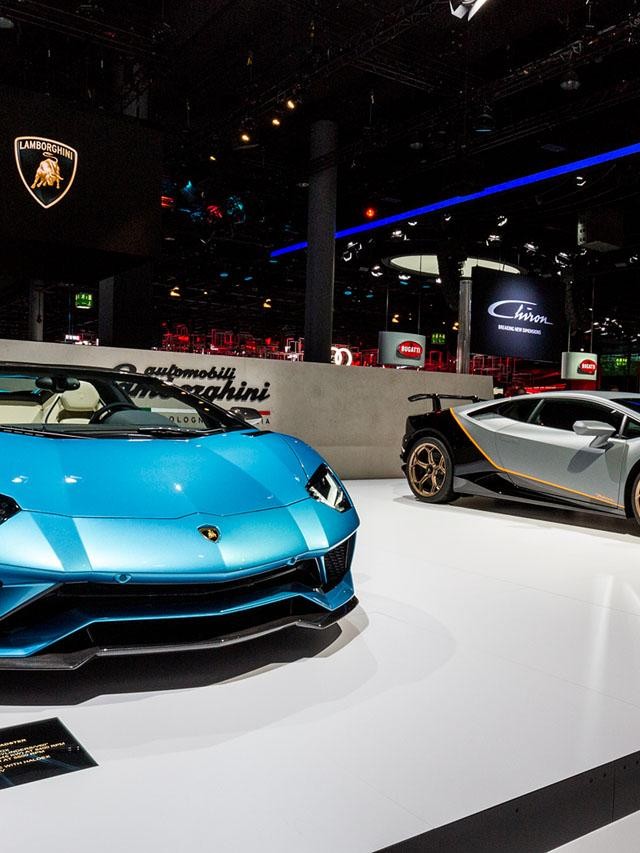
When Lamborghini parked a Huracán Performante, Huracán Spyder, Aventador S, and a historical Miura SV inside an early twentieth century industrial space on Via Tortona in central Milan, the company was making a statement that went well beyond a product launch. This was Milano Moda Uomo in June 2017, Italy’s premier menswear event, and the Collezione Automobili Lamborghini RTW Spring Summer 2018 was competing for attention alongside established fashion houses. The venue doubled as a temporary showroom and cocktail party location on June 17, with clothing racks and the Authentic Living furniture collection by Riva 1920, designed by Karim Rashid, arranged around four distinct eras and personalities of the Lamborghini lineup.
Scott Schuman, the American photographer behind The Sartorialist blog, served as the event’s marquee guest, having driven an Aventador Roadster from Florence to Milan and documented the trip on his Instagram page @thesartorialist. His presence underscored the real ambition at work: Lamborghini wanted to prove that its design language, the angular geometry and aggressive surfacing that define its supercars, could translate literally into wearable clothing. The collection’s hero piece would make that case more convincingly than any press release.
From Huracán Seats to Leather Jackets: The Hexagon Translation
The centerpiece of the Spring Summer 2018 collection is a black leather supercar jacket featuring hexagon openwork on the sides, directly inspired by the perforated seat design of the Huracán Performante. This is the kind of detail that separates a genuine design transfer from generic branding. The Performante’s seats use hexagonal perforations for both weight reduction and ventilation, a functional choice that also creates a distinctive visual pattern. Lifting that geometry and applying it as decorative openwork on a leather jacket preserves the visual connection while acknowledging that a jacket does not need to shed grams for a Nürburgring lap.
The broader collection included polos, coats, t-shirts, scarves, denim, cashmere pieces, and accessories. One source reports price points ranging from around $50 for caps to $1,228 for the top-tier leather jacket, with a travel bag listed at $1,068. Those figures place the collection in the territory of accessible luxury rather than haute couture, pitched at buyers who want quality materials with automotive provenance but are not shopping at Hermès.
Lamborghini’s online store also offered a “shop by car” feature, letting customers filter merchandise by model. A small detail, but a revealing one: the company understood that owners identify with their specific car, not just the brand at large. A Huracán owner and an Aventador owner occupy different emotional territories, and the merchandise strategy acknowledged that distinction. Supercar fashion lines carry a reputation problem, because most enthusiasts can spot the difference between a genuine design extension and a logo slapped on a polo shirt. By anchoring the clothing in identifiable design language from specific models rather than relying on shield badges and raging bull crests alone, Lamborghini tried to bridge that gap.

Three men pose in front of an orange Lamborghini Huracan Performante at a stylish indoor event. Image: Automobili Lamborghini.
Scott Schuman and the Aventador Road Trip: Content Strategy in a Leather Seat
Enlisting Scott Schuman was a calculated move. The Sartorialist built its reputation on street-style photography that captures how real people wear clothes in real contexts, not on studio shoots with professional models. Sending him on a road trip from Florence to Milan in an Aventador Roadster, then having him document the journey on Instagram, created exactly the kind of organic-feeling content that luxury brands crave. The subtext: Lamborghini style looks best when it is lived in, not posed.
Schuman’s involvement also gave the collection credibility outside the automotive bubble. His audience skews toward fashion-literate readers who may never visit a Lamborghini dealership but who appreciate design craft and Italian manufacturing. For Lamborghini, that crossover audience represents potential future customers or, at minimum, people who reinforce the brand’s cultural relevance beyond horsepower figures. Roughly 300 kilometers of Tuscan and Emilian roads in a naturally aspirated V12 roadster, passing through the kind of landscape that makes Italian grand touring feel like a birthright: as a content vehicle, it is hard to improve upon. The partnership also reinforced the collection’s central premise. Schuman’s eye gravitates toward the telling detail, the unexpected texture, the way a garment moves on a real body. That sensibility aligns naturally with a fashion line whose strongest argument is a hexagonal perforation pattern lifted from a racing seat.
Building Beyond the Garage: Lamborghini’s Broader Lifestyle Strategy
The Spring Summer 2018 collection did not exist in isolation. By 2017, Lamborghini had already established collaborations with Riva 1920 for furniture, Tecknomonster for carbon fiber luggage, and Enzo Bonafè for leather shoes. The Karim Rashid-designed furniture displayed alongside the clothing in Milan reinforced the idea that Lamborghini’s design language could scale across product categories, from a 740 PS flagship to a coffee table. More recently, as Car and Driver reported, Lamborghini extended its design collaboration to a 101-foot luxury yacht with Tecnomar, scaling the brand’s angular aesthetic to nautical proportions.
The trajectory is clear: Sant’Agata views its design DNA as a transferable asset, applicable wherever exclusivity and Italian craftsmanship command a premium. This strategy mirrors what Ferrari accomplished with its own lifestyle division, which eventually grew into a publicly visible revenue stream. The difference in approach is instructive. Ferrari’s fashion line leans heavily on the Prancing Horse logo as a status marker. Lamborghini’s collection, at least in its 2018 iteration, tried harder to embed actual design elements from specific cars. Whether that distinction matters to the buyer browsing an online store probably depends on how deeply they care about the cars themselves. For the enthusiast who knows what Performante seat perforations look like, the hexagon openwork on a jacket registers as an insider reference. For everyone else, it is simply a well-made leather jacket with an interesting texture.
The Enthusiast’s Honest Assessment
The fundamental tension in any supercar fashion line is authenticity. Lamborghini owners tend to be expressive, design-conscious buyers who chose the brand precisely because it refuses to be understated. A clothing collection that channels that same energy, translating specific visual motifs from car to garment, stands a better chance of resonating with that audience than generic branded apparel. The “shop by car” feature acknowledged that loyalty runs model-deep, not just brand-deep. And the price points, while not cheap, remained well below the cost of a set of carbon-ceramic brake discs.
What remains unknown is how profitable these lifestyle extensions actually are for Lamborghini relative to their marketing value. The company does not break out merchandise revenue in its public financials, and no independent analysis of the fashion line’s commercial performance surfaced in available reporting. The safer read is that collections like this function primarily as brand-building exercises: they keep the Lamborghini name circulating in fashion media, reinforce the aspirational identity, and give the company a presence in contexts where even the most dramatic supercar cannot physically appear.
Lamborghini’s decision to present at Milano Moda Uomo rather than simply launching online or at an auto show tells you where the company sees its competitive set. Not just Ferrari and McLaren, but the broader luxury ecosystem where design, exclusivity, and Italian provenance carry their own currency. The hexagons on that leather jacket are small, but the ambition behind them is anything but.


