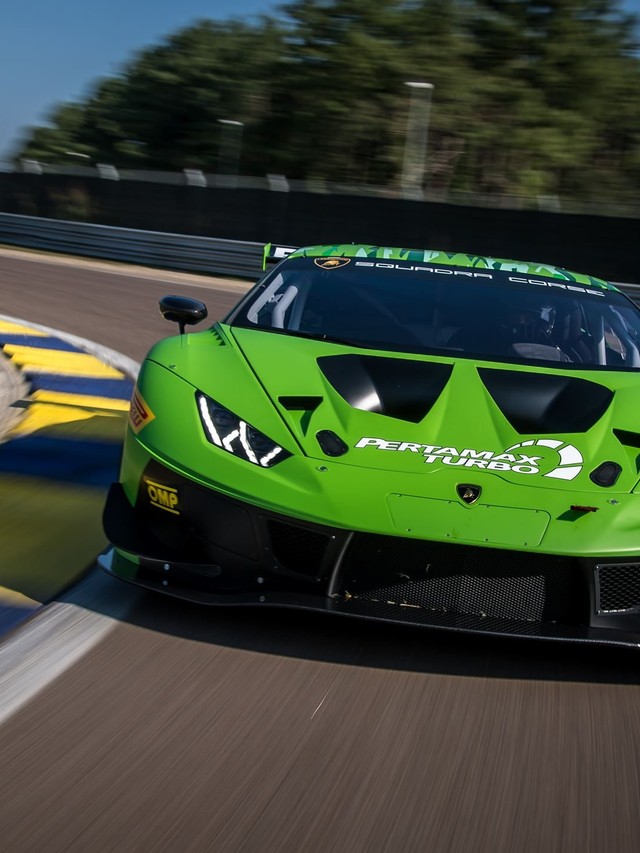
Three Super Trofeo Champions, Three Customer Teams, One Race
Ahead of the 71st 24 Hours of Spa-Francorchamps on July 27-28, 2019, Lamborghini Squadra Corse did something quietly revealing: it embedded three of its most recent Super Trofeo champions into three separate customer GT3 teams, all competing in the Silver Cup class. Giacomo Altoè, the 2018 Super Trofeo Europe champion, joined Orange1 FFF Racing Team in the #555 Huracán GT3 Evo. Andrea Amici, the previous season’s Super Trofeo Asia winner, was assigned to GRT Grasser in their #19 car. Corey Lewis, winner of the Super Trofeo North America title, slotted into Ombra Racing’s #12 entry.
One champion from each continental series, placed into a 24-hour endurance race that represents a massive step up in complexity, team dynamics, and physical demand. The coordination was too precise to be coincidental. It looked like a pipeline, because it was one.
The Super Trofeo as a Deliberate Development Platform
Launched in 2009 as a one-make championship built around identical cars, the Lamborghini Super Trofeo was designed to isolate driver skill from engineering advantages. By 2019 it spanned three continental championships (Europe, North America, and Asia) plus an annual World Final, with each regional series typically running six weekends of two 50-minute races. The format is compact, intense, and heavily monitored by Squadra Corse coaching staff.
Beneath the racing, though, sits an intentional structure that gives the series its real purpose. According to Lamborghini’s own Squadra Corse program documentation, the driver development pathway is tiered: Super Trofeo Junior Drivers are monitored and coached, the best graduate to GT3 Junior Driver status, and from there the goal is a Young Professional seat or even a factory drive. Drivers are evaluated on qualifying pace, race results, on-track etiquette, post-weekend reports, and technical feedback with engineers. It is a structured talent funnel, not a loose affiliation.
Spa-Francorchamps holds particular significance within this structure. The Belgian circuit has appeared in every Super Trofeo Europe season since the series began, meaning every European champion already knows the track’s rhythm before stepping into a GT3 car for the 24-hour race. That familiarity is a deliberate advantage Squadra Corse can exploit when placing its graduates.
Why Squadra Corse Backs Customer Teams with Young Talent
Customer racing is the commercial engine of any GT3 manufacturer’s motorsport operation. Teams like Orange1 FFF Racing, GRT Grasser, and Ombra Racing buy Huracán GT3 Evos, pay for parts and support, and compete under their own banners. Squadra Corse’s role is to make those teams competitive enough to keep buying Lamborghini hardware.
Placing proven young drivers into those customer crews serves two purposes at once. The teams get fast, hungry co-drivers who lower the average age and Silver Cup eligibility of their lineups. Squadra Corse, in return, gets real-world data on how its graduates perform under the most demanding conditions in GT racing: night stints, multi-driver strategy, tire management across 24 hours, and the pressure of racing alongside 71 other cars in a record-entry field.
Altoè was 18 at the time. Amici described the Spa 24 Hours as a years-long dream. Lewis arrived knowing that Ombra Racing had won the Silver Cup class the previous year and expected to defend that result. Each driver brought a different regional perspective, a different Super Trofeo experience, and the same factory backing. That kind of coordinated placement across three separate teams is far more deliberate than a typical gentleman-driver arrangement, and it reveals how seriously Squadra Corse treats the pipeline as competitive infrastructure.
Eleven Huracán GT3 Evos and the Strength of Lamborghini’s Grid Presence
Lamborghini confirmed eleven Huracán GT3 Evos on the starting grid for the 2019 Spa 24 Hours, a substantial presence in a 72-car field. Orange1 FFF Racing and GRT Grasser each fielded three cars in the PRO category alone, with additional Silver Cup entries rounding out the contingent.
The Huracán GT3 Evo’s naturally aspirated 5.2-liter V10 remained a distinctive voice on a grid increasingly populated by turbocharged competitors. Where many rival GT3 platforms rely on forced induction, the Huracán’s V10 offered linear throttle response and a soundtrack that made Lamborghini entries identifiable from the grandstands during night stints. For the young Super Trofeo graduates stepping into these cars, the transition was eased by engine familiarity: the Super Trofeo EVO2 runs a version of the same naturally aspirated V10 producing 620 horsepower, so the fundamental character of the powertrain carried over even as everything else changed dramatically. Team structure, race duration, strategy complexity: all new. The engine note in their ears: the same. That continuity is not accidental. It is part of what makes the pipeline work.

The number 12 Lamborghini Huracan GT3 races around the track at dusk during the 24 Hours of Spa.
How Lamborghini’s Approach Compares to Rival Programs
Every major GT3 manufacturer runs some version of a driver development program, but the structures vary considerably. Ferrari operates its well-funded FDA (Ferrari Driver Academy) that feeds talent primarily toward Formula 1, with GT racing serving as a secondary track. Porsche’s Supercup series functions similarly to the Super Trofeo as a one-make feeder, though its graduates often disperse across a much wider ecosystem of Porsche customer teams in multiple series worldwide.
Lamborghini’s approach in 2019 was distinctive in its directness. Win a continental Super Trofeo title, and Squadra Corse actively placed you into a specific customer team at a specific race. The pathway was visible and concrete rather than aspirational. For young drivers without family wealth or major sponsorship backing, that kind of factory intervention can be the difference between a career stalling after a one-make championship and actually reaching the endurance racing grid.
The program continued to evolve after 2019. One report from Lamborghini’s own program documentation indicates that by 2026, Squadra Corse renewed its Young Driver Programs for the thirteenth consecutive year, selecting 30 drivers across its tiered structure. That longevity suggests the pipeline approach worked well enough to become a permanent fixture of the motorsport operation rather than a one-off publicity exercise.
What This Tells Enthusiasts About Lamborghini’s Motorsport Commitment
For Lamborghini fans watching from the road-car side, the Super Trofeo pipeline matters because it reinforces the connection between the cars you can buy and the cars that race. The Huracán GT3 Evo shared its fundamental engine architecture with the road-going Huracán, and the Super Trofeo car sat between the two as a stepping stone. That coherence across the product range, from street to one-make to GT3 endurance, is something Squadra Corse clearly valued as both a marketing narrative and an engineering reality.
The practical takeaway is straightforward: Lamborghini treats its one-make series as genuine infrastructure, not a hospitality exercise with helmets. Winning a Super Trofeo title carried tangible professional consequences for Altoè, Amici, and Lewis, each of whom moved into a 24-hour endurance race with factory support at an age when most aspiring GT drivers are still searching for budget. Whether those individual careers flourished afterward depended on many factors Lamborghini could not control. But the opportunity itself was engineered, deliberate, and repeatable. That is exactly what a serious motorsport pipeline looks like, and the 2019 Spa 24 Hours was the clearest proof Squadra Corse had yet offered.


