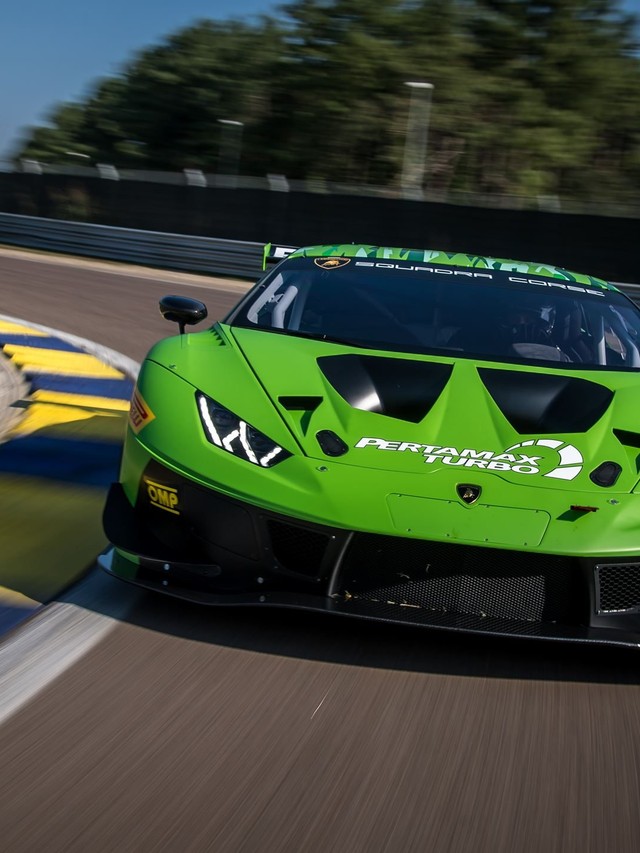
Seven Drivers, One Huracán GT3, and a Final Exam at Imola
At the end of October 2017, seven young racing drivers arrived at Imola for what Lamborghini Squadra Corse calls its annual final evaluation. The format was deliberately clinical: individual sessions in a Huracán GT3, qualifying simulations on fresh tires, a chance to adjust the car’s setup, timed laps, and then a choice about whether to keep those changes or revert. The 24-year-old Dane Dennis Lind, already the 2016 European and World Champion of the Lamborghini Super Trofeo, came out on top. His prize was economic support from Squadra Corse to race a Huracán GT3 in an international GT championship during the 2018 season.
The second name to emerge was Jonathan Cecotto, just eighteen years old and the son of former Formula 1 driver and motorcycle champion Johnny Cecotto. The younger Cecotto had finished third in the 2017 Lamborghini Super Trofeo Europe with Imperiale Racing, earning himself a test drive in the Huracán GT3. Both results mattered on their own terms, but the more revealing story sits underneath the stopwatch data: what Lamborghini was actually measuring, and why it produced a factory driver two years later.
Why Lamborghini Measures Everything Except Raw Speed First
Lamborghini’s Motorsport Department states plainly that pure speed on track is not enough to become a professional driver. That line reads like corporate boilerplate until you examine what the Imola evaluation actually tested. Squadra Corse’s technical staff and instructors from the ACI Sport Federal School, coordinated by Raffaele Giammaria, compiled reports blending objective telemetry with subjective assessments. They watched how each driver interpreted setup changes, whether they could articulate what the car was doing in terms useful to engineers, and how well they understood telemetry as a diagnostic tool rather than just a lap time readout.
This philosophy shapes the entire Youngster Programs structure, which Lamborghini Squadra Corse established in 2014. Selection criteria for the final evaluation included results from two training sessions at Imola in June and October, but also continuous monitoring of what the company describes as “sport and behavioral performance” throughout the racing season. A driver who is fast but cannot communicate with an engineering team, or who wilts under the media obligations of a factory role, becomes a liability in endurance racing. Lamborghini designed this program to filter for the complete package, and the Imola shoot-out was its most concentrated expression.
Cross-fit, Classroom Lectures, and Brand Ambassadorship
The curriculum extends well beyond the cockpit. Drivers participate in physical conditioning that includes racing bike sessions on track, cross-fit workouts, and reflex and mental concentration tests. Classroom instruction covers brand values, communication skills, and the technical features of Lamborghini’s road car lineup. That last detail is easy to overlook, but it reflects a practical reality: factory drivers are expected to represent the brand at dealer events, media appearances, and the Lamborghini Accademia driving school, where the top performers from the Youngster Programs can serve as instructors.
This breadth of training ties directly back to the evaluation philosophy on display at Imola. Squadra Corse is not simply looking for the fastest hand; it is building drivers who can function as the public face of a racing operation while delivering results on track. Whether that approach produces better drivers or better ambassadors is debatable, but it does produce something specific to Lamborghini’s needs in GT customer racing, where a factory pilot’s week might split between endurance stints, simulator sessions, dealer appearances, and media obligations in roughly equal measure.
From Youngster to Factory Pilot: Dennis Lind’s Trajectory
The proof of any development program lies in outcomes, and Lind’s career arc validates the investment. He joined Lamborghini Squadra Corse two years before the 2017 evaluation, progressing from the Young Driver Program for Super Trofeo competitors to the GT3 Junior Program and debuting in the Blancpain GT Series with a Huracán GT3 during that same 2017 season. By 2019, Lind became the first driver to graduate through Lamborghini Squadra Corse’s young driver program into a full factory driver role. He won the Blancpain GT World Challenge Asia title alongside Martin Kodric and competed in the Blancpain Endurance Series in Europe.
That progression, from one-make series entrant to factory contract holder in roughly four years, represents exactly the pipeline Lamborghini designed. Lind remains active in GT racing and returned to the Lamborghini Super Trofeo North America in 2026 with TR3 Racing, a detail that underscores how deeply the program’s alumni stay embedded in the Lamborghini ecosystem. For anyone watching the Youngster Programs and wondering whether the pathway is real or decorative, Lind’s career answers the question concretely.

A racing driver in a black suit holds his blue helmet, looking towards the horizon on a bright day at the track.
Jonathan Cecotto and the Value of a GT3 Test
Cecotto’s story carries a different weight. At eighteen, with a famous surname and a third-place Super Trofeo Europe finish already on his record, the Huracán GT3 test represented a chance to step into a faster, more complex machine and demonstrate whether his consistency and racecraft could translate to GT3 competition. Lamborghini highlighted his victory count in the Super Trofeo, his consistency across race weekends, his performance during the program’s training sessions, and his behavioral conduct as the criteria behind his selection.
Whether Cecotto’s career ultimately followed the same trajectory as Lind’s is a question the 2017 announcement could not answer, and Lamborghini’s subsequent public record on his specific progression remains limited. What the selection does illustrate is that the Young Drivers tier of the program functions as a genuine talent identification layer, not simply a participation trophy for Super Trofeo competitors. The GT3 test is a tangible step, and for a young driver, seat time in a race car worth several hundred thousand dollars is worth more than any certificate.
What This Means for Lamborghini’s Racing Pipeline
Lamborghini’s customer racing business depends on a steady supply of capable, brand-loyal drivers who can win races and attract paying co-drivers in pro-am formats. The Youngster Programs feed that supply chain directly. As the brand transitions its racing platform from the Huracán to the Temerario GT3 and Super Trofeo, the drivers who graduate from this system will be the ones shaping how those new cars perform in competition and how they are perceived by prospective customer teams.
The practical takeaway for LamboCars readers who follow the racing side of the brand is straightforward: Lamborghini’s driver development pipeline is structured, it produces results, and it remains active. The program’s emphasis on engineering communication, brand representation, and physical conditioning may sound like corporate polish, but it reflects the real demands placed on modern GT factory drivers. Speed gets a driver noticed. Everything else determines whether they keep the seat.


