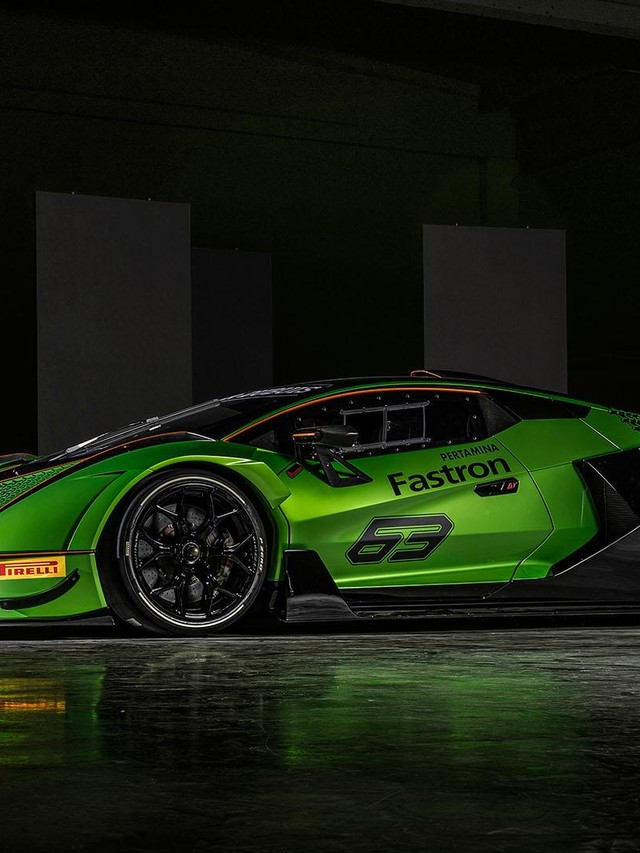
Lamborghini Squadra Corse Locks In Pertamina Lubricants Through 2021
When a racing program wins twice at Daytona, twice at Sebring, and sweeps the Blancpain GT Series, the temptation is to credit the driver, the chassis, the aero package. Rarely does anyone point at the oil. Lamborghini Squadra Corse and Pertamina Lubricants clearly disagree with that instinct, because the two organizations announced a renewed technical partnership covering the next two seasons of both GT3 and Super Trofeo competition worldwide.
The collaboration originally began in 2015, timed to the presentation of the first Huracán GT3. Five years on, the renewal signals something more substantial than a logo swap on the bodywork. Pertamina Lubricants, a subsidiary of Indonesia’s primary oil and gas company, supplies the Fastron Synthetic Oil line to every Squadra Corse operation, including the bespoke Platinum Racing 10W-60 formulated specifically for the Huracán’s naturally aspirated V10 competition engines. The agreement covers all three regional Super Trofeo championships (Asia, Europe, and North America) alongside the global GT3 program.
Giorgio Sanna, Head of Automobili Lamborghini Motorsport, framed the renewal as recognition that both organizations delivered results together at the highest levels of GT racing. Andre Herlambang, Director of Finance & Business Support at Pertamina Lubricants, pointed to the partnership’s role in building the Fastron brand’s credibility on a global stage. Strip away the corporate language and the message is straightforward: the oil works, the wins prove it, and both sides want to keep going.
Why a V10 Racing Engine Demands More Than Off-the-Shelf Lubricant
A naturally aspirated V10 in GT3 trim operates in a thermal and mechanical environment that would destroy conventional engine oil within minutes. Sustained high RPM for stint after stint, oil temperatures climbing well past 130°C during long summer races, and the enormous shear forces generated by ten pistons cycling at speeds far beyond any road car application all conspire against the lubricant. Standard synthetic oils lose viscosity under those loads. Once viscosity drops, the oil film between metal surfaces thins, friction increases, temperatures spike further, and the result is a catastrophic feedback loop ending with a seized bearing or a cracked ring land.
The 10W-60 viscosity grade itself tells part of the story. That “60” weight at operating temperature means the oil maintains a thick, protective film even when the engine is fully heat-soaked. The “10W” cold rating ensures the oil flows quickly enough at startup to protect components before the engine reaches its operating window. For a racing V10 that might sit cold in a pit stall and then be pushed to redline within a single out-lap, that cold-flow behavior matters more than most spectators realize.
One technical product listing describes the Platinum Racing 10W-60 as a fully synthetic formulation built on a Polyalphaolefin (PAO) base oil. PAO synthetics resist thermal breakdown far better than conventional mineral or even Group III synthetic base stocks. The listing also notes a viscosity index of 175, meaning the oil’s thickness stays remarkably consistent across a wide temperature range. A flash point of 232°C provides additional safety margin against the extreme heat that GT3 engines generate during endurance events like the 24 Hours of Daytona.
For anyone who thinks oil is oil: the difference between a racing-specific formulation and a premium road-car synthetic is roughly the difference between a track-day brake pad and the pads on your daily driver. Both stop the car. Only one does it reliably for 24 consecutive hours at 95 percent of its limit.
A Trophy Case Built on Consistency
Pertamina Lubricants contributed to two victories at the 24 Hours of Daytona and two more at the 12 Hours of Sebring since the partnership began in 2015. Lamborghini also credits the collaboration with a triple win in the Blancpain GT Series, a result that required sustained competitiveness across sprint, endurance, and overall championship classifications.
Those results deserve context. Endurance racing at Daytona and Sebring punishes every component in the car. Engines run for hours at a time between service windows, and the Florida heat adds ambient thermal stress that shorter European sprint races simply do not replicate. A lubricant failure during a 24-hour race does not just cost a position; it ends the event entirely. The fact that the Huracán GT3 won at Daytona twice with Pertamina’s oil in the sump says as much about the lubricant’s endurance capability as it does about the car’s pace.
The Super Trofeo side of the equation matters too, though it gets less attention from the mainstream motorsport press. Lamborghini’s one-make series puts dozens of identically prepared Huracán race cars on track across three continents, and every single one runs the same Pertamina Fastron oil. That volume creates a massive real-world testing dataset: hundreds of engines, thousands of race hours, all feeding information back to both Pertamina’s chemists and Squadra Corse’s engineers. Few lubricant partnerships in GT racing generate that density of operational data, and it is precisely this closed loop between competition use and product refinement that makes the alliance more than a branding exercise.

The Lamborghini Huracán GT3 EVO, number 11, showcases its speed and distinctive livery on the race track.
Inside the Platinum Racing 10W-60 Formula
Lamborghini describes the Platinum Racing 10W-60 as developed specifically to enhance the performance of the V10 engines in Huracán competition cars. That phrasing is worth pausing on. This is not a commercial product that Pertamina happened to sell to a racing team. The formulation carries an official Lamborghini Squadra Corse approval alongside API SN and ACEA A3/B4 performance certifications, according to one published product specification.
The PAO base oil is the foundation. Polyalphaolefins are synthesized from ethylene rather than refined from crude oil, which gives them a more uniform molecular structure. Uniform molecules mean more predictable behavior under stress: less oxidation at high temperatures, less sludge formation over extended use, and better resistance to the shearing forces that break down lesser oils. For a V10 engine spinning at racing RPM with tight bearing clearances, that molecular consistency translates directly into reduced friction and more reliable protection.
The additive package layered on top of the PAO base is where the real tuning happens. Racing oils typically use anti-wear additives, detergents to keep internal surfaces clean, and friction modifiers calibrated to the specific metallurgy of the engine they protect. Lamborghini’s engineers and Pertamina’s chemists would have tested and adjusted this additive chemistry against the Huracán V10’s particular demands: its bearing materials, its operating temperature range, its oil flow paths, and its sensitivity to viscosity changes under load.
The product specification also lists a pour point of minus 30°C. That might seem irrelevant for a race car, but Super Trofeo and GT3 events run in conditions ranging from cold European mornings to blazing Middle Eastern afternoons. An oil that flows freely at minus 30°C reaches critical engine surfaces faster during cold starts, reducing the wear that accumulates in those first few seconds before the engine reaches temperature. Across a season spanning three continents, that flexibility adds up.
The Strategic Value of Long-Term Technical Alliances for Lamborghini Motorsport
Every major GT3 manufacturer maintains lubricant partnerships, but the depth and duration of those relationships vary considerably. Ferrari’s customer racing operations work with Shell, a relationship rooted in Formula 1. Porsche Motorsport partners with Mobil 1, another tie that extends across multiple racing platforms.
What distinguishes Lamborghini’s arrangement with Pertamina is the specificity. The Platinum Racing 10W-60 carries an explicit Squadra Corse approval, meaning it was developed and validated for one particular engine architecture: the Huracán’s 5.2-liter V10 in competition tune. Larger oil companies supplying multiple manufacturers often provide formulations that must cover a broader range of engine types and operating conditions. A bespoke product, tailored to one engine family and tested across hundreds of identical Super Trofeo cars, can be optimized more aggressively for that specific application.
The Super Trofeo series itself gives Lamborghini a structural advantage in this area. Porsche runs the Carrera Cup and Supercup one-make series, and Ferrari operates its Challenge program, but Lamborghini’s three-continent Super Trofeo grid creates a uniquely large and controlled sample set for lubricant development. Every car runs the same engine, the same oil, and reports back to the same engineering group.
For customer teams running Huracán GT3 cars in open-class competition, the lubricant question is not abstract. Engine reliability directly affects race results and, just as importantly, rebuild costs. A customer team that loses an engine mid-season faces a bill that can reshape its entire budget. The confidence that comes from a proven, purpose-built lubricant partnership is a competitive asset that never appears on a spec sheet but shows up in the results column.
What This Partnership Signals for Lamborghini’s Racing Future
The 2019 renewal covered the 2020 and 2021 seasons, but the partnership did not end there. Subsequent renewals extended the agreement through at least 2025, eventually encompassing Lamborghini’s SC63 LMDh prototype program alongside the GT3 and Super Trofeo operations. That trajectory tells a clear story: Pertamina moved from supporting a single-platform V10 racing effort to backing Lamborghini’s entire motorsport portfolio, including its first factory prototype campaign.
For those watching the transition from the Huracán racing platform to the incoming Temerario GT3, the lubricant question becomes freshly relevant. Road & Track reported that the Temerario GT3 marks Lamborghini’s move to a twin-turbocharged V8 for customer racing after a decade of naturally aspirated V10 dominance. Turbocharged engines generate different thermal and mechanical stresses than naturally aspirated units: higher combustion pressures, greater heat concentration around the turbocharger bearings, and different oil flow requirements. Whether Pertamina develops a new formulation for the Temerario platform or adapts the existing Platinum Racing line remains unconfirmed, but the engineering challenge is real and the partnership’s track record suggests the work is already underway.
The practical takeaway for anyone involved in Lamborghini customer racing, whether as a team owner, a gentleman driver, or a prospective Super Trofeo entrant, is that Squadra Corse treats its lubricant supply as a core engineering function rather than a marketing line item. When a technical partnership survives multiple platform generations and expands to cover new engine architectures, it reflects a genuine engineering dependency.
Lamborghini’s GT3 program built its championship record on the Huracán V10’s reliability as much as its pace. As the brand prepares to defend that record with a fundamentally different powertrain, the depth of its technical partnerships becomes more important, not less. The oil is invisible during the race. Its absence would be impossible to miss.


