European Champions Crowned at Valencia’s Ricardo Tormo Circuit
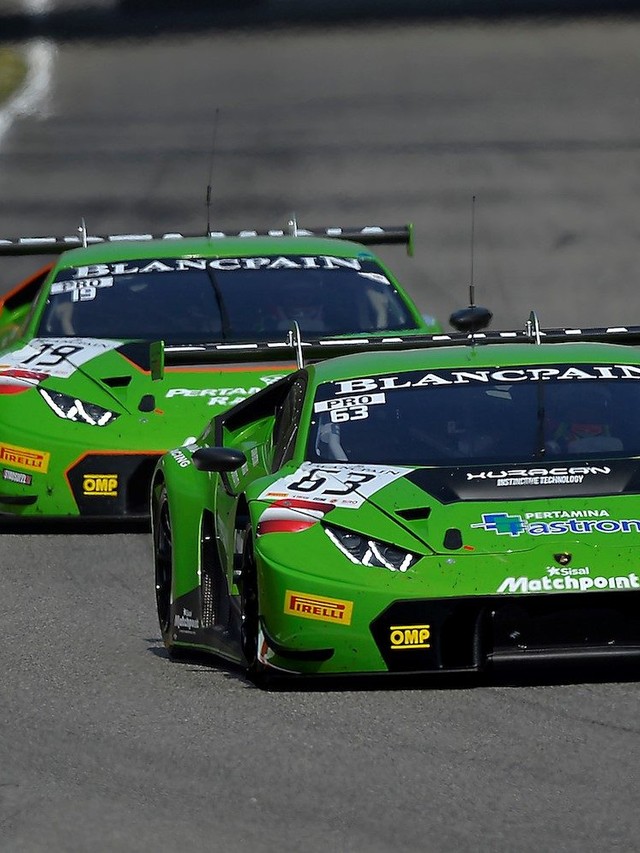
The sixth and final round of the Lamborghini Blancpain Super Trofeo Europe settled every title fight on a single December weekend at Valencia’s Ricardo Tormo circuit, then handed the track straight to the 2016 World Final. Dennis Lind, a 23-year-old Dane racing for Raton Racing, claimed the PRO championship with his fifth victory of the season in Race 1 and a composed fifth-place finish in Race 2. In the PRO-AM class, MotoGP star Andrea Dovizioso won Race 2 on his very first weekend in a Huracán Super Trofeo, finishing sixth overall. For a series built to strip away car advantages and expose raw talent, Valencia delivered exactly the kind of results that justify the entire program.
Lind’s title arrived after a season-long battle against Vito Postiglione of Imperiale Racing, who collected two second-place finishes in Valencia, and Latvia’s Harald Schlegelmilch of Artline Team Georgia, who took third in both races. Loris Spinelli won Race 2 outright. Across the other classes, Adrian Amstutz and Patrick Kujala of Bonaldi Motorsport secured the PRO-AM championship, Nouri Shahin claimed the AM title, and Gerard Van der Horst was crowned Lamborghini Cup champion after sweeping both Valencia races.
“This has been a special day for me. I remember the day of my debut in the championship I made a promise hard to keep: that I would win the title. Today, I’m a champion and this makes me happy and proud of my team.”, Dennis Lind
Dovizioso’s Debut Win and What It Reveals About the Format
Dovizioso’s appearance on the Super Trofeo grid carried more weight than a typical celebrity guest drive. The Ducati factory rider, accustomed to managing 260-horsepower prototypes leaned over at 60 degrees, adapted to a closed-cockpit, rear-wheel-drive race car quickly enough to win his class in only his second start of the weekend. After finishing fourth in Race 1, he took the PRO-AM category in Race 2, a result that speaks both to his racecraft and to the Huracán Super Trofeo’s ability to reward a driver who understands vehicle dynamics even without meaningful seat time.
Dovizioso himself acknowledged the learning curve was steep. “Starting in eighth position made a difference,” he said. “Overtaking is really difficult, what’s more the sun was low and it kept me from seeing well.” He credited Lamborghini factory drivers Andrea Fontana, Marco Mapelli, and Riccardo Agostini for coaching him through the compressed preparation window. That a world-class athlete from a completely different discipline can step into this car and be competitive immediately reinforces the one-make format’s central promise: it isolates talent rather than engineering budgets. And that promise is precisely what makes the Super Trofeo a credible feeder series rather than a vanity exercise.

Drivers and team members celebrate their victory on the podium at the Lamborghini Blancpain Super Trofeo event.
A Meritocratic Ladder Hiding in Plain Sight
Every car on the grid runs an identical Huracán Super Trofeo, so lap-time gaps come down to driver skill, tire management, and team strategy rather than aero packages or powertrain upgrades. Established in 2009 with the Gallardo Super Trofeo, the series now spans three continental championships before funneling top performers into a single World Final. That structure creates a clear, meritocratic ladder, and Valencia showed it working across every rung.
Alongside the European finale, the North America and Asia series also ran their closing rounds on the same grid. Richard Antinucci of Change Racing won both North American races, while PRO champion Shinya Michimi of Prestige Performance took a third and a second. In Asia, champions Toshiyuki Ochiai and Afiq Yazid swept their pair of races. All of these drivers would reconvene the following day for the World Final qualifying sessions, with two fifty-minute races on the schedule.
For aspiring professionals, the Super Trofeo functions as a proving ground. Multiple sources report that some drivers graduate from the series into GT3 and endurance racing programs. Lind himself would go on to win the 2016 World Final, validating the championship as a genuine talent filter. The 18-year-old Kikko Galbiati, who won his AM debut for Antonelli Motorsport in Valencia, represents the next wave of that pipeline. Nouri Shahin, the AM champion, captured the dynamic well: “This has been my first season in the Lamborghini Blancpain Super Trofeo; a fantastic season during which everything has been new to me, both the car and racetracks.”
Customer Racing as Lamborghini’s Long Game
The broader significance of the Super Trofeo sits within Lamborghini’s evolving motorsport strategy. Squadra Corse built this series to do two things simultaneously: sell race cars to gentleman drivers and identify professional talent worth investing in. Both goals feed the company’s ambitions further up the racing ladder, and the Valencia results illustrate how the two tracks converge. Shahin and Van der Horst represent the gentleman-driver constituency; Lind and Galbiati represent the professional pipeline. The same grid, the same weekend, the same car.
According to Autoblog, the Temerario GT3 represents Lamborghini’s first competition car fully designed, developed, and built in-house. That milestone did not appear from nowhere. Years of running the Super Trofeo gave Squadra Corse operational experience managing global grids, supporting privateer teams, and refining race-car platforms derived from road cars. The Huracán Super Trofeo, widely recognized as a hardcore, race-ready iteration of the road-going Huracán, served as the training ground for the engineering group now building a factory GT3 contender.
The class structure (PRO, PRO-AM, AM, and Lamborghini Cup) is deliberately designed to accommodate drivers at different experience levels and budgets, keeping costs more predictable than open-development GT racing. Lamborghini has not published current entry costs, but the parity-based format means the investment buys competition, not an arms race.
Setting the Stage for the World Final
With the European titles settled, the Valencia weekend pivoted immediately to the global showdown. The 2016 World Final was scheduled to begin the following morning with qualifying, followed by two fifty-minute races split by class. Continental champions from Europe, North America, and Asia would share the same grid for the first time all season.
The format rewards consistency across an entire year, but the World Final itself is a standalone event where reputation counts for nothing. Lind arrived as the European PRO champion and a clear favorite. Dovizioso, with one weekend of experience, would face drivers who had been racing the Huracán Super Trofeo for months. That convergence of three continental series into a single decisive weekend remains the most effective way Lamborghini generates global attention for a customer racing program that quietly underpins the brand’s competitive credibility, and, as Valencia proved, keeps producing drivers worth watching long after the champagne dries.


