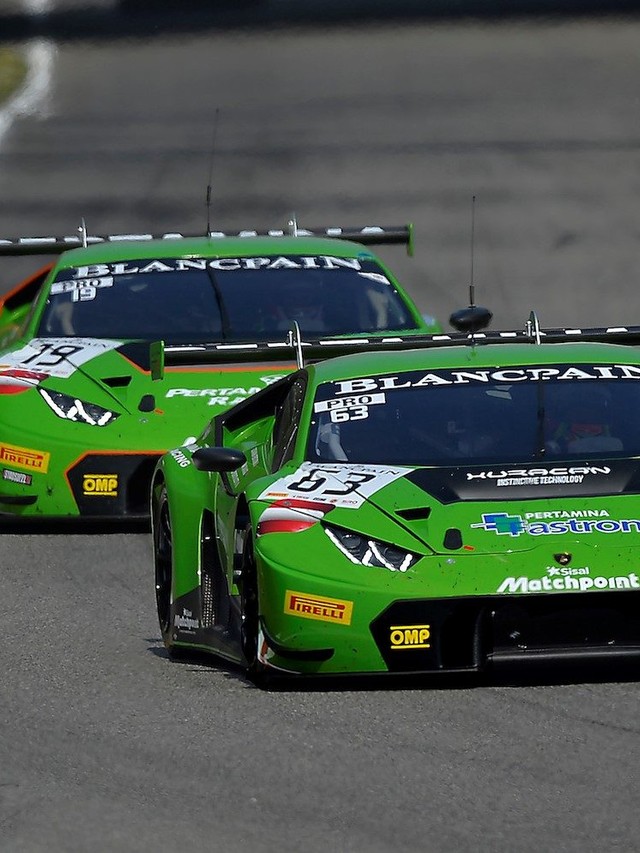
Michimi’s Masterclass at VIRginia International Raceway
Shinya Michimi crossed the line at VIRginia International Raceway on August 27, 2016, with a 9.091-second gap to the field, collecting his fifth victory in seven rounds of the Lamborghini Blancpain Super Trofeo North America season. Driving the No. 1 Prestige Performance Huracán LP 620-2 for Lamborghini Paramus, he delivered the kind of performance that makes a one-make series worth watching: patient in traffic, surgical under pressure, utterly ruthless once clear air appeared.
The race unraveled early under punishing heat. Six minutes in, series rookie Steve Johnson dropped a wheel exiting Turn 17 and hit the wall hard, triggering a full-course yellow that consumed roughly ten minutes of cleanup. That caution compressed the first stint and forced teams with co-drivers to recalculate pit strategies on the fly. Richard Antinucci, sharing the No. 17 US RaceTronics car with Yufeng Luo, held the lead and stayed out as long as possible to bank fast laps before handing over to his Pro-Am partner.
Once pit stops shook out, Luo inherited the lead, but Michimi was closing quickly. With twenty minutes left, he passed Luo cleanly into Turn 1 and immediately began stretching the gap, at one point building an eighteen-second cushion. A second caution with seven minutes remaining bunched the field, yet Michimi pulled away on the restart as if the yellow had never happened. Josh Norman, in only his second solo start, pushed past Luo in the closing laps to claim second overall and the top Amateur result in the No. 71 Change Racing entry for Lamborghini Carolinas. Luo and Antinucci held on for third overall and the Pro-Am class win.
The Anatomy of a Season-Long Streak
Five wins from seven starts is a record that speaks for itself, but the manner of those victories tells a richer story about what the Super Trofeo can reveal about a driver. Michimi had previously won at Watkins Glen International and would go on to sweep the entire VIR weekend by taking Round 8 the following morning. His consistency pointed to something beyond raw speed: an ability to read chaotic race conditions, adapt to circuits he had never driven, and extract maximum performance from a car that every other competitor on the grid also possessed.
“The track is really nice, really smooth. It makes the lines interesting because you can run three different lines in different sections and end up with the same lap times.”
That quote, from Michimi after the race, reveals a driver thinking in terms of optimization rather than heroics. In a one-make series where every Huracán LP 620-2 rolls off the same Squadra Corse preparation line, the differentiator is the person behind the wheel and the team’s ability to manage tires, strategy, and setup within tight regulations. Michimi and Prestige Performance found an edge nobody else could match.
Ross Chouest deserves mention in the same breath. His seventh consecutive class victory in the Lamborghini Cup division, driving the No. 3 DXDT Racing car for Lamborghini Miami, represented a perfect season to that point: every pole, every win. Dominant performances across multiple classes suggested a series that rewarded committed preparation, not just checkbook entries.
Why the Super Trofeo Matters More Than Its Grid Size Suggests
Lamborghini inaugurated the Super Trofeo in 2009 as its first single-make racing championship, partnering with Swiss watchmaker Blancpain in a relationship that went beyond logo placement. One report indicates that Blancpain’s CEO, Marc Hayek, actually drove one of the eleven cars in that inaugural season. The North American arm launched in 2013, and by 2016 it had grown into a legitimate pipeline for customer racers looking to sharpen their skills before stepping up to GT3 competition.
The Huracán Super Trofeo, successor to the Gallardo Super Trofeo as the series’ featured car, brought 620 horsepower and a rear-wheel-drive layout that deliberately strips away the all-wheel-drive safety net found on most road-going Huracáns. That configuration is the point. It rewards throttle discipline and punishes laziness, making it a genuine driver-development tool rather than a branded track-day experience. Michimi’s dominance was the clearest possible advertisement for that philosophy: give skilled drivers identical machinery and let the results speak.
The strategic value for Lamborghini extends well beyond trophies. Every dealership name on every car (Lamborghini Paramus, Lamborghini Carolinas, Lamborghini Beverly Hills, Lamborghini Miami) ties the racing program directly to the retail network. Owners who watch these races see their local dealer represented on a grid, building community in a way that a factory GT3 effort alone cannot replicate. Forum threads on Lamborghini-Talk from the series’ early years show genuine enthusiasm from owners attending track days alongside Super Trofeo machinery, and that crossover between showroom and paddock remains one of the program’s underappreciated strengths.
From Super Trofeo Grid to Road Car DNA
The connection between Lamborghini’s customer racing and its road car lineup is more direct than marketing materials typically let on. The Huracán STO, which arrived several years after this 2016 season, borrowed heavily from the Super Trofeo and GT3 programs in its aerodynamic philosophy, rear-wheel-drive bias, and track-focused calibration. Thousands of laps by privateer teams fed back into Squadra Corse’s understanding of what a naturally aspirated V10 could deliver under sustained competitive stress.
Looking further ahead, Autoblog reports that the Temerario GT3, unveiled at the 2025 Goodwood Festival of Speed, represents Lamborghini’s first competition car fully designed, developed, and built in-house. That milestone traces a clear arc from the Super Trofeo’s origins as a customer-focused proving ground to a factory with the confidence and capability to engineer its own race cars from a blank sheet. Seasons like Michimi’s 2016 campaign provided the data, the operational experience, and the credibility to make that leap.
For prospective buyers weighing a Lamborghini against a Ferrari or Porsche, the Super Trofeo program offers something concrete. Ferrari Challenge and Porsche’s various one-make cups serve similar functions, but Lamborghini’s approach, with its tight dealer integration and relatively accessible entry point compared to GT3, occupies a distinct niche. Whether that accessibility translates into lower costs is another question entirely. Reddit discussions from aspiring Super Trofeo owners paint a sobering picture: alternators with limited lifespans, subframes requiring weld inspections after every session, and the general reality that maintaining a purpose-built race car is, as one community member put it, “a part-time job.”
What Michimi’s 2016 Campaign Means in Retrospect
Michimi’s five victories in seven rounds, capped by a full weekend sweep at VIR, did more than pad a championship lead. They demonstrated that the Huracán LP 620-2 could be a reliable, repeatable weapon in the hands of a skilled driver and a well-organized team, which is exactly the narrative Lamborghini needed as the Super Trofeo matured from a niche curiosity into a credible motorsport ladder.
The practical takeaway for anyone following Lamborghini’s racing trajectory is straightforward: the brand’s current confidence in GT3 and customer motorsport did not appear overnight. It was built race by race, season by season, at circuits like VIR where extreme heat, early cautions, and compressed pit windows tested cars and teams in ways no press event or controlled demonstration ever could. Michimi’s dominance was the proof of concept, and the Temerario GT3 is its eventual product.
Gallery


