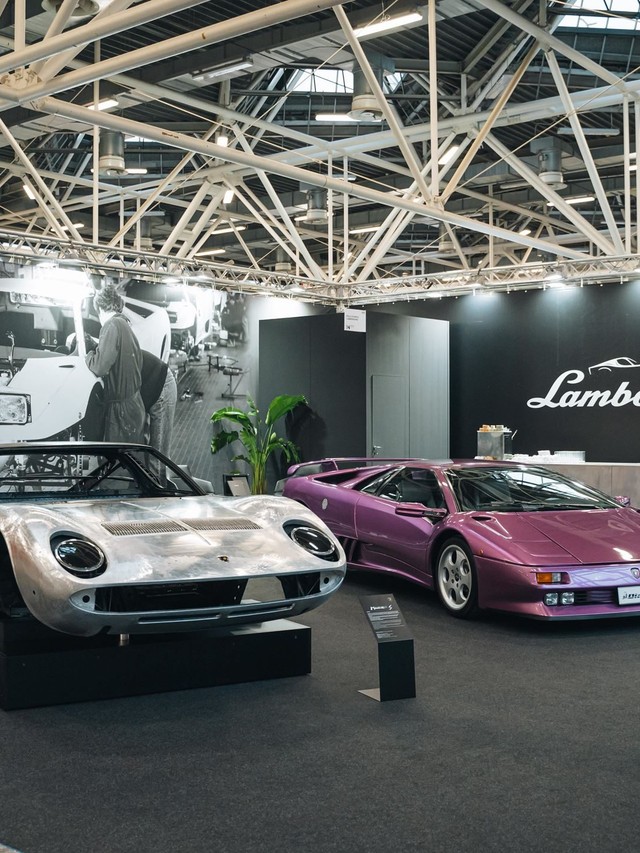
Lamborghini Polo Storico and HAGI Launch a Dedicated Classic Lamborghini Market Index
Lamborghini Polo Storico, the brand’s in-house classic department, has signed a collaboration agreement with Historic Automobile Group International (HAGI), the independent investment research firm that tracks collectible car markets using financial-sector methodology. At the heart of the deal sits the HAGI LPS Index (Lamborghini Polo Storico), a monthly gauge measuring price development across the historic Lamborghini market from the 350 GT through the Diablo.
The implication is significant: classic Lamborghinis now receive the same kind of transparent, continuously updated price tracking that blue-chip equities and commodities enjoy. HAGI’s proprietary archive draws on more than 100,000 transactions spanning private sales, dealer trades, and auction results. Its broader indices are referenced by the Financial Times, Wall Street Journal, New York Times, and Octane Magazine, lending the LPS Index a degree of institutional credibility that most classic car valuation tools lack.
The monthly index uses a starting value of 100 as of December 31, 2017. More striking is what a back test revealed about the years leading up to that baseline: Lamborghini says prices for classic models increased tenfold from 2000 to 2017. That kind of appreciation puts pre-2001 Lamborghinis in rare company, even within the broader collector car world. By formalizing this data through an independent research partner, Polo Storico is making a deliberate case that its heritage cars belong in the same conversation as tracked, investable asset classes.
Why This Matters for Owners and Prospective Buyers
Collector car markets have always operated with far less transparency than financial markets. A Miura owner in 2019 could consult auction results, dealer asking prices, and the occasional Hagerty or Bonhams estimate, but no single, continuously updated benchmark existed specifically for the Sant’Agata Bolognese back catalogue. The LPS Index fills that gap, and in doing so it changes the calculus for both sides of a transaction.
For current owners, the index provides an impartial, ongoing reference point. If you hold a Countach LP400 or a Diablo SE30, you can now track whether the broader classic Lamborghini market is rising, flattening, or softening on a monthly basis rather than relying on anecdotal auction results that may reflect one exceptional car or one soft market weekend. For prospective buyers weighing a classic Lamborghini acquisition, the index offers something equally valuable: historical context for whether the market sits at a peak, a trough, or somewhere in between.
Lamborghini’s motive is not purely altruistic. The collaboration also feeds market intelligence back to Polo Storico, allowing the department to plan spare parts production more strategically. If the index shows rising transaction volumes for Espada models, for instance, Polo Storico can anticipate demand for components that might otherwise go unproduced. In 2018 alone, the department created more than 200 new spare part code numbers. Knowing which models are trading actively helps prioritize that pipeline.
Online enthusiast communities reflect a real appetite for this kind of data. Forum discussions frequently revolve around whether specific models are appreciating, whether a manual Murciélago will hold value, or whether a Countach qualifies as a “usable investment.” The LPS Index gives those conversations a factual anchor instead of guesswork.
What the Tenfold Appreciation Figure Actually Tells Us
A tenfold increase over seventeen years sounds dramatic, and it is. Context matters, though. The period from 2000 to 2017 encompasses the broader classic car boom that lifted values across nearly every significant marque, fueled by low interest rates, growing wealth in emerging markets, and a generational shift as buyers who grew up with bedroom posters of the Countach reached peak earning years.
Lamborghini says the LPS back test confirms that tenfold figure for the brand’s classic models as a group. What the index does not yet reveal publicly is which individual models drove the bulk of that appreciation. Miuras, particularly the SV, command prices that would have been unthinkable in 2000. Early Countach LP400 models with periscope roofs followed a similar trajectory. Whether a Jalpa or an Urraco kept pace with a Miura SV is a different question entirely, and one the index could eventually help answer as more granular data becomes available.
The starting baseline of 100 at the end of 2017 also means the index begins measuring at what many analysts considered a market plateau for certain classic car segments. If the LPS Index shows steady or rising values from that point forward, it would suggest classic Lamborghinis retained their strength even as some other marques cooled. Lamborghini has not published subsequent index readings in this announcement, so that question remains open. Still, the very act of establishing a tracked baseline signals confidence that the numbers will bear scrutiny.

A stunning yellow Lamborghini Miura P400 glides past a luxurious building, showcasing its timeless design and dynamic presence.
Polo Storico’s Role: Certification, Parts, and Protecting Originality
None of this market transparency would matter much without the infrastructure to protect the cars themselves. Polo Storico, established in 2016, operates as the factory’s guardian of everything built in Sant’Agata Bolognese up to 2001. Its mandate covers four pillars: archiving production records and original design files, certifying the authenticity of classic Lamborghinis, restoring cars to factory specification, and manufacturing spare parts no longer available through normal channels.
The certification process deserves particular attention for anyone buying or selling a classic Lamborghini. Polo Storico houses detailed build records that go beyond chassis numbers to include engine, gearbox, axle, and body codes, along with original paint color, trim, wheel specification, and optional equipment. When a car is submitted for certification, its current condition is assessed against those records. Any non-original component, a replacement gearbox, for instance, is noted on the certificate rather than disqualifying the car entirely. That level of documentation directly supports the kind of transparent market the LPS Index is designed to track: a certified car with a clean originality record commands a premium that an undocumented example cannot.
The parts production side of the operation reinforces the same logic. Classic cars that lack factory parts support tend to depreciate or, worse, get modified with non-original components that erode their collectibility. Polo Storico’s commitment to remanufacturing parts using original production files and tooling data keeps these cars driveable and original. For an owner weighing whether to invest in a 1970s Lamborghini, knowing that the factory stands behind parts availability is a meaningful differentiator, and the LPS Index now provides a way to measure whether that support is reflected in market prices.
How Lamborghini’s Heritage Strategy Compares to Ferrari and Porsche
Lamborghini is not the first manufacturer to formalize its classic car heritage program. Ferrari Classiche, established in the late 2000s, offers a similar certification and restoration service for Ferraris older than twenty years. Porsche Classic operates its own parts supply and restoration operation out of Stuttgart, with a catalogue covering models stretching back decades. Both programs enjoy strong reputations among collectors.
What distinguishes the HAGI LPS Index is the explicit link between a manufacturer’s heritage department and an independent financial research firm. Ferrari Classiche certifies cars and supplies parts, but it does not co-brand a market index with an outside analytics house. Porsche Classic focuses heavily on parts availability and factory restorations but similarly lacks a dedicated, publicly tracked price index bearing its name. The LPS Index gives Lamborghini a visible, data-driven claim in the investment conversation that its competitors do not currently match.
Whether that translates into a tangible market advantage for classic Lamborghini values is harder to measure. Certification from any major manufacturer’s heritage division adds value at auction and in private sales. The index layers market transparency on top of that certification, which could attract a different kind of buyer: one who thinks in terms of asset allocation and portfolio diversification rather than purely in terms of passion. For a brand whose classic production numbers are far smaller than Ferrari’s or Porsche’s, scarcity plus transparency is a potent combination.
What This Means for the Future of Classic Lamborghini Collecting
The HAGI LPS Index covers models up to the Diablo, which means the Murciélago and Gallardo remain outside its scope for now. Lamborghini has not indicated whether the index will eventually expand to include newer models as they age into classic status. Given that gated-manual Murciélagos are already commanding strong premiums in the secondary market, extending the index to cover early 2000s production would seem a logical next step, though it remains unconfirmed.
For buyers considering a classic Lamborghini purchase today, the practical takeaway is straightforward: factory-backed certification from Polo Storico, combined with a publicly tracked market index, creates a level of institutional support that reduces some of the uncertainty inherent in collector car ownership. It does not eliminate risk. Classic car markets remain cyclical, illiquid compared to equities, and sensitive to macroeconomic conditions. A Miura is still a car, not a bond. But it is now a car with a factory-endorsed price benchmark, original parts support, and detailed provenance documentation.
The collaboration between Polo Storico and HAGI signals that Lamborghini views its pre-2001 production not as a nostalgic afterthought but as a strategic asset class worth protecting and promoting. In a market where provenance, originality, and transparency increasingly determine value, that commitment carries real weight.


