A Riveted Miura on a Frozen Lake Opens Lamborghini’s 60th Anniversary
Lamborghini Polo Storico chose the frozen lake of St. Moritz and THE ICE Concours d’Elegance as the stage for its first public act of the brand’s 60th-anniversary year. The star of the weekend was not a pristine, numbers-matching concours queen. It was a dark green Miura P400 S covered in rivets, bearing the nickname Millechiodi, Italian for “a thousand nails,” and carrying a factory certification that tells collectors something genuinely provocative about how Lamborghini thinks about its own past.
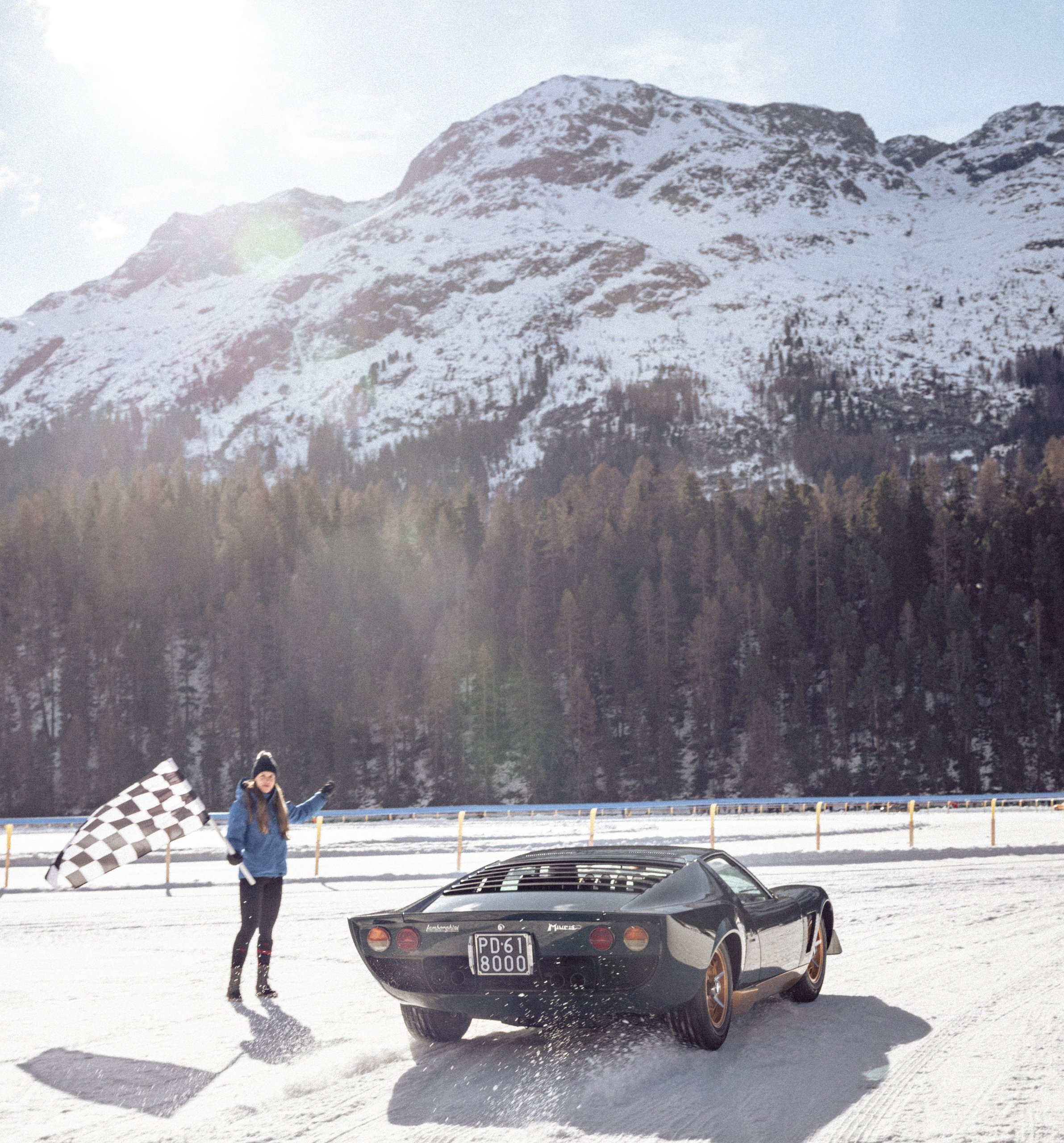
Chassis number 4302 rolled onto the ice alongside a Miura P400 SV and a Countach LP400, but the Millechiodi crystallized the weekend’s real message. Lamborghini says this event marked the official beginning of celebrations for the company’s six decades in business. What made it more than a scenic photo opportunity was the philosophical question sitting under all those rivets: when does a modified classic become historically authentic in the factory’s own eyes?
The answer Polo Storico gave here matters for anyone who tracks the heritage market closely. It suggests that Lamborghini’s official heritage division is willing to certify a car that deviates significantly from its original build sheet, provided the story behind those deviations is compelling, well-documented, and executed at a high level. That posture differs from what most rival programs adopt, and it carries real implications for collectors.

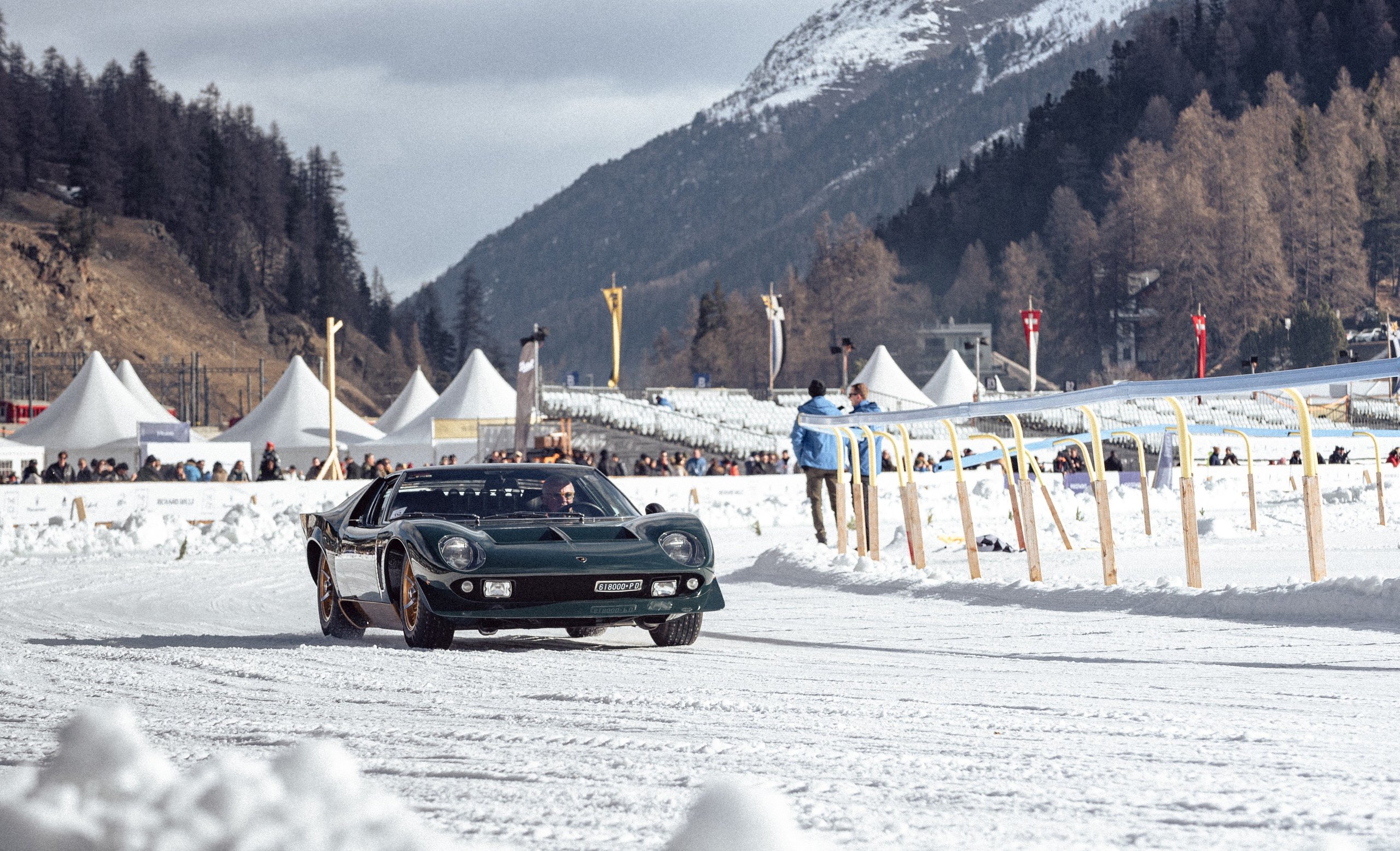
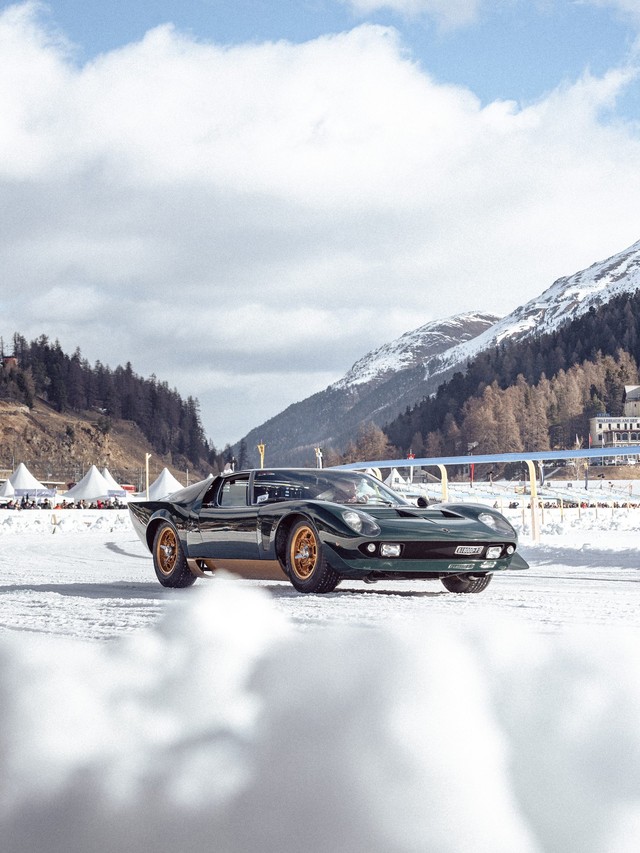
The legendary Lamborghini Miura P400 SVR glides across a snowy track amidst a stunning mountain backdrop.
“Millechiodi”: The Miura Rebuilt in the Spirit of the Lost Jota
The story of chassis 4302 reads like a Lamborghini enthusiast’s fever dream. According to Lamborghini, the car left Sant’Agata Bolognese in November 1969, finished in Blu Notte. It passed through a series of Italian owners before landing, in 1975, with Giovanni Sotgiu and Walter Ronchi. Those two names carry weight in Lamborghini lore: Sotgiu and Ronchi were the owners of Bob Wallace’s original Miura Jota, the one-off test mule Wallace built to conform to FIA Appendix J racing regulations.
The original Jota was destroyed in a road accident in April 1971, before it could reach a new buyer. That loss haunted its former custodians. When Sotgiu and Ronchi acquired chassis 4302, already damaged in a separate accident, they saw an opportunity to rebuild it in the Jota’s image. According to one detailed account, the pair enlisted former Sant’Agata workers, the official Lamborghini agent Achilli Motors of Milan, and former racing driver Franco Galli to transform the P400 S into something far more aggressive. The body panels were joined with so many rivets that the car earned its name organically. The original Blu Notte gave way to Verde Scuro, and the result was a Miura that looked and felt like a period racer, even though it never left the factory that way.
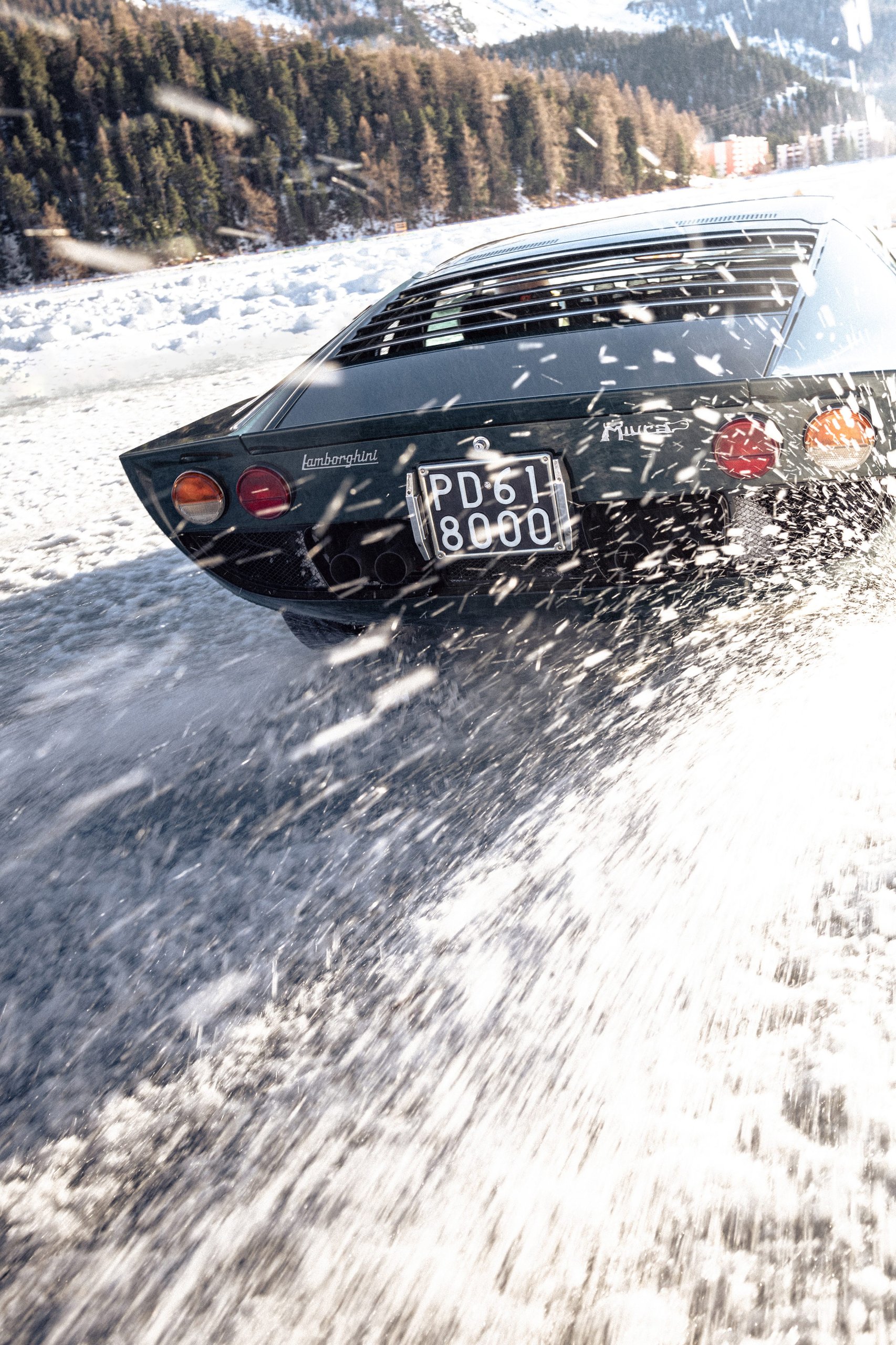
The Millechiodi occupies a category most heritage programs refuse to acknowledge. It is neither a faithful restoration nor a factory-built special. It is a period modification with documented provenance, executed by people with direct connections to both the Jota and the Lamborghini factory itself. The riveted bodywork visible in close-up photographs from St. Moritz confirms the car’s distinctive construction, each fastener a small monument to its owners’ obsession with the lost original.

The unique chrome vent and side window of the Lamborghini Miura P400 SVR reflect the cloudy sky.
Polo Storico’s Certification Logic: When Deviation Becomes Heritage
The Millechiodi was restored in 2018 and certified by Lamborghini Polo Storico in 2020. That certification is the detail that elevates this car from a curiosity into a case study. Polo Storico’s standard process involves verifying the originality and consistency of every detail against historical records, from chassis numbers to bodywork and interior finishes. A car with riveted panels, a non-original color, and extensive structural modifications would normally fail that test.
Alessandro Farmeschi, Lamborghini’s Global After Sales Director, addressed this directly. He acknowledged the difficulty of certifying a car with such “specific deviation” from original specifications, but argued that the modifications were “carried out at a very high level and well-defined within a historical period.” Reversing those changes, he said, would have made no sense.
That logic deserves unpacking. Polo Storico issued what Lamborghini calls a Certification of Historic Authentication, a recognition specifically for vehicles modified during their period of use with ascertained history and historical significance. The distinction matters: this is not Polo Storico pretending the car left the factory with rivets. It is the factory saying that the car’s post-factory life became part of its authentic identity. The Millechiodi’s connection to the Jota, its documented chain of custody, and the quality of the conversion work all contributed to that judgment.
For anyone considering a classic Lamborghini purchase, this sets an important precedent. A Polo Storico certification on a modified car does not mean “factory original.” It means the factory reviewed the car’s complete history and concluded that its current state is the historically correct one. Buyers should understand the distinction, because it affects both the car’s narrative value and its position in the market relative to unmodified examples.
How Lamborghini’s Approach Compares to Ferrari Classiche and Porsche Classic
No competitor’s heritage program covers the Millechiodi story the same way, and that gap reveals something about Lamborghini’s brand character. Ferrari Classiche operates on a strict matching-numbers philosophy. A Ferrari that deviates from its original build sheet typically cannot receive a Red Book certification until it is returned to factory specification. Porsche Classic follows a similar logic, emphasizing fidelity to the original configuration as documented in the Kardex production records.
Lamborghini Polo Storico, inaugurated in 2015, built its program around four pillars: Archive, Certification, Restoration, and Original Spare Parts. The department covers models from the 350 GT through the Diablo, and the number of vehicles it supports grows annually. The Millechiodi certification, though, suggests a fifth, unwritten pillar: narrative. Where Ferrari Classiche asks “does this car match its build sheet?” Polo Storico appears willing to ask “does this car’s story deserve preservation as it stands?”
That is a more subjective standard, and it carries risks. A less scrupulous program could use the same logic to certify poorly documented modifications as “historically significant.” Lamborghini’s credibility here rests on the specificity of the Millechiodi’s provenance: the Jota connection, the named individuals, the documented involvement of factory-adjacent craftsmen. Whether Polo Storico would extend the same flexibility to a car with a murkier history remains an open question.
The practical takeaway for collectors is straightforward. If you own a classic Lamborghini with period modifications and a well-documented story, Polo Storico may be more receptive than you expect. If the documentation is thin, do not assume the Millechiodi precedent applies automatically.

The meticulously crafted V12 engine of a Lamborghini Miura P400S, a masterpiece of automotive engineering.
Iron Dames on Ice: Professional Racers Meet a 1970s V12
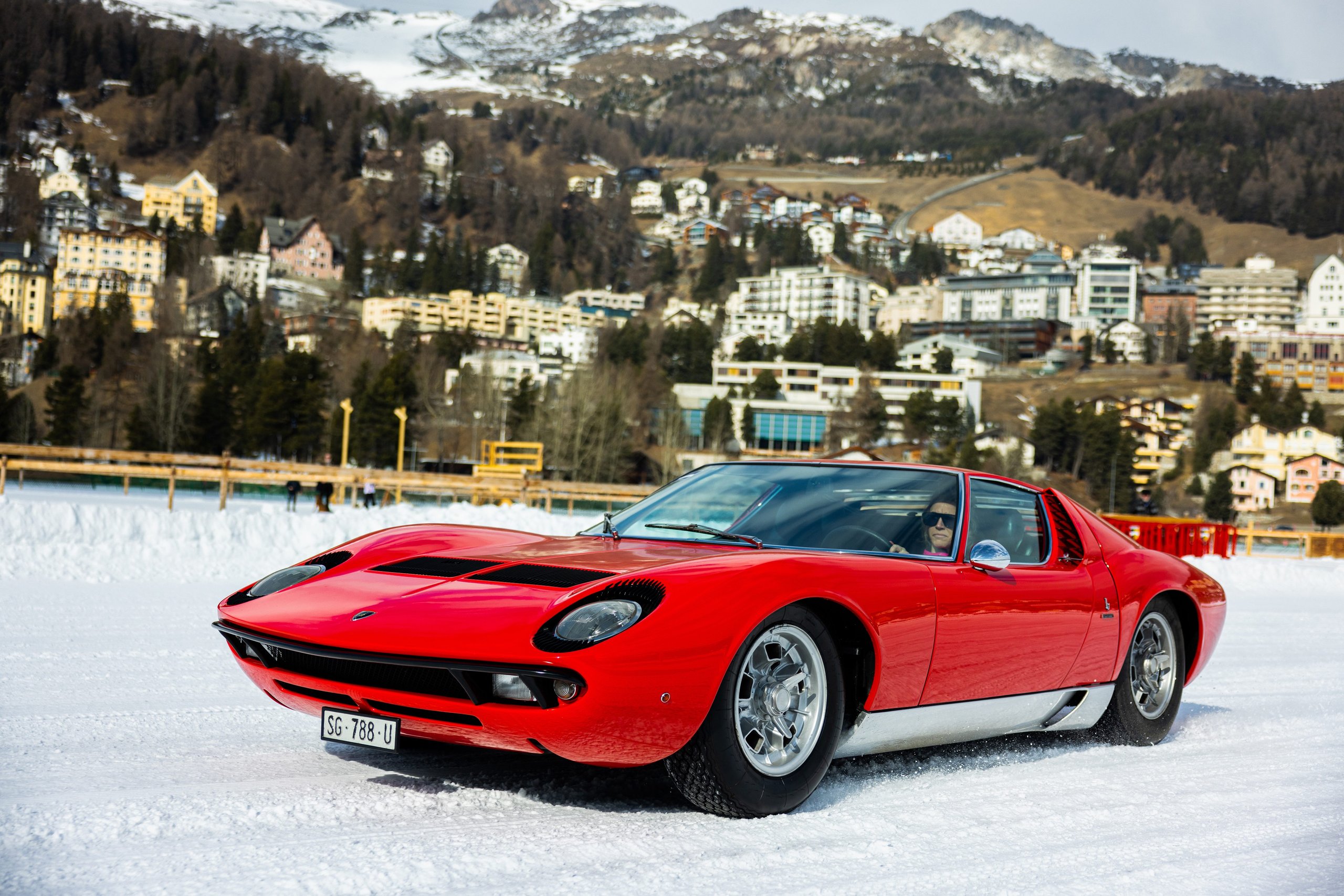
Polo Storico also arranged for the Iron Dames racing team to drive a Miura P400 SV on the frozen lake. Sarah Bovy, Rahel Frey, and Michelle Gatting, fresh from competing in the Huracan GT3 EVO2 at the 24 Hours of Daytona, traded their modern race car for a classic V12 on studded Pirelli tires. Lamborghini positioned the experience as a bridge between its motorsport present and its heritage past, and the photographs from the event show the three drivers in pink racing suits alongside a pair of red Miuras and a Countach LP400 on the snow.
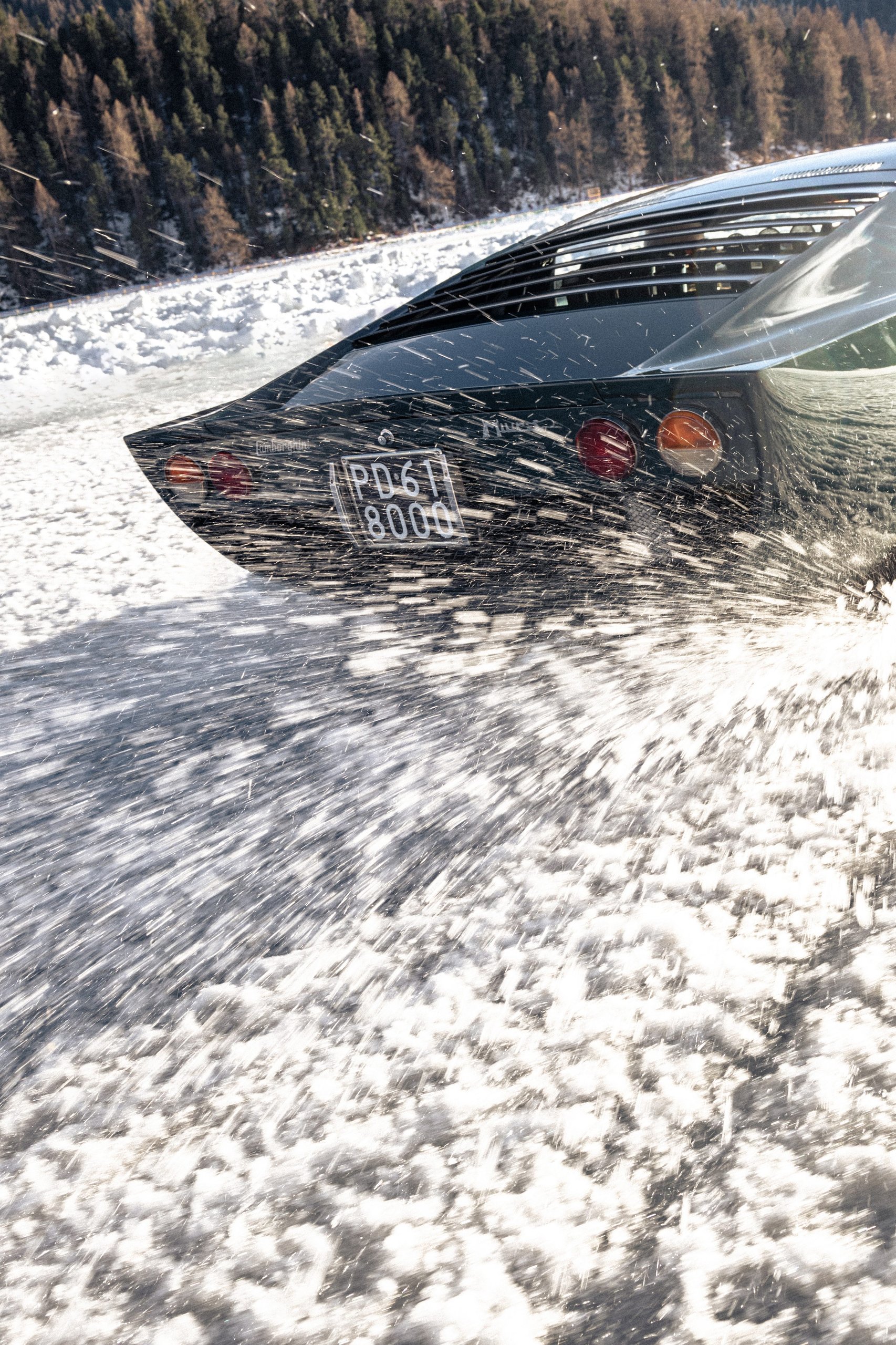
The ice-driving element served a dual purpose. For the Iron Dames, it was a visceral introduction to the car that started the mid-engine supercar lineage their GT3 race car descends from. For Lamborghini, it produced imagery that no studio shoot could replicate: professional women drivers wrestling a 50-year-old V12 across a frozen Alpine lake. The studded tires visible in detail shots from the event confirm the cars were genuinely driven, not merely rolled into position for photographs.
THE ICE occupies a specific niche on the concours circuit. Held on the frozen lake where snow polo normally takes place, it attracts a collector audience that overlaps heavily with the buyers Polo Storico serves. Staging the 60th-anniversary kickoff here, rather than at a traditional motor show, signals where Lamborghini sees its heritage division’s natural audience: among the kind of collectors who bring seven-figure cars to the Swiss Alps in February and expect to drive them. That willingness to use classics rather than merely display them connects directly to the Millechiodi’s own story, a car whose identity was forged through use, modification, and the refusal to treat a Miura as untouchable.

Three women in vibrant pink suits pose with iconic red Lamborghini Miura and Countach models on a pristine snowy landscape.
Polo Storico’s Role in Lamborghini’s Next Chapter
Lamborghini says the 60th-anniversary program will continue in September with a dedicated Polo Storico Tour reserved for classic Lamborghini cars in Italy. The department itself reaches its own tenth anniversary in 2025, and the company plans a series of events for collectors, customers, and media to mark that milestone as well.
As Lamborghini’s current production lineup shifts toward hybrid powertrains with the Revuelto and Temerario, the heritage division becomes an increasingly important custodian of the brand’s naturally aspirated, mechanically pure identity. Polo Storico is the department that keeps the V12 Miuras, the carbureted 350 GTs, and the early Countachs not just alive but active, documented, and certified. In a market where classic supercar values reward provenance above almost everything else, that function carries real commercial weight.
The Millechiodi’s appearance at St. Moritz added a new dimension to that role. By certifying a car whose identity was shaped as much by its post-factory life as by its original build, Polo Storico made an argument that Lamborghini’s heritage is not a museum exhibit. It is a living record, one that accommodates the passions, accidents, and ambitions of the people who owned these cars. For a brand built on defiance and individuality, that feels exactly right.
The three red Lamborghinis lined up on the snow, a Miura SV, a Countach LP400, and a Miura P400 S, traced a visual arc from the late 1960s through the mid-1970s. The green Millechiodi, parked nearby with its rivets catching the Alpine light, told a different kind of story. Not one of factory perfection, but of what happens when the right people refuse to let a legend die.

A stunning trio of classic red Lamborghinis, including the Miura SV, Countach LP400, and Miura P400S, grace a snowy landscape.
Gallery