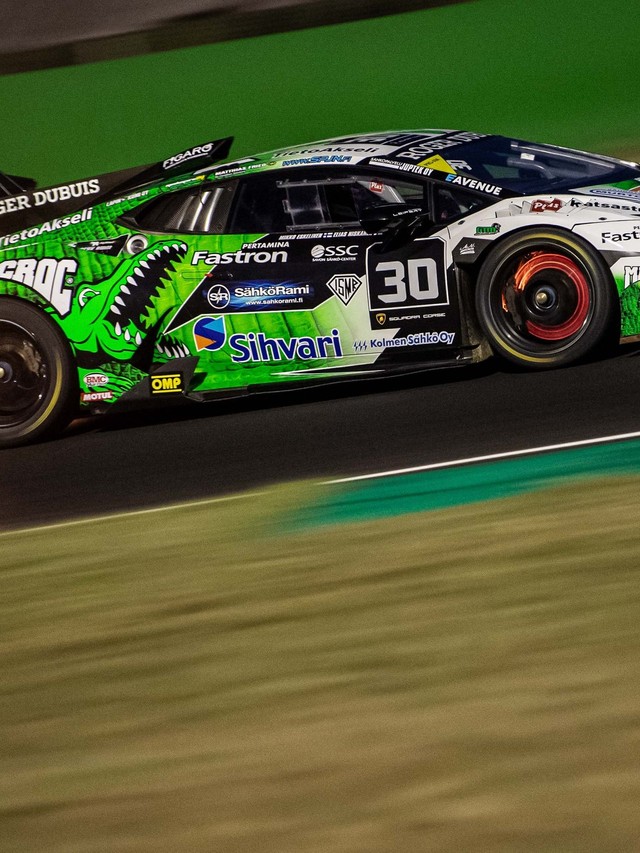
Where Racing Meets the Lamborghini Lifestyle
A 21.580-second winning margin in a single-make race series is not supposed to happen. Every Lamborghini Huracán Super Trofeo LP 620-2 on the grid at Road America carried the same naturally aspirated V10, the same rear-drive layout, the same aerodynamic package. When Shinya Michimi crossed the finish line that far ahead of Brandon Gdovic in Round 6 of the Blancpain Super Trofeo North America, the gap said nothing about the car and everything about the driver, the team, and the broader ecosystem Lamborghini has built around this championship.
That ecosystem is the real story of the Road America weekend. Lamborghini brought two products to the 4.048-mile, 14-turn circuit: a competitive race and a curated hospitality event for dealer clients and prospective buyers. The 50-minute sprint headlined the schedule, but the paddock was equally busy with IMSA Hot Lap Experiences, where guests rode shotgun in a Lamborghini at speed around one of America’s most demanding road courses. The racing validates the hardware. The hospitality sells the dream. And the two feed each other in ways that a standard track day or a standard race weekend, taken alone, cannot replicate.
The Super Trofeo series launched in 2009 as Lamborghini’s first dedicated one-make championship, initially fielding Gallardo-based race cars in Europe before expanding to Asia in 2012 and North America in 2013. By 2016, the series ran Huracán machines across three continents, with an annual World Final bringing regional champions together. The Blancpain partnership was instrumental in establishing the series’ prestige; according to one report, Blancpain’s CEO Marc Hayek even competed as a driver in the inaugural season, a detail that underscores how deeply the watchmaker invested in the program’s identity.
Michimi’s 21-Second Margin and What It Proved
Michimi secured his fourth victory of the 2016 season in the No. 1 Prestige Performance entry representing Lamborghini Paramus, and the race unfolded in stages that rewarded both aggression and patience. Cedric Sbirrazzuoli, a Lamborghini Squadra Corse GT3 Junior Program driver, led from pole and held Michimi in close formation through the opening 15 minutes. After Michimi’s earlier failed outside pass at Turn 5, Sbirrazzuoli got loose through Turn 1 two laps later, and the door opened. Michimi took the lead and pitted immediately when the mandatory stop window opened, a strategic call that paid off when Sbirrazzuoli’s co-driver Larry DeGeorge emerged from the pits barely ahead. Michimi needed only half a lap to reclaim the position and then drove away.
“My gap kept getting a bit bigger. I was just in a good rhythm and for the last lap I decided to just turn it up a bit and see if I could best my best lap. The car was really good.”
In a series where the car is equalized, the phrase “the car was really good” is really about setup, tire management, and the team’s ability to extract everything from a known platform. Michimi has been the dominant force in the 2016 North American season, and his consistency speaks to the kind of preparation that separates front-runners from the rest of the field in customer racing. That separation, visible in a gap measured in tens of seconds rather than tenths, is precisely what makes the Super Trofeo a credible proving ground rather than a parade.

Two Lamborghini Huracán Super Trofeo race cars navigate a turn on the track during a Blancpain Super Trofeo North America event.
The GT3 Junior Program: Lamborghini’s Talent Pipeline
Sbirrazzuoli’s presence on the grid illustrates one of the Super Trofeo’s less obvious functions: it operates as a feeder system for Lamborghini’s higher-tier motorsport ambitions. Squadra Corse identifies promising young drivers, embeds them in the Super Trofeo field, and uses the series as a proving ground before potential promotion to GT3 competition. The structure gives Lamborghini something most supercar manufacturers struggle to build organically: a pipeline of drivers who know the brand’s cars intimately before they ever climb into a GT3 cockpit.
Sbirrazzuoli led the opening laps at Road America and ran competitively against the season’s most successful driver, which is exactly the kind of pressure-testing the program is designed to provide. The fact that he was paired with gentleman driver DeGeorge for the mandatory driver change adds another layer: Junior Program drivers learn to share a car, manage tire degradation across stints, and communicate with co-drivers whose pace and priorities differ from their own. These are not skills you develop in a simulator.
Looking ahead, this pipeline becomes even more significant. The Temerario GT3, noted as Lamborghini’s first competition car to be fully designed, developed, and built in-house, represents a generational shift in Squadra Corse’s approach. Drivers who cut their teeth in the Super Trofeo’s current Huracán-based series will be the candidates to race that new machine. The investment Lamborghini makes in programs like the GT3 Junior effort is, in practical terms, an investment in having experienced, brand-loyal drivers ready when the next platform arrives.
The Rest of the Grid: Pro-Am, Amateur, and Lamborghini Cup
Behind Michimi’s runaway victory, the battles for the remaining podium positions were considerably tighter and arguably more representative of what makes customer racing compelling. Trent Hindman took over the No. 10 Prestige Performance car from teammate Craig Duerson in sixth position and methodically picked off the cars ahead. With ten minutes remaining, Hindman sat ten seconds behind Gdovic. That gap shrank to 1.645 seconds with five minutes left, and by the white flag Hindman filled Gdovic’s mirrors. Gdovic held on to claim second overall and the Pro-Am division win for DAC Motorsports representing Lamborghini Palm Beach. Hindman and Duerson settled for third overall and second in Pro-Am, following up their Round 5 victory.
Richard Antinucci and Brian Thienes earned their second Pro-Am podium of the weekend in the No. 17 US RaceTronics entry representing Lamborghini Beverly Hills. In the Amateur division, Damon Ockey extended his championship points lead with a third class win of the season, holding off Josh Norman, who was competing as a solo entrant for the first time. Ross Chouest continued a remarkable streak in Lamborghini Cup, taking his sixth consecutive class victory in the No. 3 DXDT Racing entry representing Lamborghini Miami.
Every entry on the grid carries a dealer affiliation, from Lamborghini Paramus to Lamborghini Carolinas to Lamborghini Calgary. This is not incidental branding. The dealer network is woven directly into the series’ commercial fabric, giving individual dealerships a visible, competitive presence that reinforces their relationship with racing-inclined clients. When Gdovic wins for Lamborghini Palm Beach or Chouest wins for Lamborghini Miami, those results ripple back through the showroom in ways no billboard can match.
Hot Laps and Hospitality: The Business Case for Trackside Access
The IMSA Hot Lap Experience offered to dealer guests at Road America is a deceptively simple concept: put a prospective or existing owner in the passenger seat and send them around a world-class circuit at speed. No showroom demonstration, configurator session, or test drive on public roads can approximate the sensory impact of a hot lap through Road America’s Carousel or the Kink.
Lamborghini does not publish detailed breakdowns of what the VIP hospitality entails at every round, but the broader Super Trofeo program, particularly at the annual World Final, is known to include dedicated lounge areas, grid walks, and Italian catering alongside the passenger rides. The format positions the series as something closer to a private club event than a conventional race weekend, and that distinction is deliberate. Lamborghini and title sponsor Blancpain staged what the company describes as world-class hospitality for clients and dealer guests, turning a regional racing round into an immersive brand event.
Competitor programs exist in this space. Ferrari runs the Ferrari Challenge, Porsche operates the Carrera Cup, and both offer their own hospitality packages. What separates Lamborghini’s approach, at least in principle, is the integration: the same weekend that showcases the car’s competitive capability also functions as a client acquisition and retention event, with the dealer network directly involved through team sponsorships and guest invitations. Whether Lamborghini executes this better than its rivals on any given weekend is debatable, but the structural ambition is clear. The Super Trofeo is designed to make the distance between “I own a Lamborghini” and “I race a Lamborghini” feel shorter than it actually is.
The Huracán Super Trofeo’s Place in a Changing Lineup
The LP 620-2 designation on these race cars carries a specific message: 620 metric horsepower, rear-wheel drive. The road-going Huracán launched as the LP 610-4, meaning all-wheel drive. Stripping the front axle for the racing variant was a deliberate engineering choice, prioritizing the kind of adjustable, driver-dependent handling that reveals talent differences in a one-make field. It also made the car lighter and mechanically simpler, which matters when dozens of customer teams need to maintain these machines across a full season.
The Huracán’s naturally aspirated 5.2-liter V10 defined an era of Lamborghini customer racing. As Autoblog noted in a feature on a street-titled Super Trofeo car, the platform spawned track-focused variants from the Performante to the STO to the dedicated race machines. The Super Trofeo sat at the extreme end of that spectrum: a car you could not register for road use (Michigan title loopholes notwithstanding) but one that gave paying customers access to genuine racing infrastructure.
The Huracán was succeeded by the plug-in hybrid Temerario in 2024, and the Temerario GT3 represents the next chapter for Squadra Corse’s competition efforts. For buyers and collectors watching the Super Trofeo, the practical takeaway is straightforward: the naturally aspirated V10 racing Huracán occupies a specific, non-repeatable moment in Lamborghini’s history. The series moves forward with hybrid power and in-house engineering. What came before, the raw simplicity of a rear-drive V10 race car built for a single-make grid, will not come around again.
The series was scheduled to continue at VIRginia International Raceway from August 26 through 28, the only circuit to host the North American championship in all of its first four seasons. For Lamborghini, the venue continuity reinforced the series’ identity as a fixture on the American racing calendar rather than a traveling promotional exercise.


