Ten Rounds Done, Everything Still on the Line
By mid-September 2018, the Lamborghini Super Trofeo North America series had completed its first ten rounds across American circuits, and the championship picture was almost unreasonably tight. Two class titles were already settled. Two more, plus the team and dealer championships, remained wide open, all of it funneling toward the Autodromo Vallelunga Piero Taruffi, the nine-turn circuit north of Rome that would host Rounds 11 and 12 before rolling straight into the 2018 World Final from November 15 to 18.
The margins told the story better than any narrative could. In the team standings, Change Racing held a single point over US RaceTronics, with P1 Motorsports lurking just four points further back. The PRO class gap sat at seven points. The AM class, six. Numbers like these could evaporate in a single corner incident or a botched pit stop, and everyone involved knew it. What made the 2018 season so compelling was not any one battle but the way every open championship converged on the same weekend, turning Vallelunga into a pressure cooker where consistency, racecraft, and nerve would matter far more than outright speed.
PRO Class: Consistency Against Momentum
Corey Lewis and Madison Snow, piloting the No. 29 Change Racing entry representing Lamborghini Charlotte, led the PRO class by seven points heading to Italy. The curious detail: they won the first two races of the year and never stood on the top step again. Instead, they ground out four second-place finishes in the last five rounds, building their advantage through relentless consistency rather than outright pace.
Behind them, two crews were tied for second and carried very different momentum. Taylor Proto and Edoardo Piscopo (No. 50 US RaceTronics, Lamborghini Beverly Hills) owned the most wins of the group with four, but a failure to finish Round 10 cost them dearly and dropped them into a share of second place. Brandon Gdovic and Shinya Michimi (No. 46 PPM, Lamborghini Palm Beach) had only one victory on the season but scored double-digit points in eight of ten rounds. Jonathan Cecotto and Trent Hindman, running the No. 1 Wayne Taylor Racing car for Lamborghini Paramus, sat fourth with three wins and 95 points. Any of these pairings could still take the title with a strong Vallelunga weekend, which is precisely the kind of scenario one-make racing is designed to produce: when the cars are mechanically identical, the championship rewards racecraft and program management as much as raw speed.
AM, PRO-AM, and LB Cup: Settled and Unsettled
Ryan Hardwick, driving the No. 2 Dream Racing Motorsport entry for Lamborghini Atlanta, carried a six-point AM class lead into Italy. Four wins and nine podiums in ten rounds gave him the kind of season that looks dominant on paper but felt fragile in practice. Canadian Damon Ockey of US RaceTronics, Lamborghini Calgary, had closed the gap after a strong run at WeatherTech Raceway Laguna Seca, and he had already beaten Hardwick by two or more positions twice during the season. Brian Thienes, with two wins in the last four rounds, trailed by 21 points, making him a long shot but not mathematically eliminated. Like the PRO class, the AM fight reinforced the season’s central theme: no lead felt safe.
The PRO-AM class, by contrast, belonged to JC Perez and Loris Spinelli. The No. 71 P1 Motorsports, Lamborghini Broward duo clinched their title at Laguna Seca with eight wins in ten rounds. Perez had won the LB Cup the previous year, making this a clear step up in class. Mark Proto and Parris Mullins (No. 88 US RaceTronics, Lamborghini La Jolla) locked down the LB Cup championship with five wins and a podium in every single round. Sheena Monk of Wayne Taylor Racing sat second in LB Cup, one point ahead of Brett Meredith of P1 Motorsports.
The Dealer Championship and Team Title: Bragging Rights with Real Stakes
Lamborghini’s dealer championship is one of those features that separates the Super Trofeo from most rival one-make series. It ties dealership identity directly to on-track results, giving showroom staff a reason to follow the racing and giving customers a tangible connection between where they buy their car and where it competes. In 2018, Lamborghini Beverly Hills led Lamborghini Broward by five points, with Lamborghini Paramus in third. Beverly Hills claimed the most race wins of any dealer with three.
The team championship was tighter still, and it crystallized everything the season had been building toward. Change Racing’s one-point margin over US RaceTronics, with P1 Motorsports only four points back, meant all three organizations could realistically win the title at Vallelunga. For the teams, this kind of exposure matters beyond trophies. A strong Super Trofeo result builds credibility for attracting future customer drivers and sponsorship, making the final two rounds a business decision as much as a sporting one. That a single point separated the top two teams after ten hard-fought rounds was not a fluke; it was the natural product of a series structured to keep competition honest.
The Huracán Super Trofeo: The Machine Behind the Drama
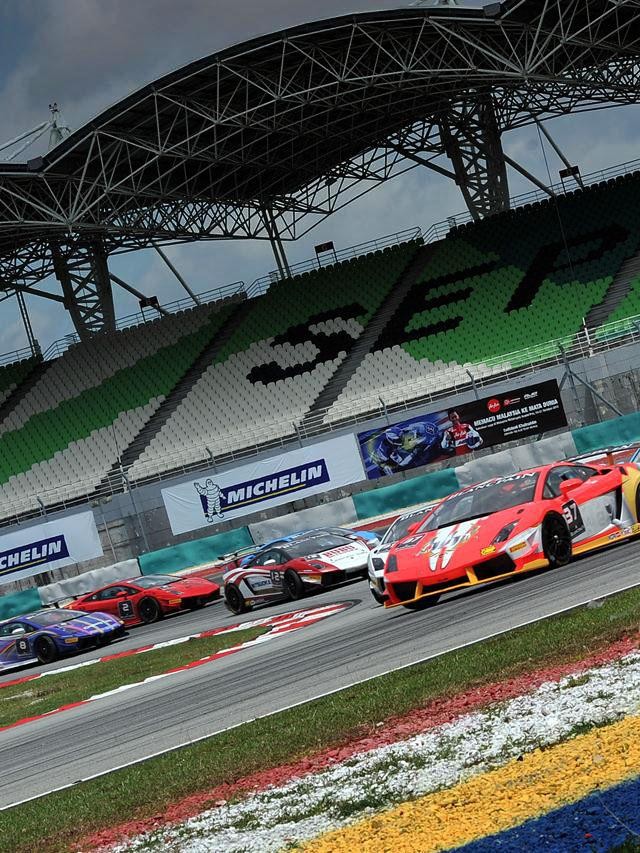
Every car on the 2018 grid ran the Huracán LP620-2 Super Trofeo, a machine built on the road-going Huracán LP610-4 platform but stripped and reconfigured for pure competition. The 5.2-liter naturally aspirated V10 produced 620 horsepower and drove the rear wheels only through a six-speed sequential gearbox. Dry weight sat at 1,270 kg (2,800 lb). The frame used a hybrid carbon and aluminum construction, and the car featured racing ABS and traction control systems calibrated for circuit use.
The rear-wheel-drive layout deserves attention. While road-going Huracáns typically sent power to all four wheels, the Super Trofeo stripped away that safety net. For driver development, this mattered enormously. Drivers who learned car control in a 620-horsepower, rear-drive V10 on racing slicks developed skills that translated directly into GT3 competition and beyond. In this way, the mechanical equality that produced the season’s impossibly close points battles also served a deeper purpose: the Super Trofeo functioned as Lamborghini’s finishing school for aspiring professional racers, and the identical machinery ensured that talent, not equipment, determined who graduated.
From 2018 to Now: The Super Trofeo’s Place in Lamborghini’s Motorsport Story
Viewed from today, what stands out about the 2018 season is how clearly it demonstrated the Super Trofeo’s role as a proving ground for Lamborghini’s broader motorsport ambitions. The series, which debuted in North America in 2013, gave Squadra Corse a structured pathway: customer drivers entered the one-make series, developed their skills in identical machinery, and the best graduated to GT3 and endurance racing programs. Multiple sources indicate that the Temerario Super Trofeo was unveiled in May 2026 as the next-generation car for the category, marking the transition from naturally aspirated V10 power to the twin-turbo V8 hybrid architecture.
The 2018 season snapshot captures the Huracán era at full maturity. The grids were competitive, the dealer involvement gave the series a grassroots commercial energy, and the World Final at Vallelunga brought North American, European, and Asian champions together on the same track. According to Autoblog, the Huracán Super Trofeo platform remains desirable enough that individual cars still surface on the collector market years later, sometimes with creative solutions for road registration.
The Super Trofeo remains the entry point into Squadra Corse’s ecosystem, and the competitive intensity visible in 2018’s one-point team championship battle continues to define the series. Whether the Temerario-based car preserves the same grassroots energy will depend on how well Lamborghini manages the transition from a naturally aspirated icon to a turbocharged hybrid successor. The 2018 season, with its razor-thin margins and clear driver pathways, set a standard that the next generation will be measured against.
Gallery


