The First Series-Produced Open-Top Superveloce Arrives at Monterey
Lamborghini chose The Quail, A Motorsports Gathering, to pull the covers off the Aventador LP 750-4 Superveloce Roadster during Monterey Car Week in August 2015. No previous series-produced Lamborghini had worn the Superveloce badge on an open-top body, and the 500-unit worldwide production cap made the point unmistakable: this car existed for the fraction of the brand’s clientele that wanted the stripped-back, track-focused intensity of the SV coupe without a roof, and without apology.
The venue was deliberate. Monterey Car Week concentrates the world’s most active supercar buyers in a single California zip code for a few days each August, so debuting a $530,075 limited-production roadster at The Quail put the car directly in front of the people most likely to sign a build sheet before the champagne went flat. Stephan Winkelmann, then President and CEO, framed the Roadster as a commitment to satisfying Lamborghini’s most passionate clients with driving dynamics and open-air sensation combined. The subtext was clearer: the coupe’s 600-unit run had proved that appetite for extreme, naturally aspirated V12 performance showed no sign of cooling, and the Roadster was the logical next step toward delivering that experience with nothing between the driver and the engine note but open sky.
Engineering the Superveloce Promise Without a Roof
Chopping the roof off a supercar and calling it done is a recipe for structural compromise. The SV Roadster’s engineering story centers on what Lamborghini refused to sacrifice in pursuit of the open-air experience. The full carbon fiber monocoque carries over from the coupe, and the company says the car’s dry weight lands at 1,575 kg, 50 kg lighter than the standard Aventador LP 700-4 Roadster. Paired with the 50 hp bump to 750 hp from the naturally aspirated 6.5-liter V12, that yields a power-to-weight ratio of 2.1 kg/hp.
The chassis hardware reads like the coupe’s spec sheet copied verbatim: adaptive Magneto Rheological Suspension, a pushrod damping system, Lamborghini Dynamic Steering, and the Haldex Generation IV all-wheel-drive system feeding power through the 7-speed ISR transmission. Lamborghini says the car reaches 100 km/h in 2.9 seconds and exceeds 350 km/h flat out. Those numbers shadow the coupe so closely that the Roadster’s real achievement is structural: maintaining that level of dynamic confidence with an open top.
The removable hardtop itself uses RTM and Forged Composite carbon fiber, split into two panels that each weigh less than six kilograms. Both pieces stow in the luggage compartment. Light enough to handle solo, engineered precisely enough to complement the monocoque’s stiffness when installed, the solution is deliberately analog in an era when competitors lean on complex folding mechanisms. The weight savings speak for themselves.

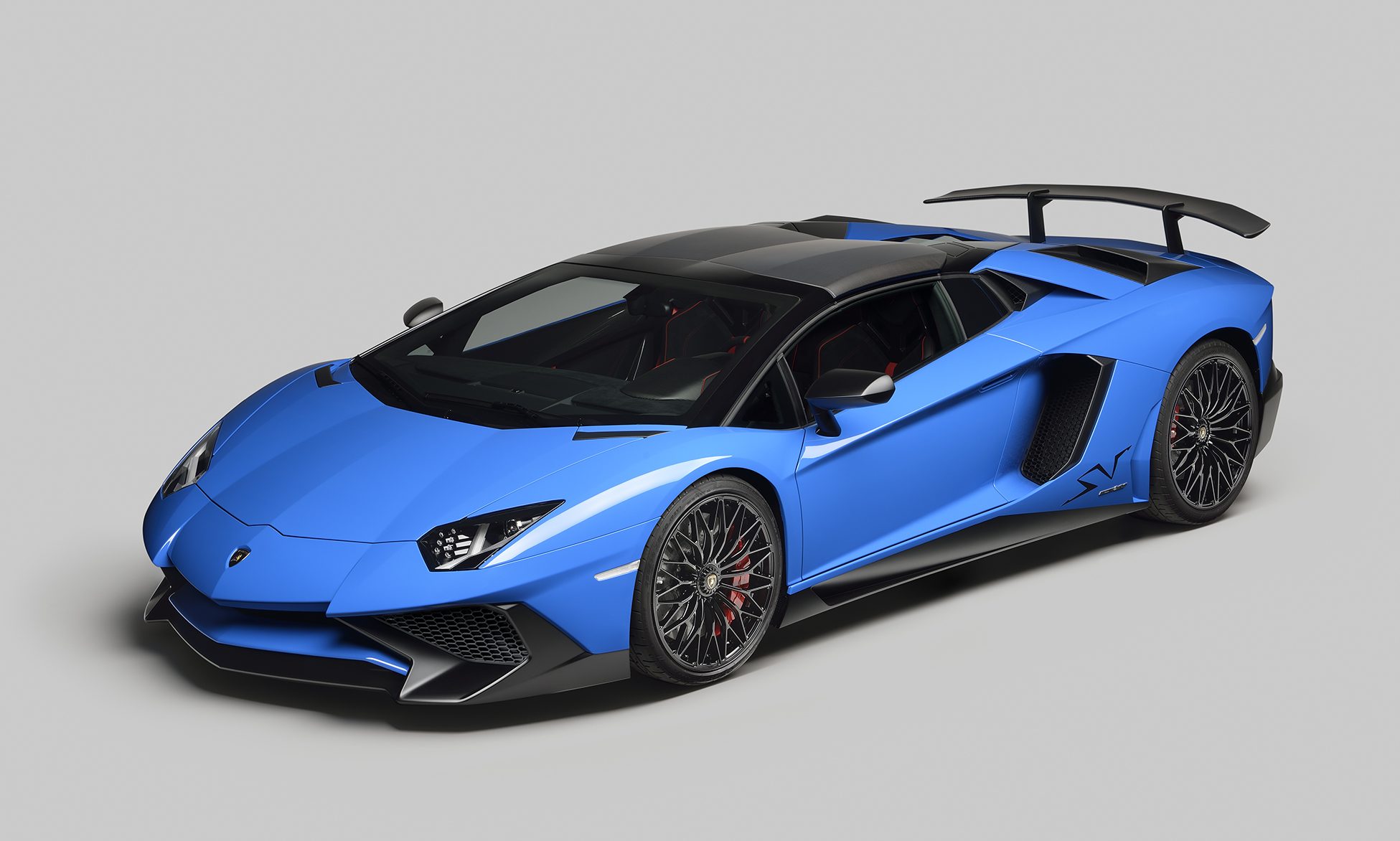
The sleek side profile of the blue Lamborghini Aventador LP 750-4 Superveloce Roadster highlights its aerodynamic form.
The Power Rear Window and Why the Roadster Sounds Different
At 8,400 rpm the 6.5-liter engine produces its full 750 hp, and the naturally aspirated character means the power delivery is linear, predictable, and accompanied by a soundtrack no turbocharger can replicate. In the coupe, that sound is magnificent but contained. The Roadster was engineered to let it loose.
The power rear window is the detail that separates this car from a simple roof-delete exercise. When lowered, it channels the engine’s intake and exhaust harmonics directly into the cabin. Lamborghini describes the result as “free-flowing engine sound” filling the cockpit, and multiple automotive journalists corroborate the claim. Car and Driver characterized the SV as “brash, unreserved, and charismatic, yet also very well-made and seemingly indifferent to a sound flogging.” That assessment applies doubly with the rear glass down and the roof panels stowed.
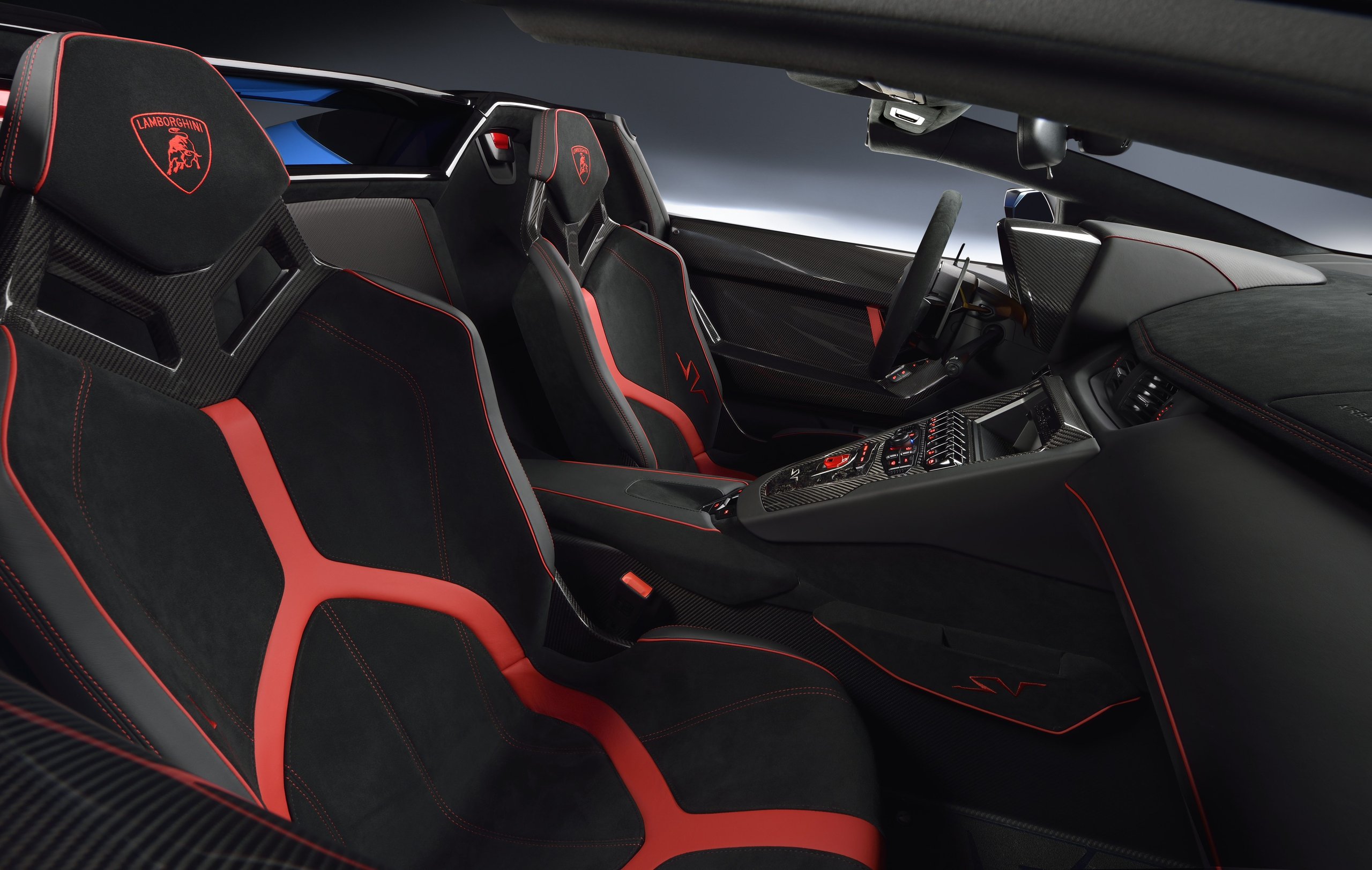
The interior reinforces the same philosophy. Carpet, sound deadening, USB ports, Bluetooth phone pairing, and cruise control are all absent. This is not an oversight; every deleted comfort feature reduces weight and removes a barrier between driver and machine. The cabin, finished in Carbon Skin with exposed carbon fiber throughout, features a yellow-dominated TFT instrument cluster with integrated shift lights and an on-screen G-force meter. It communicates a single priority: this car is a driving instrument first, and the open top exists to amplify that experience rather than soften it.

The driver-focused cockpit of the Aventador SV Roadster features a digital display, carbon fiber, and red accents.
Where the SV Roadster Sits in the Aventador Lineage
The Superveloce badge carries weight at Sant’Agata. Before the Aventador SV, the last production car to wear it was the Murciélago LP 670-4 SuperVeloce, a car that signaled the absolute limit of that platform’s development. By extending the tradition into open-air territory for the first time in a series-production model, the SV Roadster established a template Lamborghini would revisit with the Aventador SVJ Roadster and, ultimately, the Aventador Ultimae Roadster, which CarBuzz described as “the perfect goodbye” to the naturally aspirated V12 era.
Viewed through the lens of what followed, the SV Roadster occupies a specific and increasingly valuable place in the lineage. It arrived before the Aventador S refinements, before the SVJ’s aero-vectoring complexity, and well before electrification entered the conversation with the Revuelto. For collectors, it represents the purest expression of the mid-cycle Aventador’s performance philosophy: more power, less weight, no hybrid assist, no active aero beyond the fixed rear wing. Forum discussions among Aventador owners consistently reflect an emotional attachment that later, more sophisticated variants do not automatically replicate. A recurring theme on enthusiast boards is that the SV’s rawness gives it a character distinct from the more polished S and SVJ models, and the Roadster version concentrates that rawness by adding the visceral dimension of open air.

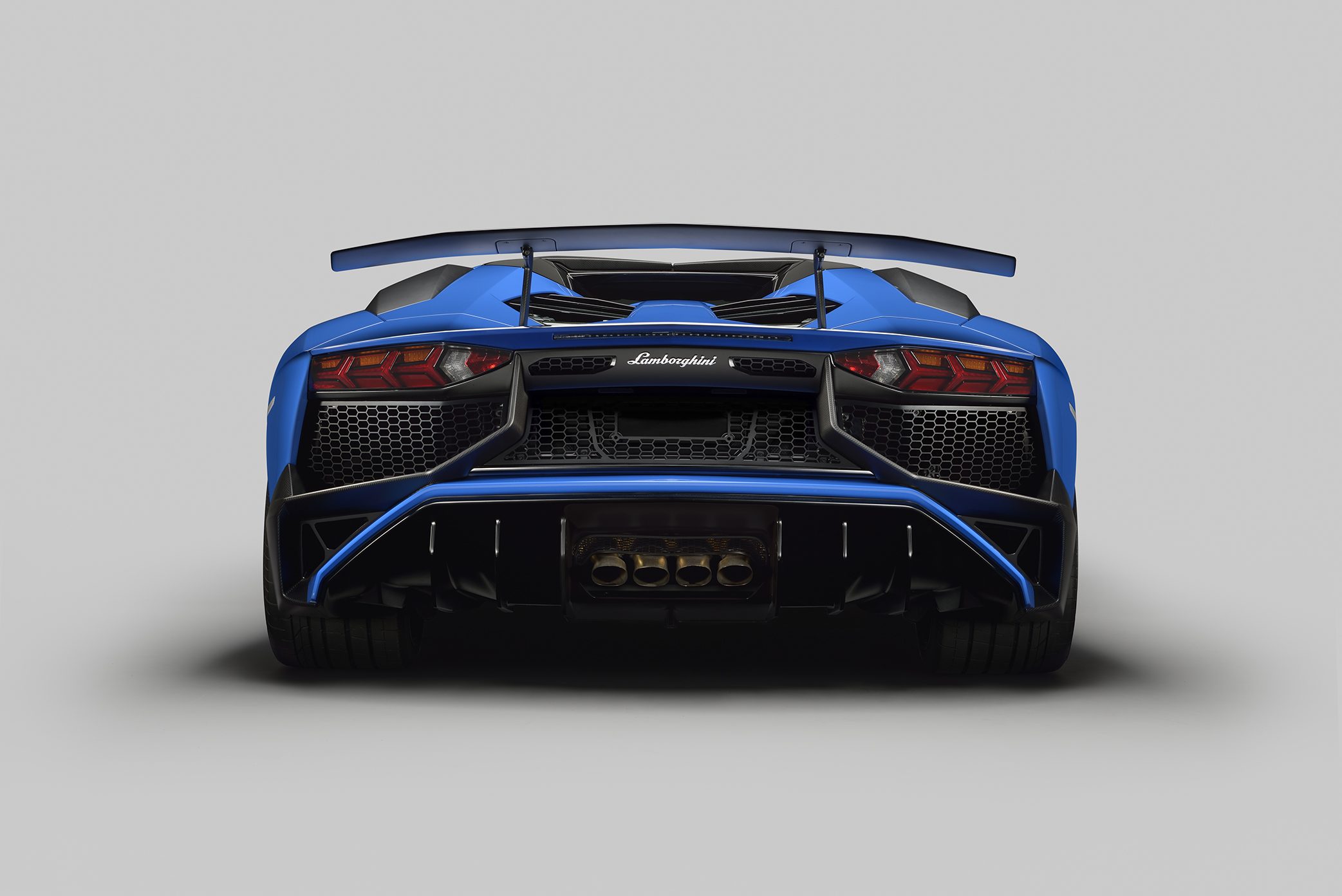
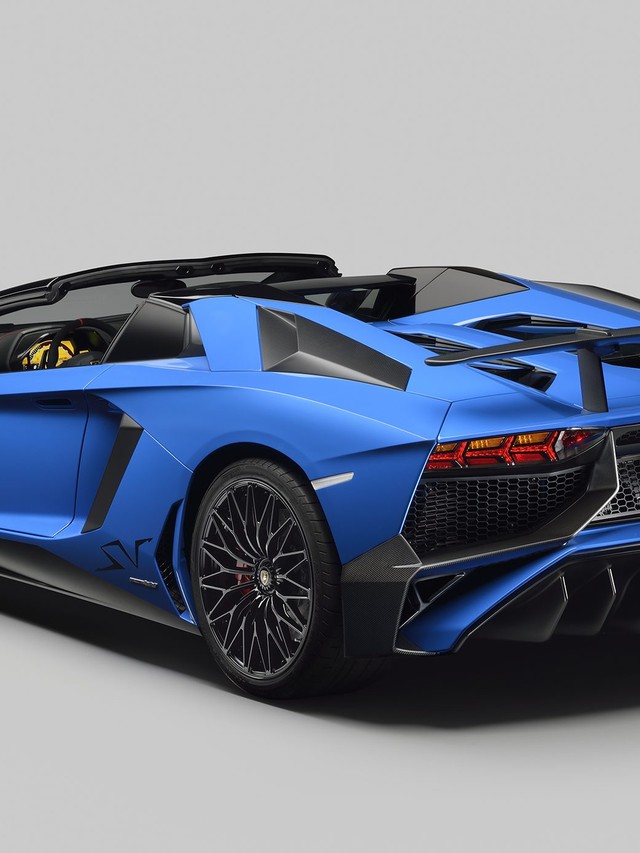
The open-top blue Lamborghini Aventador LP 750-4 Superveloce Roadster reveals its powerful rear and interior details.
Competitive Context: The Naturally Aspirated Argument
By 2015 the extreme open-top supercar segment was becoming a battlefield. Ferrari’s 458 Speciale A had already demonstrated that Maranello could strip a Spider to near-coupe performance levels, and McLaren’s 675LT Spider was arriving with twin-turbo ferocity. Both were formidable, but neither carried a naturally aspirated V12 with the SV Roadster’s displacement or character.
That distinction matters more now than it did at launch. Turbocharged engines dominate the current supercar landscape, and Lamborghini’s own lineup reflects the shift: the Revuelto pairs its V12 with three electric motors, while the Temerario uses a twin-turbo V8. The SV Roadster belongs to a generation where 750 hp came exclusively from combustion, with no electric fill and no forced induction. For buyers who prioritize throttle response and acoustic drama over peak torque numbers, that engineering philosophy remains the core appeal, and the open top turns it into something closer to a sensory event than a specification advantage.

The powerful rear design of the blue Lamborghini Aventador LP 750-4 Superveloce Roadster features a prominent wing.
Pricing, Production, and What Collectors Should Know
Lamborghini confirmed base pricing of €357,000 (excluding VAT) or $530,075 MSRP for the U.S. market, with deliveries beginning in early 2016. Production was capped at 500 units worldwide. At launch, that price positioned the SV Roadster firmly above the standard Aventador Roadster while reflecting the engineering content, exclusivity, and the Superveloce premium.
What Lamborghini did not disclose at the time, and what remains difficult to pin down with precision, is how quickly those 500 allocations were spoken for. Anecdotal evidence from dealer networks and enthusiast communities suggests the production run was effectively sold out well before deliveries commenced, a pattern consistent with Lamborghini’s limited-edition strategy across the Aventador family. On the secondary market today, the SV Roadster’s combination of limited numbers, naturally aspirated V12 power, and its status as the first Superveloce roadster positions it as one of the more collectible modern Lamborghinis. Lamborghini’s Ad Personam program allowed extensive personalization on these cars, meaning no two build sheets are identical, which adds another layer of collector interest for well-specced examples. In every respect, the car delivers on the promise Winkelmann made at The Quail: an immensely emotional driving experience, unfiltered by a roof, built for the 500 buyers who wanted exactly that.

The blue Lamborghini Aventador LP 750-4 Superveloce Roadster is captured from directly above in a pristine studio setting.
Gallery