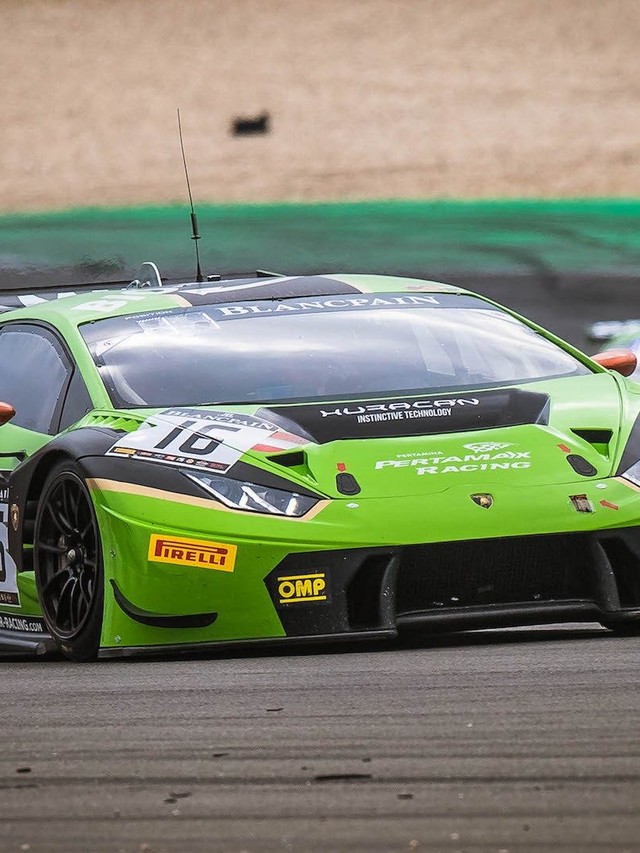
Pole, Lead, Victory: Grasser Racing Owned the Nürburgring Finale
Lamborghini Squadra Corse closed the 2016 Blancpain GT Series Endurance Cup season with a statement that crystallized everything the Huracán GT3 had been building toward: total control of a 54-car field from qualifying through the checkered flag. At the Nürburgring finale on September 18, Grasser Racing Team’s No. 16 Huracán GT3 led the three-hour race from start to finish, delivering the Austrian squad’s first Endurance Cup victory of the year. The sister No. 19 car reinforced the weekend by finishing sixth overall.
The dominance started on Saturday, when Lamborghini GT3 Factory Driver Mirko Bortolotti posted a 1:55.022 in Pre-Qualifying, the fastest time among all 54 entries. He had done the same thing at this circuit the previous year, claiming pole then as well. On Sunday morning, after the first two qualifying sessions were scrubbed due to weather, GT3 Junior Driver Luca Stolz put the No. 19 car on pole in the single remaining session, giving Lamborghini the top qualifying spot for the race.
Bortolotti started fifth on the grid but gained three positions almost immediately, caught the leading No. 19, and took over the front of the field within the opening laps. From that point, the No. 16 crew of Bortolotti, Rolf Ineichen, and Christian Engelhart never relinquished control. Engelhart handled the final stint and defended against a charging WRT Audi R8 LMS with what Lamborghini described as “coldly proficient” defensive driving. The Audi finished second, unable to find a way past.
Paul Miller Racing Adds a COTA Podium to the Momentum
Hours before the Nürburgring victory, the Huracán GT3 delivered results on the other side of the Atlantic, reinforcing the impression that this was no longer a car capable of only isolated flashes of speed. Paul Miller Racing’s No. 48 car, driven by GT3 Junior Driver Madison Snow and Bryan Sellers, finished second in the GTD class at the Lone Star Le Mans, the IMSA WeatherTech SportsCar Championship round held at the Circuit of the Americas in Texas.
The COTA result marked the team’s third podium of the 2016 IMSA season and followed a GTD class win at Virginia International Raceway during the previous round. Two consecutive podiums, including a victory, showed the Huracán GT3 finding genuine consistency in North American endurance racing. For a platform still in its second full season of competition, that kind of reliability mattered as much as outright pace and suggested the car’s competitiveness was structural rather than circumstantial.
The V10 GT3 Platform in Context
Understanding why these results resonated requires appreciating what Squadra Corse built into the car. The Huracán GT3 that Grasser and Paul Miller campaigned in 2016 represented the first generation of Lamborghini’s FIA GT3 contender, constructed on the road car’s aluminum and carbon fiber hybrid chassis. One widely cited source reports that the car was developed in collaboration with Dallara, retained the naturally aspirated 5.2-liter V10 from the street Huracán, and produced 576 HP at 8,000 rpm in its original 2015-specification form, weighing 1,230 kg (2,712 lbs). It ran rear-wheel drive with an automated manual six-speed gearbox, a significant departure from the all-wheel-drive road car.
Squadra Corse kept the naturally aspirated V10 at the heart of the car while stripping away the all-wheel-drive system, a combination that rewarded driver skill and delivered the kind of high-revving, linear power that separated the Huracán from turbocharged competitors in the GT3 field. The adjustable rear wing and front and rear Venturi tunnels gave teams a broad aerodynamic setup window, but the V10’s throttle response and sound remained the car’s signature calling card on any circuit.
The Nürburgring weekend demonstrated something practical about the platform’s versatility, too. Bortolotti’s qualifying pace showed the car could extract a single-lap time good enough to beat 53 rivals, while the race itself proved the Huracán GT3 could manage tire degradation and fuel strategy over three hours. Doing both well at a track as demanding as the Nürburgring GP circuit is a meaningful validation for any customer racing car, and it was exactly the kind of proof point that turned curious teams into committed buyers.
A Global Weekend for Squadra Corse
The Blancpain and IMSA results did not happen in isolation. Lamborghini confirmed that the same weekend saw the Blancpain Super Trofeo one-make series running simultaneously at three circuits: the Nürburgring in Germany, Fuji in Japan, and COTA in the United States. Running a factory-supported customer racing operation across three continents on the same weekend is a logistical exercise that few manufacturers attempt, and it reflects the scale of commitment Squadra Corse was building around the Huracán platform by late 2016.
For prospective customer racing teams evaluating the GT3 market at the time, that global infrastructure mattered. Parts supply, engineering support, and factory driver availability are the unglamorous factors that determine whether a racing platform delivers results season after season. Multiple enthusiast forum discussions from this era reflect mixed sentiment on Lamborghini’s factory support compared to longer-established GT3 programs, but the on-track results at the Nürburgring and COTA showed the car itself was more than competitive when team execution matched the hardware.
What This Win Signaled for the Huracán GT3 Program
The Nürburgring victory and COTA podium closed the 2016 Endurance Cup season on a high note, but the broader significance lay in the trajectory they confirmed. Lamborghini used racing data and operational experience from seasons like this one to develop the Huracán GT3 EVO in 2019, which shifted the aerodynamic balance forward (approximately 40% of downforce on the front axle, up from roughly 33-34% in the original car, according to one report) and upgraded the front suspension arms from steel to billet aluminum. The EVO swept all three titles in the GT World Challenge Europe series during its debut year.
The lineage continued through the GT3 EVO2, based on the Huracán STO, and the platform accumulated what one source describes as 96 titles and 187 race victories across its competitive life. Each of those numbers traces back, in part, to weekends like the 2016 Nürburgring finale, where Grasser Racing proved the original car could win outright against a packed GT3 field.
For Lamborghini followers watching the transition to the Temerario-based next generation of GT3 machinery, the Huracán GT3’s record stands as the benchmark Squadra Corse built over nearly a decade. The naturally aspirated V10 will give way to a twin-turbocharged V8 hybrid architecture, meaning teams will need to adapt to an entirely different powerband, weight distribution, and energy management strategy. Whether the new platform can match the Huracán GT3’s combination of driver accessibility and outright pace remains the open question for Lamborghini’s customer racing future.
Gallery


