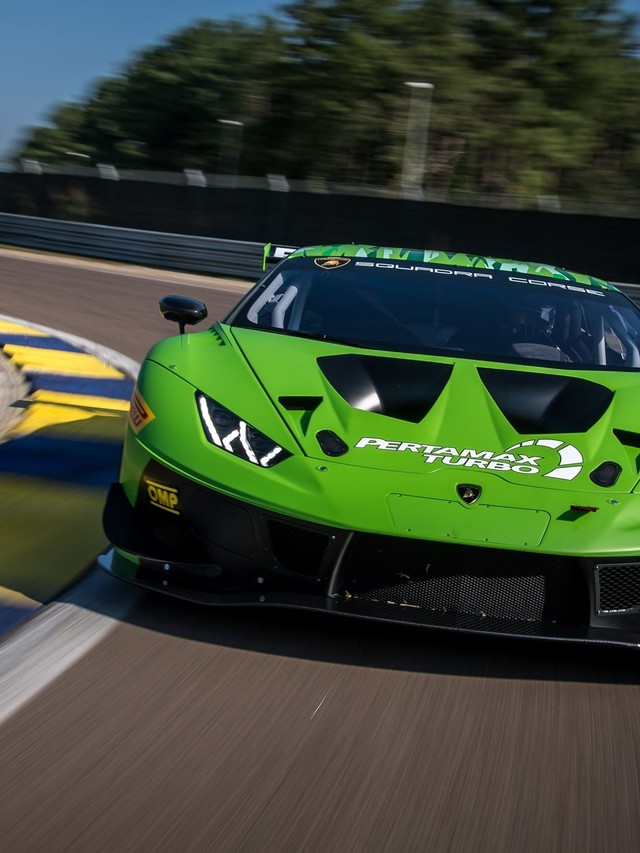
Lamborghini’s Global GT3 Showcase: Paul Ricard and Suzuka in One Weekend
Five Lamborghini Squadra Corse customer teams rolled eight Huracán GT3s onto the 5.7 km Circuit Paul Ricard layout for the official Blancpain GT Series test days in March 2016, and the results told a clear story before the season even started. Barwell Motorsport’s N. 78 car, with official test driver Marco Mapelli at the wheel, posted the fastest lap of the entire two-day test: a 1’56″602 that put Lamborghini at the top of a field that included over 50 GT cars across 14 hours of track time.
On the other side of the world, customer teams Direction Racing and JLOC tested their Huracán GT3s at Suzuka ahead of the SuperGT season’s GT300 class. Lamborghini says both cars were the fastest on track, with factory driver Adrian Zaugg recording the best lap. Running competitive pre-season tests on two continents simultaneously, through customer teams rather than a factory effort, was a deliberate statement about the breadth of Squadra Corse’s support network and the car’s adaptability to very different circuits and regulations. It also underlined the thesis that would define Lamborghini’s entire 2016 GT campaign: the Huracán GT3’s combination of drivability and reliability made it a car that customer teams could trust, and that trust was translating into a rapidly expanding global footprint.
Why Reliability and Drivability Matter More Than Raw Pace
The fastest lap gets the headline, but the more telling detail from Paul Ricard was Attempto Racing’s approach. Rather than chasing single-lap pace, Attempto’s two Huracán GT3s focused on endurance simulation, logging approximately 1800 km over the two days while still posting competitive times (their N. 100 car finished eighth in the final session). That kind of mileage at consistent pace, without reported mechanical drama, tells a customer team everything it needs to know about whether a car will survive a three-hour Blancpain Endurance Cup round.
Two new teams, ARC Bratislava and Autovitesse, debuted with the Huracán GT3 at these tests. Both praised the car’s reliability and what they described as an “easy-to-drive feeling.” That phrase matters enormously in customer GT3 racing. The AM class drivers who fund these programs are often gentleman racers, not career professionals. A car that inspires confidence on cold tires, communicates its limits clearly, and does not punish small mistakes will attract more customers than the fastest but most temperamental option in the paddock. Lamborghini’s engineering focus on drivability is a commercial strategy as much as a technical one, and the newcomers’ willingness to commit to the platform after just two days of testing proved the strategy was working.

A sleek black Lamborghini Huracán GT3 race car with number 78 races on a sunny day at the track.
The Junior Program and Factory Driver Pipeline
Grasser Racing Team‘s N. 63 car, driven by Luca Stolz and Michele Beretta, both members of the Lamborghini Squadra Corse GT3 Junior Program, posted the third fastest time in two separate sessions. Attempto Racing’s lineup included two more Junior Program members: Patric Niederhauser and Daniel Zampieri. At the sharp end, Grasser’s N. 19 car paired factory driver Mirko Bortolotti with the experienced Jeroen Bleekemolen, and that combination finished the final session second overall with a 1’56″675.
The Junior Program addresses something competitors often struggle with: it gives young, fast drivers a structured path into professional GT racing while simultaneously providing customer teams with talented co-drivers who elevate the entire entry. For the customer team owner, a Junior Program driver is a known quantity, vetted and trained by Squadra Corse. For the young driver, the program offers seat time in a competitive car with real championship stakes. Sportscar365 reported that Grasser Racing Team planned an ambitious three-car program for the full 2016 Blancpain season, plus additional entries in ADAC GT Masters. That scale of commitment from a single customer team reflects confidence in both the car and the factory support behind it, reinforcing the same pattern visible across every team at Paul Ricard: the Huracán GT3’s approachability lowered the barrier to entry, and Squadra Corse’s infrastructure made staying competitive realistic.
Customer Racing as Brand Strategy
Giorgio Sanna, Head of Lamborghini Motorsport, expressed confidence that Lamborghini would be competitive in the 2016 GT season. The scale of the challenge was considerable: the 2016 Blancpain GT Series, according to Lamborghini, would feature 11 manufacturers, with grids of 38 cars for the Sprint Cup opener at Misano Adriatico and 57 for the Endurance Cup opener at Monza. Competing against that many manufacturers through customer teams, rather than pouring resources into a single factory effort, is a fundamentally different motorsport philosophy.
Every customer team running a Huracán GT3 is a paying partner, not a cost center. Each car on the grid represents revenue, brand visibility, and a real-world validation of the road car’s engineering DNA. Grasser Racing Team also provided worldwide customer support for the Huracán GT3 in 2016, according to Sportscar365, which meant Lamborghini’s technical reach extended well beyond what a single factory team could achieve. For those who follow the brand’s competitive positioning, this model is worth understanding because it directly funds and justifies the motorsport program’s existence.
Lamborghini did not disclose what it costs a private team to acquire and campaign a Huracán GT3 for a full season. That figure remains one of the most common questions among prospective customer racers, and the answer varies significantly depending on the championship, the team’s infrastructure, and the number of events entered. What the test days did confirm is that the car’s reliability over long stints and its accessibility for less experienced drivers reduce the hidden costs that often make GT3 ownership more expensive than the sticker price suggests. Attempto’s 1800 km without reported issues was, in its own way, as persuasive a sales pitch as Mapelli’s fastest lap.
What These Tests Signaled for Lamborghini’s GT3 Future
Pre-season testing is, by nature, an incomplete picture. Balance of Performance adjustments, race-day strategy, and the unpredictable attrition of endurance events would determine whether the Huracán GT3’s Paul Ricard pace translated into trophies. But the combination of outright speed (fastest lap overall), endurance credibility (1800 km of consistent running), new team acquisition (two first-time Huracán GT3 operators), and a functioning driver development pipeline is exactly the kind of foundation a manufacturer needs to compete across a full season.
The Huracán GT3 platform would go on to become one of the most successful GT3 cars in the category’s history, a trajectory that these early 2016 tests foreshadowed clearly. For anyone watching Lamborghini’s motorsport ambitions evolve from the Gallardo era, the 2016 Blancpain test days at Paul Ricard represent the moment when Squadra Corse’s customer-first approach proved it could deliver results at the front of the grid, not just participation. The car’s drivability drew new teams in, its reliability kept them running, and its outright pace gave them something to fight for. That virtuous cycle, visible across every session and every team at Le Castellet, was the real result of these test days.
Gallery


