A Supercar Brand Collects a Different Kind of Trophy
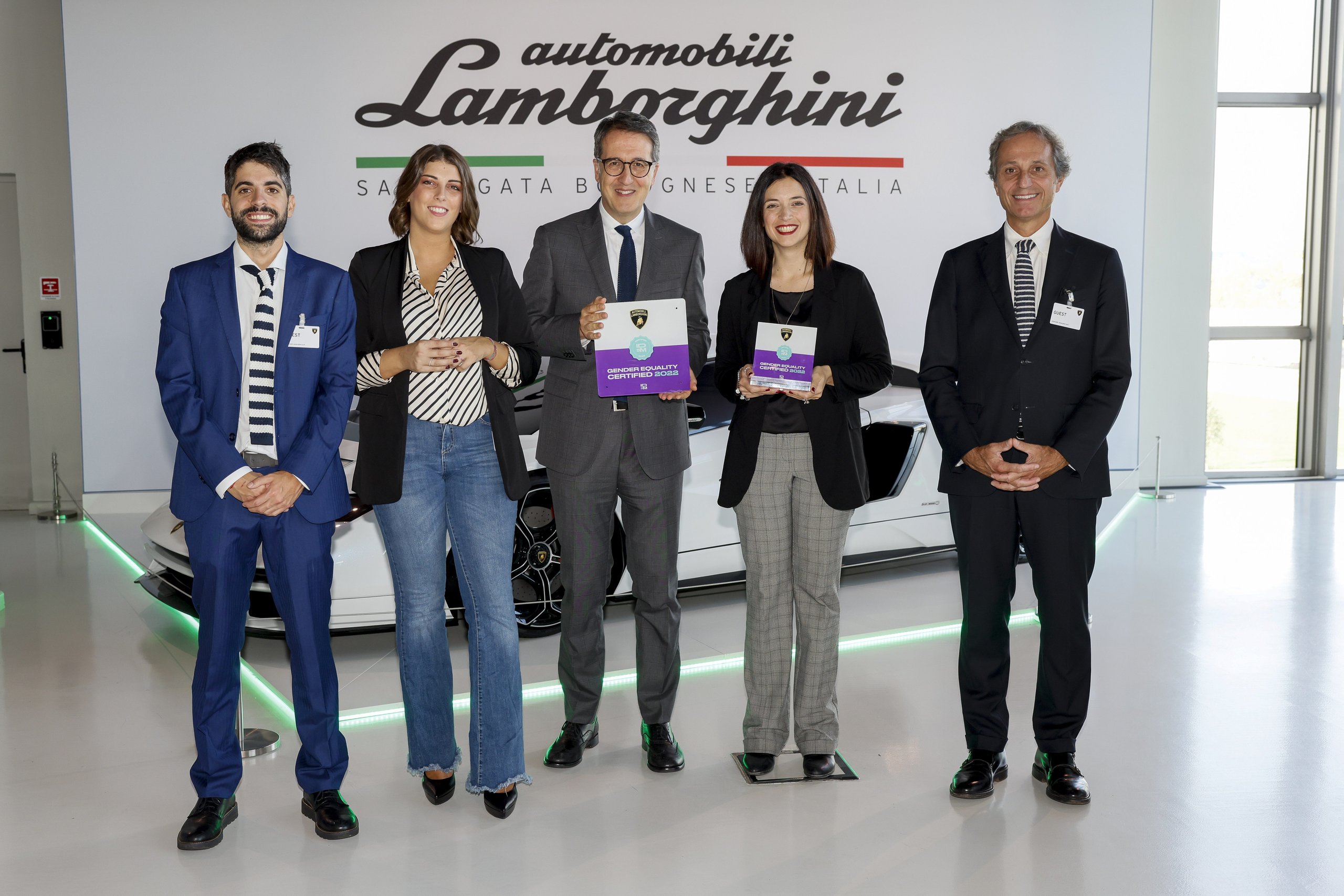
Automobili Lamborghini has been awarded UNI/PdR 125:2022 certification for gender equality, a standard endorsed by the Italian government under Law 162/2021 and verified by DNV, the independent global assurance organization. The company says it is among the first in the automotive sector to achieve this milestone, arriving on the heels of its IDEM certification earned the previous November. According to Automotive World, Lamborghini was the first automotive company to receive that IDEM credential.
Two formal certifications in quick succession from a company whose public identity revolves around V12 exhaust notes and carbon fiber aero packages. The natural reaction from the enthusiast gallery is predictable: why should anyone who cares about supercars care about an HR certificate? The honest answer cuts to the core of what makes a great car company. The people who design, assemble, and engineer these machines matter as much as the machines themselves. In a labor market where every advanced manufacturer in Emilia-Romagna competes for the same pool of STEM graduates, the ability to attract and retain talent is a competitive weapon as real as a wind tunnel. That pragmatic link between workplace culture and product excellence is the thread running through everything Lamborghini is doing here, and it deserves more scrutiny than a press release typically receives.
What the Certification Actually Measures
The UNI/PdR 125:2022 standard is not a vague corporate pledge. It requires organizations to adopt specific Key Performance Indicators covering gender equality objectives, and DNV audits compliance against those KPIs. The standard aims to help companies promote gender equality within corporate culture while measuring results, not just intentions.
The earlier IDEM certification, launched in 2020 by JobPricing and the University of Modena and Reggio Emilia’s Marco Biagi Foundation, uses a data-driven method to analyze four dimensions inside a company: career, salary, organization, and culture. According to Automotive World, Lamborghini scored very highly in the IDEM Index, with excellent performance in pay, organization, and culture. The area flagged for continued focus was development, specifically the representation of women in management positions. That kind of transparency is more useful than a trophy on a shelf, because it identifies where the gap still exists rather than pretending everything is solved.
Umberto Tossini, Lamborghini’s Chief Human Capital Officer, framed the certification as verification that the company’s measures to eliminate the gender gap in growth opportunities, ensure equal pay for equal work, support holistic well-being, and provide parenting assistance are effective and will be continuously monitored. The key word is “continuously.” A one-time audit proves a snapshot; ongoing monitoring proves a commitment. For a company trying to recruit the best engineers in Motor Valley, the difference matters.

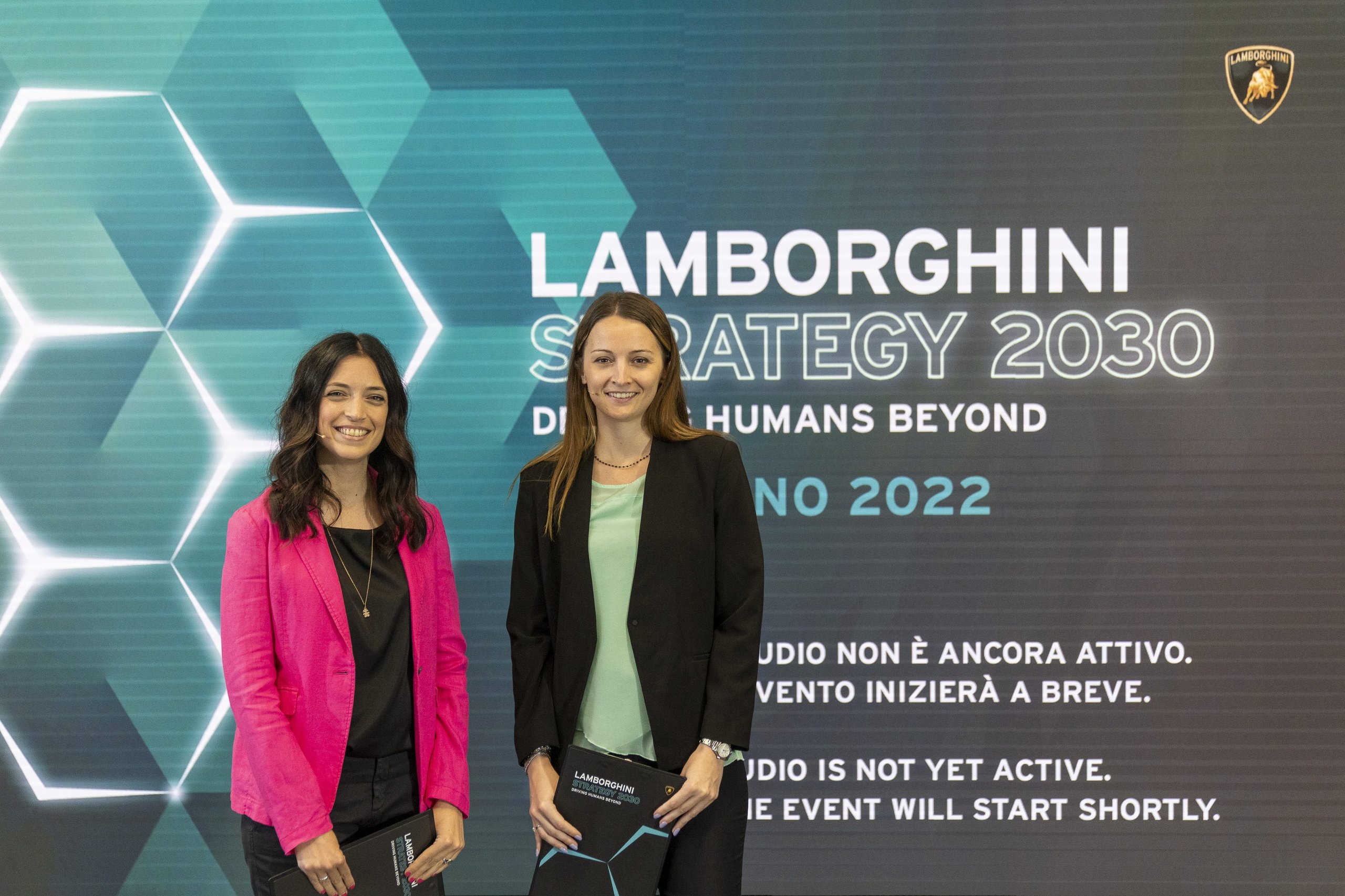
Two women discuss the Lamborghini Strategy 2030, driving humans beyond, at an indoor event. Image: Automobili Lamborghini.
The Skepticism Question: Corporate Box-Ticking or Something Real?
Any time a company famous for making absurdly fast cars announces a workplace initiative, a segment of the audience will dismiss it as virtue signaling. Forum discussion on Lamborghini-Talk reflects a broader skepticism about Volkswagen Group‘s influence on Sant’Agata’s priorities, with some enthusiasts questioning whether corporate mandates from Wolfsburg dilute the brand’s focus on building exciting cars.
That tension is worth acknowledging honestly. The luxury and performance segments built their mythology on a fairly narrow cultural archetype. Broadening that archetype can feel threatening to people who identify with the old one. The counterargument, though, is pragmatic rather than ideological: Lamborghini employs roughly 2,000 people in Sant’Agata Bolognese. Every one of those employees, from the person stitching Alcantara to the engineer calibrating hybrid battery management software, contributes to whether the next Revuelto or Temerario is excellent or merely adequate. If a workplace culture drives away half the available talent pool, the cars suffer.
The DEI conversation in the automotive world is not unique to Lamborghini. Bentley, under its Beyond 100 plan, set a target for 30% diverse management within a decade. Mercedes-Benz signed a company-wide agreement in 2020 to advance women across its workforce and management. BMW Group promotes diversity through programs like the One Young World Forum. What distinguishes Lamborghini’s approach is the specificity of the Italian certification framework. Rather than announcing aspirational targets, the UNI/PdR 125:2022 standard requires measurable KPIs and independent verification. It is, in other words, auditable. You can argue about whether audits capture everything that matters, but they are harder to fake than a press statement, and that auditability is precisely what connects the certification back to the talent question. Prospective hires can verify the claim themselves.
Mom Coaching, Dad Coaching, and the Details That Matter at Sant’Agata
The most revealing details in Lamborghini’s announcement are the specific programs rather than the certification itself. The company states it has assured pay parity between female and male employees with equal qualifications and duties since 2018. Lamborghini also reports fostering an increase in female employees, especially those with STEM backgrounds.
On the parenting front, the structure goes beyond Italian statutory requirements. Through its supplemental contract, Lamborghini provides a 30% increase in the economic supplement for the first six months of optional parental leave. That figure rises to 40% if the other parent takes at least fifteen continuous days of the same leave, a deliberate financial incentive for shared parenting responsibility. New mothers returning to work receive “mom coaching” programs, discounted daycare partnerships, summer childcare services, and paid leave.
The “dad coaching” project stands out most. Encouraging fathers to take active parenting leave is still culturally unusual in many Italian workplaces, and building a formal program around it signals a genuine attempt to normalize shared family responsibility rather than treating parental support as a women-only benefit. Whether this makes a measurable difference in retention and recruitment over time remains to be seen, but the structural incentive, the 40% supplement bump for shared leave, puts money behind the principle. These are the kinds of concrete policies that turn a certification from a wall plaque into a recruiting advantage when a talented engineer is weighing offers from three different Motor Valley employers.
Lamborghini also maintains membership in the Capo D network, a community of equal opportunity companies promoted by the Metropolitan City of Bologna, and Valore D, described as the first association of companies in Italy committed to gender balance and inclusive culture.

A person engages with 'Dad Coaching' content on a laptop, surrounded by Lamborghini memorabilia. Image: Automobili Lamborghini.
The Talent War Behind the Certification
Sant’Agata Bolognese sits in the heart of Italy’s Motor Valley, a corridor that also houses Ferrari, Pagani, Ducati, Dallara, and a constellation of motorsport suppliers. Every one of those companies needs the same engineers, the same composite specialists, the same software developers. When Lamborghini transitioned its entire lineup to plug-in hybrid architecture with the Revuelto, Temerario, and Urus SE, the demand for electrical engineers, battery management experts, and software calibration specialists spiked. Those candidates have options across Europe, and the ones with the most in-demand skills can afford to be choosy about where they work.
This is where a gender equality certification stops being an abstract corporate exercise and becomes a tangible recruitment tool. A company that can demonstrate, through third-party audit, that it pays equitably, supports working parents regardless of gender, and actively recruits women with STEM backgrounds is more attractive to the broader talent pool than one that cannot. The connection between workplace culture and product quality is indirect but real. Lamborghini’s own “Driving Humans Beyond” strategy, visible in official material from the company’s 2030 planning sessions, explicitly frames human capital as central to the brand’s future. The certification is the receipts for that claim.

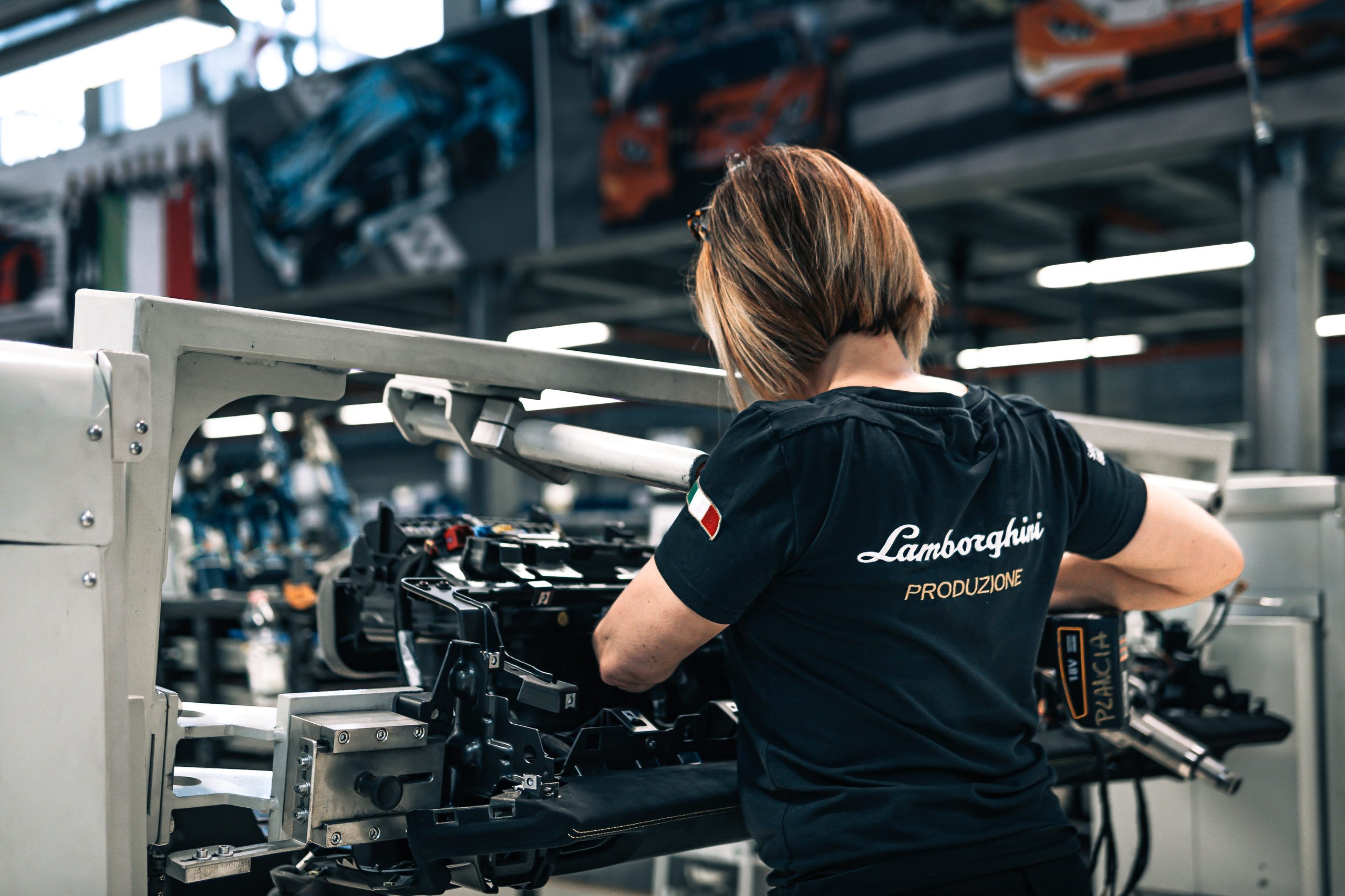
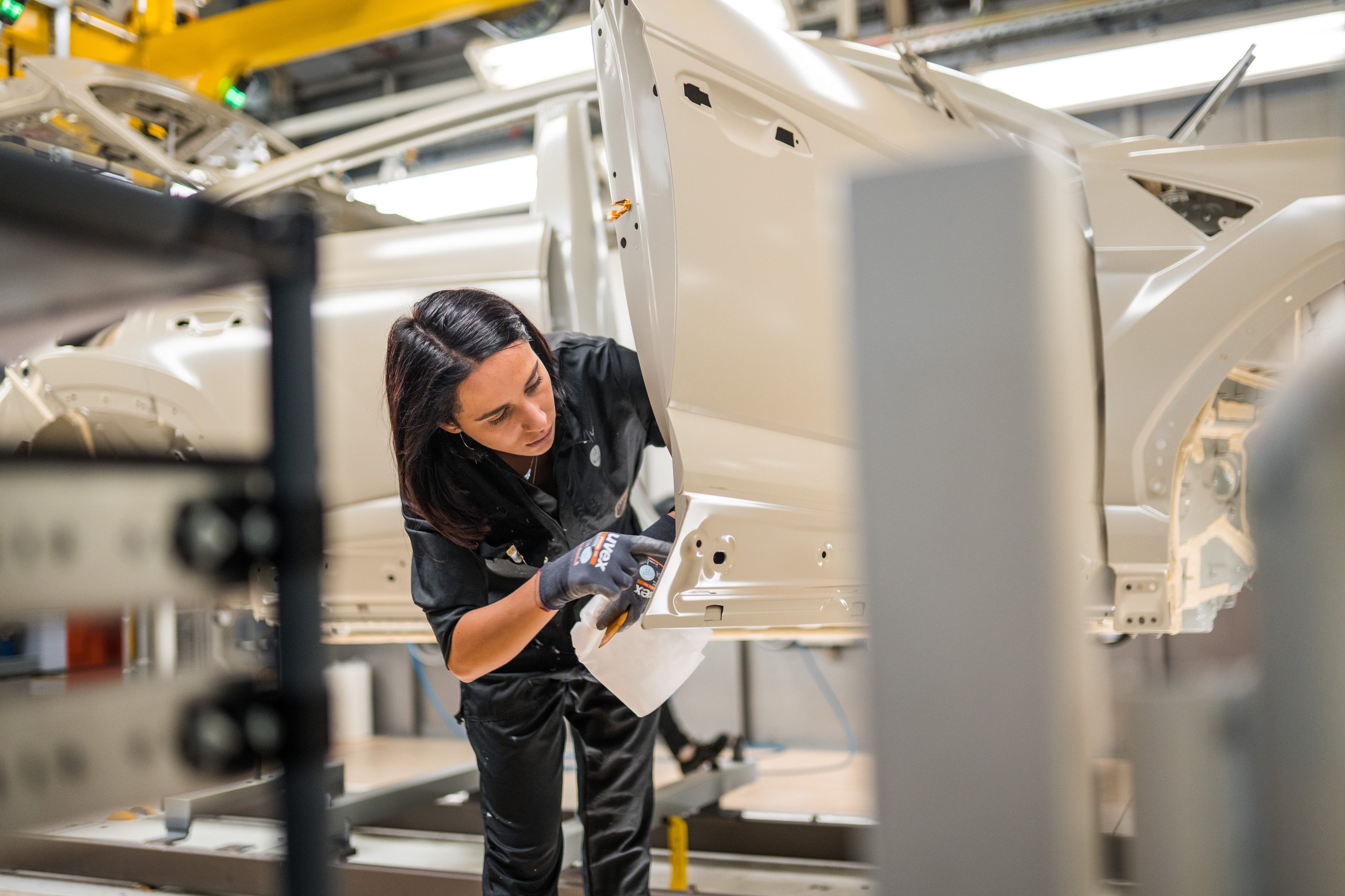
A Lamborghini production team member meticulously inspects a powerful engine assembly. Image: Automobili Lamborghini.
How Lamborghini Compares to Ferrari, Porsche, and Other Rivals
Quantitative comparison of gender equality programs across luxury automakers is difficult because most competitors do not submit to the same Italian certification framework. Ferrari, headquartered just down the road in Maranello, publishes sustainability reports but has not publicly pursued UNI/PdR 125:2022 or IDEM certification. Porsche, operating under the same Volkswagen Group umbrella as Lamborghini, benefits from VW’s broader ESG commitments, but the Zuffenhausen brand’s public communications emphasize engineering and motorsport heritage over workplace equity metrics.
Lamborghini’s decision to pursue two separate, independently audited certifications gives it a concrete, verifiable claim that most direct competitors cannot currently match. Whether that translates into a meaningful brand differentiator for buyers is debatable. Supercar customers generally choose based on driving experience, design, and exclusivity rather than a manufacturer’s HR policies. Brand perception, however, operates on multiple levels. For a younger generation of wealthy buyers who increasingly factor corporate responsibility into purchasing decisions across every category, from fashion to real estate, a company’s values are not irrelevant.
The more immediate competitive advantage circles back to the same talent argument. If Lamborghini can attract even a handful of talented engineers or designers who might otherwise have gone to a competitor because of a better workplace culture, the return on investment in these programs could show up in the cars themselves years from now. Nobody will ever see a line item on a Configurator screen that reads “designed by a team recruited through inclusive hiring practices,” but the quality of the people building the car shapes every detail of the ownership experience.

Four proud women from Lamborghini's team celebrate a significant achievement with a framed certificate. Image: Automobili Lamborghini.
What This Means for Lamborghini’s Brand and Its Buyers
For current and prospective Lamborghini owners, this certification does not change the spec sheet, the delivery timeline, or the driving experience. It does add a layer to what the brand represents. Lamborghini built its identity on audacity, on the idea that a tractor manufacturer’s son could challenge Ferrari and win. That origin story is fundamentally about refusing to accept the way things were always done.
Applying that same stubbornness to workplace culture is a more coherent brand extension than it might first appear. The IDEM audit identified women in management as an area for continued focus, which means Lamborghini is not claiming perfection. The company is claiming measurable progress, verified by outsiders, with a framework for continued improvement. In an industry where corporate announcements often amount to aspirational language with no accountability mechanism, the auditable nature of these certifications is the genuinely interesting part.
Lamborghini confirmed it achieved the UNI/PdR 125:2022 certification among its 2022 goals, and web research confirms the company successfully reconfirmed it in November 2025. That reconfirmation matters because it means the policies survived beyond the initial announcement cycle. Programs like dad coaching and the parental leave incentive structure are still in place, still being measured, and still subject to external review. For a brand navigating the transition to hybrid powertrains, record sales volumes, and an expanding global customer base, demonstrating that it can manage growth without abandoning its people is a quieter kind of performance metric. It will not show up on a dyno chart, but it will shape the cars coming out of Sant’Agata for years.

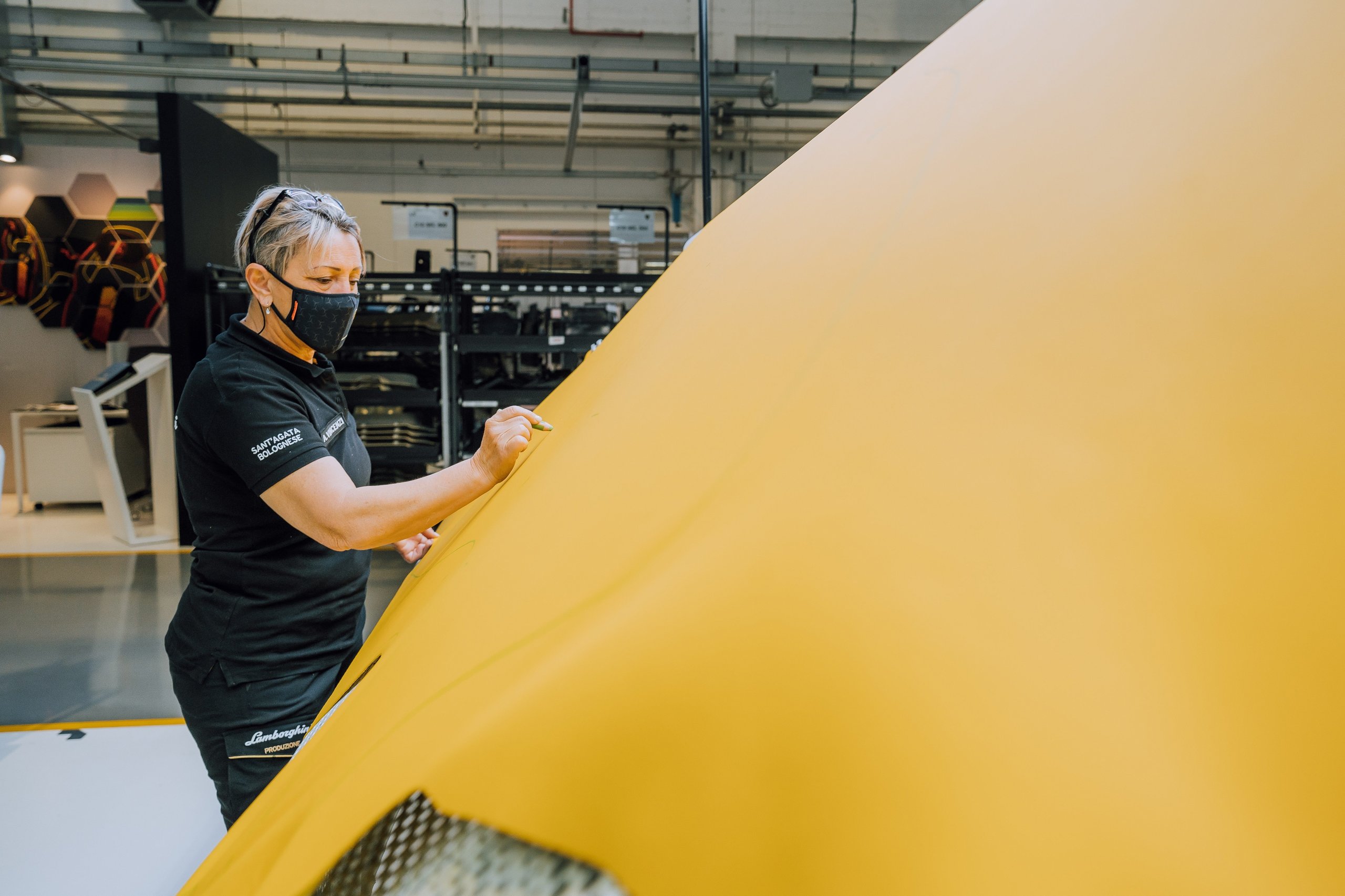
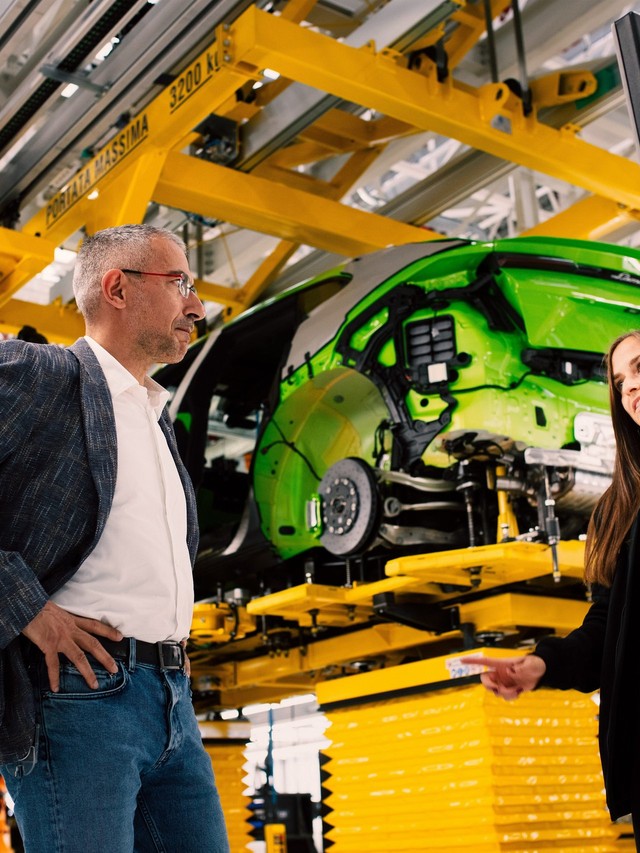
Engineers collaborate on the assembly line, reviewing data for a vibrant green Lamborghini chassis. Image: Automobili Lamborghini.
Gallery