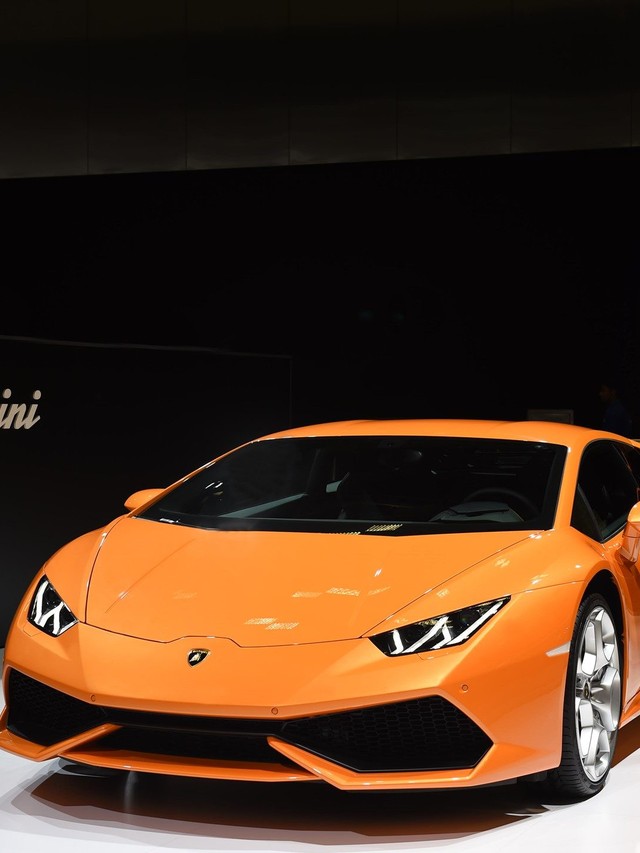
2,530 Cars and a New Benchmark: Lamborghini’s Banner 2014
Lamborghini delivered 2,530 cars globally in 2014, a 19% increase over the 2,121 units sold in 2013 and a new all-time record for the company. The figure surpassed the brand’s previous high-water mark set in 2008, before the global financial crisis reshaped the supercar market. Two models carried the weight: the freshly launched Huracán LP 610-4, which accounted for 1,137 deliveries from its summer start, and the Aventador, which posted its own V12-model record at 1,128 units across coupe and roadster variants. The final 265 Gallardos also rolled off dealer lots that year, closing the book on a production run that totaled 14,022 cars.
The timing is what elevates this beyond a routine annual tally. Lamborghini managed to transition away from its most successful model ever, the Gallardo, to an entirely new platform, and the market responded with a backlog rather than hesitation. By December 2014, the Huracán’s order bank stood at over 3,300 units, meaning the factory in Sant’Agata Bolognese entered 2015 with roughly three years of V10 production already spoken for. Revenue reflected the momentum: Lamborghini reported a 24% jump in its top line, to 629 million euros. A model transition that could have stalled the company instead became the foundation for everything that followed.
The Huracán Effect: Why the V10 Successor Landed So Hard
Replacing the Gallardo was never going to be simple. That car defined Lamborghini’s volume business for over a decade and introduced thousands of buyers to the brand for the first time. The Huracán LP 610-4 needed to feel like a generational leap, not a facelift, and Lamborghini loaded it accordingly.
Power came from a naturally aspirated 5.2-liter V10 producing 610 hp, paired with a new 7-speed dual-clutch transmission branded Lamborghini Doppia Frizione (LDF). The dual-clutch unit marked a significant departure from the Gallardo’s automated single-clutch gearbox, giving the Huracán a tangible advantage in shift speed and refinement. Acceleration from 0 to 100 km/h arrived in 3.2 seconds, with a top speed exceeding 325 km/h. Underneath, a hybrid carbon fiber and aluminum chassis replaced the Gallardo’s steel-and-aluminum structure, cutting weight while improving torsional rigidity.
The transmission choice deserves particular attention. In 2014, the much more expensive Aventador still relied on Lamborghini’s ISR single-clutch automated manual, a gearbox that delivered drama but could feel agricultural in traffic. The Huracán’s DCT made the entry-level Lamborghini the smoother, more livable car in the lineup, broadening its appeal to buyers who wanted supercar performance without a jerky low-speed penalty. Priced at $255,150 USD before taxes, the Huracán sat squarely against the Ferrari 458 and McLaren 650S in a segment where the driving experience on a Tuesday morning matters almost as much as lap times. That 3,300-unit order bank by year’s end proved the formula worked: the Huracán was not merely replacing the Gallardo’s sales, it was accelerating them.
Aventador’s Quiet Record: The V12 Flagship Held Its Ground
Model transitions often cannibalize the flagship. New buyers gravitate to the fresh product, and the older, pricier car loses momentum. That pattern did not play out at Lamborghini in 2014. Aventador deliveries climbed 13% over 2013, reaching 1,128 units, a record for any V12 Lamborghini.
The Aventador’s resilience mattered because it proved Lamborghini could sustain two distinct, high-demand product lines simultaneously, a dynamic that would become critical when the Urus arrived years later and tripled the brand’s total volume. For buyers in 2014, the Aventador’s appeal was straightforward: a naturally aspirated 6.5-liter V12 in a mid-engine layout, wrapped in one of the most dramatic designs on the road. The car occupied a price and performance tier that the Huracán deliberately did not touch, keeping the two models complementary rather than competitive. In a year defined by the Huracán’s debut, the Aventador’s parallel climb confirmed that Lamborghini’s record was built on breadth, not a single product spike.
Global Reach: Balanced Distribution and the Middle East Surge
Lamborghini’s global sales distribution in 2014 split almost evenly into thirds: EMEA (Europe, Middle East, Africa), the Americas, and Asia Pacific each accounted for roughly one-third of total deliveries. The United States remained the single largest national market, with China close behind. That kind of geographic balance insulates a low-volume manufacturer from regional economic shocks, a lesson the supercar industry learned painfully during the 2008 downturn when several brands were overexposed to a single market.
The standout regional story was the Middle East, where deliveries surged 51%. Aventador sales in the region specifically grew 16% year over year. Christian Mastro, Lamborghini’s Head of Europe, Middle East and Africa, pointed to Qatar as a bellwether for the region’s appetite. For a brand producing only 2,530 cars globally, a 51% jump in any region represents a meaningful shift in allocation strategy, not just a statistical footnote.
Middle Eastern buyers tend to spec aggressively through Lamborghini’s Ad Personam customization program, and the region’s preference for flagship models typically pushes average transaction prices higher than the global mean. Lamborghini does not publish regional revenue breakdowns, but the combination of volume growth and high-spec orders in the Middle East almost certainly contributed to the 24% revenue increase the company reported. The geographic balance reinforced the same lesson as the dual-model strength: Lamborghini’s 2014 record rested on a broad, resilient foundation rather than a single fortunate variable.
From 2,530 to 10,112: How 2014 Set the Template
Viewed from 2025, Lamborghini’s 2014 record looks modest. The company delivered 10,112 cars in 2023, according to Car and Driver, a fourfold increase in less than a decade. The Urus SUV, which arrived in 2018, accounts for the bulk of that growth. But the strategic groundwork was already visible in 2014: prove that Lamborghini can execute a flawless model transition, maintain flagship desirability, and balance global distribution without chasing volume for its own sake.
The Huracán went on to become the most produced Lamborghini in history, eventually eclipsing the Gallardo’s 14,022-unit run. Its platform spawned the Performante, the STO, the Tecnica, and the off-road Sterrato, each variant expanding the audience without diluting the core product. That variant strategy, refined throughout the Huracán’s lifecycle, now carries forward into the Temerario, the twin-turbo V8 hybrid that replaces the Huracán for 2025. The Aventador’s successor, the Revuelto, follows a similar playbook: retain the naturally aspirated V12 (now with hybrid assistance), push performance into hypercar territory, and keep the flagship emotionally distinct from the V8 line below it. Road & Track reported in early 2024 that Lamborghini sees “no sign of weakness in the market,” with plug-in hybrid versions of both the Huracán successor and Urus confirmed, and two all-electric vehicles on the horizon.
For anyone who watched Lamborghini navigate the Gallardo-to-Huracán handoff in real time, the 2014 record was the proof point. The company demonstrated it could replace its best-selling model, grow the flagship simultaneously, and emerge with a deeper order bank than it started with. Every strategic move Lamborghini has made in the decade since, from the Urus to the Revuelto to the Temerario, traces a line back to the confidence that 2014 provided.
Gallery


