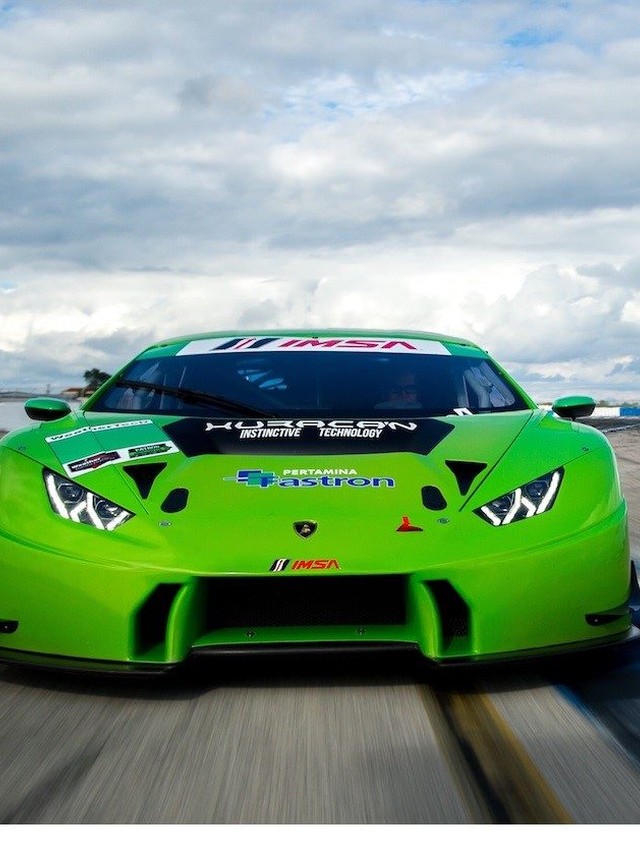
Lamborghini Squadra Corse’s Historic Entry into the 12 Hours of Sebring
When six Lamborghini Huracán GTDs rolled onto the grid at Sebring International Raceway for the 64th running of the 12 Hours of Sebring, they carried a weight the casual observer might have missed. Lamborghini Squadra Corse had never competed in the IMSA WeatherTech SportsCar Championship at America’s oldest endurance race. Four customer teams fielded those six cars in the GT Daytona class, one more Huracán than the 24 Hours of Daytona held just weeks earlier, and the expansion told a clear story: Lamborghini’s customer racing operation was growing fast, and it intended to prove the Huracán’s endurance credentials on one of the most punishing circuits in professional motorsport.
The GTD class was the largest of the four categories at Sebring in 2016, with 20 cars out of 49 entries total. Lamborghini says the customer teams completed a productive test session at Sebring in late February, where feedback on car balance was positive, partly because the Balance of Performance settings aligned closely with FIA standards used in European competition. Giorgio Sanna, Head of Lamborghini Motorsport, put the mood simply: the teams were well prepared, the driver lineups were strong, and the expectation was a competitive result on a track he acknowledged as extraordinarily demanding.
The distinction between this debut and Lamborghini’s existing Sebring presence deserves emphasis. The Lamborghini Blancpain Super Trofeo North America World Final was held at Sebring in 2015, but that was a one-make series, a controlled environment where every car on the grid was a Huracán. Entering the IMSA WeatherTech championship meant fighting against Audi, BMW, Ferrari, Porsche, McLaren, and Aston Martin on the same track, under the same rules, with the same clock running for twelve hours. A fundamentally different competitive proposition, and the real measure of whether Squadra Corse’s customer racing model could survive outside its own ecosystem.
Why Sebring: The Ultimate Proving Ground for Endurance Hardware
Sebring’s reputation rests on its origins and its surface. Lamborghini describes the circuit as America’s oldest endurance race and one of the most famous in the world. The track opened in 1941 as an Army Air Force training base for B-17 Flying Fortress crews, and that military airfield DNA remains baked into the layout. The current configuration stretches 3.74 miles with 17 turns and a 0.66-mile straight, but the defining characteristic is the pavement itself: a mix of concrete and asphalt sections that punishes suspension components, shakes loose anything not perfectly secured, and rewards cars with robust mechanical durability over those optimized purely for peak lap time.
For a manufacturer making its IMSA WeatherTech debut, Sebring was less a race than a stress test. A smooth, modern circuit would measure speed. Sebring measures survival. Finishing twelve hours on that surface, through day-to-night transitions and the physical toll on drivers, validates an entire engineering philosophy. If the Huracán GTD could hold together at Sebring, it could hold together anywhere on the IMSA calendar.
The race was scheduled for Saturday, March 19, starting at 10:40 am ET, meaning the cars would run from mid-morning through late evening, covering every lighting condition and temperature swing Florida could offer in a single day. For Squadra Corse, choosing this circuit as the stage for its largest IMSA commitment to date was a deliberate statement about the kind of racing program it was building: one rooted in durability and operational depth, not just outright pace.
The Teams and Drivers Behind Lamborghini’s Sebring Push
The four customer teams fielding Huracán GTDs at Sebring brought a mix of professional experience, gentleman-driver ambition, and direct Squadra Corse factory support, precisely the blend that defined Lamborghini’s approach to GT racing.
Change Racing doubled its commitment from Daytona, expanding to two cars with backing from Lamborghini Dallas and Lamborghini Carolinas. The No. 16 car paired Spencer Pumpelly with Corey Lewis, a member of the Lamborghini Squadra Corse GT3 Junior Program. The No. 11 entry was driven by Bill Sweedler, Townsend Bell, and Richard Antinucci, who won the 2015 Lamborghini Blancpain Super Trofeo North America championship.
Dream Racing made its WeatherTech SportsCar Championship debut at Sebring. The Las Vegas-based team, headed by former Italian Formula One driver Enrico Bertaggia, ran the No. 27 Huracán GTD with Paolo Ruberti, Luca Persiani, Lamborghini GT3 Factory Driver Fabio Babini, and GT3 Junior Driver Cedric Sbirrazzuoli. That driver roster blended factory-supported talent with customer-racing experience, a formula Squadra Corse clearly wanted to replicate across its entries.
Paul Miller Racing brought the No. 48 with full-season drivers Bryan Sellers and Madison Snow, joined by Bryce Miller for the endurance round, the same arrangement used at Daytona. Konrad Motorsport ran two cars, including the No. 28 with a driver pairing that carried genuine Sebring history: Franz Konrad and Terry Borcheller, who won the 2001 12 Hours of Sebring in the GTS class. Fifteen years later, that combination returned to the same circuit in a Lamborghini.
Squadra Corse was not fielding a single works effort. It was supporting an ecosystem of independent teams who bought the car, hired the drivers, and relied on factory technical backing. The Junior Program seeded young talent into those lineups, while seasoned professionals and gentlemen racers provided the institutional knowledge and funding that kept the operation viable. That customer-centric model would become central to Lamborghini’s motorsport identity in the years that followed.

A teal-green Lamborghini Huracán GT3 race car with number 28 speeds along the track, captured with dynamic motion blur.
The 2016 GTD Competitive Landscape: Walking Into a Crowded Fight
Lamborghini’s Sebring debut did not happen in a vacuum. The 2016 IMSA WeatherTech SportsCar Championship marked a significant shift for the GTD class, which moved to full FIA GT3-specification machinery. The season attracted entries from Aston Martin, Audi, BMW, Ferrari, Lamborghini, McLaren, and Porsche, making the GTD grid one of the most manufacturer-diverse categories in North American sportscar racing.
The competitive reality was stark. Scuderia Corsa’s Ferrari 488 GT3 ultimately claimed both the GTD Drivers’ Championship and the GTD Teams’ Championship that season, while Audi was recognized as the GTD Manufacturers’ Champion for 2016. Lamborghini was entering a class where established programs with years of IMSA experience already knew the circuits, the tire strategies, and the Balance of Performance dynamics intimately. For Squadra Corse and its customer teams, every race in 2016 was a learning exercise wrapped inside a competitive event.
What set Lamborghini apart was its insistence on the customer-team model rather than a factory-backed superteam. Ferrari had Scuderia Corsa. Porsche had multiple well-funded customer operations with deep institutional knowledge. Lamborghini was building its IMSA presence from the ground up, and the Sebring entry with six cars represented the largest single-event commitment in that process. The strategy was legible: field enough cars to accumulate data, develop driver talent through the Junior Program, and build the kind of operational experience that wins championships over multiple seasons rather than in a single weekend. Patience, not spectacle, was the governing principle.
From Debut to Dominance: What Sebring Became for Lamborghini
The significance of this 2016 debut becomes sharper when viewed through the lens of what followed. Paul Miller Racing, one of the four teams present at this first Sebring outing, secured a GTD class win at Sebring in 2018. A year later, the No. 11 Grasser Racing Team Huracán GT3, driven by Mirko Bortolotti, Rik Breukers, and Rolf Ineichen, won the GT Daytona class at the 67th 12 Hours of Sebring. In 2019, Lamborghini became the first manufacturer to complete the “36 Hours of Florida” (winning both the Daytona 24 Hours and Sebring 12 Hours in the same year) for the second consecutive time.
That trajectory, from first-time entrant in 2016 to class winner within two years, validates the customer-racing infrastructure Squadra Corse was building when it brought those six Huracáns to Sebring for the first time. The teams that learned the circuit’s punishing surface in 2016 became the teams that won on it.
The Huracán platform’s competitive longevity in GT3 racing underscores the point for anyone following Lamborghini’s current motorsport direction. Road & Track reported that the V10 Huracán GT3 served as Lamborghini’s primary GT3 platform for a full decade. The Temerario GT3, the first race car designed and built entirely in-house by Squadra Corse, is slated to replace it. The Lamborghini SC63 hybrid race car made its U.S. debut at the 12 Hours of Sebring in 2024, extending the brand’s Sebring connection into the prototype ranks, though that LMDh program has since been paused for 2026.
For buyers and enthusiasts tracking Lamborghini’s competitive arc, the 2016 Sebring debut was the foundation stone. Six customer-run Huracán GTDs on a brutal circuit, learning in real time against Ferrari, Porsche, and Audi, set the pattern for everything that came after: invest in customer teams, develop drivers through the Junior Program, and let the results build over seasons rather than demanding instant success. That patience paid off at Sebring before the decade was out.
Gallery


