Three Milestones Converge at Circuit de la Sarthe
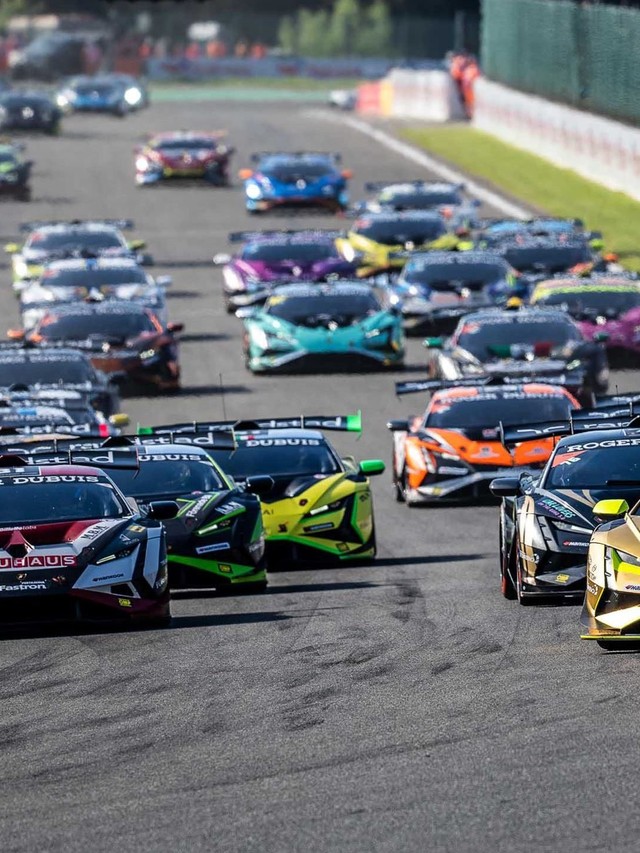
Lamborghini Super Trofeo Europe heads to Le Mans for round three of the 2024 season carrying an unusual weight of occasion. The weekend marks the Huracán Super Trofeo EVO2’s first appearance on the 24 Hours of Le Mans support bill, the championship’s 200th race, and a direct echo of the Diablo SV-R era: Lamborghini says this is a return to Circuit de la Sarthe 28 years after its predecessor series, the Super Sport Trophy for Diablo SV-Rs, first competed there.
The timing sharpens the significance further. The same race week brings the long-anticipated Le Mans debut of the Lamborghini SC63 LMDh Hypercar prototype in the main event, with partner team Lamborghini Iron Lynx fielding two cars. So the brand occupies both sides of the Le Mans program simultaneously: a mature, well-populated one-make series on the support bill, and a factory-backed prototype contesting the top category of endurance racing for the first time at this circuit.
That overlap is what makes the weekend genuinely revealing. Lamborghini’s motorsport presence at Le Mans in 2024 spans the full range, from customer racing entries to the pinnacle of sports car competition, all at the same venue, in the same week. It is the clearest illustration yet of how Sant’Agata Bolognese views racing not as a side project but as a layered, interconnected strategy.
Why Le Mans Matters for Lamborghini’s Racing Pyramid
Running a one-make series on the Le Mans support bill does something no amount of standalone track days can replicate: it places customer racing directly in front of the largest, most knowledgeable endurance-racing audience in the world. A grid of over 50 Huracán Super Trofeo EVO2 cars competing on the 13.626km Circuit de la Sarthe is a substantial field by any measure, and it puts Lamborghini’s customer racing ecosystem on display at the sport’s most visible weekend.
The format reflects the realities of sharing a calendar with the 24 Hours. Competitors get a single 45-minute free practice session on Wednesday morning, followed by two shortened 20-minute qualifying sessions later that day. Race 1 runs Thursday afternoon; Race 2 is slated for Saturday morning, directly preceding the start of the 24 Hours. Race distance is trimmed by 10 minutes to 45-minute contests, and no prior testing is possible on the full Le Mans layout, putting a premium on preparation and adaptability.
Teams accustomed to more generous track time at venues like Imola and Spa-Francorchamps will need to extract maximum learning from minimal laps. For drivers working their way up through the series, performing well under these constraints, on this stage, carries real weight within the broader Lamborghini motorsport ladder.

200 Races: From Gallardo to Huracán EVO2
Lamborghini Squadra Corse launched the Super Trofeo one-make championship in 2009, with the inaugural race meeting held at Adria Raceway. The series ran with the original Gallardo Super Trofeo from 2009 through 2012, transitioned to the Gallardo LP 570-4 Super Trofeo for the 2013 to 2015 seasons, and welcomed the Huracán LP 620-2 Super Trofeo in mid-2015, overlapping briefly with the outgoing Gallardo. The Huracán EVO joined the grid by 2018, and the current third-generation car, the EVO2, took over in 2022.
Fifteen years and four distinct car generations to reach 200 races tells a story of steady institutional commitment rather than a flashy one-off effort. Each generation brought updated bodywork and revised aerodynamics while keeping the core formula intact: a naturally aspirated V10 engine, rear-wheel drive, and a focus on close, competitive racing across multiple skill categories. The series currently splits its field into Pro, Pro-Am, Am, and Lamborghini Cup classes, which is how a grid of over 50 cars can accommodate professional racers and gentleman drivers on the same circuit without chaos.
The 2024 calendar reinforces the strategy of placing Super Trofeo alongside the sport’s biggest events. Le Mans, Imola, and Spa-Francorchamps all run as FIA World Endurance Championship support events, with additional rounds at the Nürburgring, Barcelona, and the season-ending World Finals at Jerez de la Frontera. Wherever the endurance-racing world gathers, Lamborghini’s customer series is there too, building visibility and feeding the pipeline that connects amateur racers to the factory’s broader competition programs.
The Huracán Super Trofeo EVO2: What the Grid is Running
Every car on the Le Mans grid is a Lamborghini Huracán Super Trofeo EVO2, powered by the same 5.2-litre naturally aspirated V10 that defines the road-going Huracán family. In race trim, the engine delivers up to 620 horsepower. The car is rear-wheel drive with a dry weight of 1,270 kg, a combination that rewards precision and punishes sloppy inputs.
Braking comes from Brembo/PFC components, and the car carries a fully integrated roll cage built to FIA specifications. According to one report, the gearbox is a 6-speed sequential unit electrically actuated by Marelli, a setup that prioritizes shift speed and reliability over the dual-clutch sophistication found in road cars. Engine management runs through a Motec control unit, giving teams a standardized electronics platform.
The one-make format is the key detail. Because every entry runs identical hardware, results come down to driver skill, team preparation, and setup choices rather than budget-driven engineering advantages. That makes the championship particularly compelling for drivers building a racing career, and for the kind of enthusiast owner-driver who wants to compete without needing a Formula 1 team’s resources. Multiple owners on enthusiast forums describe the Super Trofeo cars as raw, visceral machines that reward commitment, a character the naturally aspirated V10 and rear-drive layout reinforce at every corner entry.

Who Leads What Heading into Le Mans
Tight battles in every class give the 200th race genuine competitive stakes. Lamborghini says Amaury Bonduel leads the Pro class after three victories in the first four races, running for BDR Competition with Grupo Prom. The Pro-Am standings are topped by the Mičánek Motorsport pairing of Bronislav Formánek and Štefan Rosina, while Oregon Team’s Pietro Perolini and Davide Roda lead the Am class. In the Lamborghini Cup, Holger Harmsen holds the narrowest of advantages.
The Pro class field includes some intriguing storylines. Hampus Ericsson, brother of IndyCar driver Marcus, showed strong pace at Spa-Francorchamps and will be looking to convert that into results on a very different circuit. Last year’s championship runner-up, Mattia Michelotto, enters as a solo driver for VS Racing after a difficult start to the season. A trio of French drivers also return to the grid after missing the Spa round: Loris Cabirou and Quentin Antonel at CMR, and Simon Gachet and Lola Lovinfosse with Schumacher CLRT. Lovinfosse’s return is notable in itself, having recovered from a fractured wrist sustained during the F1 Academy series in Miami.
Le Mans is the kind of round where standings can shift dramatically. The compressed schedule, unfamiliar layout, and sheer length of the circuit create opportunities for well-prepared teams to make up ground and for leaders to stumble.

What This Weekend Signals for Lamborghini’s Motorsport Identity
Le Mans 2024 is the rare weekend where Lamborghini’s motorsport efforts are visible at every level simultaneously. The Super Trofeo series, now 15 years old and celebrating its 200th race, represents the broadest base of that pyramid: dozens of customer teams, multiple classes, and a direct pipeline for drivers who want to progress into GT3 and beyond. At the top sits the SC63 LMDh, contesting the world’s most prestigious endurance race for the first time with two entries from Lamborghini Iron Lynx.
The connection between these programs is practical, not just symbolic. Squadra Corse designs and supports both the customer racing cars and the factory prototype effort from Sant’Agata Bolognese. Drivers who develop through the Super Trofeo ranks gain experience that feeds into the broader Lamborghini racing ecosystem. The EVO2 itself, with its naturally aspirated V10 and aggressive Centro Stile bodywork, continues to serve as a visible link between the road car lineup and the track.
Lamborghini has not announced what comes next for the Super Trofeo series as the Huracán gives way to the Temerario generation. Autoblog reports that the Temerario GT3 debuted at the 2025 Goodwood Festival of Speed as Lamborghini’s first fully in-house competition car, which suggests the one-make series will eventually transition to that platform. For now, Le Mans 2024 belongs to the V10. Over 50 of them, screaming down the Mulsanne approach on the same weekend that Lamborghini’s hybrid prototype takes on the 24 Hours. The brand’s motorsport ambitions look broad, and this weekend puts all of them on display at once.

Gallery


