A Motorsport Event Gets Audited for Sustainability, and Passes
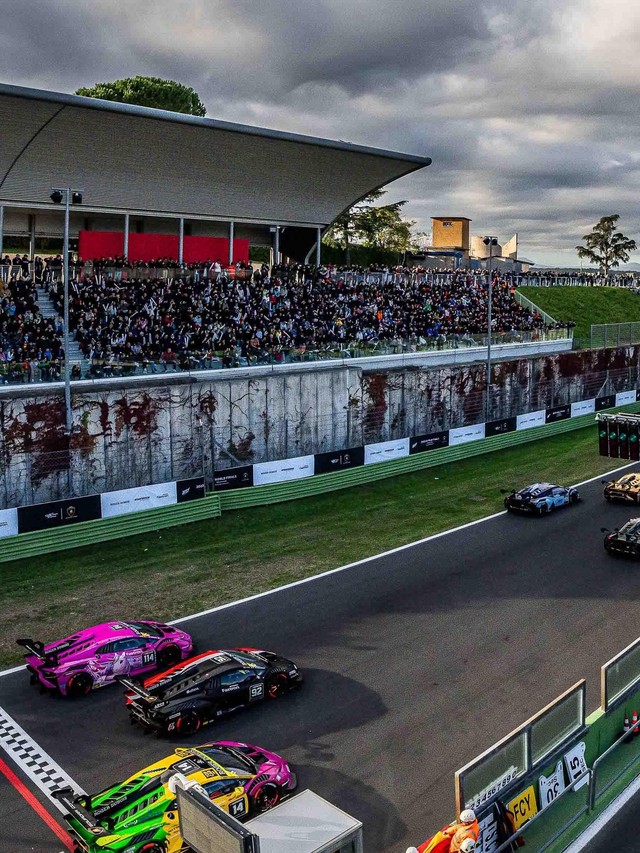
The Lamborghini World Finals 2023, held November 16 through 19 at the Vallelunga circuit on the outskirts of Rome, was awarded ISO 20121 certification for sustainable event management. TÜV Italia, a certifying body specializing in environment, quality, energy, and safety, issued the certificate, which was presented directly to Automobili Lamborghini Chairman and CEO Stephan Winkelmann by Francesco Scarlata, Director of TÜV Italia’s Business Assurance Division.
ISO 20121 is an international standard that requires an event organizer to demonstrate verifiable practices across environmental impact, social responsibility, and economic sustainability. Originally developed for the 2012 London Olympics, it demands a management system with measurable goals, not just good intentions. For a motorsport event built around V10 race cars burning through fuel at competition pace, earning this certification requires deliberate, documented effort in areas that racing organizers rarely prioritize.
Squadra Corse previously earned ISO 20121 certification for the Misano stage of the Super Trofeo Europe in 2022. The Vallelunga certification extends that effort to Lamborghini’s largest annual customer racing event, the season-ending World Finals where regional champions converge for the global title. Together, the two certifications begin to outline something more ambitious than a one-off publicity exercise: a systematic attempt to wrap externally verified sustainability around a racing series whose cars remain gloriously, unapologetically combustion-powered.

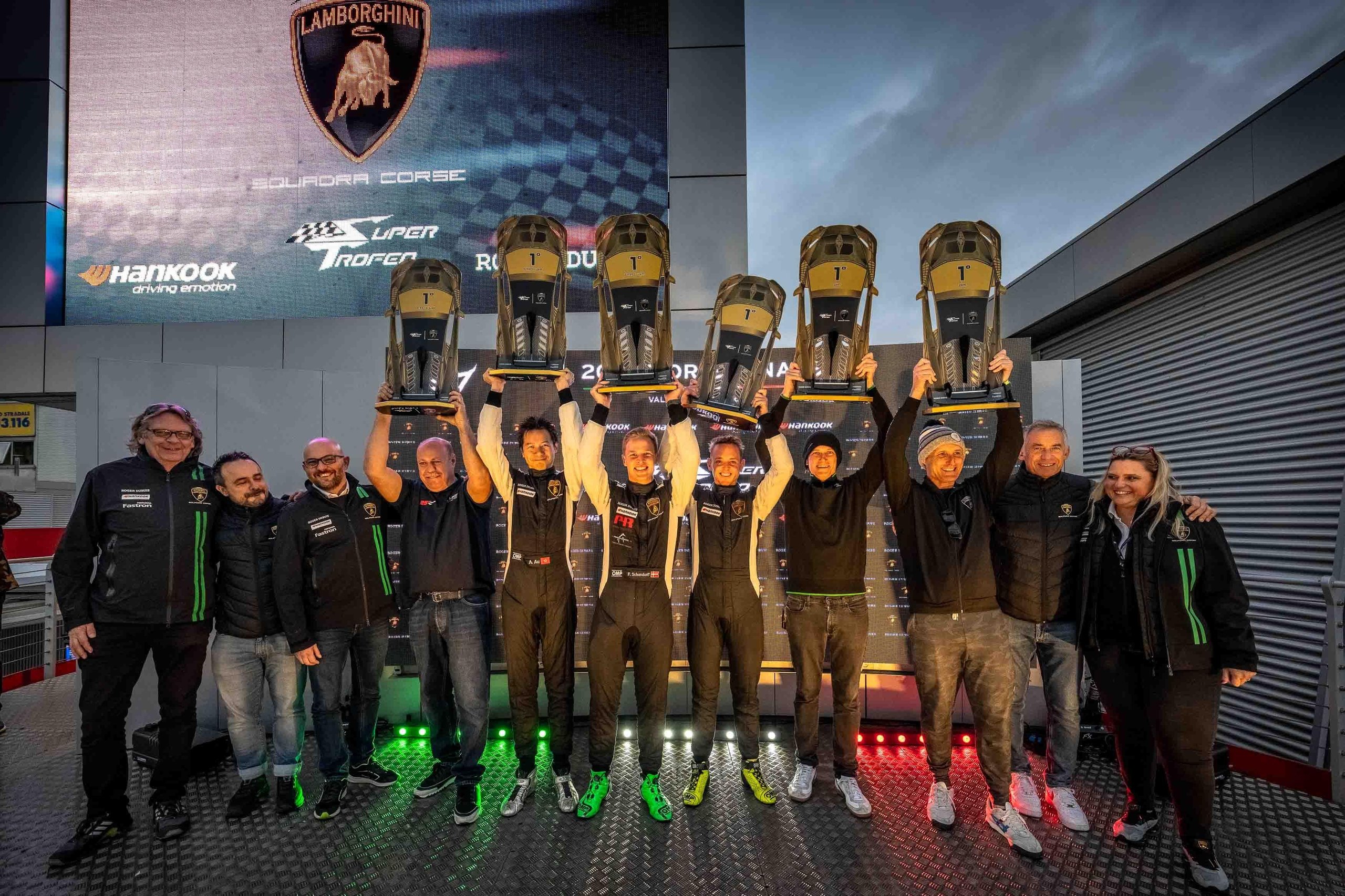
Lamborghini's ISO 20121 certification for sustainable event management is proudly displayed at the World Finals.
What ISO 20121 Actually Requires
According to Lamborghini, ISO 20121 certification confirms that an event’s organization adheres to best practices across environmental, social, and economic sustainability criteria. That description is accurate but undersells the rigor involved. The standard requires organizations to establish a formal management system with documented objectives, assign accountability, train personnel, and commit to a post-event reporting phase that evaluates results and sets targets for the next iteration.
For a motorsport event, the standard covers everything from waste streams and energy consumption to supply chain sourcing and community engagement. The certification body audits the entire operational footprint: logistics, catering, materials, transport, and the social impact on the host community. Most racing series and one-make championships do not pursue this level of scrutiny because the compliance cost and operational complexity are significant, particularly for events that move between circuits and countries each season.
The practical implication is that Squadra Corse now operates under an externally verified sustainability framework requiring continuous improvement. Each certified event feeds data into the next, creating an accountability loop that generic “green” pledges lack. That loop is what separates ISO 20121 from the kind of vague environmental messaging that motorsport organizations often default to, and it is the mechanism that gives Winkelmann’s stated ambition of a “fully-sustainable championship” at least a structural foundation.
Electric Shuttles, Compostable Cutlery, and a Food Bank Partnership
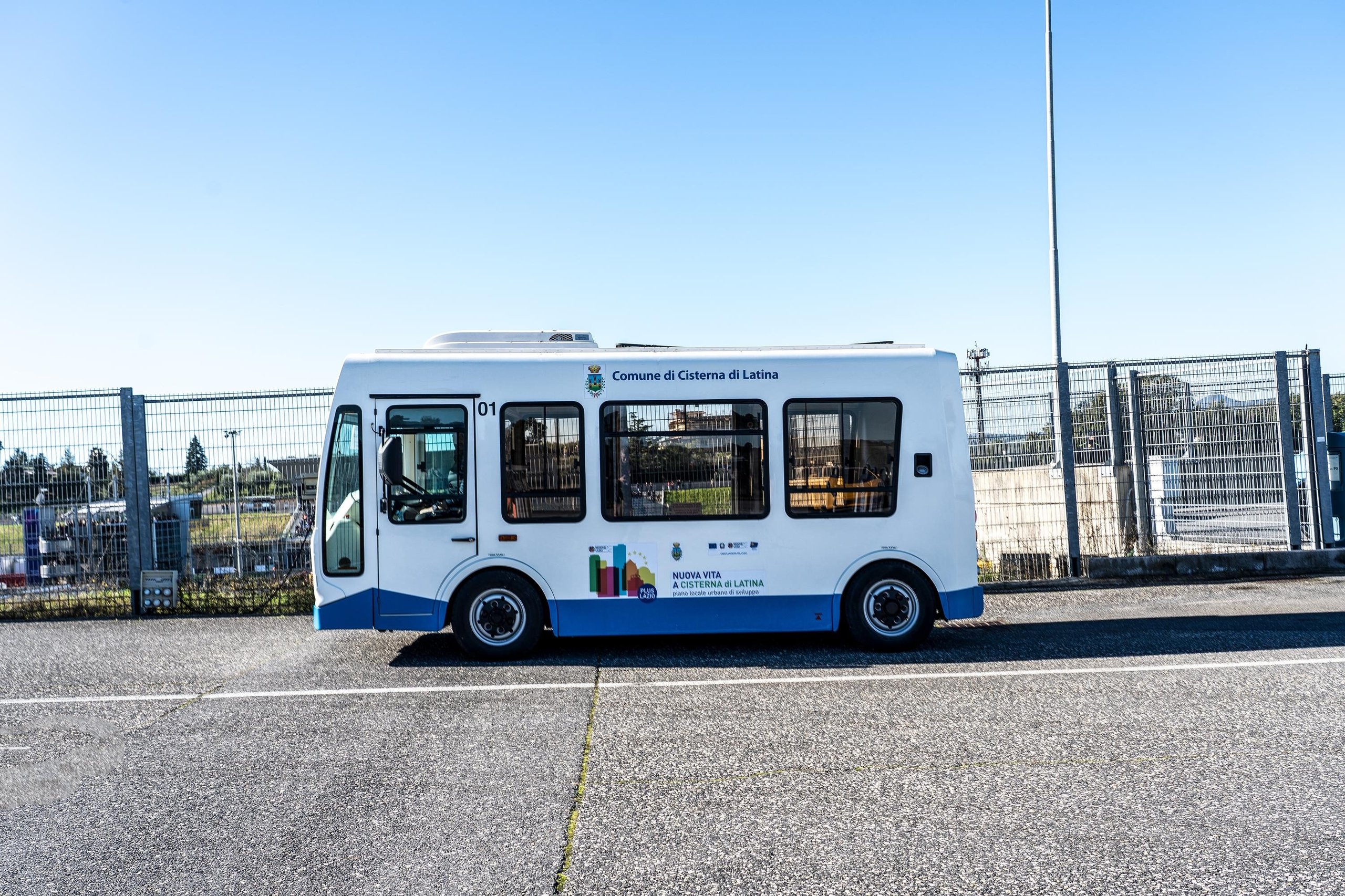
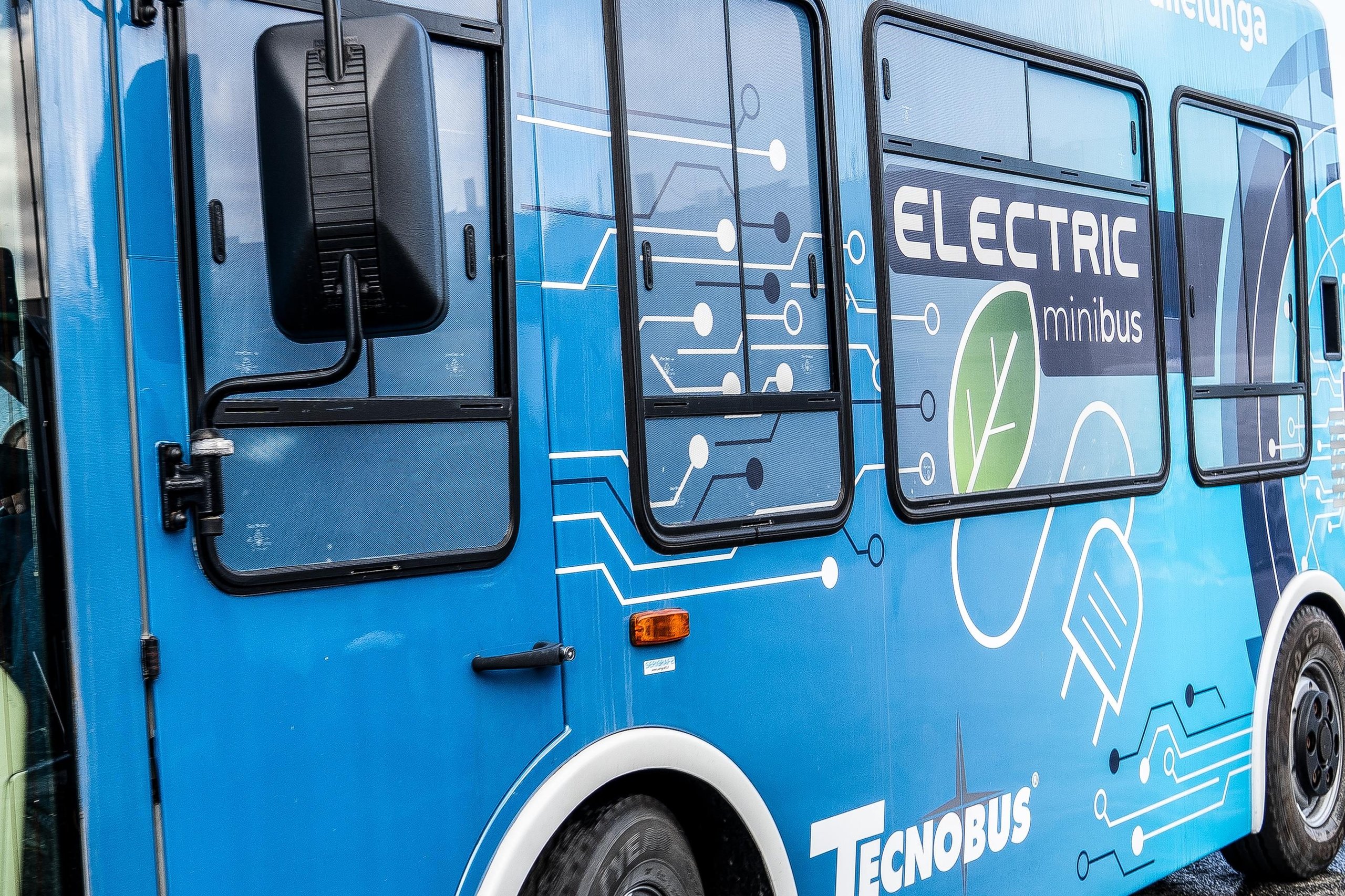
At Vallelunga, the ISO framework translated into tangible, visible changes across the event’s operational footprint. Personnel, including drivers and technicians, underwent training and awareness programs focused on sustainability. Staff mobility around the circuit relied on electric scooters and golf cars rather than combustion-powered alternatives. Waste management promoted recycling throughout the venue, with packaging and disposable plastics reduced in favor of bio-compostable cutlery and recyclable aluminum containers.
Catering utilized organic and locally-sourced food and beverages through partnerships with local businesses, a requirement that also supports the economic sustainability pillar of the standard by directing spending into the host region’s economy. A meal recovery program, in collaboration with the Food Bank of Rome, facilitated food donations to the parish of San Giovanni Battista. That last detail connects a global motorsport event directly to a local community need, which is precisely the kind of social engagement ISO 20121 evaluates.
None of these measures alter the sound or speed of the Huracán Super Trofeo EVO2 cars on track, and that distinction is central to understanding what Lamborghini is actually doing here. The certification addresses the operational infrastructure surrounding the racing, not the racing itself. Fans in the grandstands still watched naturally aspirated V10s at full volume. The sustainability effort wrapped around the event experience, from what the hospitality staff served to how the recycling bins were labeled. The cars remained untouched; the paddock evolved.

Sustainable beverage options, including CARBON champagne, are offered at the Lamborghini World Finals event.
Winkelmann’s ‘Fully-Sustainable Championship’ and What It Would Take
Stephan Winkelmann stated that Lamborghini’s sustainability commitment began in 2009, well before the concept became a standard corporate talking point. He described the World Finals certification as motivation to achieve the “ambitious goal of a fully-sustainable championship.”
That phrase deserves careful scrutiny. A fully-sustainable championship would need to address not only the event infrastructure that ISO 20121 covers but also the carbon footprint of the race cars themselves, the logistics of transporting dozens of cars and teams across continents, and the environmental cost of tire and consumable production. Lamborghini has not announced specific plans for alternative fuels, hybrid powertrains, or electric drivetrains in its customer racing series. The current Huracán Super Trofeo EVO2, reported to produce 612 hp from its naturally aspirated V10, runs on conventional racing fuel.
In line with ISO 20121 requirements, a reporting phase will follow the event to assess results and establish future objectives. This is the mechanism through which each certified event feeds measurable data into the next, and it represents the most credible aspect of the commitment: documented accountability rather than aspirational language. Whether those future objectives eventually extend to the cars themselves or remain focused on event operations is a question Lamborghini has not yet answered publicly.
For Super Trofeo participants and prospective customer racing buyers, the practical takeaway is straightforward. The racing product remains unchanged. The operational environment around it is evolving under external verification. The on-track experience is the same V10 formula that defines the Huracán era; the paddock experience is where the changes show up.

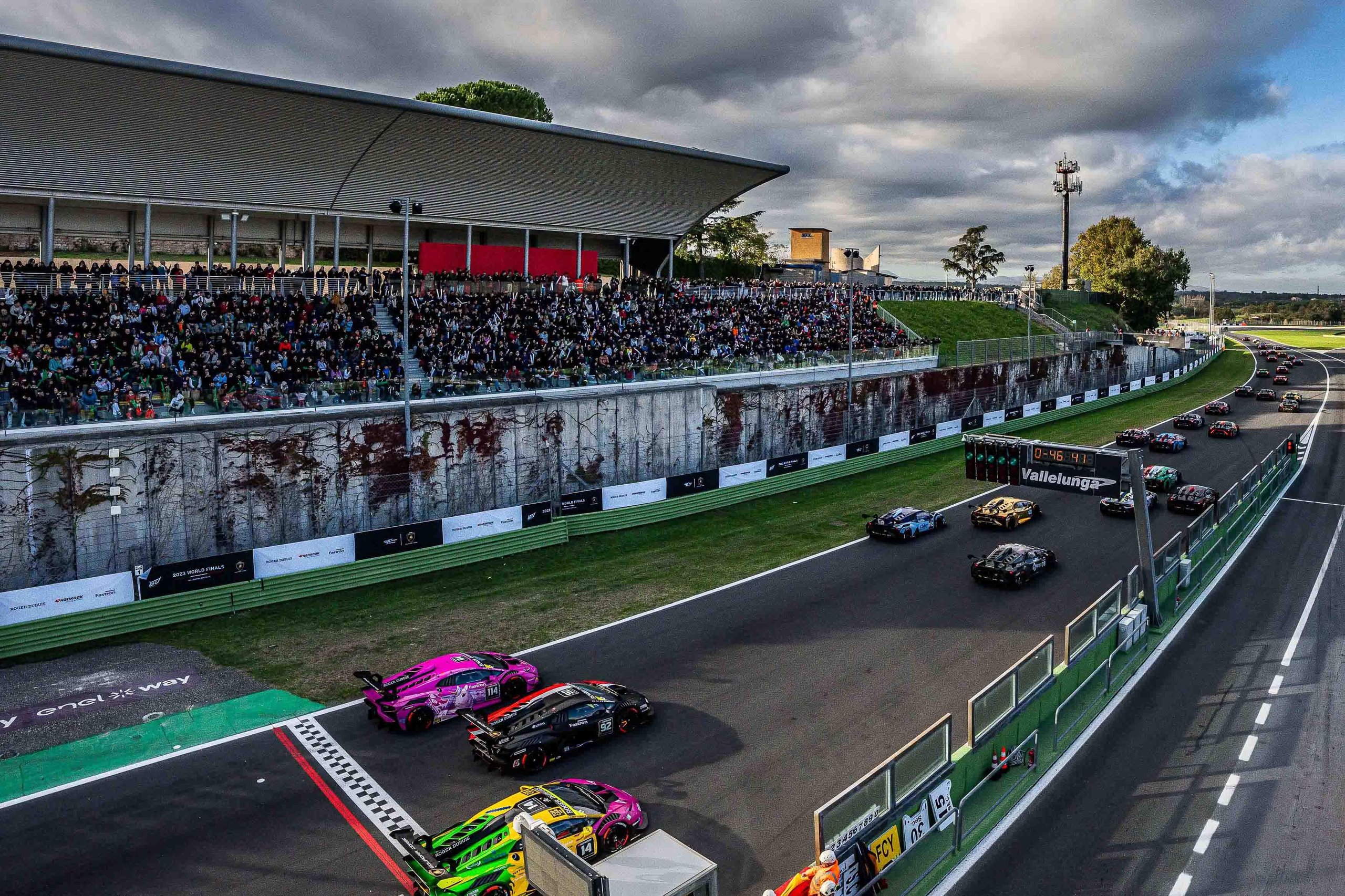
A fleet of Lamborghini Huracán Super Trofeo EVO2 race cars navigates the track during the World Finals.
Where Lamborghini Stands Against Rival Motorsport Programs
Lamborghini now holds ISO 20121 certification for two separate motorsport events: the 2022 Misano Super Trofeo Europe round and the 2023 World Finals at Vallelunga. No comparable ISO 20121 certifications for customer racing events from Ferrari, Porsche, or Mercedes-AMG appear in available reporting.
That gap is worth noting, but it comes with a caveat. Competitors may pursue sustainability through different frameworks, internal targets, or unannounced programs that do not carry an ISO label. Formula E, for instance, operates under its own sustainability accreditation system. The FIA itself promotes environmental certification for circuits and events. Lamborghini’s advantage is specificity: an externally audited, internationally recognized standard applied to its own customer racing program, not a broader series-level initiative imposed from above.
For a brand that built its identity on excess and spectacle, the strategic value is significant. Lamborghini is demonstrating that sustainability compliance and a V10 customer racing series can coexist without diluting either. As the Temerario GT3 program prepares to succeed the Huracán in Lamborghini’s racing lineup, the operational sustainability infrastructure being built now through Squadra Corse will carry forward regardless of what powertrain sits in the next generation of race cars.

Enthusiastic fans fill the grandstand, cheering on the racers at the Lamborghini World Finals.
Direzione Cor Tauri and the Bigger Brand Calculation
The World Finals certification fits within Lamborghini’s broader Direzione Cor Tauri strategy, the company’s roadmap for decarbonization across its entire value chain. The Sant’Agata Bolognese production site carries carbon-neutral certification, and the company’s stated target is a 40% reduction in CO2 emissions by 2030. Extending that framework to motorsport events is a logical progression, but it also serves a specific commercial purpose.
Customer racing programs like the Super Trofeo exist at the intersection of brand experience and revenue. The teams and drivers who participate are often current or prospective Lamborghini road car owners. The World Finals function as both a championship decider and an immersive brand event, complete with hospitality, networking, and the kind of curated experience that reinforces loyalty. Making that experience verifiably sustainable signals to a buyer demographic that increasingly weighs environmental credentials alongside performance specifications.
Online discussion among enthusiasts reflects a genuine tension on this point. Forum and social media conversations about Lamborghini’s sustainability direction reveal a split: some owners and fans see hybrid and sustainability initiatives as essential to the brand’s survival, while others view them as incompatible with the visceral, unapologetic character that defines Lamborghini. The World Finals certification is interesting precisely because it sidesteps that debate. The cars on track remain untouched. The operational wrapper around them evolves.
The reporting phase required by ISO 20121 will produce measurable data from the Vallelunga event, creating benchmarks for future World Finals and Super Trofeo rounds. Lamborghini has not published those results yet, and the real test of this program’s credibility will come when they do. A certified framework is only as meaningful as the goals it sets and the transparency with which results are shared. For now, Lamborghini holds a credential that no direct competitor in customer GT racing can publicly match, and the accountability mechanism to build on it. Whether that mechanism eventually reshapes the racing itself, or remains a carefully bounded exercise in operational greening, will define how seriously the Direzione Cor Tauri vision extends beyond the factory gates.

Attendees gather in a conference hall for the Lamborghini X World Finals 2023 event in Rome.
Gallery