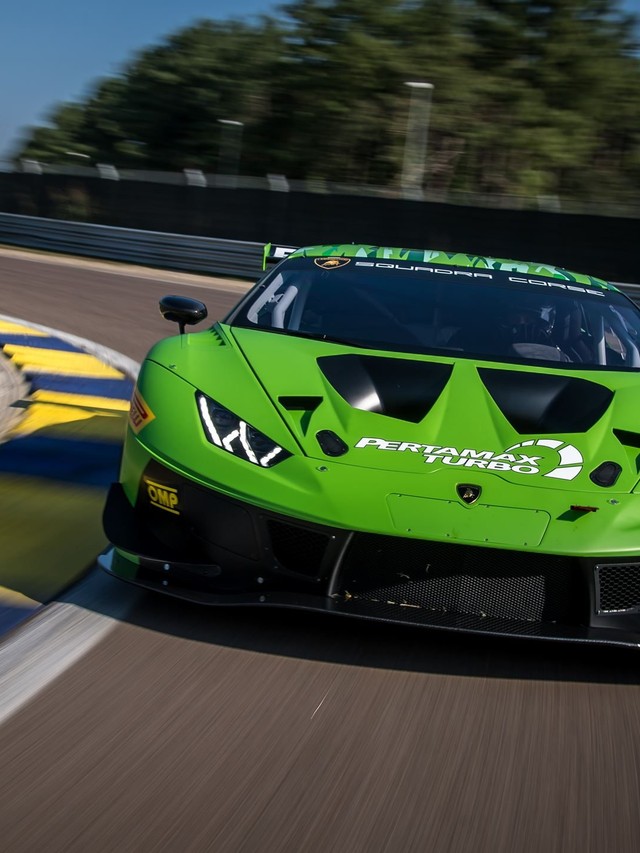
Squadra Corse Opens Its 2016 Driver Academy Season at Imola
In June 2016, Lamborghini Squadra Corse gathered 34 aspiring racing drivers at the Autodromo di Imola for the opening training sessions of its Young Drivers Program and GT3 Junior Program. The intake comprised 14 members in the Young Drivers Program, aimed at competitors in the Lamborghini Blancpain Super Trofeo, and 20 participants in the GT3 Junior Program, drawn from international GT championships. The split reflected two distinct career ladders under one organizational roof: one-make series talent on one side, customer GT3 competitors on the other.
What made the 2016 kickoff worth paying attention to was the scope of what Squadra Corse expected these drivers to absorb. Physical conditioning, on-track car development, telemetry analysis, and a full module on brand representation and media skills all featured in the curriculum. Speed alone would not earn anyone a factory contract. Lamborghini was building complete professionals, and the structure of the 2016 season revealed just how demanding that process would be. Every element of the program reinforced a single conviction: a modern GT factory driver must be an athlete, an engineer’s collaborator, and a brand ambassador in equal measure.
More Than Lap Times: Why Lamborghini Demands a Complete Driver
Most manufacturer driver programs share a basic premise: find fast young talent, give them seat time, promote the best. Lamborghini’s approach in 2016 went further by treating driving ability as a baseline requirement rather than a distinguishing one. The programs were explicitly structured around the idea that becoming a Lamborghini factory driver meant becoming a public representative of the brand, a collaborator with engineers, and a physically prepared endurance athlete, all at once.
That philosophy reflects the realities of GT racing, particularly at the endurance level, where consistency and communication matter as much as raw pace. A driver who can turn a blistering qualifying lap but cannot articulate tire degradation to an engineer between stints, or who wilts physically after two hours in a cockpit at 50 degrees Celsius, is a liability in a 24-hour race. Lamborghini’s 2016 curriculum addressed every one of those failure modes, treating them not as optional extras but as core competencies.
The contrast with Ferrari’s Driver Academy helps clarify the point. The FDA channels its graduates toward Formula One, focusing on the open-wheel ladder with the explicit goal of placing drivers on the F1 grid, producing names like Charles Leclerc and Oliver Bearman. Lamborghini’s programs serve a fundamentally different purpose: cultivating GT and sports car specialists who will race Huracán machinery in SRO series, IMSA, WEC, and the Super Trofeo one-make championship. The career ceiling is different, the skill set is different, and the brand expectations are different.
Inside the Technogym Partnership: Athletic Preparation for Endurance Racing
For the 2016 season, Lamborghini partnered with Technogym to design a dedicated athletic conditioning program for its young drivers. The drivers traveled to Technogym’s facility in Cesena for a regimen that included body composition measurement, full sports-medicine check-ups, endurance and strength evaluations, kinesiological testing, and nutritional guidance. Each driver received a personalized training plan with season-long targets, accessible through Technogym’s My Wellness Cloud platform for tracking progress.
The detail here is worth pausing on. Technogym built bespoke programs calibrated to the physical demands of racing: sustained cardiovascular output, neck and core strength to resist lateral G-forces, and the mental stamina to maintain concentration during multi-hour stints. Lamborghini’s stated rationale was straightforward: drivers need to sustain high performance under extreme physical stress, particularly in endurance formats where a lapse in concentration at hour five can undo the work of the entire team.
For anyone who thinks GT racing is less physically punishing than open-wheel competition, the cockpit temperatures and stint lengths in events like the Spa 24 Hours or the Rolex 24 at Daytona tell a different story. By formalizing the Technogym partnership, Squadra Corse signaled that physical readiness was not something to be left to individual initiative. It was a pillar of the program, reinforcing the conviction that completeness, not just speed, defined a Lamborghini driver.
Track Development: Learning the Car by Helping Build It
The on-track portion of the 2016 program split participants by category. Young Drivers Program members tested in the Huracán LP 620-2 Super Trofeo, while GT3 Junior Program participants drove the Huracán GT3. Both groups worked at Imola under the supervision of Lamborghini factory driver coaches.
What set Lamborghini’s program apart from a standard test day was the integration of car development work. Drivers did not simply log laps and receive feedback. They participated in development tests alongside official Motorsport department engineers, experiencing firsthand how setup changes affected the car’s behavior and learning to articulate those differences in technical language. After each session, drivers sat down with specialized engineers to review telemetry data, dissecting braking points, throttle application, and cornering loads.
Each program was led by a Lamborghini factory driver acting as coach, evaluating not just lap pace but a driver’s sensitivity to the car, ability to adapt to new configurations, and willingness to collaborate with team members. The factory coaches assessed how well a young driver could translate subjective impressions into useful engineering feedback. In professional GT racing, that skill separates a driver who simply goes fast from one who makes the entire team faster.
The ability to contribute meaningfully to car development becomes even more valuable as Lamborghini transitions its customer racing platform. The Temerario GT3, which Autoblog reported debuted at the 2025 Goodwood Festival of Speed as Lamborghini’s first competition car fully designed, developed, and built in-house, represents a significant engineering leap. Drivers trained in the Huracán-era programs who learned to communicate setup nuances effectively are precisely the kind of professionals Squadra Corse will need as it refines an entirely new racing platform.
Becoming an Ambassador: Brand Values and Media Training
The third pillar of the 2016 program was a theoretical module covering Lamborghini brand values, behavioral standards, and communication skills. Official drivers are expected to serve as ambassadors of the brand, which means knowing the product line well enough to explain the differences between a road-going Huracán and its Super Trofeo and GT3 derivatives.
The communication training extended to practical media skills: how to handle interviews, how to use social media responsibly, and how to interact with customers in the role of an Accademia instructor. That last point is easy to overlook, but it reveals something important about Lamborghini’s business model. Factory and junior drivers regularly work as instructors at Lamborghini’s track experience events, putting them face-to-face with the brand’s wealthiest clients. A driver who can teach a customer to brake later at turn three while making them feel confident and excited is performing a direct commercial function for the company.
No other part of the program illustrates the completeness mandate more clearly. Ferrari’s Driver Academy graduates need to impress team principals and deliver results in single-seater championships. Lamborghini’s graduates need to do all of that within GT racing while also functioning as polished brand representatives at hospitality events, customer track days, and media appearances. The 2016 curriculum made no attempt to disguise this dual demand; it was baked into the structure from the start.
From 2016 to the Temerario GT3: Where This Pipeline Leads
Lamborghini Squadra Corse announced intakes for its Young Driver and GT3 Junior programs consistently in subsequent years, confirming the initiative’s permanence rather than treating it as a one-off publicity exercise. The program expanded: Lamborghini announced 19 Young Drivers and 15 GT3 Juniors for the 2021 season, and 15 Young Drivers alongside 23 GT3 Juniors for 2022. By 2026, the structure had evolved to include three tiers (Super Trofeo Junior, GT3 Junior, and Young Professional), with 30 drivers selected through a coefficient ranking system across the three continental championships.
The progression path for graduates is clearly defined. Top Super Trofeo Junior performers advance to GT3 Junior status. The best GT3 Juniors earn the Young Professional designation, which carries direct support from Squadra Corse and positions them for potential factory contracts. Raffaele Giammaria leads the programs, overseeing a year-end selection shoot-out in Italy where top performers are evaluated through a combination of physical tests, driving assessments, and broader professional evaluations.
Lamborghini’s motorsport ambitions now extend well beyond the Super Trofeo one-make series. The Temerario GT3 will replace the Huracán GT3 EVO2 as the brand’s customer racing weapon, and Lamborghini’s SC63 LMDh prototype competes at the highest level of endurance racing. Both programs require factory-caliber drivers who can develop new machinery, represent the brand under intense media scrutiny, and perform physically across grueling race weekends. The 2016 curriculum, with its insistence on engineering communication, physical conditioning, and brand literacy, reads like a blueprint for exactly that kind of driver.
Lamborghini did not publish success rates for graduates who eventually earned factory contracts, and the specific career trajectories of 2016 participants remain unconfirmed in available reporting. What the record does show is that the program’s structure survived, expanded, and became more formalized over the following decade, which suggests Squadra Corse found it effective enough to invest in year after year.
How Lamborghini’s Approach Compares to the Competition
Every major manufacturer in GT racing runs some version of a young driver program, but the philosophies differ in ways that matter. Ferrari’s Driver Academy operates with a singular focus: identify prodigies early and funnel them toward Formula One. The results speak for themselves in names like Leclerc. Squadra Corse is not trying to produce F1 drivers. It is building a roster of GT specialists who can race, develop cars, instruct customers, and represent a luxury brand simultaneously.
Porsche’s Junior Programme occupies a middle ground, placing young drivers in the Supercup and Carrera Cup series with a pathway toward factory GT drives. The structure is well-established and produces strong GT talent, but Lamborghini’s explicit emphasis on brand ambassadorship and customer-facing roles adds a commercial dimension that competitors tend to treat as secondary.
For prospective racing drivers evaluating which manufacturer program to pursue, the practical takeaway is this: Lamborghini’s pathway rewards versatility and professionalism as much as raw speed. A driver who can turn competitive lap times, communicate setup changes to engineers in precise technical language, handle a media interview with poise, and make a wealthy customer feel like a hero at a track day is the ideal Lamborghini factory driver. That profile did not emerge by accident. It was designed, starting with programs like the 2016 intake at Imola, and refined over more than a decade of continuous operation.


