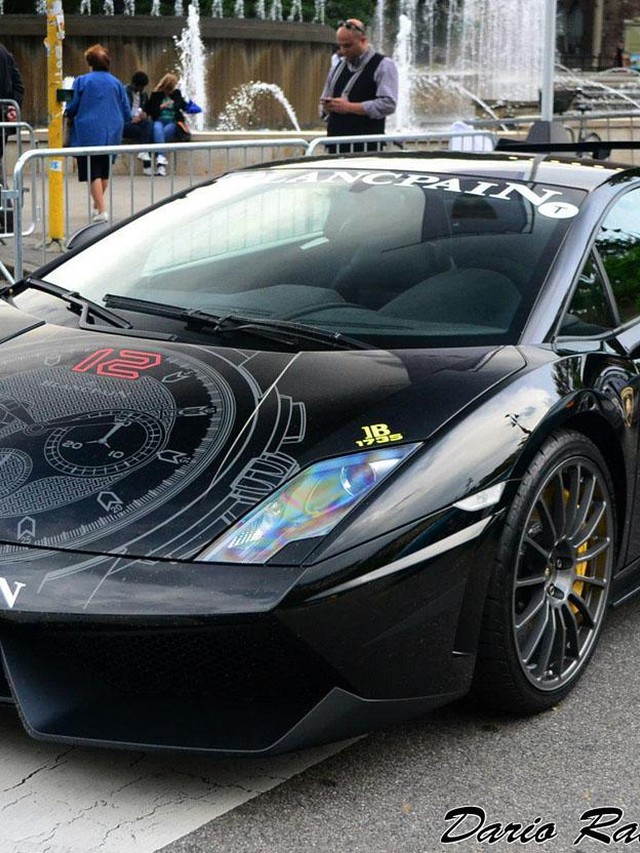
Sixteen Hours at Vallelunga: Setting the Stage for 2016
When the Piero Taruffi racetrack in Vallelunga hosted the first official pre-season test days for the Lamborghini Blancpain Super Trofeo Europe series on March 22 and 23, 2016, the story was not written in lap times. It was written in the sheer number of Huracán LP 620-2 Super Trofeo cars crowding the pit lane. Teams ran four sessions totaling 16 hours of track time, each squad averaging 30 laps per session and covering hundreds of kilometers on one of Italy’s most demanding circuits before the season opener at Monza on April 23-24.
Lamborghini anticipated a grid of nearly 40 cars for that Monza round, a figure that would represent the largest field in the series’ history. For a one-make championship built around a single, naturally aspirated V10 race car, that kind of density signals something fundamental about the health of the program and the appetite among gentleman drivers and professional teams alike. The two days at Vallelunga were a shakedown, yes, but they also served as a census of a series reaching peak momentum.
The final session produced the sharpest times, as pre-season tests tend to do. Raton Racing set the benchmark: Roberto Tanca and 23-year-old Danish driver Dennis Lind posted a 1’32″757 at an average speed of 158.543 km/h. Imperiale Racing fielded four cars and turned in strong results across all of them, with drivers Vito Postiglione, Alberto Viberti, Andrea Palma, Carina Lima, Simone Pellegrinelli, and Steve Tandy sharing duties. Bonaldi Motorsport (running Martin Kodric and Ricardo Vera) and Orange1 Team Lazarus (with Fabrizio Del Monte and Nicola De Marco) were consistently among the quickest throughout.
The Huracán LP 620-2 Super Trofeo: 620 Horsepower, Rear Drive, No Safety Net
The car filling that record grid deserves closer examination than its name might suggest. Based on the road-going Huracán LP610-4, the LP 620-2 Super Trofeo shares a structural foundation with its street sibling but little else in character. Power comes from a naturally aspirated 5.2-liter V10 producing 620 horsepower, a modest bump over the road car’s 610, though the real transformation lies in the diet. Dry weight sits at 1,270 kg (2,800 lb), yielding a weight-to-power ratio that Lamborghini pegs at 2.05 kg/CV. According to one report, the chassis is a hybrid carbon and aluminum construction, and the car runs Brembo/PFC brakes, a Motec data acquisition system, and a six-speed sequential gearbox.
The defining engineering decision is the switch from the road car’s all-wheel-drive system to rear-wheel drive. That “2” in the name is the tell. Stripping the front driveshafts saves weight, but the real rationale is pedagogical. A rear-drive race car with 620 horsepower and slick tires demands precise throttle management, teaches drivers to feel the rear axle’s limits, and punishes sloppiness with immediate oversteer. The Super Trofeo is explicitly designed as a stepping stone toward GT3 competition, and the RWD layout is central to that philosophy. When nearly 40 of these cars line up on a grid, the quality of the racing depends on every driver having earned their confidence through that unforgiving drivetrain.
The LP 620-2 replaced the Gallardo LP 570-4 Super Trofeo, continuing a lineage that began when the series launched in 2009. The Huracán brought a stiffer platform, more sophisticated aerodynamics, and a significantly more modern cockpit, all while keeping the naturally aspirated V10 character that defines the series’ appeal from the grandstands.
Why the Super Trofeo Grid Matters More Than the Lap Times
A grid approaching 40 identical cars is not just a logistical achievement. It reflects genuine commercial confidence in Lamborghini’s customer racing model, which operates on a simple but demanding premise: teams purchase the cars, Squadra Corse provides technical support and parts supply, and Blancpain lends title sponsorship and timing infrastructure. The Blancpain partnership itself carries an unusual origin story, formed after Blancpain CEO Marc Hayek drove in the series’ inaugural 2009 season. That detail says something about the kind of people the program attracts.
By 2016, the series operated across three continental championships. The Super Trofeo expanded to Asia in 2012 and North America in 2013, with all three regional series feeding into a World Final. Vallelunga itself held significance as the venue for the first Super Trofeo World Championships in 2013, making it a fitting location for a pre-season shakedown that previewed the European series’ largest-ever entry.
Three new teams at Vallelunga underscored the program’s pull. Dörr Motorsport brought fifteen years of experience from the German VLN Championship, fielding Jaap Bartels and Arne Hoffmeister. GT3 Poland ran two cars, marking the series’ expansion into Eastern European motorsport. French outfit MN Development rounded out the newcomers. Each entry represents a significant financial commitment, and their presence signals that the Super Trofeo’s reputation as a well-organized, competitively meaningful series continued to grow. One-make series live or die by their ability to attract and retain teams. When the grid thins, the racing suffers, the broadcast value drops, and the manufacturer’s investment looks questionable. At Vallelunga, the opposite was happening. Lamborghini’s customer racing pipeline was filling up, not draining.
Customer Racing as Brand Strategy: The Deeper Investment
Lamborghini was not operating in a vacuum. Ferrari’s Challenge series and Porsche’s various one-make cups represent the most direct competitive analogs, each offering wealthy enthusiasts and semi-professional drivers a structured environment to race identical machinery under factory support. What distinguished the Super Trofeo in 2016 was the car itself. Where many customer racing programs rely on turbocharged engines or heavily restricted powertrains, the Huracán Super Trofeo delivered its performance through a naturally aspirated V10 at a time when that engine architecture was already becoming rare in new production cars. The sound alone was a differentiator at any circuit.
The strategic value for Lamborghini extended well beyond race weekends. Customer racing programs create a captive audience of high-net-worth individuals who interact with the brand at a level far deeper than a showroom visit. They buy the car, they buy the spares, they travel to circuits across Europe and beyond, and they build loyalty that translates into road car purchases. Squadra Corse understood this, and the Super Trofeo’s growth through 2016 validated the investment. For prospective entrants weighing the commitment, the practical reality of a Super Trofeo season involves the car purchase (later EVO2 models listed at around €250,000 excluding taxes, per available pricing data), plus running costs for tires, transport, entry fees, and engineering support across a multi-round calendar. It is not inexpensive, but the infrastructure Lamborghini provides, from technical briefings to data support, is designed to lower the barrier for drivers who lack factory-team resources. That nearly 40 teams found the proposition worthwhile in 2016 speaks to how effectively Squadra Corse balanced accessibility with competitive credibility.
From Super Trofeo to Temerario GT3: The Long Arc of Lamborghini’s Racing Investment
Viewed through a longer lens, the 2016 Vallelunga tests occupy a specific place in a broader trajectory. The Huracán Super Trofeo platform served Lamborghini’s customer racing ambitions for nearly a decade, evolving through the EVO (2017) and EVO2 (2021) updates that refined aerodynamics and electronics without abandoning the naturally aspirated V10 formula. That consistency gave teams long development cycles and kept the series accessible to drivers who could build expertise on a stable platform.
The next chapter represents a fundamental shift. The Temerario GT3, which Autoblog reported debuted at the 2025 Goodwood Festival of Speed, is Lamborghini’s first competition car to be fully designed, developed, and built in-house. It replaces the naturally aspirated V10 with a twin-turbocharged V8 hybrid architecture derived from the road-going Temerario, marking Squadra Corse’s evolution from a customer racing support operation into a genuine in-house motorsport engineering house.
For teams and drivers who built their programs around the Huracán’s characteristics, this transition means adapting to an entirely new powerband, different weight distribution, and the complexities of turbo management in wheel-to-wheel racing. The Super Trofeo series itself will presumably follow the platform change, though Lamborghini has not confirmed the full timeline for that transition.
What the 2016 Vallelunga tests captured, in retrospect, was a one-make series at peak momentum on a platform that would become one of the last pure naturally aspirated racing cars available to gentleman drivers. The nearly 40 cars expected at Monza that April were not just competing for trophies. They were participating in the final golden stretch of a formula that the industry, Lamborghini included, is moving beyond. The V10’s successor will be turbocharged, hybridized, and built entirely within Sant’Agata’s own walls. Whether the next generation of Super Trofeo grids will match the density of 2016 remains an open question, but the foundation those Vallelunga tests reinforced continues to support everything Squadra Corse builds today.
Gallery


