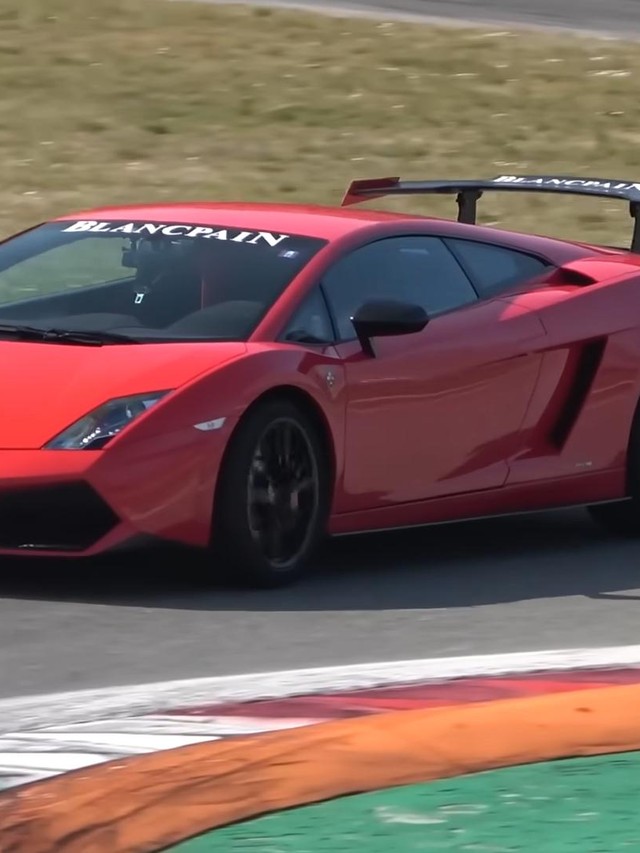
V10 Thunder Returns to Silverstone for the Super Trofeo Europe Season Opener
Twenty-plus Huracán Super Trofeo EVO race cars lined up on Silverstone’s 5.9 kilometers for the opening round of the eleventh Lamborghini Super Trofeo Europe season on May 11 and 12. The format is familiar: two 50-minute races, rolling starts, mandatory pit stops, and four classes (Pro, Pro-Am, Am, and Lamborghini Cup) that mix professional racers with gentleman drivers. Practice sessions begin on Friday, May 10, with qualifying and Race 1 on Saturday and Race 2 at 11:10 a.m. local time on Sunday.
What makes this particular grid worth paying attention to is the mix of names on it. A 17-year-old Pole making his series debut shares the entry list with a three-time category champion and a driver who just won the opening round of the Italian GT Championship in a Huracán GT3 EVO. The Super Trofeo is not a parade lap for wealthy hobbyists. It functions as a deliberate talent pipeline, and the 2019 season brought one of the more interesting grids in the series’ decade-long history.
Why a Single-Make Series Matters More Than It Looks
Lamborghini Squadra Corse launched the Super Trofeo in 2009. By 2019, the series spanned three continental championships (Europe, North America, and Asia) and culminated each year in a World Final where drivers from all regions compete for a global title. The structure is not accidental. A single-make series strips away the engineering arms race and forces the competition to live entirely in driver skill, team preparation, and setup decisions. For a manufacturer, it also means every car on the grid reinforces brand identity at circuits that host major GT World Challenge events.
The rear-wheel-drive layout of the Huracán Super Trofeo EVO is the detail that matters most for understanding the series’ purpose. Road-going Huracáns send power to all four wheels. The race car does not. Removing the front axle drive forces younger drivers to learn throttle management, rotation, and oversteer correction in a way that directly prepares them for GT3 machinery. Lamborghini designed this as a classroom, and the curriculum is deliberately harder than the road car suggests.
Ferrari runs the Ferrari Challenge and Porsche the Carrera Cup with similar philosophies, but Lamborghini’s approach leans harder on the rear-drive education model. The Super Trofeo functions as the first rung on a motorsport ladder that, for the most promising drivers, leads to GT3 seats and, eventually, factory programs.
The Huracán Super Trofeo EVO: Road Car DNA, Race Car Purpose
Lamborghini says the Huracán Super Trofeo EVO’s 5,204 cc V10 produces 620 CV at 8,250 RPM, with peak torque of 570 Nm arriving at 6,500 RPM. One source reports a dry weight of 1,270 kg, which translates to a weight-to-power ratio of roughly 2.05 kg per CV. That engine is derived directly from the unit in the road-going Huracán, which is the point. The Super Trofeo is not a silhouette car wearing a Lamborghini body over unrelated mechanicals. The V10, the hybrid carbon and aluminum frame construction, and the fundamental architecture come from Sant’Agata’s production line.
What changes is everything around the driver. A Marelli-actuated six-speed sequential gearbox replaces the road car’s dual-clutch automatic. Racing ABS with 12 positions and traction control with nine positions give teams granular setup options. The front-to-rear weight distribution sits at 42/58 percent, biased toward the driven wheels. Pirelli supplies the control tire, ensuring the competitive variable is the person behind the wheel rather than the rubber budget.
| Spec | Huracán Super Trofeo EVO |
|---|---|
| Engine | 5,204 cc V10 |
| Power | 620 CV at 8,250 RPM |
| Torque | 570 Nm at 6,500 RPM |
| Dry Weight | 1,270 kg |
| Gearbox | 6-speed sequential (Marelli) |
| Drive | Rear-wheel drive |
| Weight Distribution | 42% front / 58% rear |
For enthusiasts who follow the Huracán STO or Performante, the Super Trofeo EVO puts those road cars in context. The STO borrows aero philosophy and driver-focused intent from this race car, not the other way around. The technology transfer flows from track to showroom.
Drivers to Watch on the 2019 Grid
Imperiale Racing, based in Modena, entered two Pro-class cars. The stronger pairing on paper put 20-year-old Kikko Galbiati alongside Vito Postiglione, who arrived at Silverstone as the reigning championship runner-up with third-place finishes in the two seasons before that. Postiglione also brought momentum from winning the first round of the Italian GT Championship Sprint series in a Huracán GT3 EVO, making him one of the few drivers on the grid actively racing at both levels of Lamborghini’s motorsport ladder.
Imperiale’s second car carried an even younger story. Bartosz Paziewski, just 17, was making his Super Trofeo debut alongside fellow Polish driver Karol Basz. Bonaldi Motorsport fielded Jack Bartholomew, the 2018 Middle East champion and Asian series runner-up, with newcomer Stuart Middleton. Leipert Motorsport confirmed Niels Lagrange, a Belgian who stood out in previous seasons, paired with 19-year-old debutant Anthony Lambert.
The Lamborghini Cup class promised the weekend’s most compelling personal rivalry: Gerard Van der Horst, who won the category title three consecutive years, against Joseph Collado, the 2018 World Final winner. MTech entered two-time Asian champion Supachai Weeraborwornpong alongside English driver Tim Richards. The breadth of nationalities and experience levels across the grid illustrates how the Super Trofeo genuinely operates as an international series rather than a regional showcase, and why it works so effectively as a proving ground for talent at every stage of development.
The Competitive Landscape and What Comes Next
Lamborghini does not publicly disclose the cost of purchasing a Huracán Super Trofeo EVO or the full-season budget required to compete. What the series structure reveals is a deliberate accessibility strategy: the four-class system accommodates professional drivers, semi-professional pairings, amateur racers, and brand-loyal enthusiasts in the Lamborghini Cup. That range keeps grids full and ensures the series serves both competitive and commercial purposes.
For anyone watching the Super Trofeo as a window into Lamborghini’s future motorsport direction, the connection to the GT3 program is the thread worth following. Drivers who prove themselves here earn consideration for GT3 seats, and the engineering lessons learned from racing the Huracán V10 in anger across six continental weekends feed back into Squadra Corse’s development work.
Both Silverstone races were live-streamed on Lamborghini Squadra Corse’s Facebook, Instagram, and YouTube channels, as well as on Motorsport.tv. For a series that started in 2009 as a European curiosity, the global streaming infrastructure signals how seriously Lamborghini treats the Super Trofeo as a brand amplifier. A decade in, the one-make championship has grown from a marketing exercise into a genuine proving ground, one where the next generation of GT drivers learns its craft in a car that shares its DNA with the road machines parked in Sant’Agata’s showroom.
Gallery


