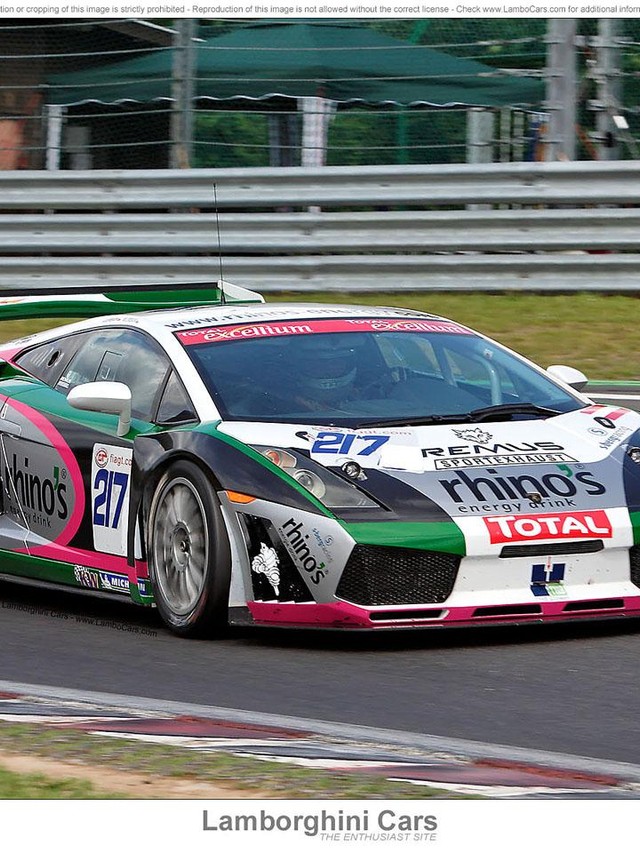
A 1-2 Lockout on a Strange August Afternoon
When the British GT Championship finally resumed at Oulton Park on August 2, 2020, Lamborghini’s customer teams treated the occasion like a coronation. Barwell Motorsport‘s Phil Keen and Adam Balon qualified on pole by posting the fastest time in the second session, then led every racing lap of the one-hour event in their Lamborghini Huracán GT3 Evo. Alongside them on the front row sat the sister Barwell car, the #78 Huracán GT3 Evo of Sandy Mitchell and Rob Collard, a pairing formed fresh for the 2020 season.
All three Lamborghini entries held position through the rolling start and the opening corner, briefly forming a 1-2-3 before the field settled. Keen controlled the race through the mandatory driver-change pit stop window, while Collard took over from Mitchell in the second Barwell car. A safety car period, triggered by an Aston Martin incident late in the race, compressed the field and effectively ended competitive running for the final 12 minutes. The result was preserved under caution: a Barwell 1-2, with WPI Motorsport’s Michael Igoe and Lamborghini factory driver Dennis Lind completing the day in fifth to put three Huracáns inside the top five.
For Mitchell and Collard, the runner-up finish was a welcome result after narrowly missing a podium in the weekend’s earlier race. Five years on, though, the significance of that opening-round lockout looks different than it did at the time. It was not simply a good day at a Cheshire circuit. It was the opening chapter of a championship-winning campaign and a data point in one of the most successful customer racing partnerships in GT3 history.
The Huracán GT3 Evo as a Customer Racing Benchmark
The Huracán GT3 platform debuted a decade ago and, through successive Evo and Evo2 updates, remained Squadra Corse’s primary weapon in production-based GT racing worldwide. Its distinction lay not in a single dominant season but in sustained competitiveness across years of Balance of Performance adjustments, regulation changes, and an ever-expanding field of factory-backed rivals.
Customer racing programs live or die on reliability and accessibility. A GT3 car that wins at Daytona means nothing to a gentleman driver if it costs a fortune in unscheduled repairs or demands factory-engineer babysitting at every round. The Huracán GT3 Evo earned its reputation partly because privateer teams could run it hard, season after season, without the platform becoming a liability. That 2020 Oulton Park result, where two customer-run Barwell entries locked out the front row and the podium, illustrates the point cleanly: the car rewarded good preparation and driver talent without requiring exotic intervention.
By the time its competitive life wound down, the Huracán GT3 platform had accumulated victories in the British GT Championship, the 24 Hours of Daytona, and numerous other series globally. Car and Driver estimates the related Huracán Super Trofeo Evo2 at 612 hp and 2,950 lb, with a $360,000 base price, offering some sense of the engineering and cost envelope Squadra Corse operated within for its one-make and GT3 programs.
Barwell Motorsport: The Partnership That Defined British GT for Lamborghini
Barwell Motorsport’s relationship with Lamborghini in British GT stretches back to 2016, and the results speak for themselves. The team secured multiple drivers’ and teams’ championship titles running Huracán GT3s, building a record of consistency that few privateer operations in any national GT series can match. The 2020 season, which began with that Oulton Park lockout, ended with Barwell winning both the British GT Teams’ and Drivers’ championships. Collard and Mitchell were crowned GT3 champions, with the Balon and Keen pairing contributing crucial points.
The operational model behind this success deserves more attention than the trophy count alone. Squadra Corse supplies the car and factory driver support (Dennis Lind’s presence at WPI Motorsport in 2020 is one example), but day-to-day engineering, logistics, and race strategy fall to the customer team. Barwell’s ability to extract consistent podium results from the Huracán GT3 Evo over many seasons reflects well on both the team’s competence and the car’s fundamental design.
That model also matters because it contrasts with how some rival manufacturers approach GT3 racing. Certain programs blur the line between “customer” and “factory” entries, embedding manufacturer engineers so deeply that the privateer label becomes cosmetic. Lamborghini’s British GT success through Barwell looks more like genuine customer racing, where the team owns the outcomes. For enthusiasts who care about the authenticity of motorsport results, that distinction carries weight.
From Huracán to Temerario: What Changes and What Carries Over
The Lamborghini Temerario GT3 is confirmed to succeed the Huracán GT3 Evo 2 as the brand’s factory-supported GT3 contender, and it represents a genuine generational shift. Lamborghini describes it as the first race car fully designed and developed in-house at its Sant’Agata Bolognese headquarters. Previous GT3 efforts relied more heavily on external partners for chassis and race-car development; bringing that work inside signals the company’s increased seriousness about controlling its own motorsport destiny.
The powertrain transition is equally significant. The road-going Temerario pairs a twin-turbocharged V8 with a hybrid system producing 907 hp combined, according to Car and Driver. For racing, as Jalopnik reports, the GT3 version strips the hybrid components entirely, running a modified version of the twin-turbo V8 alone as GT3 regulations require. For teams that spent a decade learning the naturally aspirated V10’s power delivery, throttle response, and thermal characteristics, the switch to forced induction will demand a complete recalibration of driving technique and setup philosophy.
As Road & Track noted when the car broke cover at the 2025 Goodwood Festival of Speed, the Huracán GT3 soldiered on for a full decade while the GT3 landscape professionalized dramatically around it. The Temerario GT3 arrives into a category now populated by purpose-built competitors from nearly a dozen manufacturers. Whether it can replicate the Huracán’s longevity and privateer-friendly character remains the central question for Lamborghini’s customer racing future.
This transition also comes at a moment when Lamborghini’s broader motorsport strategy is in flux. The SC63 LMDh program faced significant challenges over two seasons and was paused for 2026, concentrating the brand’s racing credibility squarely on its GT3 and Super Trofeo programs. The Temerario GT3’s success, or lack of it, will carry outsized importance for Lamborghini’s competitive image.
Why This History Matters for Lamborghini Enthusiasts Now
Looking back at a five-year-old race result might seem like an exercise in nostalgia, but the 2020 Oulton Park lockout sits at an inflection point in Lamborghini’s motorsport narrative. It came during a season disrupted by extraordinary circumstances, when the simple act of getting race cars on a grid felt like an achievement. Barwell and Lamborghini did not just show up. They dominated.
For buyers and collectors tracking Lamborghini’s trajectory, the practical takeaway is straightforward: the Huracán GT3 Evo’s competitive record, built through seasons like 2020, directly informs the expectations and engineering targets for the Temerario GT3. Squadra Corse learned what customer teams need from a decade of real-world feedback, from Barwell’s championship campaigns in the UK to endurance efforts at Daytona and beyond. The Temerario GT3’s in-house development is, in many ways, the institutional response to everything the Huracán taught Lamborghini about what works and what breaks under competitive pressure.
Anyone who followed British GT closely during the Huracán era knows that Barwell’s consistency was almost uncanny: multiple championships, dozens of podiums, and a working relationship with Squadra Corse that became the template for how Lamborghini wants its customer racing program to function globally. The 2020 season opener at Oulton Park was one race in a long campaign, but it captured the formula perfectly. Strong qualifying pace, clean execution through the pit window, and a car that rewarded disciplined driving rather than heroic improvisation. That formula now needs to survive the transition to turbocharging, to a GT3 class more crowded and professional than ever. The Huracán’s legacy gives Lamborghini a foundation. Building on it with the Temerario is the next test.
Gallery


