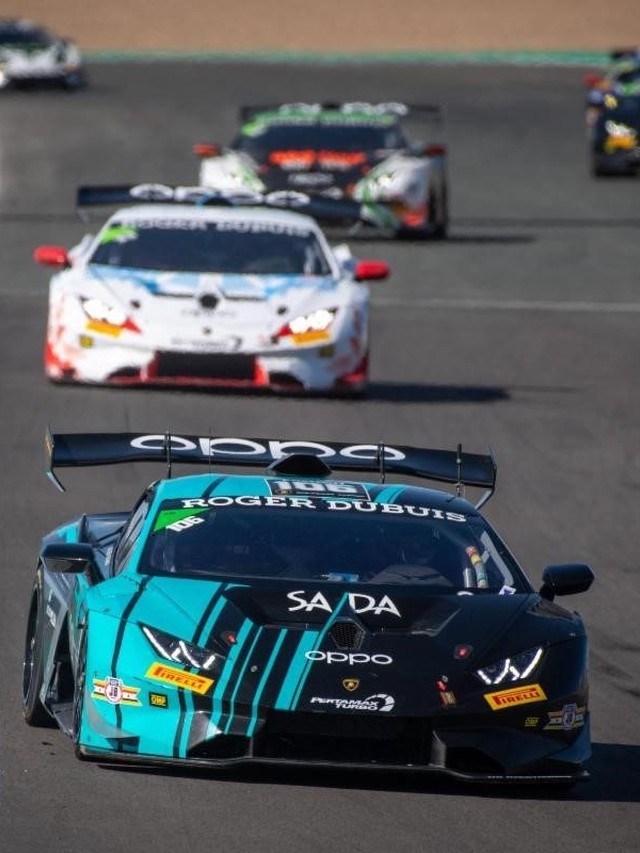
Imperiale Racing and Venturini Seal the International GT Open Crown
When the checkered flag dropped at the 2017 International GT Open finale in Barcelona, Lamborghini Factory Driver Giovanni Venturini and the Imperiale Racing team could finally exhale. The #63 Huracán GT3, which Venturini shared with co-drivers Thomas Biagi and Marco Mapelli across the season, finished the championship on 114 points, eight clear of the nearest challenger: a BMW M6 GT3. That margin sounds comfortable, but it was forged through relentless consistency. The car scored points in every single race, collecting two outright wins at Hungaroring Race 1 and Barcelona Race 1, plus four runner-up finishes at Estoril, Paul Ricard, Silverstone, and Monza.
Imperiale ran two full-season Huracán GT3 entries and added a third car from the Silverstone round onward. Biagi finished fourth in the overall standings. Vito Postiglione, simultaneously contesting the Lamborghini Super Trofeo Europe, ended eleventh alongside Lamborghini Factory Driver Christian Engelhart. That strength in depth mattered tactically: Imperiale pressured rivals from multiple grid positions, and the result was at least one Imperiale podium in round after round.
The International GT Open title alone would have been worth celebrating. Yet this particular championship turned out to be just one strand of a far larger 2017 story, one that would redefine how the motorsport world viewed Lamborghini.
A Global Title Haul That Demanded Attention
Lamborghini says the Huracán GT3 accumulated eight championships during the 2017 season: three team titles and five driver titles, spread across a dozen international and national GT series. Roughly 60 Huracán GT3s were competing worldwide that year, a figure that gives a sense of the customer racing program’s scale.
The team championships went to Grasser Racing Team in the Blancpain GT Series, Barwell Motorsport in the British GT Championship, and Imperiale Racing in the International GT Open. On the driver side, Mirko Bortolotti, Andrea Caldarelli, and Christian Engelhart took both the Blancpain GT Series overall and Endurance Cup driver titles. Enrico Beretta and Michele Frassineti won the Italian GT Championship. Venturini claimed the International GT Open crown. And the pairing of Fabio Babini and Emanuele Busnelli secured the Michelin GT3 Le Mans Cup.
The breadth is what separates a strong season from a genuinely dominant one. The Blancpain GT Series pits GT3 cars from every major manufacturer against each other across sprint and endurance formats, and winning it carries enormous weight. Stacking British GT, the Italian championship, and the Le Mans Cup on top shows the Huracán GT3 could prevail in different regulatory environments, on different circuits, and under different teams making their own engineering calls within GT3 regulations. No single factory effort could orchestrate all of that. These results came from independent customer squads who chose the Huracán, invested their own money, and still found it competitive enough to beat the field. That is the most powerful form of engineering validation a manufacturer can receive, and it became the thread running through everything Lamborghini’s motorsport division did next.
The V10’s Natural Advantage on Track
At the heart of every Huracán GT3 sits a naturally aspirated 5.2-liter V10, derived from the road car’s engine but recalibrated for endurance racing. In a class where Balance of Performance (BoP) regulations exist specifically to equalize different powertrains, the character of the engine still matters. A naturally aspirated V10 delivers power in a linear, predictable curve. For a driver exiting a corner at the limit of adhesion, that predictability translates into confidence: throttle response is immediate, and power arrives without the lag or surge that turbocharged competitors can introduce.
Lamborghini Squadra Corse developed the GT3 around the Huracán’s aluminum and carbon-fiber chassis architecture, stripping weight and adding the aerodynamic package required for GT3 competition, most visibly the large rear wing and aggressive splitter. The engineering philosophy prioritized drivability alongside outright pace. A GT3 car that is fast but fragile or difficult to manage across a multi-hour stint will lose championships to one that is merely quick and utterly reliable.
Multiple enthusiast communities and sim-racing discussions describe the Huracán GT3 as a car that rewards smooth, precise inputs and punishes aggression, particularly with its rear-end behavior under trail-braking and throttle lift. That reputation aligns with how the real car performed in 2017: consistent, points-scoring finishes rather than spectacular one-off wins followed by retirements. The #63 Imperiale car’s record of scoring in every race is a direct reflection of that engineering character.
Lamborghini confirmed nothing about specific BoP advantages or technical secrets, and the company would not. BoP is managed by series organizers, not manufacturers. What Squadra Corse could control was the baseline package sold to customer teams, and in 2017, that package proved remarkably well-suited to a wide range of circuits and conditions.
Racing DNA Feeding Back to the Road
For Lamborghini owners and prospective buyers, the question that follows any motorsport headline is always the same: does any of this actually matter for the car in my garage? The honest answer is that GT3 racing and road-car development exist on a spectrum rather than a direct pipeline, but the 2017 season strengthened a connection Lamborghini would lean on heavily in subsequent years.
The Huracán Performante, which arrived in 2017 with its active aerodynamic Aerodinamica Lamborghini Attiva (ALA) system, shared the same V10 DNA and chassis philosophy as the GT3 racer. The later Huracán STO (Super Trofeo Omologata), launched in 2020, made the link even more explicit: its name directly references the Super Trofeo racing series, and its aerodynamic and suspension tuning drew from lessons learned in competition. When Lamborghini’s marketing materials for the STO referenced the brand’s GT3 success, the 2017 title haul was the foundation of that claim.
The broader significance is about credibility. Lamborghini spent decades being perceived, fairly or not, as a brand that built spectacular road cars but lacked serious motorsport credentials compared to Ferrari or Porsche. Eight titles across multiple series, earned by independent customer teams spending their own money, made that perception much harder to sustain. The 2017 campaign did not just sell race cars; it gave Lamborghini a motorsport narrative it could carry into every showroom.
Where Lamborghini Stood Against Ferrari and Porsche in 2017
GT3 racing in 2017 was fiercely contested. Ferrari’s 488 GT3, which first raced in 2016, was already establishing itself as a formidable competitor. According to TopSpeed, the 488 GT3 would go on to accumulate 429 victories and 107 titles across its full racing career. Porsche’s 911 GT3 R remained a perennial threat in every series it entered, backed by decades of customer racing infrastructure. Against that field, eight titles for the Huracán GT3 represented a genuine statement.
The competitive dynamics in GT3 are shaped by BoP, which means no single car should be inherently faster than another. Championships are won on reliability, team execution, driver talent, and the subtle engineering margins that exist within the regulations. Lamborghini’s achievement was proving that Squadra Corse’s customer support, technical package, and driver development program could compete at the highest level across multiple championships simultaneously. Grasser Racing’s Blancpain GT Series title, in particular, came against full-factory-backed efforts from manufacturers with far longer racing histories.
That success also laid groundwork for what followed. Grasser Racing Team went on to win the 24 Hours of Daytona in 2018 with the Huracán GT3, one of the most prestigious endurance results in North American motorsport. The Huracán GT3 EVO, an updated version of the original car, extended the platform’s competitive life, and one report from TopSpeed notes it was available either as a complete new car or as an upgrade kit for existing chassis, a detail that mattered enormously for privateer teams managing budgets across multiple seasons.
Why the 2017 Season Still Resonates
Lamborghini’s motorsport story before the Huracán GT3 was sporadic. The Gallardo GT3 competed respectably but never achieved the kind of multi-championship dominance that defines a manufacturer’s racing reputation. The 2017 season changed the narrative. Eight titles, 60 cars on grids worldwide, and victories in the Blancpain GT Series, British GT, Italian GT, International GT Open, and Michelin GT3 Le Mans Cup collectively built a case that Lamborghini could sustain a serious, global customer racing program.
For anyone considering a track-focused Lamborghini today, whether that means a Huracán STO on a weekend track day or a step into the Super Trofeo feeder series, the 2017 GT3 campaign is part of the reason the infrastructure and credibility exist. Squadra Corse proved it could support dozens of independent teams across different continents and regulatory frameworks, and those teams could win. That operational capability does not appear overnight. It gets built through seasons exactly like this one, where the results justify the investment.
The Huracán GT3 program also confirmed something about the V10 engine’s character that Lamborghini enthusiasts already suspected: the naturally aspirated powerplant, with its linear delivery and visceral sound, translates beautifully into a racing context. As Lamborghini moves into a hybrid and turbocharged future with the Temerario and its eventual GT3 successor, the 2017 season stands as the benchmark, proof of what the customer racing program can achieve when the car, the teams, and the engineering all align.
Gallery


