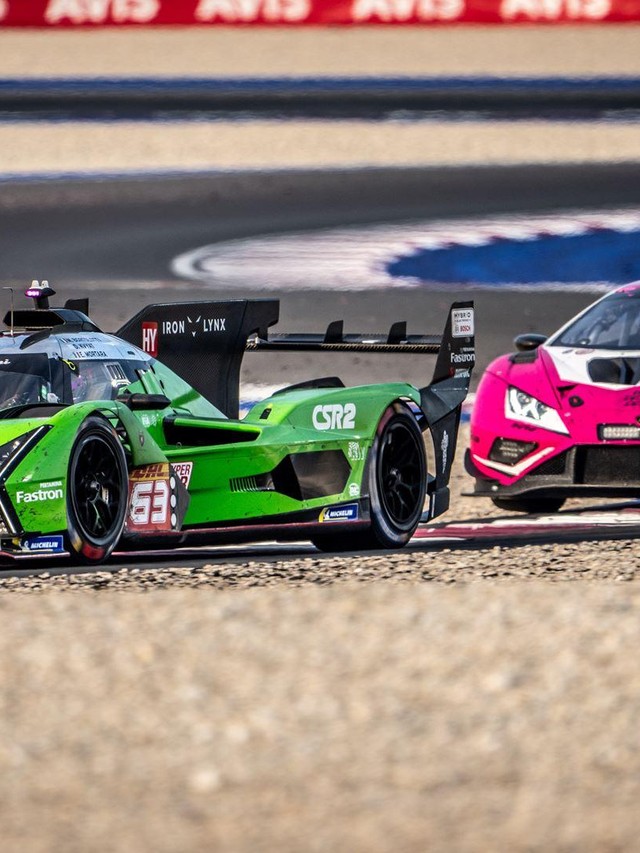
Thirty Drivers, One Ladder, and a Two-Day Test at Vallelunga
A podium on debut, at 19, alongside an established factory professional. That is the kind of result that justifies 13 years of investment in young talent, and it is exactly what Lamborghini Squadra Corse‘s junior program delivered when Patrick Kujala partnered with Mirko Bortolotti to finish third in the Blancpain Sprint Series Main Race at Misano. Days later, Squadra Corse gathered 30 selected drivers across three program tiers at Vallelunga for a two-day test session, a routine checkpoint in a pipeline now old enough to prove whether it actually works.
The evidence says it does. Kujala and fellow 19-year-old Alberto Di Folco both made their Blancpain Sprint Series debuts at Misano, part of a deliberate push that Lamborghini says has dramatically lowered the average age of its Super Trofeo competitors this season. Among the Vallelunga participants was Daniel Zampieri, a 25-year-old Italian whose resume already includes the 2009 Italian F3 and International GT Open titles. Zampieri won Race Two at Paul Ricard this season in Super Trofeo, racing alongside Roman Mavlanov with Antonelli Motorsport, and his performance earned him selection for the GT3 Junior Program. His trajectory illustrates the program’s core logic: prove yourself in one-make racing, then graduate to GT3 machinery under factory supervision.
How the Ladder Actually Works
The structure is cleaner than most manufacturer programs, and its three tiers map directly onto the career arc Lamborghini wants its drivers to follow.
At the base sit 17 Super Trofeo Junior Drivers, competing in regional one-make championships across Europe, North America, and Asia. Lamborghini’s driving coaches monitor them throughout the season, evaluating not just raw pace but consistency, professionalism, and technical feedback. The youngest driver in the current intake is 17-year-old Patrik Fraboni, racing in the European series for the second consecutive season.
Above them, 13 GT3 Junior Drivers race the Huracán GT3 EVO2 in national and international championships. Nine of those 13 compete in the Italian GT Championship across its Sprint and Endurance formats, with drivers like Enzo Geraci, Guido Luchetti, and Luca Segù undertaking double campaigns in both series. Others are spread across the ADAC GT Masters (Finn Zulauf), British GT (Jarrod Waberski), and the International GT Open (Leonardo Moncini and Rodrigo De Sousa Testa). The geographic range matters: Lamborghini wants drivers who can adapt to different circuits, regulations, and competitive environments.
At the top sit the Young Professional Drivers, a small group that includes 2024 Shootout winner Jacopo Guidetti alongside Georgi Dimitrov and Daniel Formal. These three continue to compete in GT3 with direct Squadra Corse support, effectively serving as the final stage before potential factory driver status. Factory drivers Marco Mapelli and Andrea Caldarelli reportedly serve as advisors for the regional series, and a new partnership with Formula Medicine adds a sports science dimension to driver development this year.
The North American roster deserves particular attention. Elias De La Torre IV reportedly leads the Pro class point standings through six rounds with four wins in his Huracán Super Trofeo Evo2, while Colin Queen and Thomas Tommi Gore have reached the Pro class podium. Keawn Tandon, co-driving with Lindsay Brewer, holds four ProAm podiums. For anyone watching the North American Super Trofeo series, these are the names to track.
Why Lamborghini Needs This More Than Its Rivals Do
Ferrari’s Driver Academy, established in 2009, aims squarely at Formula One, scouting karting talent as young as 12 and funneling them through single-seater categories toward a potential F1 seat. Lamborghini’s program operates with a fundamentally different objective: producing ready-made GT3 factory talent. The distinction matters because GT3 racing is where Lamborghini competes at the highest international level, and the quality of its driver roster directly affects customer team results, which in turn drives Huracán GT3 EVO2 sales to privateer operations.
Porsche runs its own Junior Programme with a similar GT focus, but Lamborghini’s three-tier ladder, running from a manufacturer-controlled one-make series through national GT3 championships to factory-adjacent professional status, creates an unusually direct pipeline. A driver can enter at 17 in Super Trofeo and, if performance warrants, be racing a GT3 car in a major national championship within two or three seasons. The program essentially lets Lamborghini evaluate talent under controlled conditions before committing factory resources.
That strategic logic becomes more urgent when you consider what comes next. The Temerario GT3, described as Lamborghini’s first competition car fully designed, developed, and built in-house, debuted at the 2025 Goodwood Festival of Speed. According to Autoblog, the car represents a significant shift in how Squadra Corse approaches its racing machinery. The Temerario Super Trofeo is expected to arrive in 2027, which means the current generation of junior drivers will be the first to transition to an entirely new platform. Lamborghini needs them ready.
The Bridge Generation
For teams and drivers who built their skills around the Huracán’s naturally aspirated V10 characteristics, the move to the Temerario platform means adapting to a twin-turbo V8 with hybrid elements, a different weight distribution, and the complexities of turbo management in wheel-to-wheel racing. The junior program’s current structure, which places drivers in Huracán-based machinery across multiple series, will need to evolve as the Temerario race cars enter service.
Lamborghini has not detailed how the transition will work for current junior drivers. The safer read, based on the program’s existing structure, is that the GT3 Junior and Young Professional tiers will shift to Temerario GT3 machinery as customer teams adopt the new car, while the Super Trofeo Junior tier will transition when the Temerario Super Trofeo replaces the current Huracán-based car. The drivers coming through the program right now are, in effect, trained on one platform and expected to deliver on another.
What Lamborghini clearly understands is that hardware alone does not win championships. The Temerario GT3 can be the most advanced customer race car in GT3, but without a deep roster of young, capable drivers to fill factory and supported seats, the car’s potential stays theoretical. Thirteen years of junior program investment is Lamborghini’s answer to that problem. The Vallelunga test session, with its 30 drivers circling a green Huracán GT3 on a hot Italian circuit, is where that answer takes physical form.
Gallery


