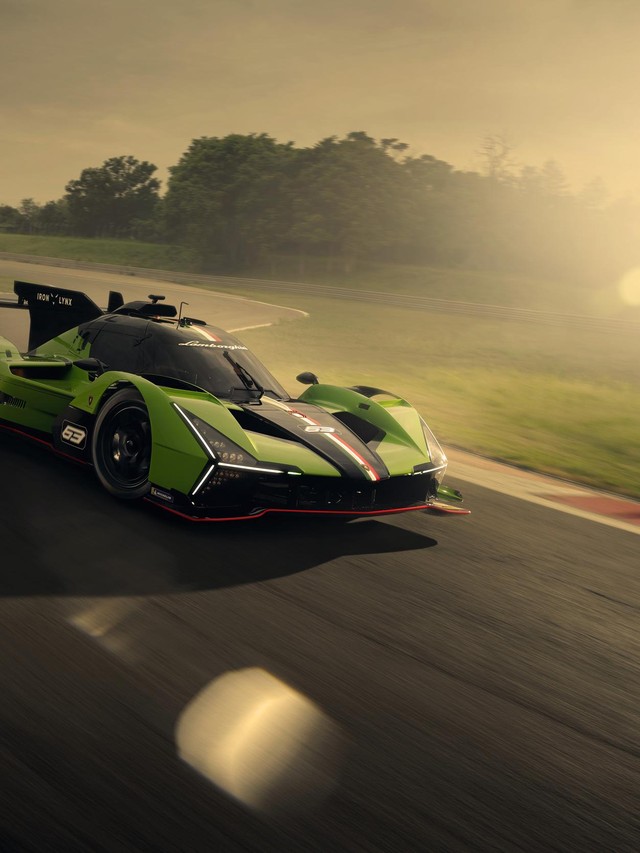
The SC63 Arrives: Lamborghini Enters Global Endurance Racing
Lamborghini chose the Goodwood Festival of Speed to pull the covers off the SC63, its first prototype built to compete at the absolute top tier of endurance racing. The car stood on a dedicated display beside the Lamborghini Lounge from July 13, presented by CEO Stephan Winkelmann, CTO Rouven Mohr, and Head of Motorsport Giorgio Sanna alongside racing partner Iron Lynx. Flanking it on the Goodwood estate were the Revuelto, making its dynamic UK appearance on the famous hillclimb, and the Huracan Sterrato in its first public UK run.
The timing was deliberate. In the year Automobili Lamborghini marked its 60th anniversary, the SC63 represented a declaration: the company intends to race in the Hypercar class of the 2024 FIA World Endurance Championship, including the 24 Hours of Le Mans, and in the GTP class of the IMSA WeatherTech Sports Car Championship Endurance Cup, covering the 24 Hours of Daytona and 12 Hours of Sebring. Running both series simultaneously is an ambitious commitment for any manufacturer, let alone one entering prototype endurance racing for the first time in the modern era.
A Bespoke Twin-Turbo V8 in a Brand Known for Natural Aspiration
The engineering story here is genuinely unusual. Lamborghini’s road car identity rests on naturally aspirated V10 and V12 engines, yet the SC63 runs a bespoke 3.8-liter twin-turbocharged V8 developed entirely by Squadra Corse. According to Motor1.com, this engine uses a “cold V” configuration, placing the turbochargers outside the cylinder bank vee for improved thermal management and tighter packaging within the Ligier-supplied carbon-fiber monocoque chassis. LMDh regulations mandate that all entrants use a spec chassis from an approved supplier, a spec Bosch motor generator unit, and a spec Xtrac gearbox, making the engine the primary area where a manufacturer can differentiate itself.
That constraint is worth understanding. Every LMDh car on the grid shares fundamentally the same hybrid hardware and chassis architecture. The combustion engine and the bodywork are where Lamborghini gets to be Lamborghini. One source reports the combined hybrid output reaches the class-maximum 671 horsepower (500 kW), meaning the V8 carries the bulk of the power budget while the electric MGU handles energy recovery and deployment under braking and acceleration zones. For a brand that spent decades letting high-revving naturally aspirated engines define its character, designing a forced-induction racing powerplant from scratch was a significant philosophical pivot.
The car tips the scales at 1,030 kg without fuel and driver, rides on pushrod suspension with KW dampers, and stops with Brembo carbon brakes measuring 380 mm at the front. Michelin slick tires wrap Ronal forged alloy wheels. None of those components are exotic by prototype standards, but the package represents the most complex racing car Squadra Corse has ever assembled.

The Lamborghini SC63 LMDh prototype racing car emerges from the darkness, showcasing its distinctive Y-shaped lighting signature.
Design Language: Countach Ducts, Revuelto Arches, and Y-Shaped Lights
Centro Stile, Lamborghini’s design group, faced an interesting constraint with the SC63. The Ligier chassis dictates the basic proportions, but the bodywork above it belongs to Sant’Agata. Motor1.com reports the result integrates Countach-styled NACA ducts and wheel arch forms drawn from the Revuelto, while the illuminated Y-shaped daytime running lights carry forward a signature that now appears across the entire current lineup. The Verde Mantis livery wears a racing stripe referencing the Italian tricolore.
This visual connection between race car and showroom car is more than cosmetic. When a manufacturer enters prototype racing, that recognition loop becomes a marketing pipeline. Ferrari understood this with the 499P, which borrows cues from its road-going hypercar lineage. Lamborghini is playing the same game: if you see the SC63’s Y-lights glowing under the floodlights at Le Mans, you should immediately think of the Revuelto in a dealer showroom. That instant association is the commercial rationale for spending tens of millions on a racing program.
From Track to Road: The Revuelto Connection
The Revuelto running up the Goodwood hill alongside the SC63’s static debut was no coincidence. Lamborghini’s flagship road car and its new racing prototype share a philosophical core: both are hybrid performance machines built around bespoke combustion engines paired with electric assistance. The Revuelto combines a newly developed V12 with three electric motors and an 8-speed dual-clutch transmission in a ground-up carbon-fiber tub. MotorAuthority.com reports the system produces 1,000 horsepower.
Factory driver Andrea Caldarelli, confirmed as one of the SC63’s pilots for the 2024 IMSA season, tested the Revuelto at Vallelunga circuit. His assessment, as reported by MotorAuthority.com, praised the car’s “uncommon power” and “excellent drivability on the track.” That a professional endurance racer found the road car’s hybrid system track-worthy speaks to the engineering credibility Lamborghini is building across both programs.
The development runs in parallel with Lamborghini’s “Direzione Cor Tauri” electrification strategy. The SC63 program served as a forcing function, pushing Squadra Corse to develop hybrid integration expertise at racing intensity, knowledge that flows back into road car calibration. Whether the specific V8 architecture from the SC63 appears in a future road car remains unconfirmed, but the hybrid systems engineering, thermal management, and energy deployment strategies are directly transferable.
The Competitive Reality: Ferrari, Porsche, and the LMDh Learning Curve
Running in WEC Hypercar and IMSA GTP simultaneously put Lamborghini on grids dominated by manufacturers with deeper prototype racing experience. Ferrari campaigned the 499P to a Le Mans victory in its return year. Porsche brought the 963 LMDh with decades of institutional endurance racing knowledge. Squadra Corse, while accomplished in GT3 racing, was building a prototype program from scratch.
Fan discussion across enthusiast communities reflects the reality of that learning curve. Multiple forums describe the SC63’s early competitive outings as difficult, with development setbacks including a significant testing crash that reportedly delayed the program and forced homologation of an underdeveloped car. Sentiment is mixed: admiration for the car’s appearance and the ambition of the effort, alongside frustration at the pace of competitive improvement. The program’s subsequent pause only deepened debate about Lamborghini’s long-term commitment to prototype racing.
The honest assessment is this: the SC63 represented Lamborghini learning an entirely new discipline at the highest possible level. The technology developed for the program, particularly the bespoke V8 and hybrid integration work, retains value regardless of race results. Whether the program resumes, evolves, or feeds into a future hypercar effort remains an open question Lamborghini has not publicly answered.
What This Means for Lamborghini Owners and Enthusiasts
Viewed from 2023, the Goodwood debut carried enormous promise. Lamborghini was signaling that its hybrid future would be validated at the most demanding endurance races on the planet, not just in press materials and configurator screens. For Revuelto buyers, the SC63 program added a layer of credibility to the hybrid powertrain concept: if Lamborghini was willing to race hybrid technology at Le Mans, the road car’s electrified V12 was more than a compliance exercise.
The broader Goodwood lineup reinforced the message. A Huracan Tecnica, Huracan STO, and Urus Performante joined the hillclimb runs throughout the weekend, giving the brand a visible presence across every segment it competes in. The Sterrato, with its raised ride height and rally-oriented calibration, made its UK dynamic debut as a reminder that Lamborghini was willing to stretch the definition of what a supercar could do, even as the V10 Huracan generation approached its end.
The company committed real engineering resources to hybrid racing at the top level, and that investment shaped the electrification philosophy now embedded in every new model leaving Sant’Agata. The SC63’s competitive record proved more complicated than the Goodwood debut suggested, but the technical foundation it built continues to influence the cars Lamborghini sells today.


