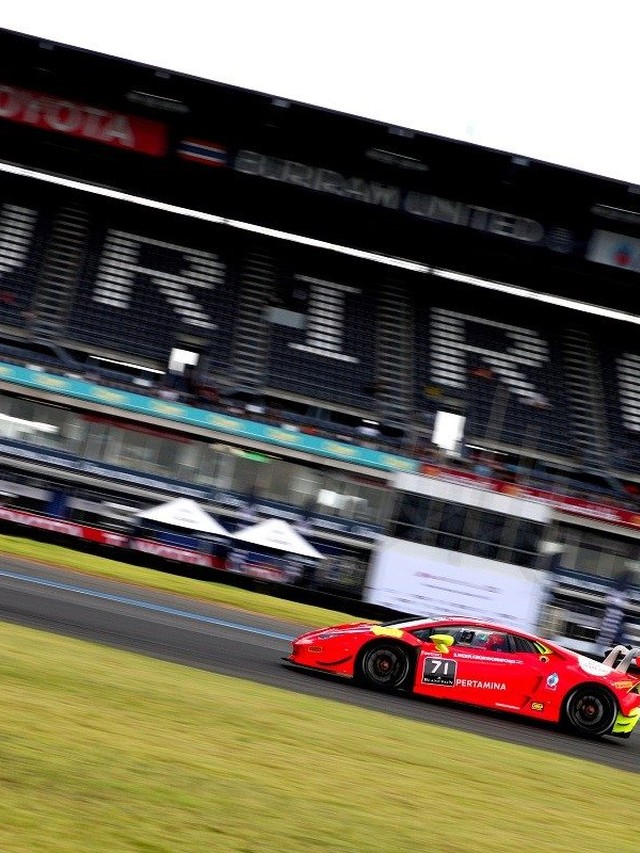
Buriram’s Debut: A Strategic First for Lamborghini Super Trofeo Asia
When the Lamborghini Blancpain Super Trofeo Asia series rolled into Thailand’s Buriram International Circuit on July 23, 2016, it marked the first time the championship had ever raced in the country. For a series then in its fifth season, the addition was more than calendar housekeeping. Buriram, designed by track engineer Hermann Tilke and opened just two years earlier, holds both FIA Grade 1 and FIM Grade A certification, placing it among the premier motorsport facilities in Southeast Asia. Those credentials aligned with the standards Lamborghini’s Squadra Corse division demands from its host circuits, and the venue’s 4.55-kilometer layout, with its mix of high-speed straights and technical corners, suited the Huracán Super Trofeo‘s balance of power and aerodynamic stability.
The 2016 season had already introduced Suzuka as a new stop for Round 2, so Buriram at Round 3 represented a deliberate push to broaden the series’ geographic reach. Four local Thai drivers joined the grid, including Supachai Weeraborwornpong, who returned to the series on home soil. Welcoming local talent at each new venue is a pattern Squadra Corse has used consistently to plant roots in emerging markets, giving regional drivers a visible platform while building spectator interest that extends beyond a single weekend. In that sense, the Buriram debut was less about one race result and more about the infrastructure Lamborghini was quietly assembling across Asia.
The Huracán Super Trofeo: A V10 Proving Ground
The 2016 season carried its own technical milestone. It was the first year the Huracán Super Trofeo, introduced the previous year as the LP 620-2, competed exclusively on the grid without any remaining Gallardo-based machinery alongside it. Purpose-built for Lamborghini’s one-make series, the Huracán’s arrival had generated renewed interest from both veteran competitors and newcomers.
For context, the series launched in 2009 using a track-optimized Gallardo LP 560-4. According to Motorauthority, those early cars produced 562 horsepower and featured carbon fiber bodywork, Makrolon windows, an FIA FT-3 fuel cell, a full roll cage, and Brembo Racing brakes. The Huracán successor pushed the formula further with more aggressive aerodynamics, a stiffer chassis, and the kind of naturally aspirated V10 soundtrack that made the car audible long before it was visible from the grandstands. Multiple enthusiast forum discussions describe the Super Trofeo series as consistently entertaining, with the cars sounding incredible even if the racing caliber varies from round to round. That visceral quality mattered at Buriram, where the series needed to make a first impression on a Thai audience unfamiliar with the championship.
Race Day at Buriram: Afiq Yazid’s Masterclass
Qualifying saw Japanese teams dominate the top of the order. Yudai Uchida and his New Zealand co-driver Jono Lester secured pole, with Dilantha Malagamuwa of Sri Lanka and Armaan Ebrahim of India in second. Toshiyuki Ochiai of Japan and his PRO teammate Afiq Yazid of Malaysia started third. Indonesian AM driver Andrew Haryanto qualified fourth, while Taiwanese pair Chun Hua Chen and Yen Chien Lee lined up fifth in the Lamborghini Cup Class.
After a safety car start, the race unfolded in layers. Malagamuwa and Ebrahim in car #24 seized the lead early, pushing Uchida and Lester back to second while Ochiai and Yazid held station in third. Mid-race, Chen and Lee climbed to third before being overtaken by Zen Low and Max Wiser, then by Haryanto, who carved his way into fifth.
The final laps delivered the kind of multi-car battle that justifies a one-make series. Malagamuwa and Ebrahim fought to protect their lead. Uchida and Lester found a way past car #24, but the decisive move belonged to Afiq Yazid. A graduate of Lamborghini Squadra Corse‘s young driver program, Yazid worked car #12 past both the #23 and #24 entries in succession to take the overall win. The result underscored exactly what the Squadra Corse development pipeline is designed to produce: young drivers capable of performing under pressure in close, competitive racing, and doing so on a circuit the series had never visited before.
Squadra Corse’s Proving Ground: Building Careers, Not Just Trophies
Yazid’s victory illustrated a broader purpose behind the Super Trofeo program that often gets lost in individual race reports. Squadra Corse does not run the series purely to sell race cars to gentlemen drivers, though that is certainly part of the business model. The young driver program is designed to identify and develop talent that can graduate into higher categories of GT racing, potentially representing Lamborghini in GT3 and beyond.
The series provides a controlled competitive environment: identical machinery, professional-grade circuits, and race formats that demand both outright speed and racecraft. For drivers like Yazid, performing against a mixed grid of amateur and semi-professional competitors on unfamiliar circuits is the kind of pressure test that separates promising talent from the rest. Expanding the calendar to venues like Buriram and Suzuka only sharpened that test, forcing young drivers to adapt quickly to layouts they had never seen while gentlemen drivers navigated the same learning curve.
Lamborghini’s investment in this pipeline paid dividends across the Huracán era and continues to inform how the company approaches driver development as it transitions toward the Temerario GT3 program. According to Autoblog, the Temerario GT3 represents Lamborghini’s first competition car fully designed, developed, and built in-house, a significant evolution from the outsourced GT3 programs of the past. The networks cultivated through Super Trofeo rounds across Asia form part of the foundation for that next chapter.
For aspiring racers considering the Super Trofeo as an entry point, the financial commitment is substantial. Forum discussions on PistonHeads and enthusiast communities describe full-season costs in the range of several hundred thousand dollars, covering the car lease, engineering support, travel, and consumables. The tradeoff is access to Lamborghini’s professional motorsport infrastructure and, for those with genuine pace, a pathway into the broader GT racing ecosystem.
Beyond the Track: Lamborghini’s Strategic Play in Asia
Every new circuit stop on the Super Trofeo Asia calendar doubles as a brand activation: local media coverage, hospitality for regional clients and prospects, and a visible demonstration that Lamborghini competes at the highest level of one-make motorsport, not just in European series. The Super Trofeo Asia series launched in 2012, initially visiting established circuits across the region. By 2016, the calendar had expanded to include venues in Japan, Thailand, and other markets where Lamborghini’s road car sales were growing. Buriram was one data point in that longer arc, but a telling one. Tilke-designed circuits tend to reward cars with strong braking performance and traction out of slow corners, both areas where the Huracán platform excelled, and the spectacle translated directly into the kind of content and conversation that builds brand equity in aspirational markets.
This approach mirrors what Ferrari does with its Challenge series and what Porsche accomplishes through the Carrera Cup, though comparing the three programs in detail requires more data than the available record provides. What the Super Trofeo offers that is distinctly Lamborghini is the combination of naturally aspirated V10 spectacle, relatively accessible entry for gentleman drivers, and the Squadra Corse development framework for younger talent. In Southeast Asian markets where supercar ownership is aspirational and brand loyalty forms early, that combination carries real commercial weight.
What Buriram 2016 Signaled for Lamborghini’s Future
Viewed in isolation, a single round of a one-make series in Thailand might seem like a minor footnote. Viewed in context, the 2016 Buriram race was part of a deliberate expansion strategy that helped establish the Lamborghini Blancpain Super Trofeo as a genuinely global championship rather than a European series with occasional Asian guest appearances. The Thai debut, Suzuka’s addition the same year, and the steady recruitment of local drivers at each new venue all pointed toward the same ambition: embedding Lamborghini’s motorsport identity in the markets where its road cars were gaining ground.
For current Lamborghini enthusiasts and prospective buyers, the relevance extends beyond nostalgia. The Squadra Corse infrastructure built during the Huracán era, including the driver development pipeline, the circuit relationships across Asia, and the operational expertise of running races in diverse markets, forms the foundation for what comes next. As the Temerario GT3 program takes shape, the circuits, teams, and driver networks cultivated through events like Buriram 2016 will likely serve as the launchpad for Lamborghini’s turbocharged racing future. The question is whether a twin-turbo V8 can generate the same visceral draw at the grandstands that the naturally aspirated V10 delivered so convincingly on that balmy Thai afternoon.
Gallery


