Young Guns, Old Scores, and 5.9 Kilometers of Northamptonshire Tarmac
Three weeks after Monza shook up the competitive order, the Lamborghini Super Trofeo Europe arrives at Silverstone from May 12 to 14 for the second of six double rounds, and the storyline that already defines this season is impossible to ignore: a generational collision between teenagers who seized the championship lead and veterans desperate to take it back.
The PRO class belongs, for now, to an 18-year-old Dutchman and a 23-year-old Zimbabwean. The crew hunting them hardest pairs a 17-year-old whose father raced in Formula 1 with a veteran who scored his first Super Trofeo victory at this very circuit last year. Lamborghini’s official preview leans heavily on the phrase “generational change,” and for once the marketing language matches reality. Across all four categories, PRO, PRO-AM, AM, and Lamborghini Cup, the grid mixes raw young talent with experienced hands in a way that makes the series far more interesting than a typical gentleman-driver showcase. The Huracán Super Trofeo one-make format strips away the engineering variable, so what remains is driver skill, team strategy, and the ability to extract every tenth from identical machinery around one of Europe’s most demanding circuits. That equation tilts toward youth on some weekends and toward experience on others, and Silverstone, with its high-speed corners that reward bravery and punish hesitation, will reveal which currency matters more right now.
The PRO Class: Three Points Separate the Top Two Crews
GDL Racing’s Rik Breukers and Axcil Jefferies sit atop the PRO standings after Monza. Breukers, just 18, and Jefferies, 23, already won the Middle East Series title together before the European season began, then backed it up with a victory in Race 1 and a runner-up finish in Race 2 at Monza. Their consistency is the kind of thing that worries rival teams: they clearly understand the car, they work well together through mandatory driver changes, and they arrived in Europe with momentum.
Trailing by only three points, Antonelli Motorsport’s Loris Spinelli and rookie Mikaël Grenier reversed the Monza script. The Italian-Canadian pairing took third on Saturday before winning Race 2 on Sunday. Grenier’s status as a series newcomer makes that result notable. Rookies in one-make series often lose time adapting to unfamiliar pit-stop procedures and the particular behavior of a car on control tires, so a win in his second race suggests he adapted quickly.
Brazilian Raphael Abbate and Japanese driver Yuki Nemoto, running with VS Racing, collected a second and a third at Monza. They sit further back in the standings but represent exactly the kind of international crew mix that gives the Super Trofeo its distinct character. Few other single-marque championships draw this geographic spread at the PRO level. All three crews will arrive at Silverstone knowing that the generational battle at the front could reshuffle entirely over a single weekend.
Cecotto and Postiglione: The Payback Narrative
The most compelling storyline heading into Silverstone belongs to Imperiale Racing’s pairing of Vito Postiglione and Jonathan Cecotto. Postiglione is the seasoned campaigner who scored his first Super Trofeo victory at Silverstone during the previous season. Cecotto is 17 years old and carries a famous motorsport surname: his father, Johnny Alberto Cecotto, raced in Formula 1 and won championships on two wheels.
At Monza, the younger Cecotto showed outright pace that matched or exceeded anyone in the field during the second qualifying session. The race results did not reflect that speed. Lamborghini describes “a series of difficulties” that prevented the pair from converting qualifying pace into points, without specifying whether those difficulties were mechanical, strategic, or simply the chaos of a season-opening weekend. The gap between Cecotto’s qualifying performance and his race result creates a genuine redemption arc for Silverstone.
Postiglione’s own history at the circuit adds another layer. Winning at a track where you know every braking zone, every curb, every wind pattern through Maggotts and Becketts is a meaningful advantage in a one-make series where car performance is equalized. For a veteran paired with a teenager who already demonstrated top-tier speed, the ingredients for a strong weekend are plainly visible. Whether they can convert this time will define the early shape of the PRO championship.
The pairing structure itself tells a story about how the Super Trofeo develops young talent. Putting a proven veteran alongside a fast but inexperienced youngster is a deliberate choice: Postiglione’s job extends beyond his own stint in the car. He provides real-time coaching, race-craft mentorship, and the kind of calm strategic input that a 17-year-old, however talented, simply cannot yet supply on his own. If Cecotto’s raw qualifying speed at Monza was the promise, Silverstone is where the veteran’s circuit knowledge could finally help him deliver on it.
PRO-AM, AM, and Lamborghini Cup: Depth Beyond the Headlines
The supporting categories carry their own competitive intrigue, and the same generational tension runs through them. In PRO-AM, VS Racing’s Christopher Dreyspring and Ja Tong Liang lead after two second-place finishes at Monza. The two Monza race wins in that class went to different crews: ArtLine Team Georgia’s Shota Abkhazava and Kelvin Snoeks took the first, while MN Development’s French duo of Julien Briché and Jean-Laurent Navarro won the second. That kind of parity, where no single team dominates both races in a double-header weekend, tends to produce tight championship battles as the season progresses.
The AM class looks more straightforward on paper. Polish drivers Andrej Lewandowski and Teodor Myszkowski of VS Racing won both races at Monza in their second season with the series. A perfect record through two races is difficult to sustain, but their 11-point advantage over Autovitesse’s Laurent Jenny and Cedric Leimer gives them a cushion heading into Silverstone.
Kikko Galbiati, competing with Antonelli Motorsport, scored two third-place finishes at his home track of Monza and represents a PRO-AM contender to watch. In the Lamborghini Cup, Greek driver Antonios Vossos claimed two pole positions, a second place, and a Race 2 victory with Target Racing. He transitions to the AM class for Silverstone, which should add another competitive variable to that category. Sri Lankan driver Dilantha Malagamuwa, a veteran of the Asian series, collected a win and a second place with GDL Racing in the same class at Monza.
Why Super Trofeo Matters More Than Its Grid Size Suggests
One-make series rarely generate the same headlines as GT3 or prototype racing, but the Lamborghini Super Trofeo, inaugurated in 2009, serves a purpose that extends well beyond weekend entertainment. It functions as a talent pipeline, a brand reinforcement tool, and a customer engagement platform simultaneously, and the generational shift visible at Silverstone is the clearest evidence of how seriously Squadra Corse takes the first of those roles.
Drivers who excel in Super Trofeo gain experience with professional team structures, mandatory pit stops, rolling starts, and the pressure of championship points before stepping into more expensive and complex GT3 machinery. The series operates internationally across Europe, Asia, and North America, with a World Final that brings regional champions together. For young drivers like Breukers and Cecotto, strong results here build the kind of documented race record that GT3 team principals actually review when filling seats.
Lamborghini’s broader motorsport trajectory reinforces why this matters now. According to Autoblog, the Temerario GT3 represents Lamborghini’s first competition car to be fully designed, developed, and built in-house. When that car enters GT3 competition, Squadra Corse will need drivers who already understand Lamborghini’s racing culture, team dynamics, and the expectations that come with wearing the Sant’Agata badge. The Super Trofeo is where that understanding begins.
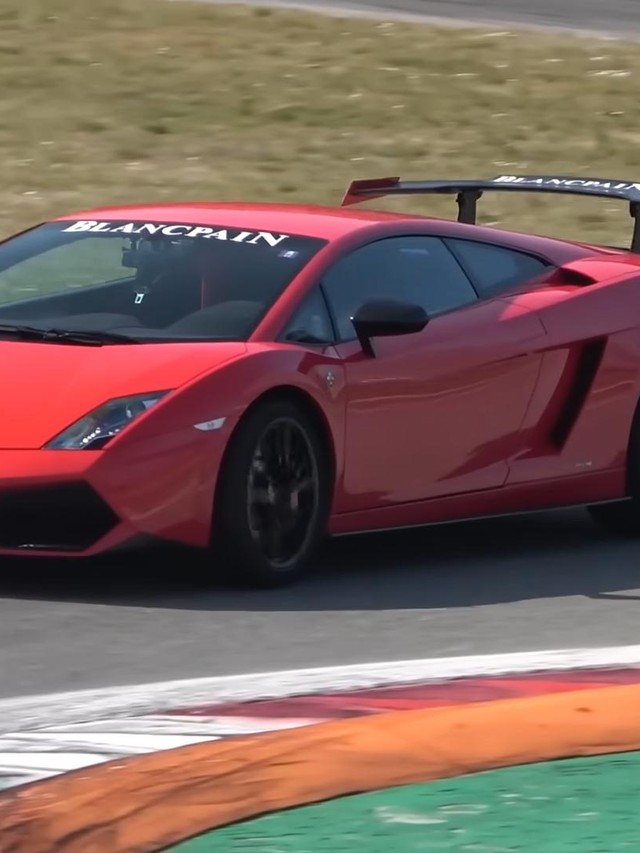
For the brand itself, the series keeps Lamborghini visible on circuits across three continents without the enormous budgets required for factory prototype or hypercar programs. Every race weekend puts Huracán Super Trofeos on track in front of spectators and livestream audiences, reinforcing the performance credibility that ultimately supports road-car sales. The car at the center of it all, a rear-wheel-drive, naturally aspirated V10 machine, rewards driver skill in a way that turbocharged, all-wheel-drive alternatives simply do not replicate, which is precisely why the young-versus-old dynamic plays out so vividly here.
Silverstone: The Circuit That Rewards Brave Drivers
The 5.9-kilometer Silverstone circuit in Northamptonshire is one of the fastest and most demanding tracks on any European racing calendar. Its high-speed corners, particularly the Maggotts-Becketts-Chapel complex, reward commitment and punish hesitation. In a one-make series where every car produces identical power, the driver who carries more speed through those fast sweepers gains time that is almost impossible to recover on the straights.
Some commentators have noted that Silverstone can be a challenging circuit for overtaking, which puts enormous pressure on qualifying. Saturday’s two 20-minute qualifying sessions will define the starting grids for both races, and a strong qualifying lap could prove more decisive here than at Monza’s more overtaking-friendly layout. For Cecotto, who showed qualifying pace at Monza but could not convert it into race results, that dynamic could work in his favor, provided the race-day difficulties do not recur. Postiglione’s track knowledge becomes doubly valuable at a circuit where grid position carries this much weight.
The practical takeaway for anyone planning to follow the weekend: qualifying on Saturday morning will likely reveal the true competitive order more clearly than the races themselves. If a crew locks out the front row for both races, the circuit characteristics make that advantage very difficult to overcome.
Schedule and How to Watch
Friday opens with two one-hour free practice sessions. Saturday begins with two 20-minute qualifying sessions that set the grids, followed by Race 1 at 3:05 p.m. local time (4:05 p.m. CEST). Race 2 runs Sunday at 11:35 a.m. local time (12:35 p.m. CEST). Both races follow a 50-minute format with rolling starts and a mandatory pit stop that includes the driver change.
Lamborghini will livestream both races at squadracorse.lamborghini.com/live-streaming. The mandatory pit stop and driver swap add a strategic dimension that pure sprint races lack, and the PRO class battle between three crews separated by single-digit points should produce genuine tension from the formation lap onward.
Two rounds of data, across two very different circuits, will separate the crews with genuine title pace from those who benefited from opening-weekend chaos. Whether the teenagers at the front can sustain their early advantage against veterans who know Silverstone’s every trick is the question that makes this particular weekend worth watching.
Gallery


