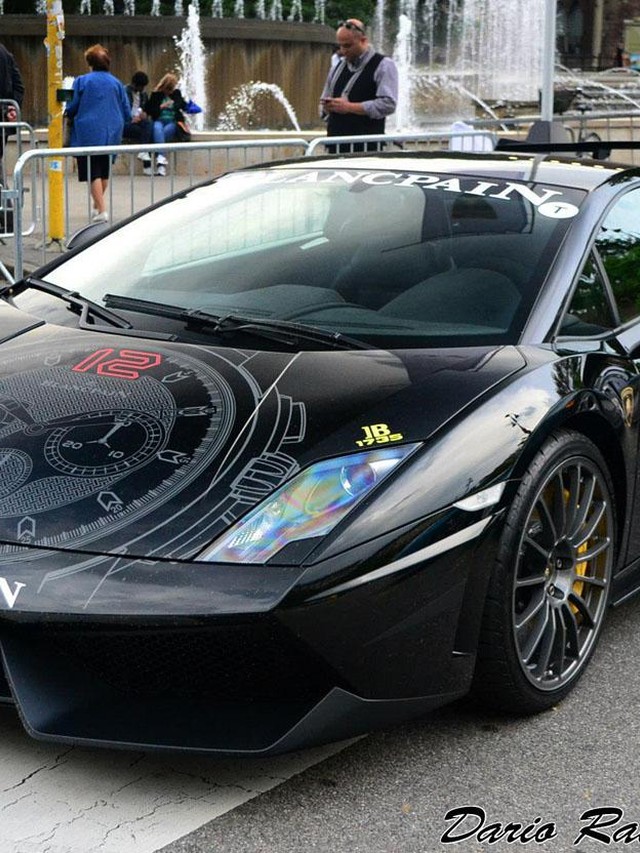
The Historic Debut: Lamborghini Super Trofeo Europe at Zandvoort
When a one-make racing series visits a circuit for the first time, the entire grid operates without a baseline. No historical lap data, no inherited setup sheets, no muscle memory through the corner sequences. That is exactly the situation facing every team and driver as Lamborghini Super Trofeo Europe heads to Zandvoort in the Netherlands for Round 3 of the 2019 season, marking the series’ maiden visit to the historic Dutch Grand Prix circuit.
Zandvoort is not a modern facility built for hospitality revenue. The 4.3-kilometer layout carved into the sand dunes along the North Sea coast dates back to 1948 and hosted the Dutch Grand Prix from 1952 through 1985. Its character comes from elevation changes, blind crests, and most critically, banked corners that load a car’s suspension and aerodynamics in ways flat circuits simply do not. For a grid of identical Huracán Super Trofeo EVO machines, the advantage shifts entirely to the driver and engineer who can read the circuit fastest during Friday’s two one-hour free practice sessions.
The weekend format follows the established Super Trofeo structure: practice on Friday, a 20-minute qualifying session on Saturday followed by the first of two 50-minute races at 16:05 CEST, and the second race on Sunday morning at 10:05 CEST. Both races feature rolling starts and mandatory pit stops, adding a layer of strategic timing to the pure driving challenge. Lamborghini says both races will be streamed live on the Squadra Corse Facebook page and YouTube channel.
Zandvoort’s Unique Demands: A Circuit Built to Expose Weaknesses
Most circuits on the Super Trofeo Europe calendar reward one dominant trait. Monza is about straight-line speed and low-drag aero. Silverstone demands high-speed confidence. Zandvoort asks for everything at once and punishes compromise.
The banked Tarzan corner at the end of the main straight is the most obvious challenge. Banking changes the effective load on the tires and suspension in a way that a flat hairpin does not, compressing the car into the surface while simultaneously demanding precise turn-in. The Huracán Super Trofeo EVO runs on spec Hankook slicks and carries significant downforce from its large rear wing and front canards, so the interaction between aerodynamic load and banked-corner forces creates a genuine setup puzzle. Too much downforce and the car bogs in the banked sections; too little and it loses grip through the faster sweeps along the dunes.
Elevation changes compound this. Zandvoort rises and falls through the dunes, meaning the car’s ride height and aero platform shift constantly. On a modern flat circuit, teams can optimize the floor and diffuser for a single ride height. At Zandvoort, the car must work across a range. That is a real engineering test even within a one-make formula where every car is mechanically identical, because damper settings, ride height adjustments, and tire pressures become the variables that separate a podium from a mid-pack finish.
For drivers accustomed to the series’ regular venues, the blind crests add another dimension. Commitment through sections where the exit is invisible until the car crests the rise separates those who trust their preparation from those who lift. In a field of identically powered V10 race cars, those fractions of hesitation accumulate across 50 minutes.
The Huracán Super Trofeo EVO: Engineering for Precision and Speed
The car at the center of this challenge occupies a fascinating position within Lamborghini’s lineup. A track-only, race-ready iteration of the road-going Huracán, the Super Trofeo EVO has been stripped to its competitive essence by Squadra Corse. The naturally aspirated 5.2-liter V10 remains at the core, while the car sheds significant weight through carbon fiber bodywork and the removal of road-car amenities. Visible through the cockpit glass in race photos: a full roll cage, racing harnesses, and a MoTeC data system replacing the road car’s infotainment.
The aerodynamic package is the most visually dramatic difference from the street Huracán. The large rear wing, front canards, and aggressive diffuser generate substantial downforce, and the entire package is designed to work within the specific regulations of the Super Trofeo series. Because Lamborghini serves as the sole constructor, every car on the grid runs identical hardware. The series was inaugurated in 2009, originally with the Gallardo, and the one-make philosophy has remained constant: eliminate the engineering arms race and let driver skill and team strategy determine the result.
That philosophy gets its purest test at a circuit like Zandvoort, where the setup window is narrow and unfamiliar. Teams cannot throw money at a faster engine or a trick aero device. They can only optimize within the allowed parameters, which means the quality of the engineer on the pit wall matters as much as the talent in the cockpit. Competition is divided into Pro, Pro-Am, Am, and Lamborghini Cup categories, ensuring that gentlemen drivers compete against peers of similar experience rather than being overwhelmed by professional-grade entrants.
Championship Crucible: Key Battles and Drivers to Watch
Two rounds into the 2019 season, the championship standings reveal a Pro category fight that could swing dramatically at Zandvoort. Imperiale Racing’s Kikko Galbiati and Vito Postiglione lead by seven points after a double victory at Misano, but their advantage is far from comfortable. Their own teammates, Karol Basz and Bartosz Paziewski, sit second, creating the kind of intra-team tension that makes one-make racing compelling. Both crews share data, share engineers, and share a transporter. They also share an intense desire to beat each other.
The wildcard at Zandvoort is the Bonaldi Motorsport entry of Danny Kroes and Sergei Afanasiev, sitting third and 14 points off the lead. Kroes is a local driver who knows Zandvoort. In a series where nobody carries circuit-specific data from previous Super Trofeo visits, that home-track familiarity becomes a genuine strategic asset. Behind them, Stuart Middleton and Jack Bartholomew, who won on debut at Silverstone, trail by just five additional points. Bartholomew brought a reigning Lamborghini Super Trofeo Middle East championship to the European series, pairing with former British GT4 competitor Middleton for the first time in 2019.
The Pro-Am category belongs, for now, to ArtLine Team Georgia’s Shota Abkhazava and Harald Schlegelmilch. The Georgian-Latvian pairing arrived at every podium ceremony so far and added a Misano victory to their record. Their consistency makes them the benchmark, though the GT3 Poland car of Grzegorz Moczulski represents a credible threat at Zandvoort.
In the Am class, the championship picture is genuinely open. Three different winners in four races tells you everything about the parity in that category. Leipert Motorsport’s Mikko Eskelinen and Jake Rattenbury closed to within five points of AGS Events’ Nicolas Gomar after their first class win at Misano, and Raffaele Giannoni lurks just six points further back. The Lamborghini Cup sees Gerhard van der Horst holding a slim four-point advantage over the Semoulin brothers, with Hans Fabri and Joseph Collado still within striking distance. Every category arrives at Zandvoort with a title fight genuinely unresolved.
Squadra Corse’s Vision: Super Trofeo as Lamborghini’s Motorsport Foundation
Bringing the Super Trofeo Europe calendar to Zandvoort is not random scheduling. It reflects Squadra Corse’s deliberate strategy of placing its one-make series on circuits with historical weight and genuine driving challenges, rather than defaulting to the same rotation of modern facilities year after year. Silverstone, Misano, and now Zandvoort: each circuit demands something different from the car and the driver, which is precisely the point of a development series designed to cultivate talent.
Since its inauguration in 2009 with the Gallardo, the Super Trofeo has served as Lamborghini’s primary pipeline for identifying and developing racing drivers. Several graduates moved into GT3 competition and beyond, using the one-make series as proof of their ability to extract performance from a car they cannot modify. That pipeline is about to become even more significant. According to Autoblog, the Temerario GT3 represents Lamborghini’s first competition car to be fully designed, developed, and built in-house, a landmark for Squadra Corse that will eventually reshape the entire customer racing ecosystem.
The Super Trofeo series, then, is where the organizational muscle for that kind of in-house program gets built. Running a global one-make championship across Europe, Asia, and North America requires logistics, engineering support, parts supply chains, and trackside operations that mirror what a full GT3 program demands. Every race weekend at a new circuit like Zandvoort is a rehearsal for that larger ambition.
How Super Trofeo Compares: Lamborghini’s Place in One-Make Racing
Lamborghini is not alone in operating a manufacturer one-make series. Ferrari runs the Ferrari Challenge, Porsche operates the Carrera Cup, and both serve similar functions: give customers a structured, competitive environment to race identical machinery. The differences lie in philosophy and accessibility.
The Super Trofeo’s category structure, splitting the grid into Pro, Pro-Am, Am, and Lamborghini Cup, creates a more granular competitive environment than some rival series. A gentleman driver in the Am category races against peers with comparable experience, not against a professional who happens to share the same car. That layered approach makes the series more inviting for the customer who wants genuine competition without being overwhelmed by a factory-caliber driver in an identical machine.
The commercial logic is straightforward. Every Super Trofeo entrant is a customer who bought a race car from Sant’Agata Bolognese, pays for parts and support, and develops a relationship with the brand that often extends to road-car purchases. Enthusiast forum discussions reflect this: owners who enter the Super Trofeo frequently own multiple Lamborghini road cars, and the series acts as both a competitive outlet and a brand loyalty mechanism. Placing the series on circuits with the prestige and challenge of Zandvoort only strengthens that proposition. Customers are not just buying a race car; they are buying access to a calendar of iconic venues.
For buyers considering the Super Trofeo as an entry into competitive motorsport, the practical takeaway is clear. The one-make format eliminates the arms race that makes open GT racing prohibitively expensive for all but the wealthiest entrants. The car is the car. The tires are the tires. The variable is the driver and the team’s ability to optimize within tight parameters. At Zandvoort, where nobody in the paddock carries historical Super Trofeo data, that optimization challenge becomes the purest test the series can offer.
Zandvoort’s addition to the calendar also signals something about where Squadra Corse sees the series heading. By the time the Temerario GT3 enters competition and the Super Trofeo eventually transitions to its successor platform, the series will need a calendar that justifies its growing ambitions. Historic circuits with real character, not just modern facilities with large run-off areas, are part of that identity. Round 3 at Zandvoort is a data point in that larger trajectory.
Gallery


