A V10 Family Portrait, Staged for China
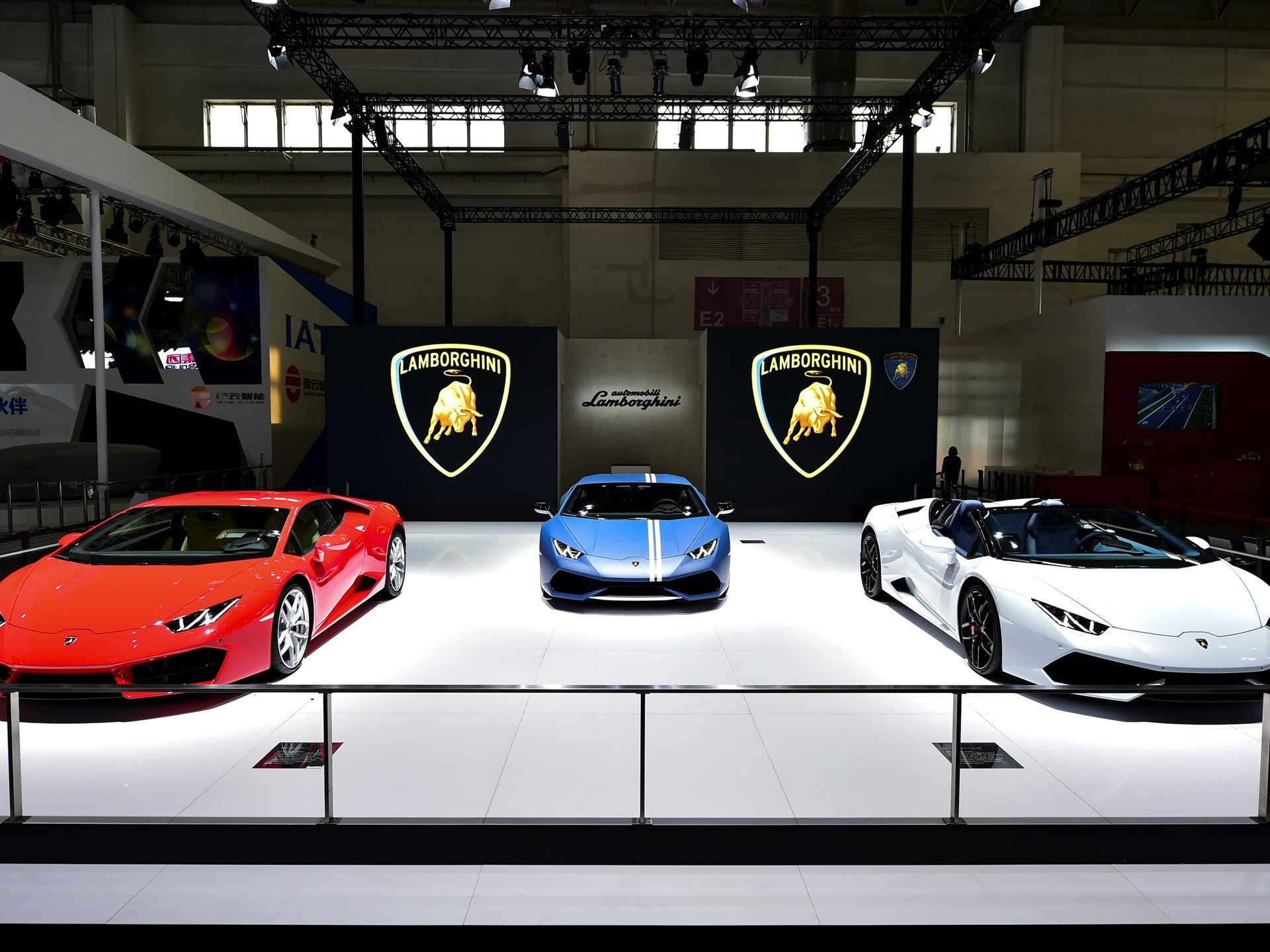
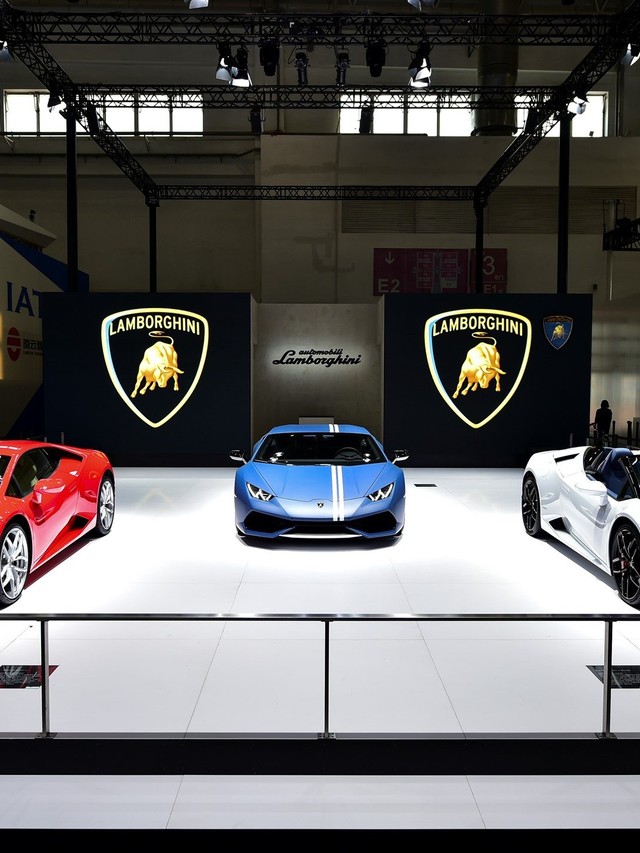
Lamborghini brought three distinct Huracán variants to their China debut at the 14th Beijing International Motorshow: the rear-wheel-drive LP 580-2, the 250-unit limited-edition LP 610-4 Avio, and the soft-top LP 610-4 Spyder. All three share the same 5.2-liter naturally aspirated V10 architecture, yet each targets a fundamentally different buyer. That deliberate fragmentation is what makes the Beijing stand worth studying.
Lamborghini could have shown one new model and filled the rest of the display with existing product. Instead, the company used its presence in one of its largest global markets to answer a question Ferrari and McLaren were also chasing at the time: how many distinct personalities can a single platform support before the engineering starts to feel diluted? The answer, at least in 2016, appears to be at least three, because the LP 580-2, the Avio, and the Spyder genuinely ask different things of their drivers.
CEO Stefano Domenicali described China as one of Lamborghini’s largest markets for sales, making it the logical stage for this kind of lineup statement. The Huracán LP 610-4 had already made 2015 the most successful year in history for V10 model deliveries, with 2,242 units reaching customers in the car’s first full year. In its initial 18 months, Huracán deliveries ran 70 percent higher than the Gallardo managed in the equivalent window. Those numbers gave Sant’Agata the commercial confidence to fragment the lineup rather than protect a single hero model.
The Purist’s Argument: Why the LP 580-2 Exists
Strip the front driveshaft and its associated hardware from a Huracán LP 610-4, recalibrate the chassis, retune the stability systems, and you arrive at the LP 580-2. On paper, the formula sounds reductive: 30 fewer horsepower (580 hp versus 610 hp), rear-wheel drive only, and a dry weight of 1,389 kg. In practice, the engineering story runs deeper than subtraction.
Lamborghini specifically designed and engineered the LP 580-2 around its rear-drive layout rather than simply deleting the front axle hardware from the AWD car. Suspension geometry, spring rates, damper tuning, and electronic stability calibration all received dedicated development. Car and Driver reported that Lamborghini’s R&D chief Maurizio Reggiani mentioned power oversteer in practically every other sentence during his presentation of the car. That emphasis was deliberate. The LP 580-2 was built to rotate, to reward throttle modulation, and to communicate rear-axle grip levels with a transparency the AWD model, by design, filters out.
One review suggested the LP 580-2 was engineered to flatter the skills of even modestly talented drivers, a polite way of saying the stability systems let you play hero without the consequences a truly raw RWD supercar would impose. For Lamborghini, this mattered strategically. The Gallardo had offered a rear-drive variant (the beloved LP 550-2 Balboni), but it arrived late in that car’s life cycle. Launching the RWD Huracán earlier signaled that Sant’Agata understood what a growing segment of enthusiast buyers wanted: less electronic intervention, more mechanical conversation.
Without the front driveshaft assembly, the LP 580-2 carries roughly 40 percent of its mass over the front axle and 60 percent over the rear. That bias reduces front-end inertia, sharpens turn-in, and makes the car more willing to rotate on trailing throttle. For buyers cross-shopping against naturally aspirated mid-engine competitors, the LP 580-2 represented Lamborghini’s clearest answer to the question of driver engagement versus outright grip, and it deepened the platform’s strategic reach in a way a single AWD configuration never could.

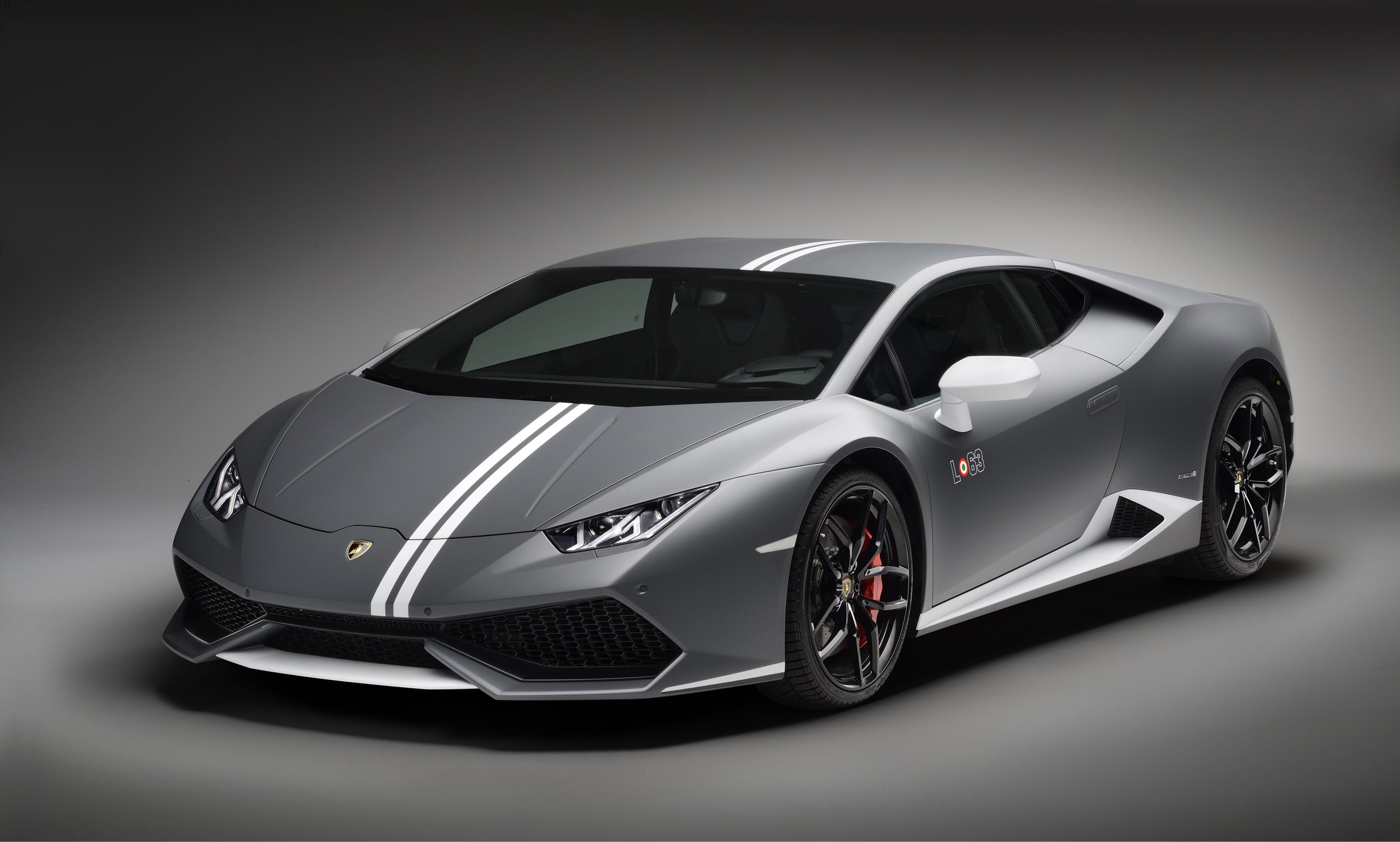
The striking front view of a grey Lamborghini Huracán with white racing stripes in a professional studio. Image: Automobili Lamborghini.
Open-Air V10: The Spyder’s Sensory Proposition
Where the LP 580-2 argues for purity through subtraction, the Huracán LP 610-4 Spyder argues for immersion through exposure. It keeps the full 610 hp and all-wheel-drive system of the coupe, trading a sliver of straight-line performance (0 to 100 km/h in 3.4 seconds, top speed of 324 km/h) for the ability to drop its electrohydraulic soft top in 17 seconds at speeds up to 50 km/h. That roof, available in black, brown, or red, folds without intruding on luggage space or the car’s low silhouette, thanks to hidden automatic pop-up safety bars that deploy only when needed.
The more interesting engineering detail is the rear window. Lamborghini designed it to open independently of the roof position. With the top up, it functions as a conventional rear windshield. Drop it electronically, and it becomes a direct acoustic channel to the naturally aspirated V10 sitting inches behind the cabin. In a turbocharged era where exhaust notes increasingly rely on amplification tricks and sound symposers, the Spyder’s approach was refreshingly analog: remove the glass, let physics handle the soundtrack.
For buyers in warmer climates, the Spyder represented the most emotionally immersive way to experience the Huracan’s V10. The soft top choice over a folding hardtop kept weight down and preserved the car’s proportions in a way that some rival convertibles, with their complex folding metal roofs, could not match. As a platform play, the Spyder captured a lifestyle buyer who might never visit a track day but who valued the sensory theater of a naturally aspirated mid-engine car above all else.
Aviation Nostalgia, Limited to 250: The Avio’s Collector Calculus
The third personality Lamborghini brought to Beijing was the most exclusive. Limited to 250 units worldwide, the LP 610-4 Avio carried the full LP 610-4 specification: 610 hp from the 5.2-liter V10, a 7-speed double-clutch gearbox, and an aluminum-and-carbon-fiber hybrid chassis yielding a power-to-weight ratio of 2.33 kg/hp. Acceleration from 0 to 100 km/h arrived in 3.2 seconds, with a top speed exceeding 325 km/h.
Lamborghini says the Avio’s name, colors, and materials pay tribute to aviation and aeronautics. The aviation theme expressed itself through dedicated livery options, interior trim selections, and badging rather than mechanical changes. Studio images show the car wearing white racing stripes over a grey body, with a visible “LO63” badge on the flanks reinforcing the limited-edition identity. The Avio sat in a tradition Lamborghini would continue to refine: take a mechanically proven platform, layer on a thematic design narrative, restrict production numbers, and create collector demand without the expense of unique engineering.
For prospective buyers weighing the Avio against a standard LP 610-4, the calculation was straightforward. The mechanical experience would be identical. The value proposition rested entirely on exclusivity, resale trajectory, and whether the aviation-inspired aesthetic resonated personally. With only 250 produced globally, the Avio was always destined to become either a footnote for speculators or a genuine keepsake for aviation enthusiasts who happened to love Lamborghinis. Looking back, limited Huracan editions from this era tend to hold their value well on the secondary market, which suggests the 250-unit cap was sized correctly. More importantly for the Beijing thesis, the Avio proved that platform diversification did not require new powertrains; narrative and scarcity could do the work just as effectively.

The elegant side profile of a grey Lamborghini Huracán with white racing stripes is showcased in a studio. Image: Automobili Lamborghini.
Why Beijing, and Why All Three at Once
Domenicali’s characterization of China as one of Lamborghini’s largest global markets explains the venue, but the decision to debut all three variants simultaneously reveals a more calculated layer of the platform strategy. By 2016, China’s supercar appetite had matured beyond simple brand recognition. Chinese buyers were increasingly specification-literate, and Lamborghini needed to demonstrate that the Huracan could serve the track-day enthusiast (LP 580-2), the collector (Avio), and the lifestyle buyer (Spyder) without requiring three separate platforms.
All 2016 model year Huracans also gained new technical features across the range: cylinder-on-demand technology paired with stop-start functionality, and, for the AWD models, an updated electronically controlled drivetrain setup for improved driving behavior. These details rarely headline auto show presentations, but they matter for real-world ownership. Cylinder deactivation on a naturally aspirated V10 supercar was still a relatively novel concept, signaling that Lamborghini took fuel consumption and emissions compliance seriously even in its most emotionally driven product line.
The Beijing staging also served a competitive purpose. Ferrari and McLaren were both expanding their own lineups aggressively in China during this period. Showing a complete Huracan family, rather than a single new model, communicated product depth and manufacturing confidence to Chinese customers and dealers alike.
What the Huracán’s Expansion Tells Us About Lamborghini’s Platform Playbook
Viewed from the present, where the Huracan has been succeeded by the twin-turbo hybrid Temerario, the Beijing triple debut looks like an early proof of concept for a strategy Lamborghini would refine over the next decade. The Huracan eventually spawned the Performante, Tecnica, STO, Sterrato, and numerous special editions, each finding a distinct audience within the same V10 architecture. That proliferation started here, with three variants designed to test whether the market would accept a Lamborghini V10 in multiple personalities.
For current Lamborghini enthusiasts, the LP 580-2 remains one of the more compelling used-market propositions in the Huracan family. Its lighter weight, rear-drive dynamics, and lower original price point make it arguably the most engaging Huracan to drive on a twisting road, even if the AWD models post faster lap times. The Spyder continues to command strong residual values in markets where open-air driving is practical year-round. The Avio occupies a quieter niche: appreciated by collectors who value thematic editions, less discussed by the driving-focused community.
Lamborghini’s willingness to fragment the Huracan lineup so early in its life cycle, and to stage that fragmentation in China rather than Geneva or Pebble Beach, was a signal that the company understood where its growth would come from. The V10 platform proved elastic enough to absorb every variant Sant’Agata could imagine, and the commercial results validated the approach. Whether the Temerario’s turbocharged hybrid architecture can support the same diversity of character remains one of the more fascinating open questions in the current supercar landscape.

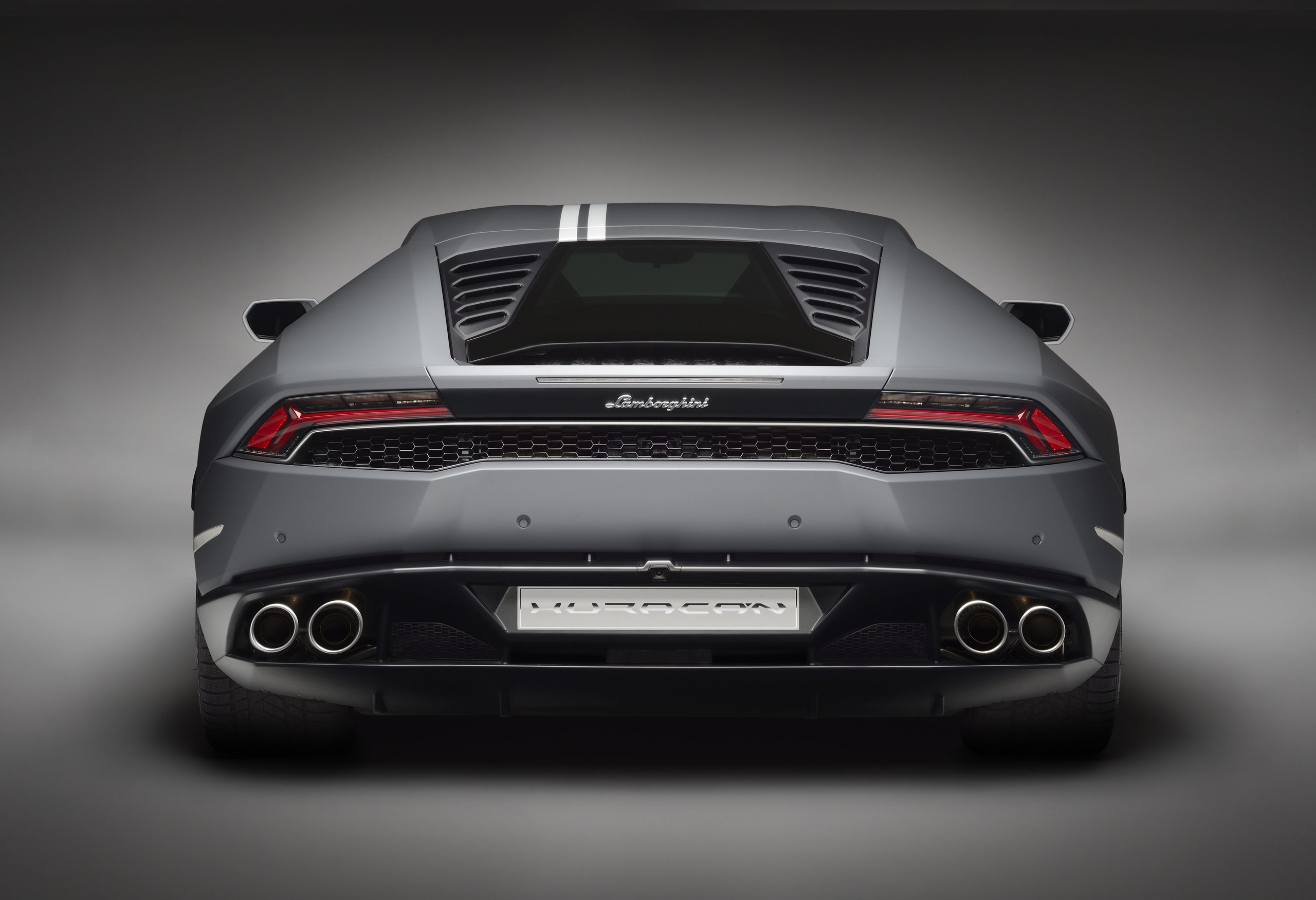
The powerful rear-three-quarter view of a grey Lamborghini Huracán with white racing stripes in a studio. Image: Automobili Lamborghini.
Gallery