3,245 Cars and a 28 Percent Surge: Sant’Agata’s New High-Water Mark
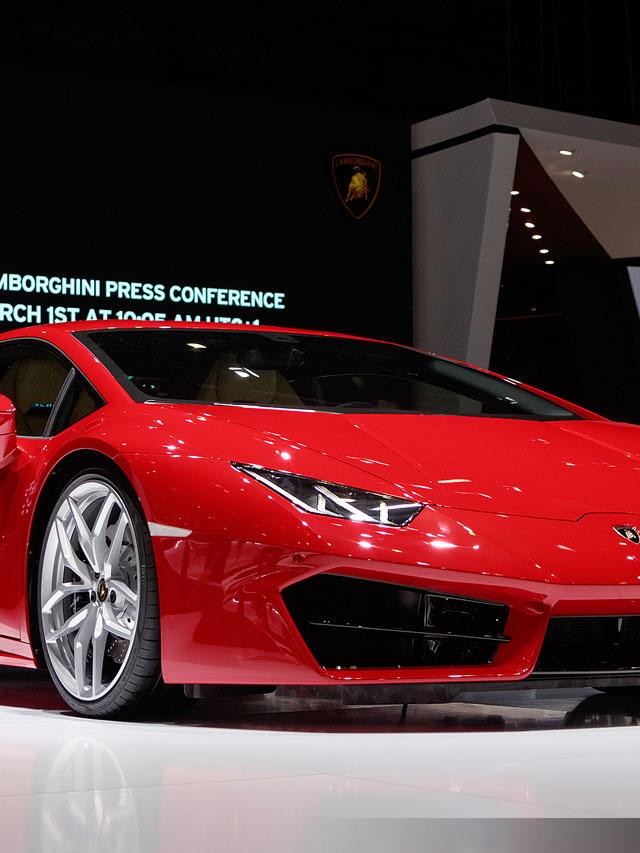
Lamborghini reported 3,245 worldwide deliveries to customers in 2015, a 28% jump over the previous year’s 2,530 units. The figure confirmed that a two-model supercar strategy, anchored by the Huracán LP 610-4 below and the Aventador above, could generate serious volume growth without visibly cheapening the badge.
Stephan Winkelmann, then President and CEO, framed the result as validation of brand, product, and commercial alignment. The deeper story, though, is structural. Lamborghini stated that 2015 sales were 2.5 times the sales of 2010, meaning the company roughly doubled its customer base in five years while keeping its dealer network at a comparatively modest 135 locations across 50 countries. That ratio of cars per dealer reveals how tightly Sant’Agata controlled distribution even as demand surged, and it set the template for every growth phase that followed.
The Huracán’s Unstoppable First Full Year
The ten-cylinder Huracán LP 610-4 succeeded the long-running Gallardo, and 2015 was its first calendar year of uninterrupted availability. Lamborghini delivered 2,242 Huracáns in that window, making it the most successful V10 sales year in company history. That single model accounted for roughly 69% of all Lamborghini deliveries, so the record year was, in practical terms, a Huracán story.
The comparison to its predecessor is where the numbers become genuinely striking. Lamborghini reported that Huracán sales in its first 18 months were up by 70% compared to the Gallardo’s performance in the equivalent period. The Gallardo itself was no underperformer; it became the best-selling Lamborghini of all time over its 2003 to 2013 production run. Outpacing it by that margin so early suggested the Huracán tapped a wider buyer pool without alienating the core audience.
Its appeal rested on a formula Lamborghini understood well: a 5.2-liter V10 engine producing 601 horsepower, paired with a seven-speed dual-clutch transmission (Lamborghini Doppia Frizione) and all-wheel drive. Performance figures included 0 to 62 mph in 3.2 seconds and a top speed approaching 202 mph. One report indicated that Lamborghini received 700 orders for the Huracán within its first month on sale, and one source noted that Lamborghini privately showcased the car to VIP clients globally before its official public unveiling. That kind of pre-launch seeding is now standard across the supercar industry, but in 2014 it signaled a more commercially sophisticated Lamborghini than many observers expected.
Balanced Global Growth, Not a Single-Market Spike
A healthy sales record and a fragile one look identical until you examine geographic concentration. Lamborghini’s 2015 breakdown looked deliberately diversified. According to Winkelmann, sales increased in all major regions, with new records in America and Asia Pacific. The company identified its biggest markets as the USA and Greater China, with Japan, the UK, the Middle East, and Germany also registering strong growth.
Lamborghini reported a well-balanced sales distribution, with EMEA, America, and Asia Pacific each contributing approximately one third of global sales. For a brand that once depended heavily on a handful of European and Middle Eastern buyers, that three-way split represented a meaningful structural shift. No single regional downturn could crater the order book, and that resilience gave Sant’Agata the confidence to plan further expansion.
Enthusiast forum discussion around this period reflected a mix of optimism and caution. Some collectors welcomed the growth as proof of brand health; others worried about what higher volumes would mean for residual values. That tension between commercial success and perceived exclusivity would follow Lamborghini through every subsequent sales milestone.
Growth Without Dilution: The Exclusivity Question
Selling 3,245 cars in a year still places Lamborghini firmly in the ultra-low-volume category compared to mainstream luxury, but within the supercar segment the number is significant. The practical question for buyers and collectors is whether scaling production erodes the ownership experience.
Lamborghini’s approach in 2015 offered one answer: keep the dealer count tight, maintain long wait lists, and expand the range laterally through special editions and variants rather than flooding the base model into showrooms. Production of the Huracán LP 610-4 continued until 2019, when it was succeeded by the Huracán Evo, giving the platform time to mature through Spyder, Performante, and STO derivatives that each commanded their own allocation and pricing tier.
For buyers who took delivery of a 2015 Huracán, the practical takeaway is that early-production cars from a record-setting model year tend to hold collector interest, particularly the coupe in well-specified configurations. The Huracán’s naturally aspirated V10 is now a closed chapter in Lamborghini’s lineup, which only reinforces the long-term desirability of the original LP 610-4.
What 2015 Set in Motion
Viewed from the present, the 2015 record looks less like a peak and more like a proof of concept. The commercial infrastructure and buyer confidence Lamborghini built around the Huracán created the conditions for the Urus SUV program, which would eventually triple the company’s annual volume beyond 10,000 units. Greenlighting a third model line that broke every convention of the brand’s identity required evidence that the market would follow Lamborghini into unfamiliar territory. The Huracán’s 2015 performance provided exactly that evidence.
Lamborghini did not disclose specific profit figures for 2015, and average transaction prices for the Huracán remain unconfirmed in public reporting. What the sales data does confirm is that Sant’Agata entered 2016 with a solid order bank, a validated two-model strategy, and the organizational momentum to pursue far more ambitious plans. Every Revuelto and Temerario rolling off the line today traces part of its commercial DNA back to the year a naturally aspirated V10 convinced 2,242 buyers that Lamborghini’s best days were still ahead.
Gallery


