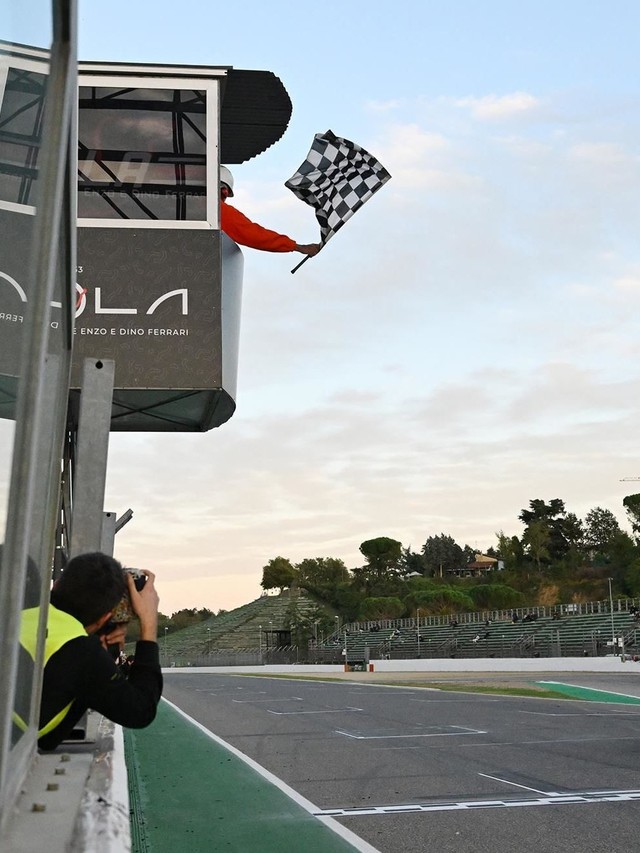
Two Wins, Two Class Titles, Zero Overall Championships
At Imola on October 29, VS Racing’s Lamborghini Huracán GT3 EVO2 entries won both one-hour races of the Italian GT Championship Sprint Cup season finale. Baptiste Moulin and Mateo Llarena took the first race in the #19 car. Mattia Michelotto and Edoardo Liberati followed with a commanding second-race victory in the #63. Lamborghini also locked down the Am class title through Massimo Ciglia and Giuseppe Fascicolo, while Dmitriy Gvazava and Phillippe Denes of Imperiale Racing secured the Pro-Am crown. And yet the overall championship belongs to BMW.
Michelotto and Liberati finished the season level on points with Jens Klingmann and Bruno Spengler’s BMW M4 GT3, but the German car’s superior record of fourth-place finishes decided the title on countback. Lamborghini’s customer teams were, by any weekend measure, the fastest cars at Imola. The problem was everything that happened in the 24 hours between qualifying and the final checkered flag. That gap between outright speed and championship outcome is what makes this finale worth examining closely, because it reveals both the strength of the Huracán GT3 EVO2 platform and the razor-thin margins that separate dominance from defeat in GT3 racing.
How Lamborghini Owned the Weekend at Imola
Edoardo Liberati set the tone on Saturday morning by putting the #63 on pole position, then controlled the rolling start to lead the field into Tamburello. Behind him, Moulin consolidated third in the #19, and Artem Petrov in the #60 gained two places from sixth on the grid. Liberati kept Klingmann’s BMW in his mirrors throughout the opening stint, carrying enough pace to hold the gap without drama.
The mandatory driver-change pit stops reshuffled the order. Mateo Llarena, taking over from Moulin, emerged in the lead of the #19. Riccardo Cazzaniga, who replaced Petrov in the #60, slotted into second. Michelotto, now aboard the #63, found himself battling the BMW for the final podium spot. Three Lamborghinis running first, second, and eventually filling the entire podium. Llarena brought the #19 home for its first victory of the season, with the Imperiale Racing Lamborghini of Denes and Gvazava second and the #60 completing an all-Lamborghini top three.
Sunday’s second race looked even more improbable. Michelotto and Liberati qualified a dismal 15th. An early safety car compressed the field and gave Michelotto a lifeline. Contact between a Mercedes and Ferrari after the restart opened two more positions, and Michelotto carved through the Imperiale Racing Lamborghini of Denes and then Spengler’s BMW to reach the podium. He moved into second past the sister VS Racing car of Cazzaniga, and by the end of the pit window, Liberati was leading. The #63 was doing exactly what it needed to do to overcome a five-point championship deficit. Across both races, the Huracán GT3 EVO2 showed the kind of raw pace that no rival could match on the day. The car was not the problem. The championship arithmetic was.

A vibrant green Lamborghini Huracán GT3 EVO races through a turn on the track, showcasing its dynamic livery.
The Penalty, the Safety Car, and the Cruelest Countback Rule in Racing
Two separate incidents conspired against the #63 crew, and together they explain how a car fast enough to win both races still lost the championship.
The first was self-inflicted. During the closing stages of Saturday’s race, Michelotto attempted an overtake on Klingmann’s BMW exiting Aqua Minerali and was pushed onto the grass. The battle escalated at Tosa, where Michelotto misjudged the move and tapped the BMW into the gravel. The resulting safety car neutralized the race, and stewards applied a 25-second post-race penalty to the #63, dropping Michelotto and Liberati from a strong finish to 11th. That penalty erased the points gain the #63 needed from Saturday. Entering the weekend five points behind the BMW, the Lamborghini crew needed to outscore Klingmann and Spengler across both races. Instead, neither title contender scored meaningful points in race one, leaving the standings unchanged heading into Sunday.
The second blow was pure bad luck. A late safety car in Sunday’s race meant the finish came under yellow flags, freezing the order and denying Liberati any chance to extend his lead or build a margin that might have produced bonus positions for other competitors behind the BMW. The result: identical point totals for both crews at season’s end.
Here the obscure countback mechanism did its work. Lamborghini says the BMW’s superior record of fourth-place finishes over the full season decided the championship. When two drivers finish level on points, championships typically compare results in descending order, counting wins first, then second places, then thirds, and so on until a difference appears. The fact that the tie-breaker came down to fourth-place finishes suggests the two crews were remarkably evenly matched throughout the season. The Lamborghini likely won more races overall but the BMW banked more steady finishes in the middle of the top ten. It is a legitimate, if painful, way to lose a title, and it underscores a truth about GT3 championships: raw speed wins weekends, but consistency wins seasons.
Class Titles Tell a Different Story
While the overall championship drama dominated the weekend, the Am and Pro-Am results deserve more than a footnote, because they reinforce the same point about the Huracán GT3 EVO2’s competitiveness from a different angle.
Ciglia and Fascicolo did not merely win the Am title; they won both races at Imola to seal it. That kind of finishing form at the final round suggests a crew operating at peak confidence, not limping across the line on accumulated points. Gvazava and Denes securing the Pro-Am crown for Imperiale Racing adds another dimension. Imperiale is one of Lamborghini Squadra Corse’s most established customer teams, and a Pro-Am title validates the support infrastructure that Lamborghini provides to its privateer operations. For prospective customer-racing buyers evaluating which manufacturer to align with, results like these matter. A factory that helps its customer teams win championships is a factory worth buying race cars from.
The practical takeaway for anyone considering entry into GT3 customer racing with Lamborghini: the Huracán GT3 EVO2 platform remains capable of winning races and titles in competitive national championships, even as its replacement looms. Teams running this car are not nursing an obsolete platform. They are competing at the front.

Two victorious drivers proudly display their trophies after a successful race event.
The Huracán GT3 EVO2 in Lamborghini’s Bigger Motorsport Picture
Imola’s results land at an interesting moment for Lamborghini’s racing operations, one that sharpens the significance of the Huracán GT3 EVO2’s continued competitiveness. The car keeps winning races in national and international GT3 series, proving the platform’s durability years into its lifecycle. Meanwhile, Lamborghini’s top-tier prototype effort, the SC 63 LMDh program, was paused for the 2026 season following two challenging years that included early retirements and reliability struggles. Road & Track documented one of the program’s most visible setbacks when the SC 63 retired from the 2025 Rolex 24 at Daytona within the first hour.
That contrast matters. Customer GT3 racing is where Lamborghini’s motorsport credibility is strongest right now. The SC 63 represented ambition at the highest level of endurance racing, but ambition without results erodes confidence. The Huracán GT3 EVO2’s consistent performance in series like the Italian GT Championship provides a counterweight: proof that Squadra Corse builds race cars that win in the hands of customer teams, not just under factory conditions.
The Temerario GT3, confirmed as the Huracán GT3 EVO2’s successor, will carry this responsibility forward. Car and Driver reported that the Temerario GT3 is the first race car entirely designed and developed at Lamborghini’s Sant’Agata Bolognese facility, a significant shift from the Huracán GT3’s development history. The new car swaps the naturally aspirated V10 for a modified version of the Temerario’s twin-turbocharged V8, which means customer teams will eventually need to adapt to a fundamentally different powertrain character. For teams and drivers who built their programs around the Huracán’s high-revving naturally aspirated behavior, that transition will demand new driving techniques, different setup philosophies, and recalibrated expectations about power delivery. Road & Track noted that in the decade the Huracán GT3 competed, eleven other brands released entirely new GT3 cars while Lamborghini refined the same basic platform. It represents a generational leap, not an incremental update, and the Huracán’s late-career form at Imola sets a high bar for its successor to clear.
What the Imola Finale Signals for Lamborghini’s GT Racing Future
Winning every race at a championship finale and still losing the title on countback is the sort of result that sticks in a team’s memory for years. It is also, paradoxically, exactly the kind of performance that reinforces a manufacturer’s reputation among the customer-racing community. VS Racing and Imperiale Racing demonstrated that the Huracán GT3 EVO2 can dominate outright and win class championships simultaneously. The overall title slipped away because of a single racing incident and a late safety car, not because the car lacked pace.
Lamborghini’s motorsport strategy right now looks like a brand leaning heavily on what works. The GT3 customer program delivers tangible results: race wins, class titles, and competitive hardware for privateer teams across multiple championships worldwide. The SC 63 pause removes the distraction of a struggling prototype program and, presumably, frees engineering resources to ensure the Temerario GT3 arrives as a fully competitive package.
Several questions remain unanswered. Lamborghini has not detailed when the Temerario GT3 will begin replacing the Huracán GT3 EVO2 in customer hands, or how the transition period will be managed for teams with existing EVO2 inventory. What the Imola weekend confirms is simpler and more immediate: the Huracán GT3 EVO2, in the twilight of its competitive life, still wins races. The car that replaces it will need to match that standard from day one.

Two drivers pose for a photo, celebrating their participation and success in the championship.
Gallery


