Squadra Corse Extends Its Pertamina Alliance Through 2025
Lamborghini Squadra Corse confirmed the renewal of its technical partnership with PT Pertamina Lubricants at the GAIKINDO Indonesia International Auto Show, extending the collaboration through 2025 and designating Pertamina’s Fastron brand as the official lubricant across every tier of Lamborghini motorsport. Super Trofeo customer racing, GT3 competition, and the SC63 LMDh prototype program all run on the same supplier’s oil.
The relationship traces back to 2015, when the two companies co-developed the Fastron Platinum Racing 10W-60 for use in regional Super Trofeo championships. Since then, the partnership contributed to multiple race victories and championship titles for Squadra Corse. Renewing through 2025 locks in continuity during the most ambitious period in Lamborghini’s racing history: the SC63 debuted at the Goodwood Festival of Speed and will contest both the FIA World Endurance Championship and the IMSA WeatherTech Sports Car Championship from 2024 onward.
Giorgio Sanna, Head of Motorsport at Lamborghini, framed the extension in explicitly technical terms, highlighting the proven performance of Pertamina’s lubricants and anticipation for developing new sustainable lubricant technologies through endurance competition in GT3 and LMDh. That word, “sustainable,” signals that the next generation of racing oils will need to address thermal efficiency and environmental targets simultaneously, not just raw protection. It also hints at the deeper reality of this partnership: Pertamina is not simply a sponsor with a logo on the bodywork, but an engineering collaborator whose products must perform under conditions that will only grow more demanding as Lamborghini’s motorsport ambitions escalate.

Executives from Lamborghini and Pertamina Fastron finalize their renewed partnership agreement.
The SC63 LMDh: Why Every Drop of Oil Matters in Hybrid Endurance Racing
Tires, aerodynamics, engine tuning, driver talent: those get the glory when people think about what makes a race car fast. In endurance racing, where a powertrain must survive 6, 12, or 24 hours of sustained abuse, the lubricant functions more like a structural component. It manages friction between metal surfaces moving at extraordinary speeds, evacuates heat from areas that coolant cannot reach, and prevents microscopic wear that compounds into catastrophic failure over hundreds of laps.
The SC63 raises those stakes considerably. One source describes the car’s 3.8-liter twin-turbo V8 as featuring a semi-dry sump recirculating oil system with internal baffles and externally accessible oil filters, plus an integral 3-liter engine oil catch tank equipped with a level sensor, fill, drain, and sight glass ports. A semi-dry sump system reduces the volume of oil sitting in the crankcase at any given moment, lowering parasitic drag on the crankshaft while relying on scavenge pumps to keep oil circulating under extreme lateral and longitudinal G-forces. The baffles prevent oil starvation during hard cornering, a scenario that can destroy a bearing in seconds.
The SC63’s hybrid architecture multiplies the lubrication challenge further. Hybrid LMDh cars cycle between electric and combustion power, meaning the engine endures repeated thermal shocks as it transitions from idle to full load. Oil viscosity must remain stable across a wider operating temperature range than a conventional race engine would demand. Too thin at peak temperature and the oil film breaks down. Too thick at cold restart and you lose power to internal friction precisely when the hybrid system is handing off to the combustion engine. This is exactly the kind of problem a lubricant partnership must solve through joint testing and co-development, not simply by selecting an off-the-shelf product.
From Super Trofeo Victories to GT3: A Decade of Collaborative Development
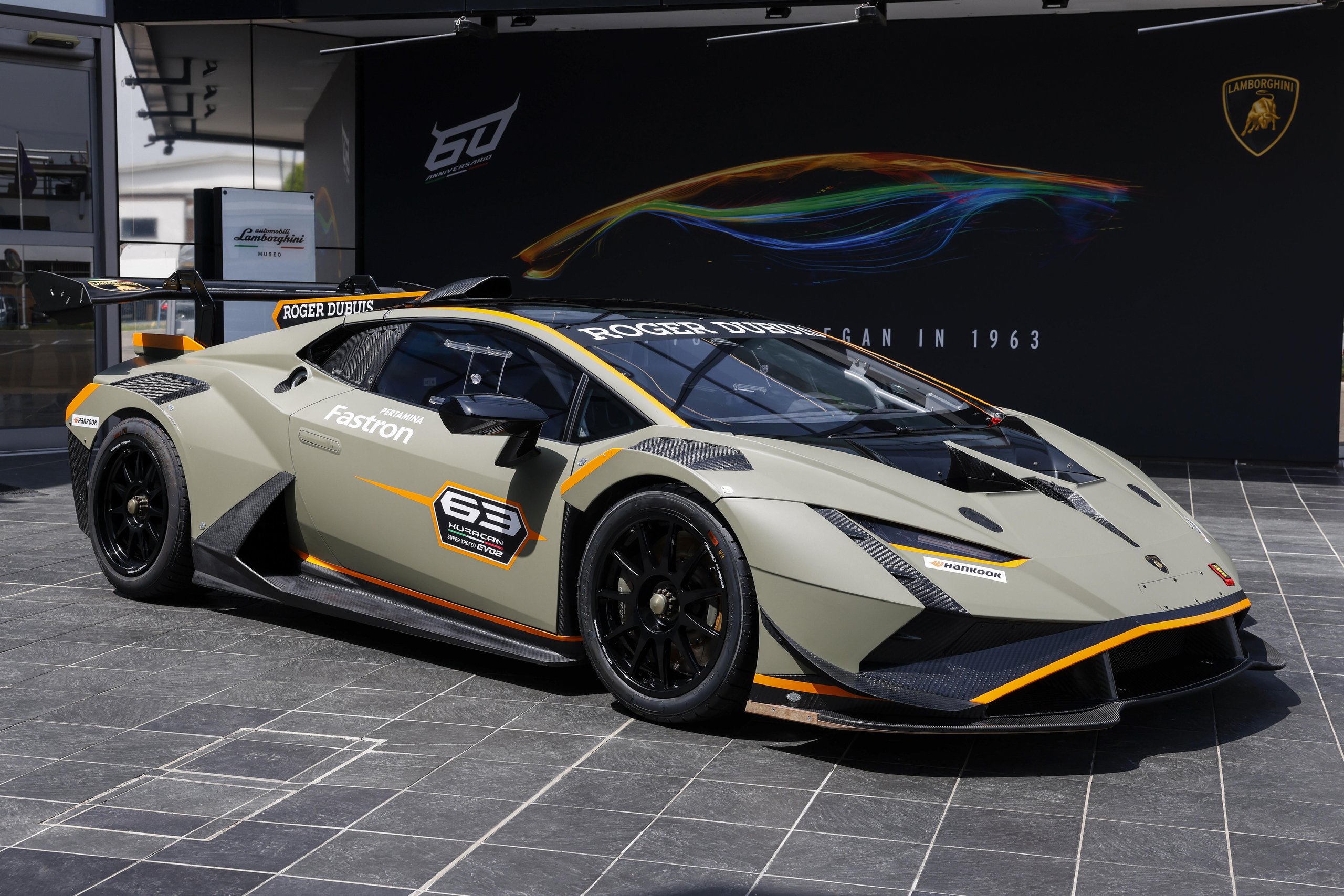
The Fastron Platinum Racing 10W-60 was the first tangible product of this alliance, developed specifically for the naturally aspirated V10 engines powering the Huracán Super Trofeo. A 10W-60 viscosity grade is a deliberate choice for high-revving, high-temperature racing applications: the “10W” ensures the oil flows quickly at cold startup, while the “60” rating maintains a thick protective film at extreme operating temperatures. For context, most road car manufacturers recommend something in the 0W-40 or 5W-30 range. The jump to a 60-weight hot viscosity tells you exactly how much thermal punishment these engines absorb.
The Super Trofeo served as an ideal proving ground because of its sheer volume. Regional championships run across Europe, Asia, and North America, generating an enormous dataset of engine hours, ambient temperature variations, and failure modes. Every oil change, every teardown, every post-race analysis feeds back into the lubricant formulation. That kind of iterative, data-rich development cycle is precisely what a lubricant supplier needs before stepping up to prototype endurance racing, where the consequences of a formulation error are measured in destroyed engines and lost championship points.
Followers of Lamborghini’s customer racing programs will recognize this ladder: the Super Trofeo feeds technology and operational knowledge into GT3, and GT3 informs the factory prototype effort. The lubricant partnership mirrors that same escalation, and the renewal through 2025 ensures Pertamina remains embedded at every rung as Squadra Corse pushes toward its most demanding competition yet.

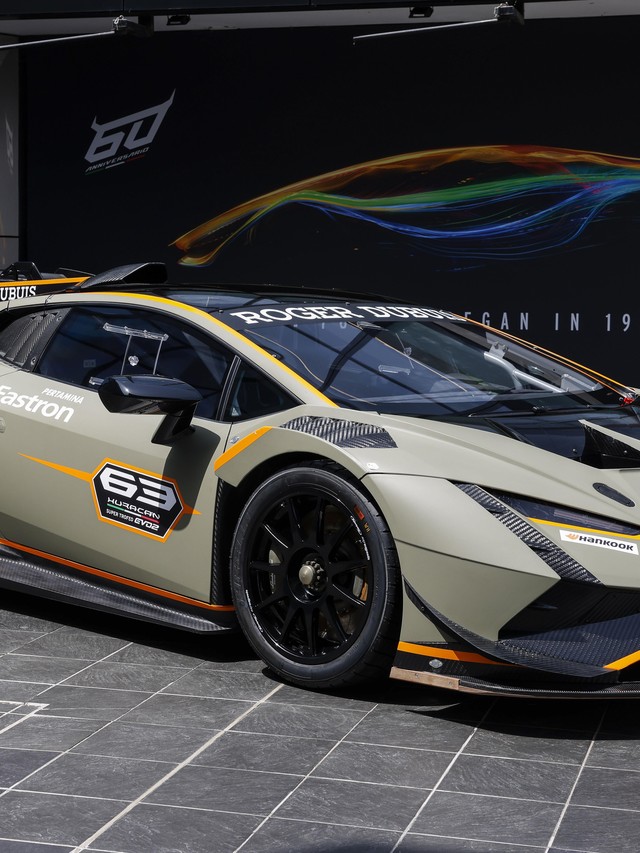
Two executives shake hands in front of a Lamborghini Huracan Super Trofeo EVO2 at a special event.
Competitive Context: How Rivals Handle Their Lubricant Engineering
Lamborghini is not the only manufacturer treating its lubricant supplier as a core engineering partner rather than a billboard. Ferrari’s decades-long relationship with Shell is probably the most visible example in endurance racing: Shell Technical Partnerships embeds engineers directly within Ferrari’s Maranello operations, co-developing fuels and lubricants that are tested at the molecular level before they ever reach a race car. Porsche follows a similar model with Mobil 1, a partnership that stretches back through multiple generations of 911 GT3 Cup cars and the 919 Hybrid LMP1 program.
What makes Lamborghini’s approach with Pertamina distinct is the relative youth of the relationship and the speed at which it scaled. Starting from a single-make customer series in 2015, the collaboration now supports a factory LMDh prototype competing against manufacturers with lubricant partnerships measured in decades. That compressed timeline places enormous pressure on the development process. Lamborghini and Pertamina lack the institutional memory that Shell and Ferrari accumulated over 70-plus years of Formula 1 and sports car racing. They compensate with intensive joint testing, using the Super Trofeo and GT3 as accelerated development platforms.
The SC63 will line up against the Ferrari 499P and Porsche 963, machines backed by lubricant partnerships with far longer track records. Whether Pertamina can deliver equivalent reliability and performance under WEC and IMSA conditions will be one of the quieter but genuinely consequential competitive variables in the SC63’s debut seasons.
What Racing Oil Development Could Mean for Lamborghini Road Cars
Sanna’s mention of “new sustainable technology” in lubricant development is tantalizing but deliberately vague. Lamborghini provided no specifics about what sustainability means in this context, whether it refers to bio-based base stocks, reduced environmental impact during manufacturing, extended drain intervals that reduce waste, or some combination.
The general pattern in the automotive industry, though, runs consistently from track to road. Shell’s work with Ferrari in F1 directly influenced the formulations sold at consumer fuel stations. Mobil 1’s racing data with Porsche feeds into the factory-fill oil recommended for every new 911. If Pertamina follows the same playbook, the extreme-condition data gathered from the SC63’s hybrid V8 could eventually inform lubricant recommendations for Lamborghini’s expanding hybrid road car lineup, which now includes the Revuelto and the Urus SE.
Lamborghini owners on enthusiast forums rarely discuss lubricant brands with the same passion they bring to exhaust notes or wheel specs. Yet the reality of modern hybrid supercar ownership is that the fluids protecting a twin-turbo V8 mated to electric motors represent a genuinely consequential maintenance decision. If Pertamina’s racing program produces lubricants optimized for exactly those thermal and load conditions, the trickle-down benefit could prove more practical than any aero upgrade.
For now, the confirmed scope of the partnership covers motorsport through 2025. Whether a consumer Fastron product carrying Lamborghini validation ever appears on dealer shelves remains speculation. The engineering pipeline, built rung by rung from Super Trofeo through GT3 and now LMDh, points in that direction.

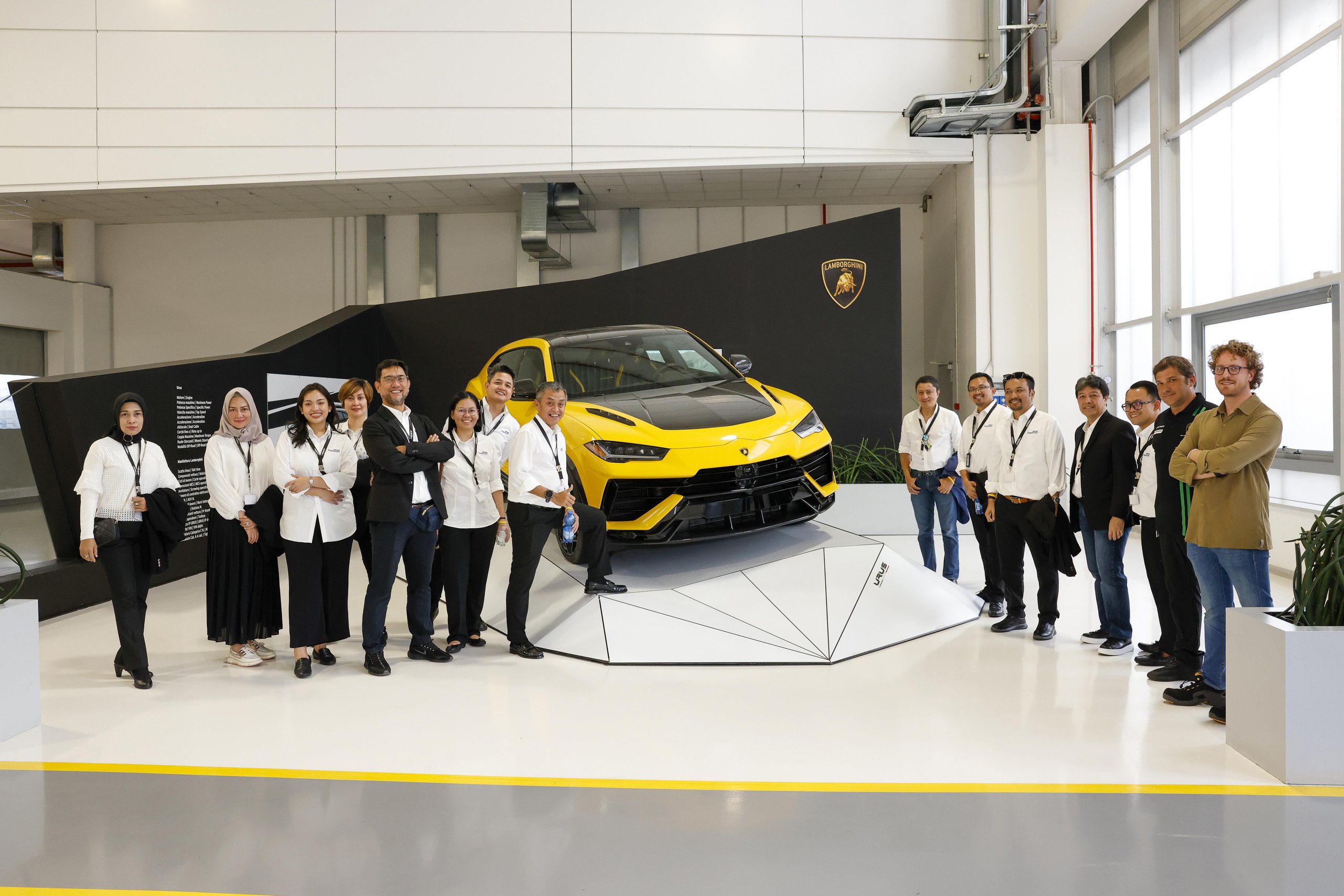
A large group celebrates the renewed partnership alongside the Lamborghini Huracan Super Trofeo EVO2.
Gallery