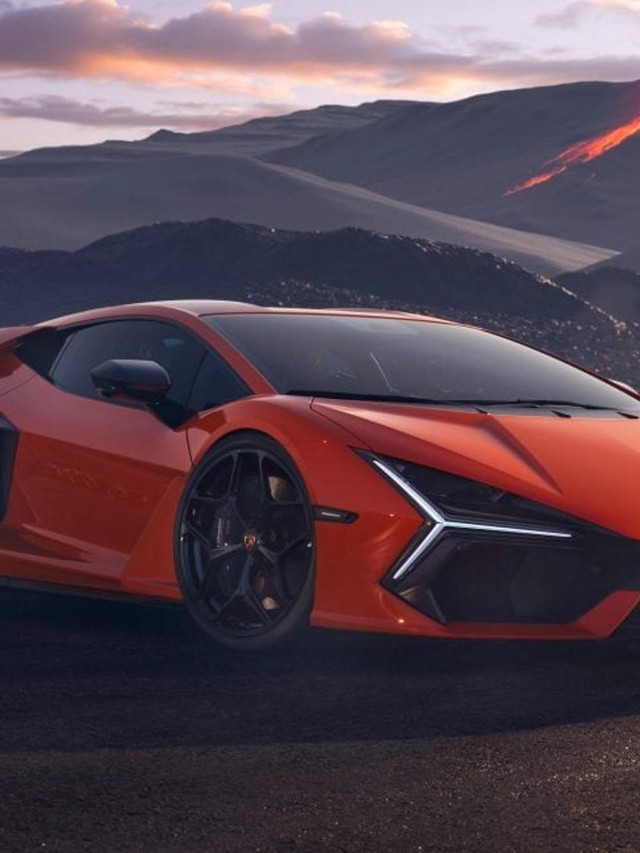
Manifattura Lamborghini Next Level: What the Revuelto Demanded
Building a naturally aspirated V12 supercar is already a specialized industrial act. Building one that also contains three electric motors, a lithium-ion battery pack, and an 8-speed dual-clutch gearbox that never existed in any previous Lamborghini requires something closer to reinvention. That is the core of what Lamborghini calls Manifattura Lamborghini Next Level, the production philosophy developed specifically to manufacture the Revuelto at the company’s Sant’Agata Bolognese headquarters.
Lamborghini says it invested €150 million into the project and expanded the facility by 172,000 square meters. For a company that produced a record 9,233 cars in 2022, operating from a site in a small Emilian town, an expansion of roughly 1.85 million square feet represents a physical transformation of the campus, not a bolt-on annex. New buildings now house electric motor and battery production alongside the traditional carbon fiber and V12 assembly areas.
Ranieri Niccoli, Lamborghini’s Chief Manufacturing Officer, framed the challenge plainly in the company’s behind-the-scenes film series on the Revuelto:
“The Revuelto is a hybrid car combining the most innovative technical solutions, yet built using traditional skills while allowing maximum personalization by the customer. We raised the bar to produce it, creating what we call ‘Manifattura Lamborghini Next Level’: a production system with people always at its core but which we have adapted to a much more complex product and to processes we haven’t used before.”
That last phrase is the telling one. For decades, Lamborghini’s assembly line evolved incrementally: the Murciélago gave way to the Aventador, which refined the carbon fiber monocoque approach over an eleven-year production run. The Revuelto broke that continuity. Its hybrid architecture introduced component categories, thermal management requirements, and electrical integration steps that simply did not exist in the Aventador’s manufacturing playbook. Keeping the V12 alive meant rebuilding the place where the engine becomes a car.
Why €150 Million? The Real Cost of Hybridizing a V12 Assembly Line
The investment figure is striking, but what did it actually buy? Lamborghini has not published a detailed facility map, so some specifics remain opaque. What the company confirms is that the expansion accommodates dedicated production areas for the Revuelto‘s electric powertrain components, additional testing infrastructure, and the physical space needed for a more complex assembly sequence.
Consider the product the line now builds. The Revuelto pairs a new 6.5-liter naturally aspirated V12 with three electric motors and routes their combined output through an 8-speed dual-clutch transmission, a first for any Lamborghini V12 car. The Aventador used a single-clutch automated manual for its entire life. Integrating a dual-clutch unit, which sits in a different physical envelope and requires different calibration and quality-control procedures, is a meaningful change to the assembly process before you even account for the hybrid system.
Then layer in the battery pack. Packaging lithium-ion cells into a mid-engine supercar built around a carbon fiber monocoque (Lamborghini calls it a “monofuselage”) introduces thermal, structural, and safety validation steps at the production level. Every completed car must meet electrical safety standards that the Aventador line never needed to address. Cooling circuits for battery cells run alongside cooling circuits for a 9,500-rpm V12. The tolerances and inspection points multiply.
Lamborghini says the Next Level system aims to reduce errors and increase production speed while maintaining quality. That language is pragmatic rather than glamorous, and it reflects a real industrial problem: when you double the number of subsystems in a car, you roughly double the opportunities for assembly defects unless you redesign the workflow. The €150 million bought that redesign.
Handcraft Meets High Voltage: Keeping People at the Core
The most interesting tension in Niccoli’s description is the insistence that people remain central to the process. Lamborghini’s identity depends on the idea that each car passes through skilled human hands, particularly in the leather-trimmed interior, the carbon fiber layup, and the final paint inspection. The Ad Personam customization program, which allows buyers to specify colors, materials, and stitching patterns in combinations that approach one-of-one territory, only works if human craftspeople execute those requests on the line.
The Revuelto does not abandon that model. Carbon fiber remains, as Car and Driver described it, “a protagonist” in the car’s construction. The monofuselage is built on a separate line at Sant’Agata, comprising several types of carbon fiber material selected by application and visibility. The front subframe uses forged carbon fiber rather than aluminum. These are labor-intensive processes that resist full automation.
What changes is the layer of electromechanical complexity underneath. Battery module assembly, high-voltage harness routing, and electric motor integration are precision tasks that benefit from guided tooling, automated torque verification, and digital quality tracking. Lamborghini’s challenge was grafting those processes onto a production culture that still values a technician’s trained eye on a leather seam. The Next Level label, stripped of its marketing polish, describes a factory that now operates in two registers simultaneously: artisan and industrial.
For buyers on the waiting list, this matters in a practical way. The depth of Ad Personam options on the Revuelto appears to be expanding rather than contracting, despite the car’s added complexity. One-off Opera Unica commissions, which involve hand-painted exterior treatments and bespoke interior details, continue to appear at regional showcases. A production system that could not accommodate that level of personalization while also managing hybrid-component integration would be a step backward. The investment signals that Lamborghini intends the opposite.
What Next Level Means Beyond the Revuelto
Lamborghini has not explicitly stated which future models will benefit from the expanded facility and new production processes, but the logic is straightforward. The Revuelto is the first Lamborghini V12 plug-in hybrid. The Temerario, the Huracán’s successor, uses a twin-turbocharged V8 hybrid powertrain with its own set of electrified components. Any future derivative or limited edition built on either platform will flow through infrastructure that now exists because of the Revuelto investment.
The 172,000-square-meter expansion is not a temporary scaffold. Lamborghini built permanent capability for electric motor production, battery assembly, and high-voltage testing at its home site. That capability serves the entire Direzione Cor Tauri electrification strategy, which Stephan Winkelmann positioned as the company’s roadmap toward hybridizing every model line. The Revuelto was the first and most complex proof of concept. What follows can leverage the same facilities, the same trained workforce, and the same quality systems.
Lamborghini confirmed that Revuelto deliveries began in the fourth quarter of 2023, coinciding with the brand’s 60th anniversary. The symbolic timing was deliberate, but the industrial reality behind it carries more weight. Sixty years after Ferruccio Lamborghini opened the factory doors, the company retooled the same site to build a fundamentally different kind of car without relocating, outsourcing core production, or abandoning its artisan identity. Whether that balance holds as volumes and complexity increase will be the real test of the investment.
How Lamborghini’s Factory Strategy Compares to Rivals
Ferrari, McLaren, and Lamborghini all faced the same industrial question when hybridization arrived: do you retrofit existing facilities, build new ones, or outsource the electrified components?
Ferrari integrated hybrid production for the SF90 Stradale within its Maranello campus, investing heavily in new assembly areas and battery production. McLaren built the Artura around a new carbon fiber architecture at its Woking Technology Centre but encountered well-documented production delays that constrained early deliveries. Lamborghini’s approach sits closer to Ferrari’s: expand the home campus, keep production centralized, and absorb the complexity internally.
The €150 million figure is difficult to compare directly without knowing Ferrari’s or McLaren’s equivalent spend, which neither company has disclosed in the same format. What can be observed is the strategic intent. Lamborghini chose to keep every critical process, from carbon fiber monocoque fabrication to electric motor assembly, under one roof in Sant’Agata Bolognese. For a company owned by the Volkswagen Group (through Audi), the decision to invest that heavily in a single Italian site rather than distributing production across the group’s global network says something about how Lamborghini’s identity functions as a commercial asset. The cars are built where they have always been built. The factory is the brand.
For prospective buyers, the practical implication is continuity. Lamborghini’s quality control, personalization pipeline, and factory-collection experience remain anchored to the same location. The car you take delivery of in Sant’Agata was assembled by the same workforce, in the same town, using processes that evolved rather than relocated. In a segment where provenance and authenticity carry real resale and emotional value, that matters more than most spec-sheet comparisons.
The V12 Lives, But the Factory Had to Change First
The Revuelto’s combined output of 1,001 horsepower, its 2.5-second sprint to 62 mph, and its 217-mph top speed all make for compelling headlines. So do 13 drive modes and electric all-wheel drive. But none of those numbers exist without the less photogenic story of factory floors being poured, new assembly stations being commissioned, and technicians learning to route high-voltage cables alongside naturally aspirated intake runners.
Lamborghini’s decision to preserve the V12 required more than engineering a new engine. It required rebuilding the place where the engine becomes a car. The Manifattura Lamborghini Next Level system is the industrial answer to a question enthusiasts have asked since electrification became inevitable: can Lamborghini add batteries and motors without losing what makes the cars feel handmade, exclusive, and unmistakably Italian?
The €150 million and 172,000 square meters represent Lamborghini’s bet that the answer is yes. Deliveries are underway, and the factory is running. Whether the bet pays off over a full production cycle will depend on build quality, personalization depth, and whether the ownership experience matches the ambition of the investment. Early signs, from the Opera Unica one-offs to the expanding Ad Personam catalog, suggest the company is leaning into complexity rather than retreating from it. For anyone holding a build slot, that confidence from the factory floor is worth more than another press photo of the car at speed.


