Lamborghini’s First V12 Plug-in Hybrid Flagship Arrives
When Lamborghini retired the Aventador after a decade-long production run, it left a question no amount of Direzione Cor Tauri strategy slides could fully answer: could electrification coexist with a naturally aspirated twelve-cylinder engine without turning the result into a compliance exercise wrapped in carbon fiber? The Revuelto is Lamborghini’s reply, and the engineering argument it makes is more interesting than the headline numbers suggest.
As the marque’s first V12 plug-in hybrid HPEV (High Performance Electrified Vehicle), the Revuelto replaces the Aventador at the absolute top of the product range. Its powertrain integrates a naturally aspirated V12 with an eight-speed, double-clutch transverse gearbox and three electric motors, producing a combined output of 1015 CV (1001 horsepower). Lamborghini states the car achieves 0-100 km/h in 2.5 seconds, with a top speed exceeding 350 km/h. The weight-to-power ratio sits at 1.75 kg/CV, the best figure in the brand’s history.
Yet the real story is not the acceleration claim. It is the architecture underneath, and why Lamborghini chose this specific combination of components to keep a naturally aspirated V12 alive in an era when most rivals reached for turbochargers instead.
Why Three Motors, a Transverse Gearbox, and No Turbochargers
The engineering logic of the Revuelto’s hybrid system becomes clearer once you understand what it replaces. The Aventador used a single-clutch automated manual gearbox, a unit that delivered drama in abundance but punished anyone who tried to use the car in slow traffic. The Revuelto’s new eight-speed double-clutch transverse gearbox is a first for any twelve-cylinder Lamborghini, and its significance goes beyond shift speed. It changes the fundamental character of how the car delivers power to the rear wheels, making the V12 usable in ways the Aventador never was.
The three electric motors are not identical, and their placement reveals the engineering priorities. Two front axial flux motors, supplied by YASA, contribute 110 kW (over 150 horsepower) and 300 Nm of torque each. These sit on the front axle, providing electric torque vectoring and energy recuperation during braking. A third radial flux motor sits above the new gearbox at the rear. In fully electric mode, the Revuelto operates on front-wheel drive only, a quirk that surprised some enthusiasts when the details emerged.
The choice of axial flux motors for the front is worth pausing on. Axial flux units pack more power into less weight and volume than conventional radial flux designs, which is why YASA’s technology attracted Lamborghini’s attention. The result is a front e-axle that can vector torque between the left and right wheels independently, sharpening turn-in response without adding the bulk of a traditional mechanical differential. Forum discussion among early owners describes the torque vectoring effect as noticeably sharper than the Aventador’s mechanical system, particularly during mid-corner adjustments.
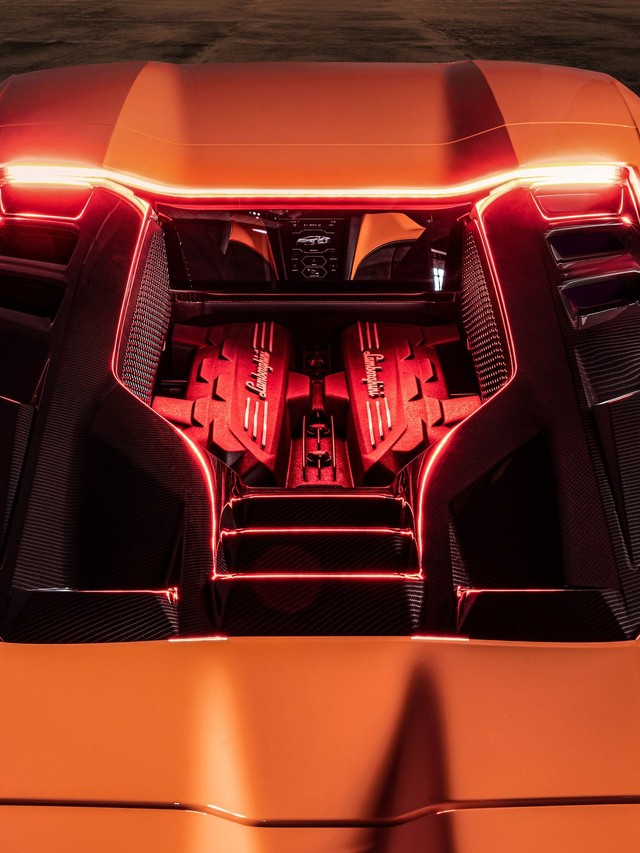
Keeping the V12 naturally aspirated while adding hybrid assistance was a deliberate philosophical choice. Ferrari’s SF90 Stradale pairs its three electric motors with a twin-turbocharged V8. McLaren’s Artura uses a twin-turbo V6 with a single axial flux motor. Both are formidable machines, but neither preserves the linear throttle response and high-rpm character of a large-displacement naturally aspirated engine. Lamborghini bet that its buyers would value the V12’s 9,500-rpm redline and unfiltered intake howl over the low-end torque advantage of forced induction, using the electric motors to fill the torque curve where the V12 is naturally thinner. That bet defines the Revuelto’s identity.

The Revuelto's powerful V12 engine, illuminated in red, is a masterpiece of engineering and design.
Design Language: Countach DNA Through a Modern Lens
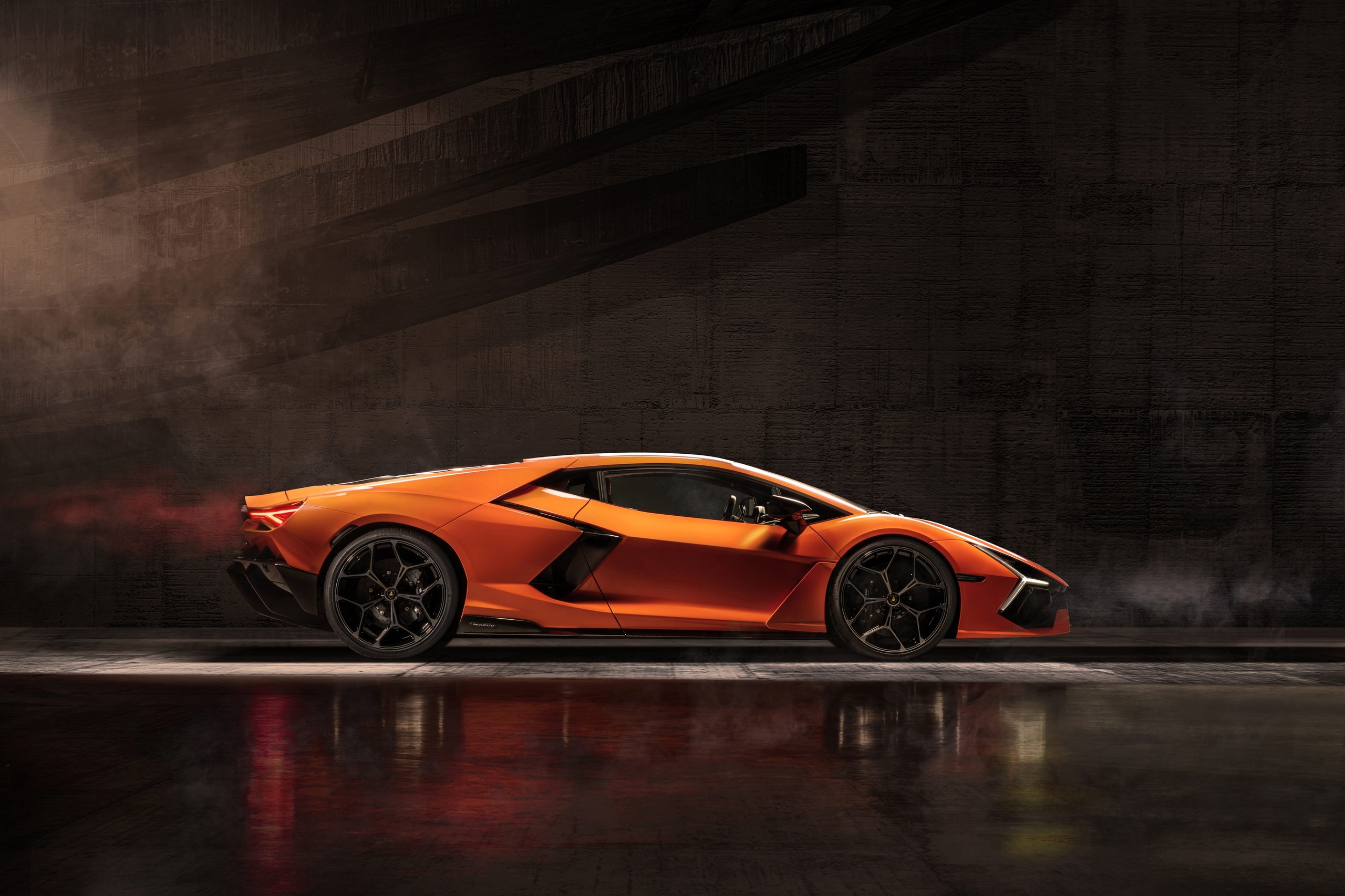
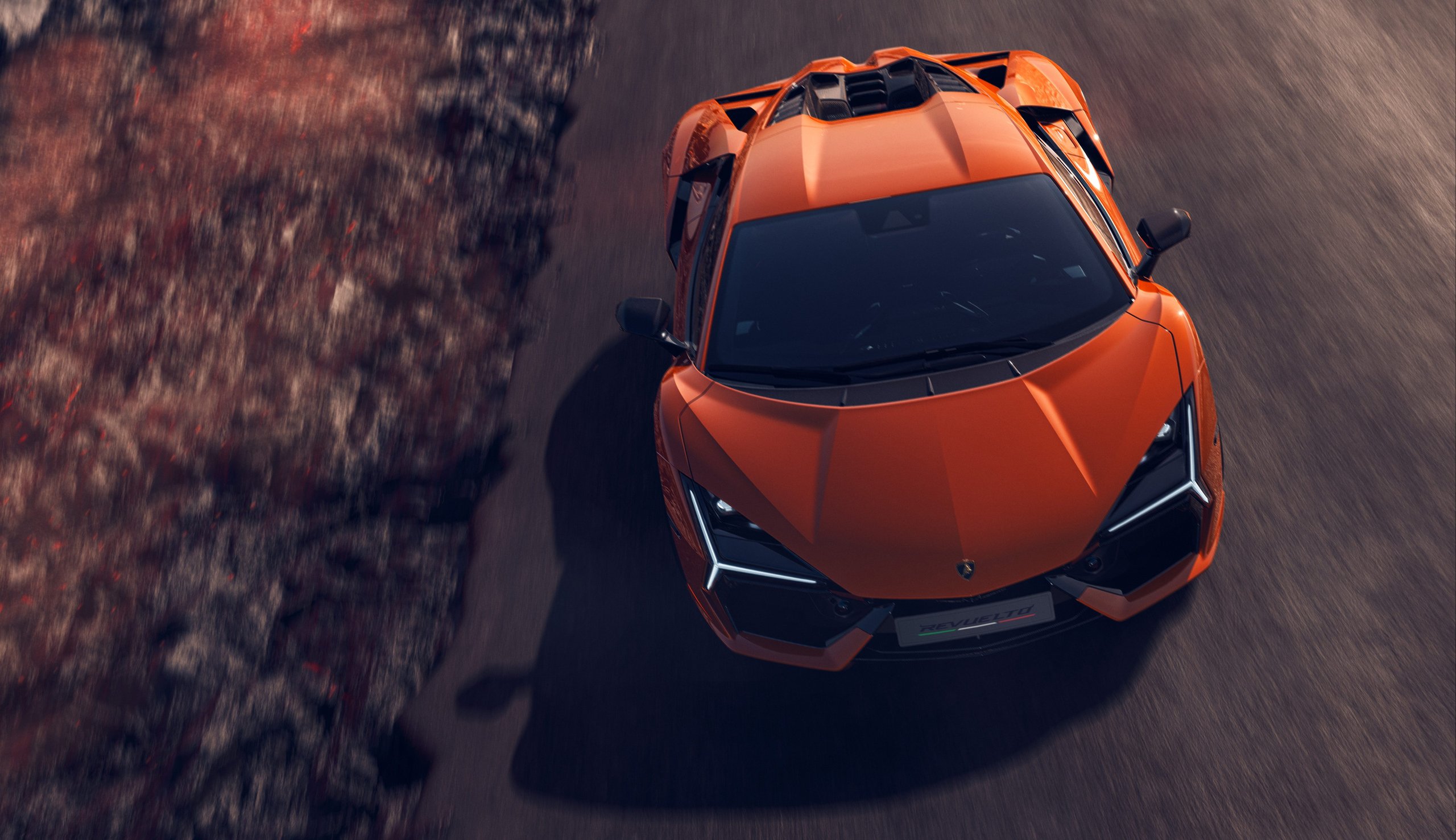
Lamborghini’s design lineage from the 1971 Countach prototype through the Diablo, Murciélago, and Aventador follows a remarkably consistent logic: a single longitudinal line defining the car’s proportions, scissor doors creating visual drama, and the engine displayed as a visible mechanical heart. The Revuelto continues every one of those traditions while introducing a new Y-shape light signature that Lamborghini says will define its contemporary design direction.
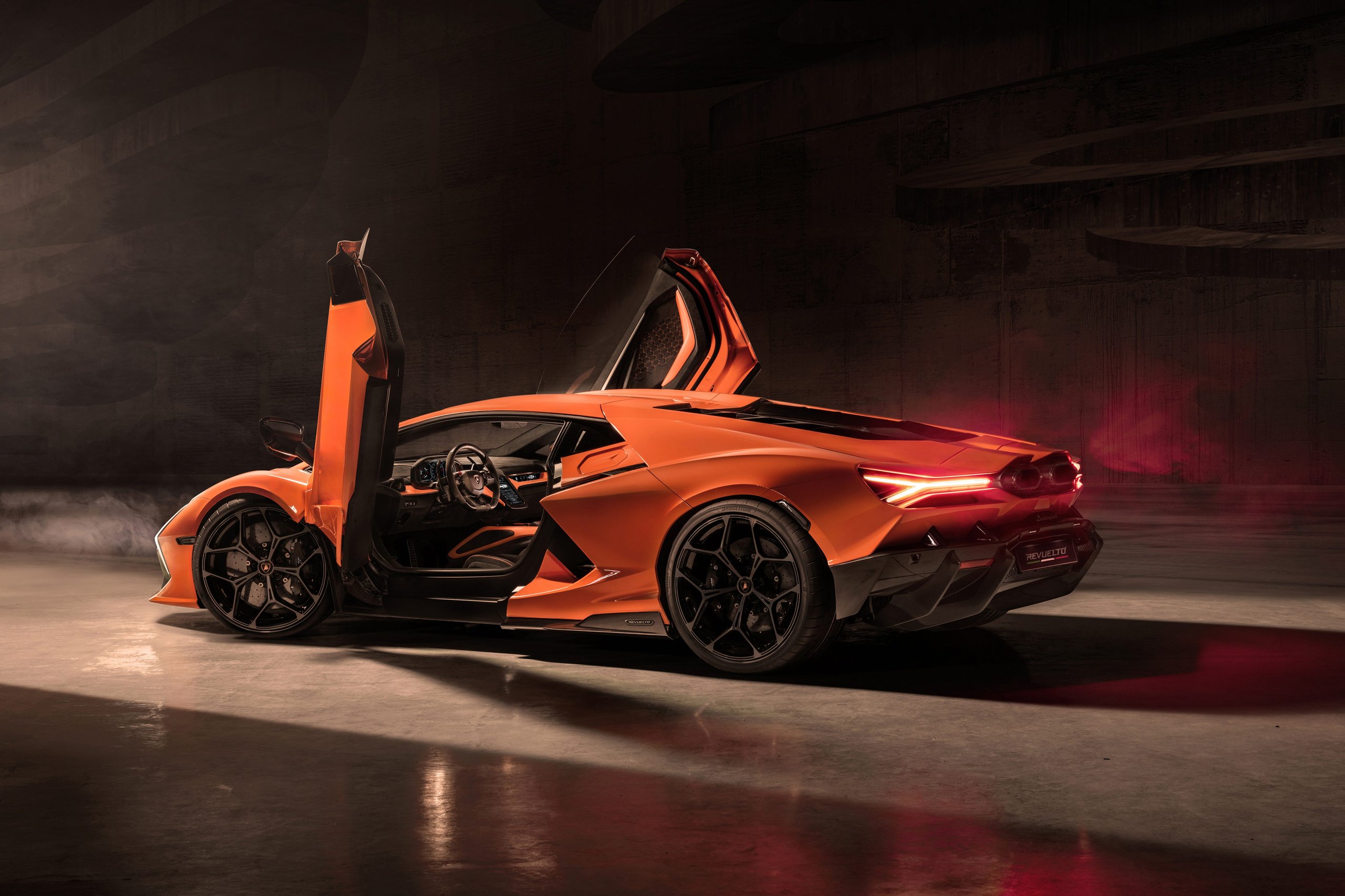
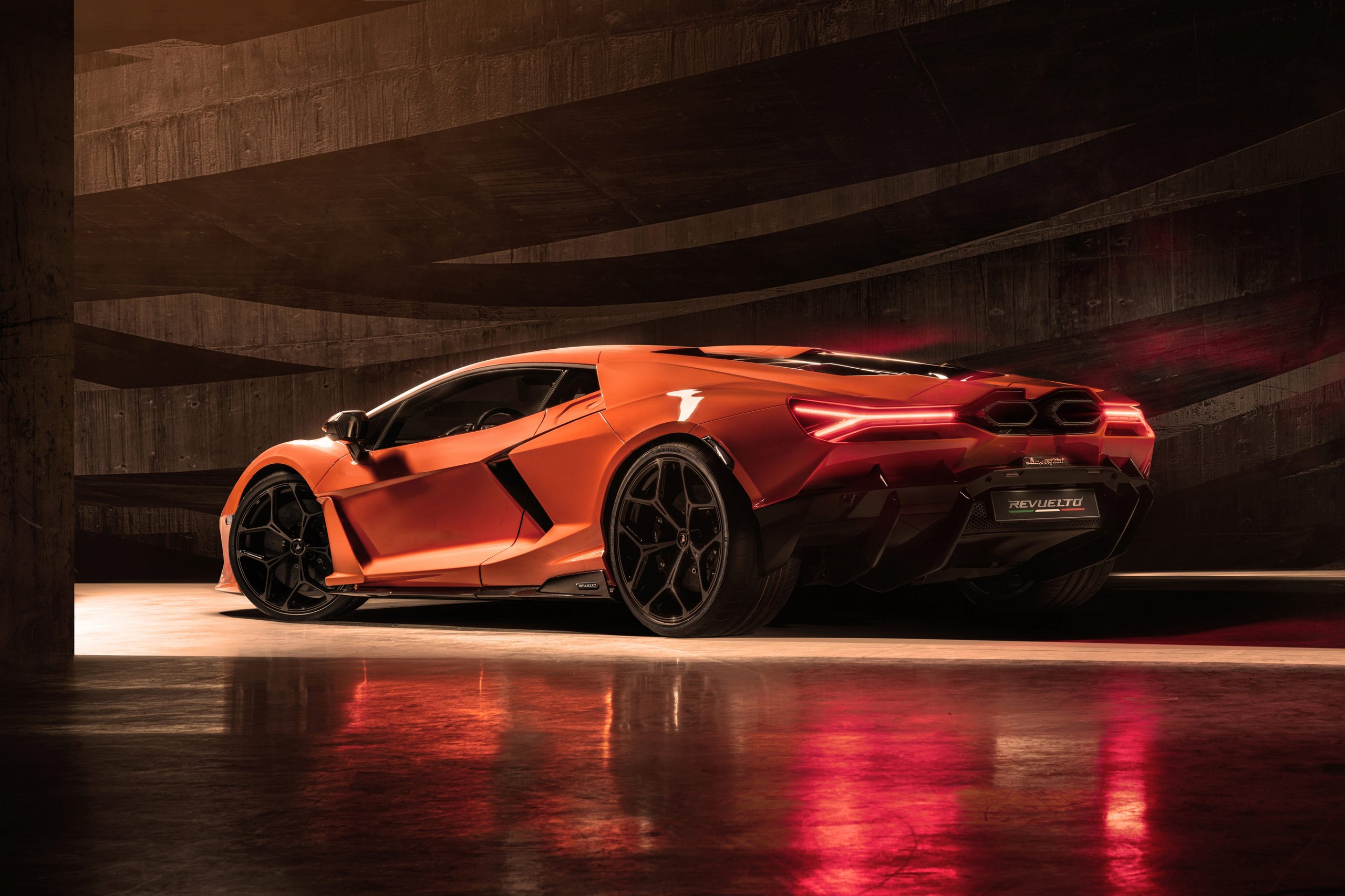
The rear treatment is where the car makes its boldest visual statement. The V12 engine bay is fully exposed through a glass cover, with hexagonal exhaust tips positioned between Y-shaped taillights. An active rear wing adjusts across three positions depending on driving mode: a low-drag setting for electric cruising or fuel economy, a balanced position for normal driving, and a high-downforce configuration the driver can also select manually via a rotor on the steering wheel.
Aerodynamic gains over the Aventador Ultimae are substantial. Lamborghini says front aerodynamic load increased by 33% and rear load by 74% under maximum load conditions. The diffuser angles tell the story: 11 degrees of central slant versus the Aventador Ultimae’s 7 degrees, and 15 degrees laterally versus 8. Carbon fiber forms the principal structural element, used in the monofuselage, frame, and numerous bodywork components. The shark-nose front section is a single monolithic carbon fiber piece, channeling air through sculpted surfaces that feed four rear vortex generators in the underbody. Every surface works to keep the naturally aspirated V12 viable at speeds where aerodynamic drag would otherwise demand a smaller, turbocharged engine.

This infographic showcases the striking evolution of Lamborghini's V12 super sports cars, culminating in the new Revuelto.
Inside the Cockpit: Screens, Rotors, and a Fighter Jet Start Button
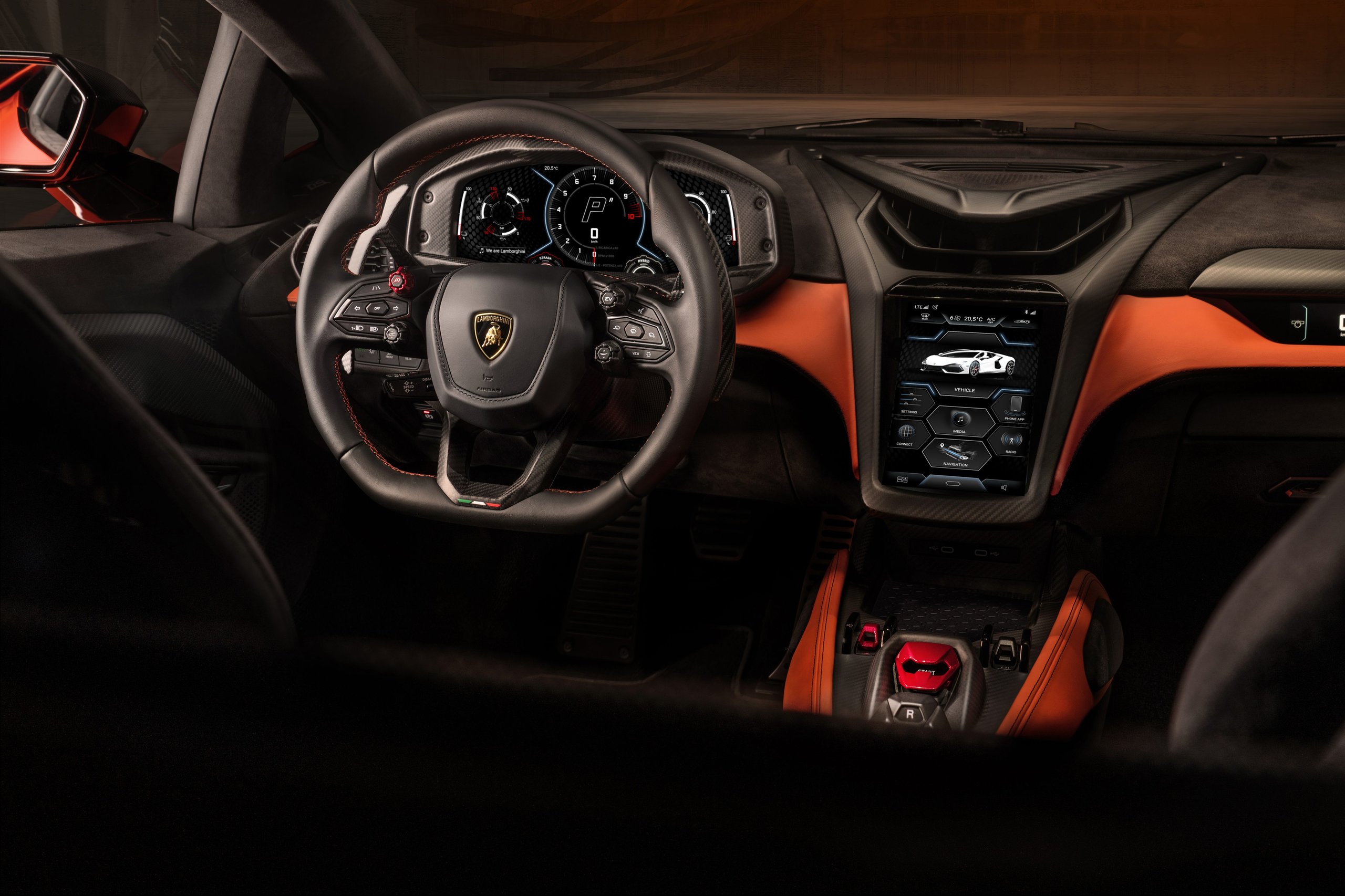
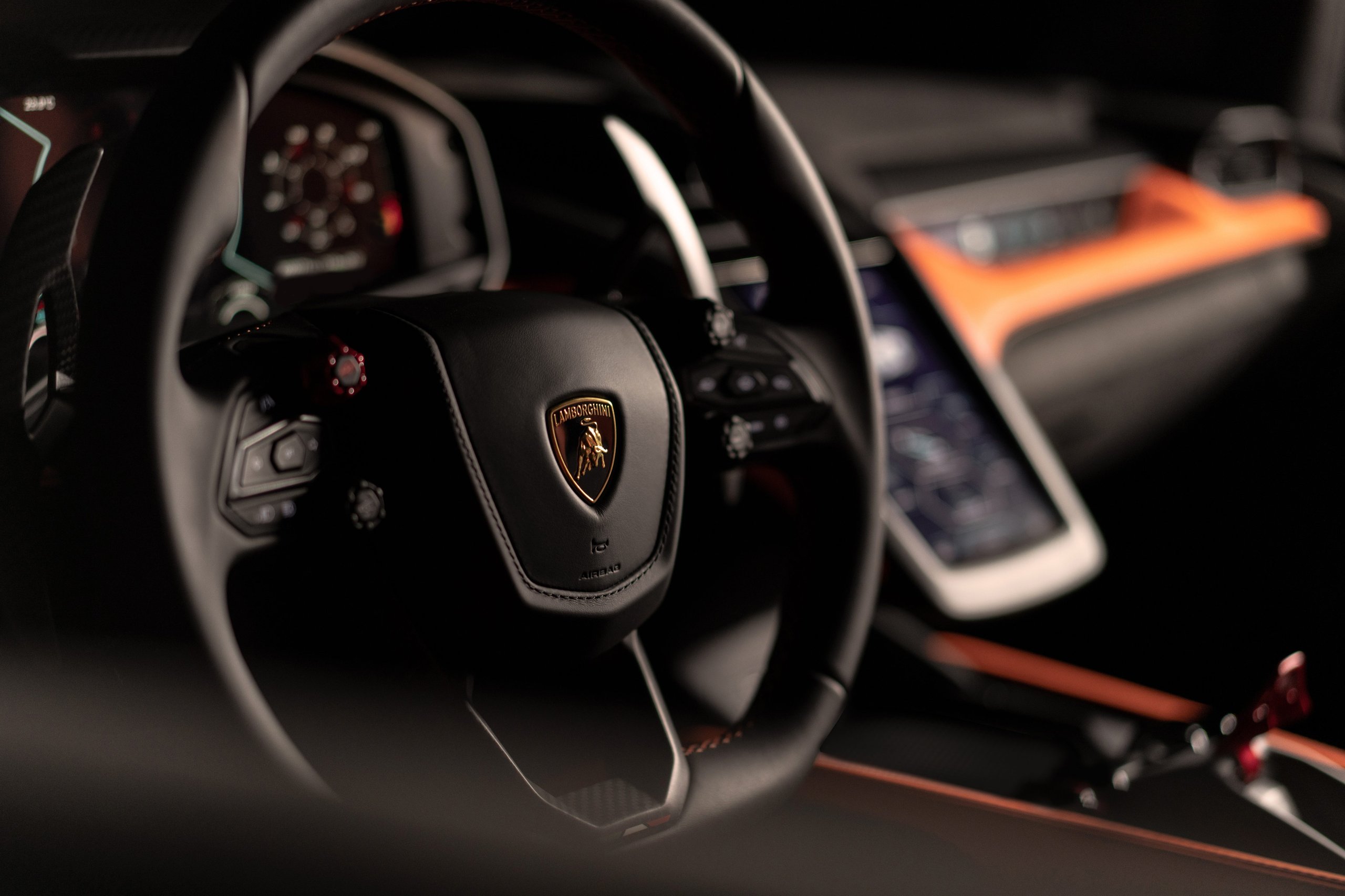
Lamborghini’s “feel like a pilot” interior philosophy translates into a cabin built around three digital screens: a 12.3-inch digital cockpit for the driver, an 8.4-inch central vertical touchscreen, and a 9.1-inch passenger display. The passenger screen mirrors the driver’s information feed, and a swipe function lets either occupant move applications between the central and side displays with a smartphone-like gesture.
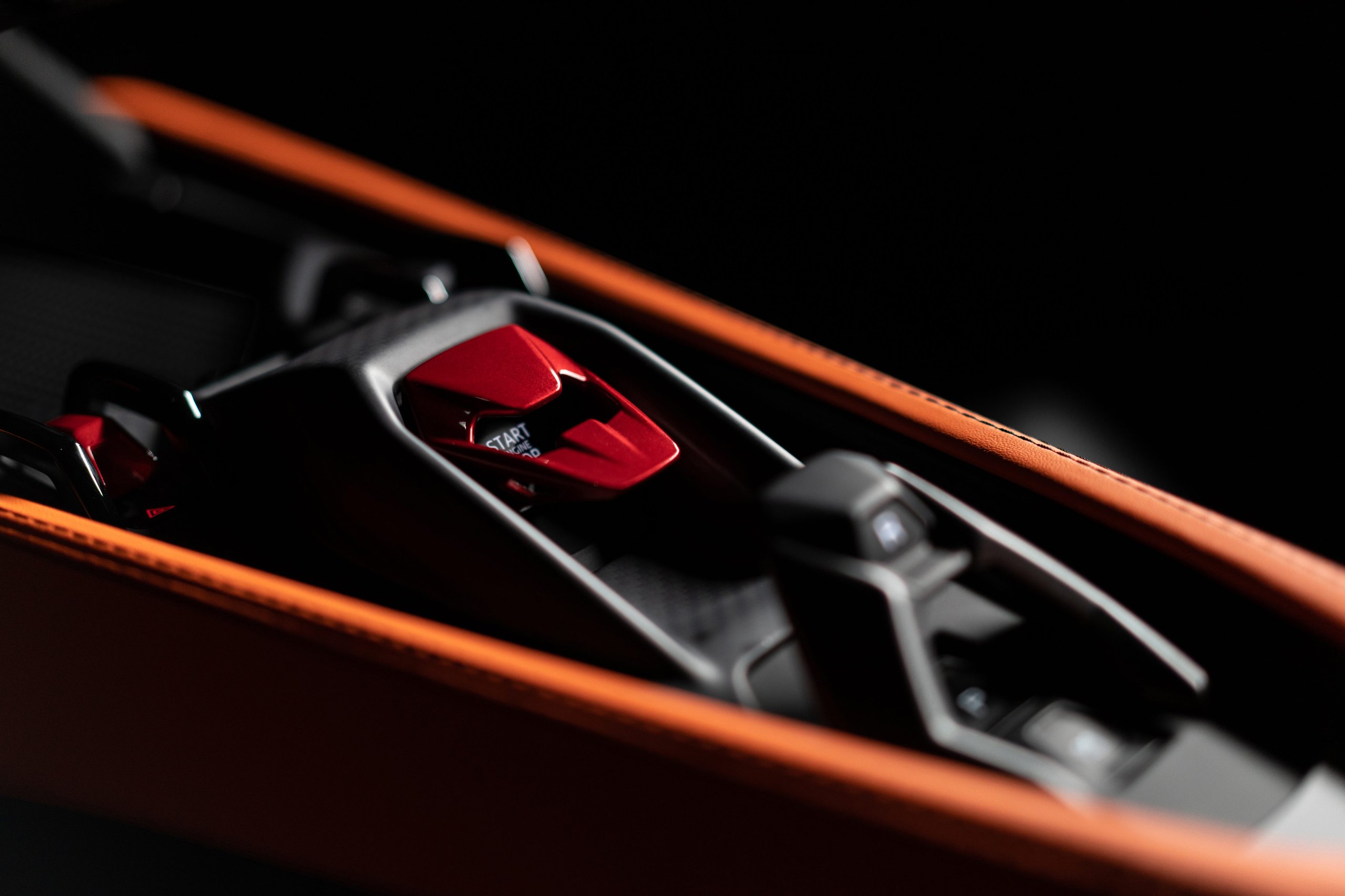
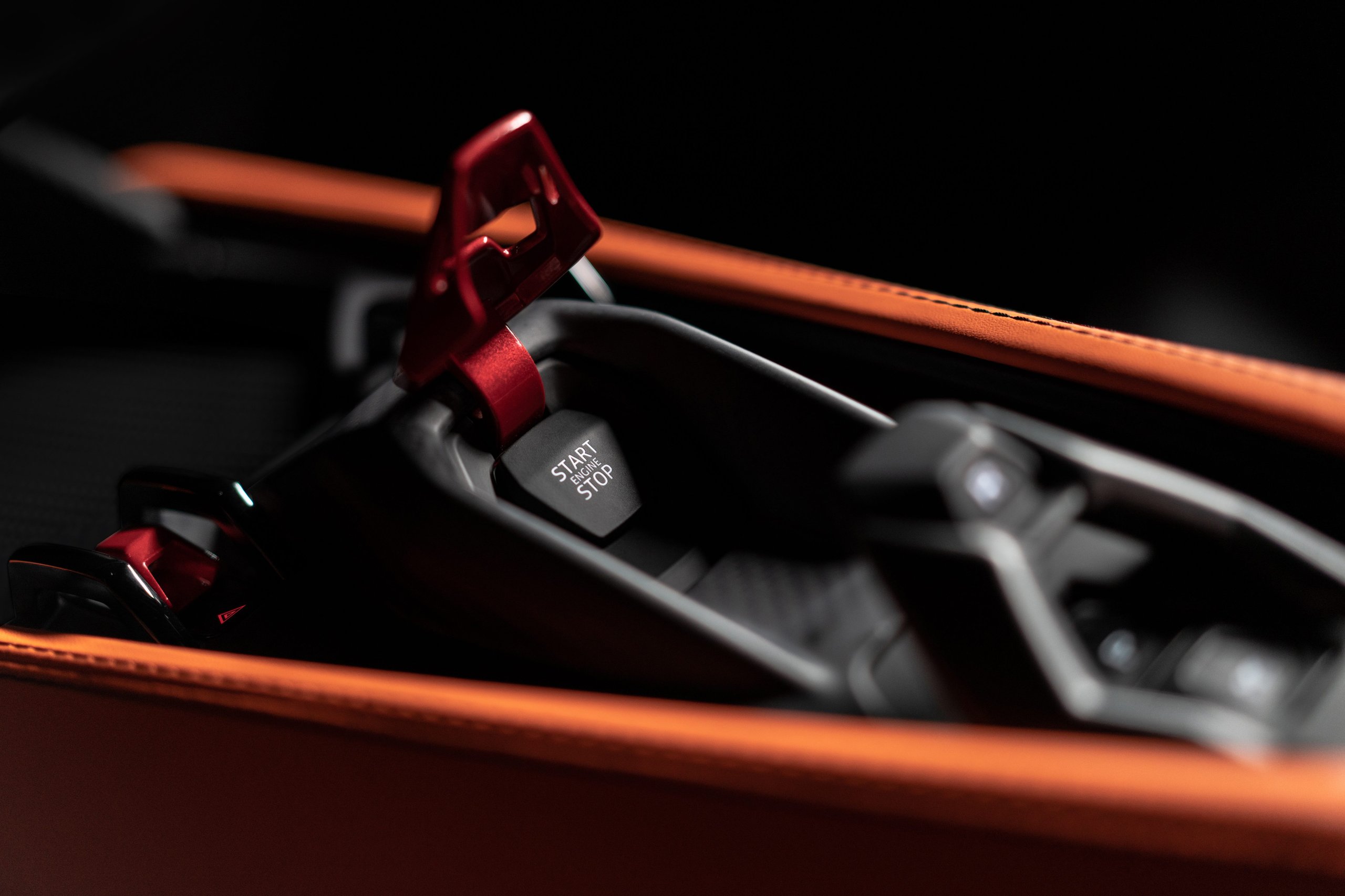
The steering wheel, inspired by the track-only Essenza SCV12, carries four rotors on its spokes for selecting drive modes, activating the front-axle lifting system, and adjusting rear wing tilt. Turn signals and launch control use physical buttons rather than stalks, keeping the driver’s hands on the wheel at all times. The red flip-up cover over the engine start button borrows directly from fighter aircraft cockpit design. It is a small theatrical touch, but one that reinforces the cockpit’s visual identity every time the car starts.
Practical improvements over the Aventador matter more than they might seem for a car in this class. Lamborghini says the new roof design provides 26 mm more headroom, while the monofuselage adds 84 mm of legroom. Behind the seats, enough space exists for a golf bag. Under the front hood, two cabin trolleys fit. Storage compartments under the center dashboard, between the seats, and a cup holder built into the passenger dashboard round out the daily-living concessions. These details signal that Lamborghini expects owners to actually drive the Revuelto regularly, not just trailer it to track days, and that expectation only makes sense because the hybrid architecture tamed the V12 without neutering it.

The Lamborghini Revuelto's interior features a driver-centric cockpit with advanced digital displays and striking orange accents.
Competitive Position and What Buyers Should Know
Car and Driver reports the 2025 Lamborghini Revuelto carries an MSRP of $608,358, placing it firmly above the Ferrari SF90 Stradale and in a different stratosphere from the McLaren Artura. The price reflects the V12’s complexity and the hybrid system’s sophistication, but also the positioning: this is Lamborghini’s flagship, not a mid-range offering.
The competitive picture is instructive. Ferrari chose a twin-turbo V8 with three electric motors for the SF90, prioritizing low-end torque and track-focused precision. McLaren went lighter still, pairing a twin-turbo V6 with a single axial flux motor in the Artura, emphasizing agility and weight savings. Lamborghini’s approach is the only one that preserves a naturally aspirated engine with more than eight cylinders, and the only one that uses the electric motors primarily to enhance the combustion engine’s character rather than compensate for a smaller displacement.
Several questions remain for prospective buyers. Lamborghini has not published detailed electric-only range figures or specific charging times for the lithium-ion battery pack. The impact of the hybrid system on the V12’s exhaust note is a frequent topic among enthusiasts. Multiple owners on forums describe the V12 as still dominant in the car’s acoustic signature, though slightly muted compared to the Aventador SVJ. The DCT gearbox draws near-universal praise as a transformative improvement for daily usability. One report from Carbuzz claims the Revuelto completed the quarter-mile in under 9.5 seconds at Bradenton Motorsports Park, which would make it exceptionally quick even by hybrid hypercar standards. Autoblog has reported that the Revuelto faced a third recall related to a door issue, a reminder that first-year production of a completely new platform often involves growing pains. Personalization extends to over 400 bodywork colors using water-based paints, with interior options spanning 70 color combinations of fine leather and Corsa-Tex recycled polyester microfiber.

The Lamborghini Revuelto stands defiantly in a fiery volcanic landscape, its bold design illuminated against the dramatic twilight sky.
What the Revuelto Signals for Lamborghini’s Future
The Revuelto is the first pillar of Lamborghini’s Direzione Cor Tauri electrification strategy, and the architecture it introduces will likely influence every model that follows. The Temerario, Lamborghini’s upcoming V8 hybrid, already borrows the principle of using electric motors to augment rather than replace a high-revving combustion engine. Reports from Autoblog suggest a forthcoming model, potentially named “Fenomeno,” could surpass the Revuelto’s power output, which would position the Revuelto as the entry point to Lamborghini’s hybrid V12 family rather than its ceiling.
For buyers on the waiting list or considering a configuration, the practical takeaway is straightforward. The DCT gearbox and front-axle torque vectoring make the Revuelto the most livable V12 Lamborghini ever built. The naturally aspirated engine preserves the acoustic and throttle-response character that defines the brand. Early ownership reports point to an infotainment system that needs software refinement and regenerative braking calibration that can feel abrupt at low speeds, but the fundamental driving experience draws consistent praise.
Lamborghini built the Revuelto to prove that electrification could serve the V12 rather than replace it. Every engineering choice, from YASA’s axial flux motors to the transverse DCT to the decision against turbocharging, points in one direction: keeping the naturally aspirated twelve-cylinder engine at the center of the experience for as long as regulations and physics allow.
Gallery