A New Chapter for Lamborghini Customer Racing, Born at Misano
Lamborghini chose to unveil the Temerario Super Trofeo design concept not at a consumer auto show but at the Misano World Circuit Marco Simoncelli on November 8, 2025, during the Lamborghini World Finals, the traditional season closer where hundreds of Squadra Corse competitors gather after a full year of one-make racing. Showing the next generation car to the people who will actually buy it and race it was a deliberate signal about where this program sits in the company’s priorities.
The Temerario Super Trofeo marks the sixth model to carry the Super Trofeo name since the customer racing division launched in 2009. It succeeds the Huracán Super Trofeo, which went through three iterations (debuting in 2015, then evolving in 2019 and 2022) and anchored the series through its most significant period of growth. Competition debuts across the Asian, European, and North American championships are scheduled for 2027.
Following that initial concept unveiling, the final version was officially presented at the Autodromo di Imola during the second round of the 2026 Lamborghini Super Trofeo Europe season, where Factory Driver Marco Mapelli demonstrated the car on track. Moving from concept to finished product in under a year signals how far along the engineering actually was when the wraps came off at Misano, and it underscores the central point of the entire program: Lamborghini has built a racing ladder where the Super Trofeo and the GT3 share enough mechanical DNA that one feeds directly into the other.

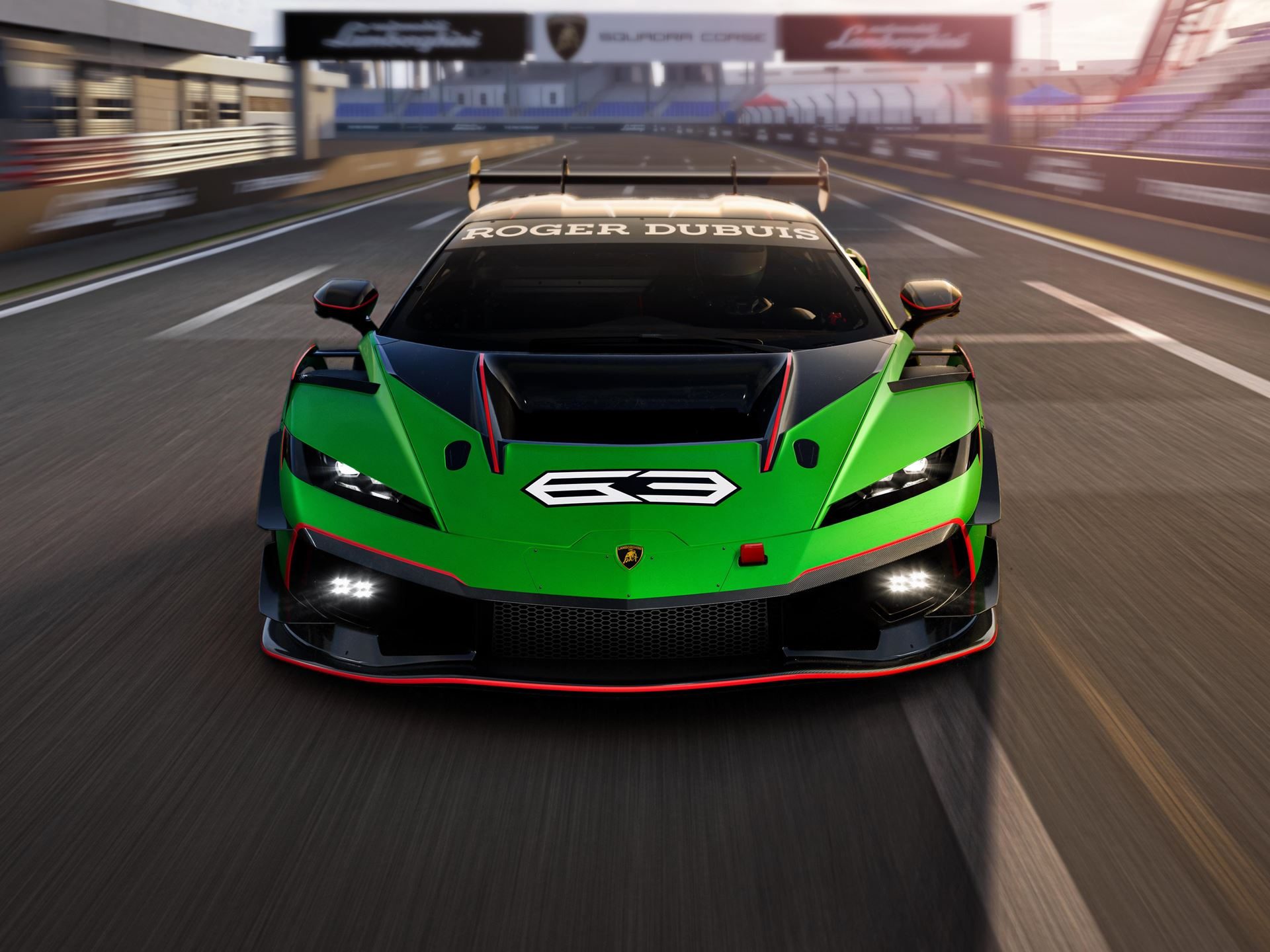
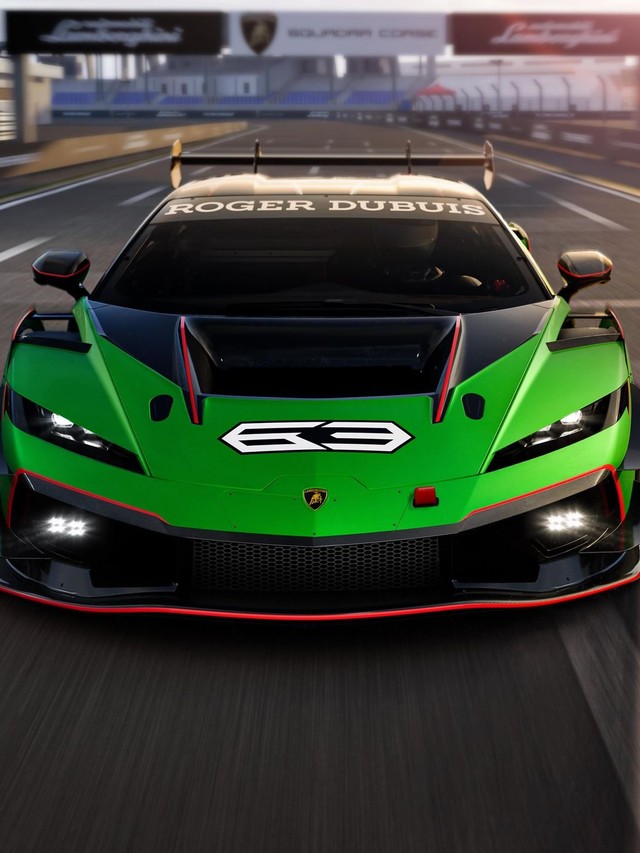
The Lamborghini Temerario Super Trofeo presents its formidable front profile in the pit lane at dusk.
Why Customer Racing Became a Strategic Pillar, Not a Side Project
CEO Stephan Winkelmann framed the Temerario Super Trofeo in terms that go well beyond motorsport bragging rights:
“In 2009 we made the bold decision to launch the Gallardo Super Trofeo. Lamborghini was not born as a racing brand, yet our customers have constantly asked us for a product designed for the track. Over the years, Super Trofeo and customer racing have become a true pillar of our long-term company strategy, strengthening the bond between the brand and its most passionate clients.”
That word “pillar” carries weight. Lamborghini says the series has welcomed 1,383 drivers and staged 563 races across its continental championships since 2009. For a brand that produces roughly 10,000 road cars per year, converting even a fraction of those owners into recurring race weekend participants creates a loyalty loop no marketing campaign can replicate. Customers who race Super Trofeo buy tires, entry fees, spare parts, coaching, and hospitality packages. They also tend to buy more road cars.
Ferrari runs its Challenge series on a similar model, and Porsche fields the Carrera Cup as a feeder into GT3 competition. Each manufacturer uses these one-make programs to build brand allegiance among wealthy enthusiasts who want more than a Sunday drive. Lamborghini’s distinguishing advantage is the direct technical overlap between its Super Trofeo and GT3 cars, a connection few rival programs replicate as deliberately. That overlap is what transforms the Super Trofeo from a standalone experience into the first rung of a genuine racing career.
The GT3 Pathway: Shared DNA as a Driver Development Tool
The engineering relationship between the Temerario Super Trofeo and the Temerario GT3 is the most strategically important detail in this entire program. Both cars share the same engine and the same six-speed sequential Hoer gearbox. A driver who spends a season learning throttle application, brake points, and racecraft in a Super Trofeo car can step into a GT3 cockpit and find the powertrain fundamentally familiar.
CTO Rouven Mohr positioned the Super Trofeo explicitly as a stepping stone, describing it as a car designed for “those eager to experience the world of GT competition.” The Temerario GT3, which debuted at the Goodwood Festival of Speed in July 2025, is set for its competitive racing debut at the 12 Hours of Sebring next March. Depending on Balance of Performance adjustments, the GT3 produces 577 horsepower. The Super Trofeo sits above that at 650 CV (approximately 641 horsepower), which sounds counterintuitive until you consider that GT3 power levels are regulated by series organizers, not by the manufacturer.
The progression path works like this for aspiring gentleman drivers and young professionals: learn car control and race discipline in Super Trofeo, then graduate to GT3 endurance and sprint racing with a powertrain you already understand. Lamborghini built this ladder intentionally. The shared component strategy between the two cars makes the transition smoother than moving between unrelated platforms, and it gives the entire customer racing ecosystem a coherence that justifies the investment at every level.

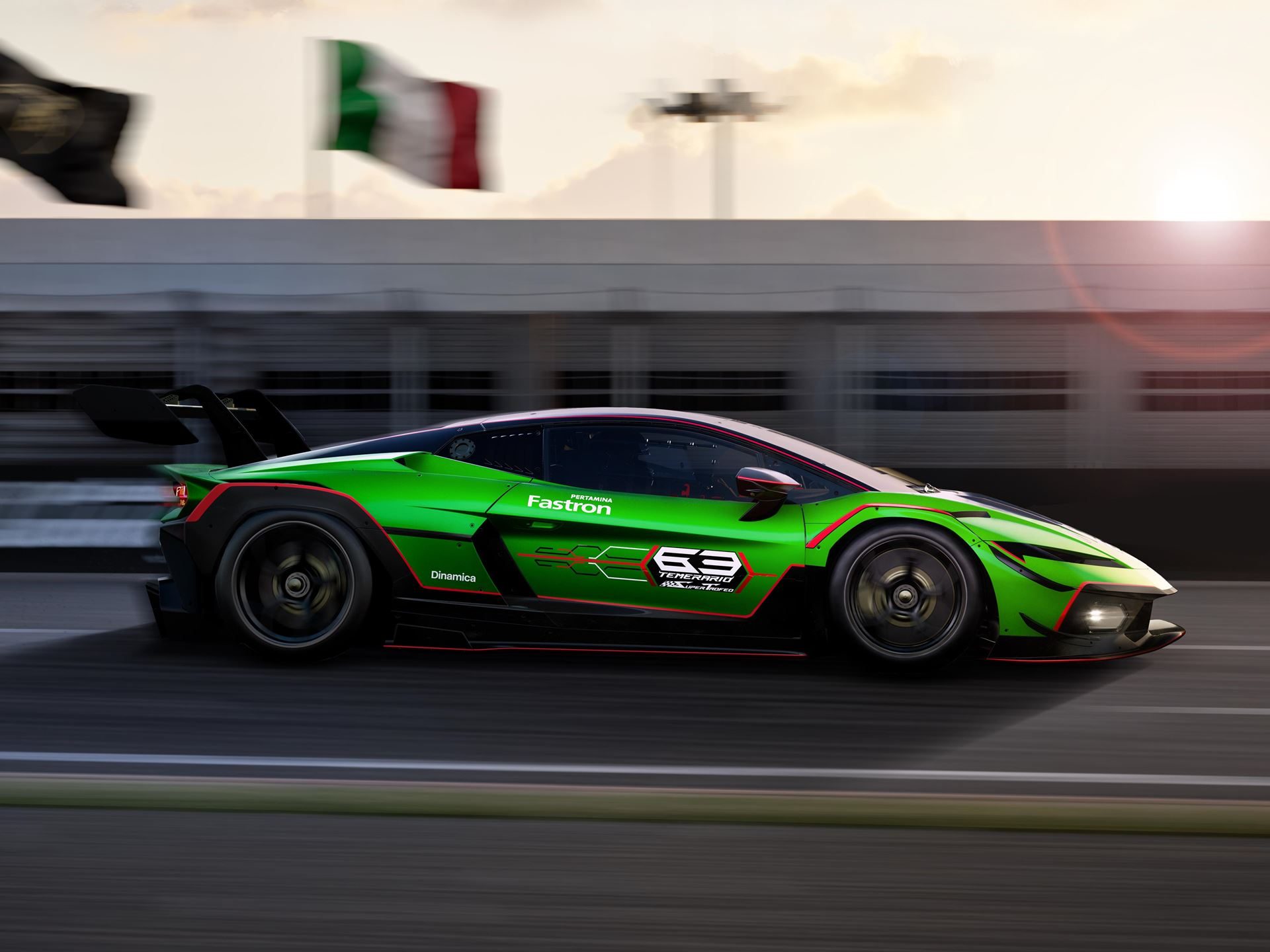
The Lamborghini Temerario Super Trofeo races on the track, displaying its vibrant green livery and aggressive aerodynamic features.
A Non-Hybrid V8 Built Purely for the Circuit
The road-going Temerario Stradale produces 800 CV, with an additional 120 hp contributed by its hybrid components. The Super Trofeo strips all of that electric assistance away. What remains is a rear-wheel-drive, twin-turbo V8 producing 650 CV, paired to the sequential Hoer gearbox instead of the road car’s dual-clutch eight-speed automatic. Reported curb weight lands at 1,392 kg.
Deleting the hybrid system makes straightforward sense in a one-make racing context. On circuit, the added weight of batteries and electric motors penalizes lap times more than the extra power compensates, especially when every car runs identical specifications. Removing hybrid complexity also simplifies maintenance between race weekends and reduces the number of systems a driver needs to manage in the cockpit. The result is a more direct connection between throttle input and rear-wheel response, exactly what you want when teaching someone to race and preparing them for the GT3 step.
The chassis uses an aluminum and carbon fiber reinforced polymer (ALU/CFRP) hybrid structure with a fully integrated FIA roll cage. Driver aids include ABS braking and a 12-point adjustable traction control, giving teams and drivers meaningful setup variables to explore across different circuits. Reports indicate a new suspension arm mounting concept with front and rear double wishbones, along with electro-hydraulic power steering featuring adjustable feedback. New aerodynamics were developed for efficiency across various circuit configurations, including a rear fin designed to improve cornering stability. Together, these elements create a car that rewards driver development rather than simply delivering speed, reinforcing its role as the entry point of a carefully constructed racing ladder.

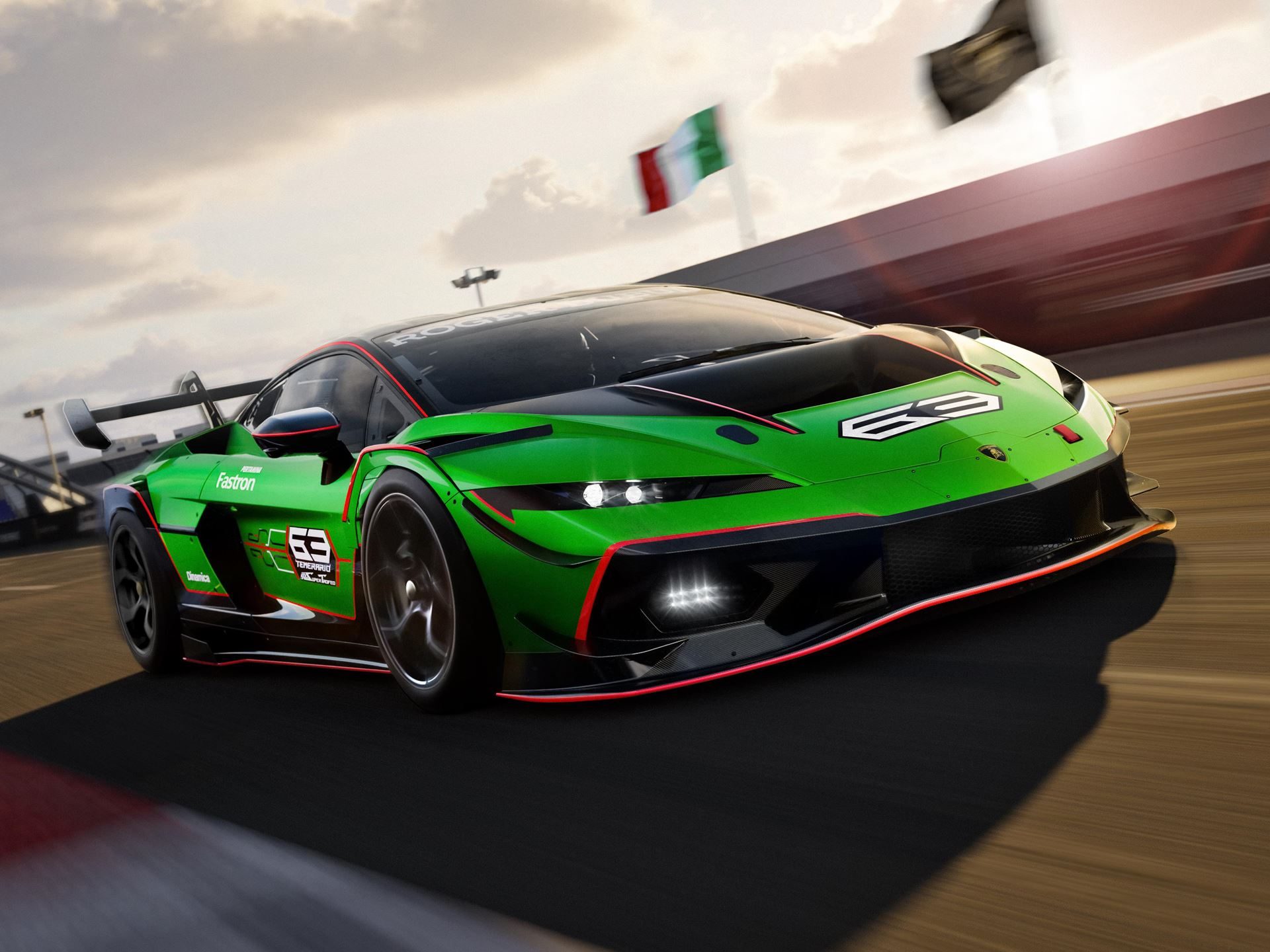
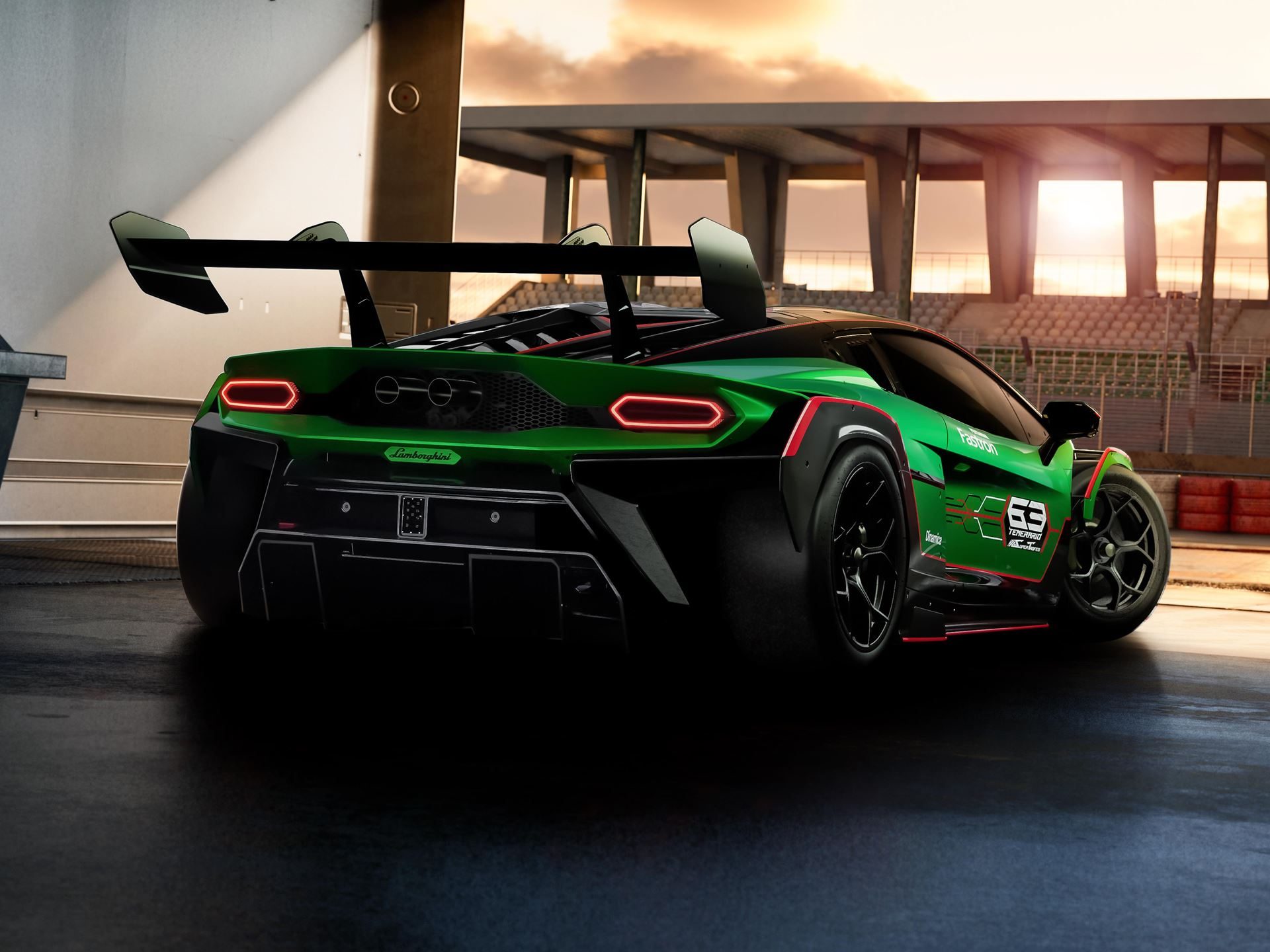
The Lamborghini Temerario Super Trofeo's powerful rear design, featuring a large diffuser and twin exhausts, is captured at sunset.
From Gallardo to Temerario: The Super Trofeo Lineage
The Super Trofeo series started in 2009 with the Gallardo, which served as the competition platform for four seasons. The Gallardo LP 570-4 Super Trofeo took over between 2013 and 2015, briefly sharing the grid with the incoming Huracán LP 620-2 Super Trofeo during the 2015 transition year. The Huracán then became the sole competition car, running in its original form through 2017 before two Evo iterations carried it through 2021 and then from 2022 to the end of 2025.
Each generation brought meaningful refinements in aerodynamics, electronics, and safety, but the fundamental formula stayed consistent: take the current mid-engine platform, strip it for competition, and give customers a controlled environment to race. The shift from the Gallardo’s V10 to the Huracán’s V10 was relatively seamless. Moving to the Temerario’s twin-turbo V8 represents a more fundamental change in engine character, one that current Super Trofeo competitors will need to adapt to. Turbo lag management, different power delivery curves, and revised braking points all come into play.
According to Winkelmann, the Temerario Super Trofeo also marks a new direction because it will be built entirely in-house at Automobili Lamborghini. Autoblog reported that the Temerario GT3 similarly represents Lamborghini’s first competition car to be fully designed, developed, and built internally, ending the brand’s previous reliance on external racing constructors. That in-house capability gives Squadra Corse tighter control over quality, development timelines, and the integration between road and race car engineering. It also tightens the thread that runs through the entire ladder: when the same factory builds both the Super Trofeo and the GT3, the shared DNA is not a marketing claim but an engineering reality.

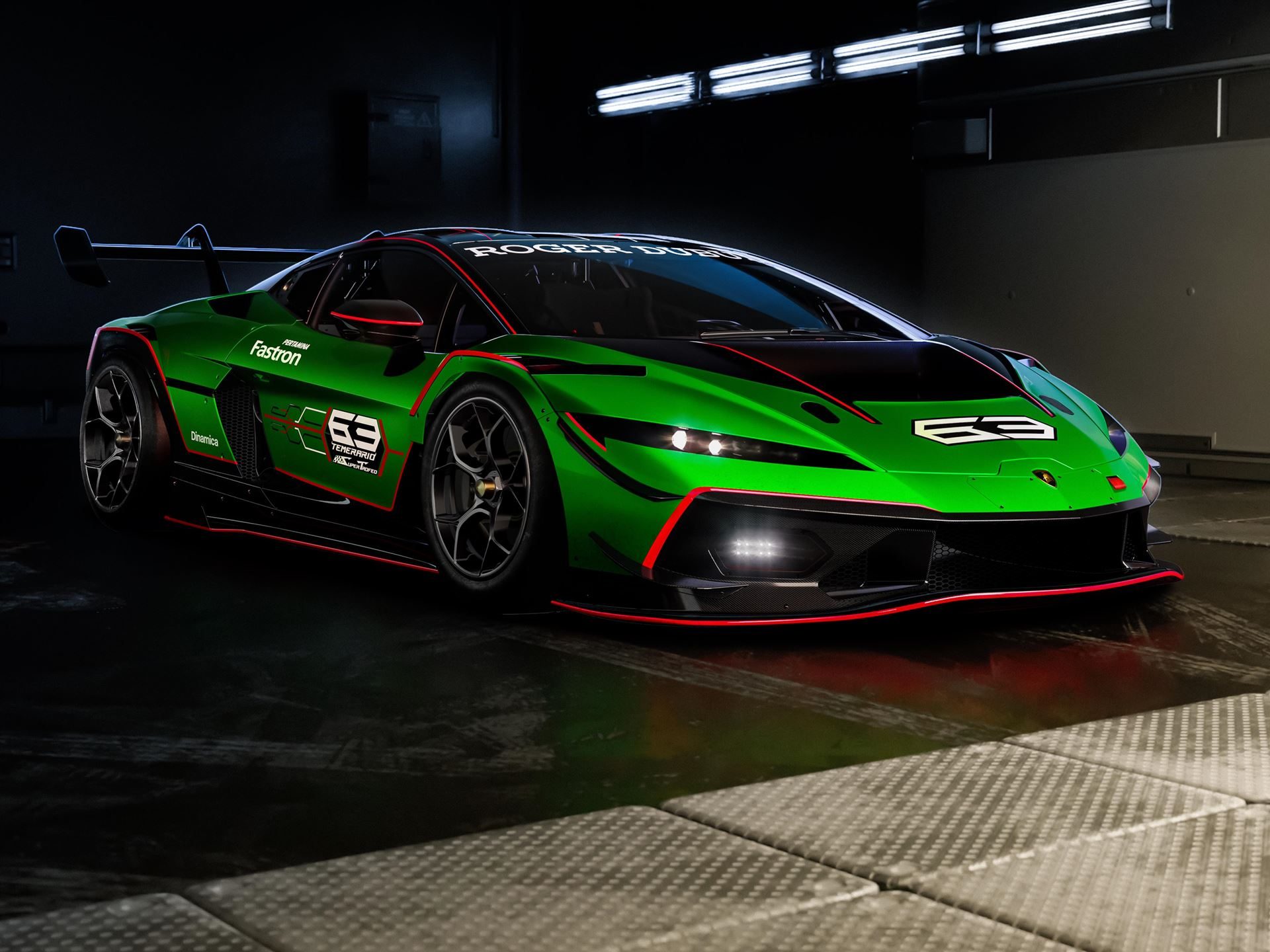
The Lamborghini Temerario Super Trofeo's aerodynamic side profile is perfectly showcased in a studio setting.
What It Costs and What Buyers Should Know
The Temerario Super Trofeo is priced at €295,000 plus VAT and duties (including shipping) in Europe, $399,000 plus applicable taxes in the United States, and €299,000 plus VAT and duties in the Asia-Pacific region. Those figures cover the car itself, but anyone considering a full season of Super Trofeo competition should understand that the purchase price is only the entry ticket. Tires, transport logistics, race entry fees, engineering support, spare parts, and driver coaching add substantially to the annual budget. Lamborghini does not publish a total season cost figure, and the actual number varies widely depending on the championship, the number of rounds, and how aggressively a team pursues development.
For prospective buyers weighing this against rival one-make programs, the key differentiator circles back to the GT3 pathway. Spending $399,000 on a Super Trofeo car that shares its engine and gearbox with the GT3 means the investment has a second act. Drivers who outgrow the one-make series can transition into international GT3 endurance racing with a familiar powertrain, reducing the learning curve and the risk of expensive mistakes during the step up.
Inside the cockpit, the dashboard features Dinamica Infinity, described as the world’s first 100% PES mono-component non-woven suede for automotive applications. Lamborghini Squadra Corse continues its partnerships with Pertamina for engine lubricants, Capristo for exhaust systems, KW for suspension, and BMC Air Filters.
One practical consideration worth noting: the Temerario Super Trofeo enters competition in 2027, which means current Huracán Super Trofeo owners face a decision about when to transition. The Huracán’s final Evo2 iteration runs through the end of 2025, and the 2026 season likely represents a bridge year. Buyers who want to race the new car from day one should be in conversation with Squadra Corse now, because allocation for the inaugural season will almost certainly be limited. For those who commit, the reward is entry into the most coherent racing ladder Lamborghini has ever constructed.

The Lamborghini Temerario Super Trofeo accelerates down the track, showcasing its powerful rear and aerodynamic design.
Gallery