Squadra Corse’s Fifth Edition: 46 Drivers, Two Programs, One Ambition
Lamborghini Squadra Corse confirmed 46 drivers for the fifth edition of its twin youth programs in 2018, splitting them between 21 participants in the Young Drivers Program (reserved for competitors under 26 in the Super Trofeo one-make series) and 25 members of the GT3 Junior Program (for drivers racing customer Huracán GT3s in international GT championships). Both programs trace back to 2014, and since then they have served a dual purpose that sets Lamborghini apart in the GT racing world: cultivating professional drivers while simultaneously feeding engineering data back into the cars they race.
The 2018 edition sharpened that dual purpose with two structural changes. GT3 Junior drivers gained direct involvement in Squadra Corse’s racing car development tests. And Lamborghini installed a dedicated driving simulator inside the R&D department, giving junior drivers virtual seat time that generates data for the Huracán GT3 platform. On the surface, the roster announcement reads like a personnel update. Underneath, it reveals a system where young drivers improve by helping improve the car, and the car improves by absorbing the experiences of 46 competitors spread across the globe.
The Ladder: From Super Trofeo Seat to Factory Driver Contract
The career architecture Squadra Corse built around these programs follows a clear, if demanding, logic. Young Drivers Program participants start in the Huracán Super Trofeo Evo, where training extends well beyond lapping. Lamborghini says the curriculum includes athletic conditioning supervised by professional trainers, theoretical product education, and communication coaching. That last element reflects a modern reality of GT racing: sponsors and teams want drivers who can represent a brand on camera, not just behind the wheel.
The best-performing graduates move up. Jonathan Cecotto, recognized as the top YDP driver in 2017, earned a promotion to the GT3 Junior Program for 2018. From there, the path leads to customer team seats in the Blancpain GT Series, IMSA WeatherTech, International GT Open, and other global championships. According to Lamborghini, some alumni advanced all the way to factory driver status with Squadra Corse, while others collected major endurance trophies, including at the 24 Hours of Daytona.
A less obvious but genuinely useful career branch also exists: top performers can become instructors for Accademia, Lamborghini’s official driving school. For drivers in their late teens or early twenties, that represents both a professional credential and paid work experience, a practical consideration that rarely gets mentioned in the glossy version of the motorsport dream.
The Engineering Feedback Loop: Why Junior Drivers Matter to the Huracán GT3
Most manufacturer youth programs focus on polishing driver talent. Lamborghini’s 2018 expansion shifted the emphasis toward something more unusual: using junior drivers as development resources for the race car itself.
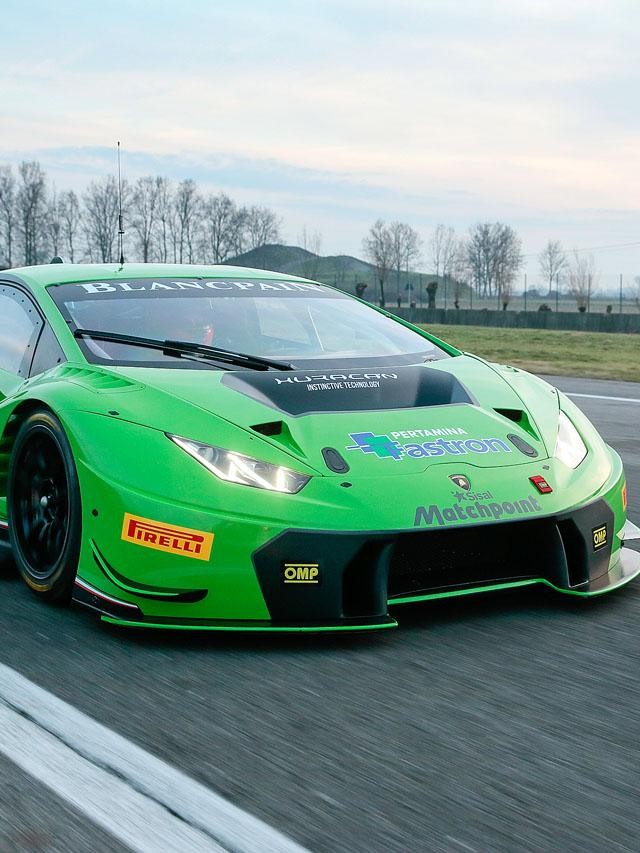
Lamborghini describes the participation of GT3 Junior drivers in Squadra Corse test sessions as critical for gathering data that the technical department uses to refine car components. The arrangement is practical, not symbolic. A manufacturer running over 50 Huracán GT3s in competition worldwide needs a constant stream of driver feedback across different circuits, conditions, and driving styles. Factory drivers alone cannot cover that volume. Junior drivers, spread across customer teams in the Blancpain GT Series, Italian GT Championship, ADAC GT Masters, and IMSA, collectively generate a broader data set than any small group of contracted professionals could.
The new simulator inside Squadra Corse’s R&D department adds another layer. GT3 Junior drivers can run virtual laps that correlate with real-world setups, allowing engineers to test component changes and setup philosophies before committing to expensive track time. For a racing division managing a global customer fleet, this kind of distributed feedback loop is an engineering advantage.
The practical question enthusiasts should ask is how directly this simulator data translates into tangible car improvements. Lamborghini confirmed the tool exists and that junior drivers will use it, but specific examples of components refined through the process remain undisclosed. Simulator-driven development is standard practice at the top levels of motorsport, and the concept is sound, but the proof will show up in lap times and reliability over the 2018 season and beyond.
Strategic Context: Why Lamborghini Invests in Youth and Motorsport
Lamborghini did not build these programs in isolation. Ferrari operates the Ferrari Driver Academy, which feeds talent into its Formula 1 program and GT racing efforts. Porsche runs the Porsche Junior Programme, selecting young drivers for its Supercup and factory GT squads. Both are well-funded, deeply established pipelines with clear records of placing drivers into top-tier seats.
What distinguishes Lamborghini’s approach is the explicit integration of driver development with customer racing car development. Ferrari’s FDA prioritizes single-seater progression toward F1, with GT racing serving as a secondary path. Porsche’s Junior Programme focuses heavily on its own one-make series as a proving ground. Lamborghini, by contrast, embedded its juniors directly into the engineering feedback loop for the Huracán GT3, the car that customer teams actually purchase and race. That alignment between driver pipeline and product improvement is a competitive differentiator, even if it receives less attention than Ferrari’s F1 connection or Porsche’s sheer depth of customer racing infrastructure.
Lamborghini’s challenge is scale. With 46 drivers across both programs in 2018, the numbers are respectable but modest compared to the breadth of Porsche’s global customer racing ecosystem. The strategic bet is that tighter integration between junior talent and R&D compensates for a smaller overall footprint.
Lamborghini has not disclosed the financial structure of these programs, specifically whether drivers pay for participation, receive subsidies, or operate under some hybrid arrangement. The broader motorsport reality is that GT3 racing carries substantial costs, and most young drivers at this level rely on personal sponsorship, family backing, or team budgets. Lamborghini’s mention that Dennis Lind races in the Blancpain GT Series Asia “with the economic support of Lamborghini” suggests that at least some financial backing is available for standout performers, but the extent of that support across the full roster remains unclear.
Faces of the Future: Names to Watch on the 2018 Roster
The 2018 Young Drivers Program features 11 new entries among its 21 participants, and several names carry immediate recognition. Fabian Vettel, the younger brother of four-time Formula 1 world champion Sebastian Vettel, joins the program at age 19, racing in the Super Trofeo Europe series with Konrad Motorsport. The family name guarantees attention, but the Super Trofeo grid will judge him on pace alone.
Giacomo Altoé, at just 17, represents the youngest cohort of the intake, racing with Antonelli Motorsport in Europe. Francesca Linossi joins as the second female driver in the program alongside 19-year-old Carrie Schreiner of Germany, a detail worth noting because representation in GT racing feeder programs remains rare across all manufacturers.
The GT3 Junior roster reads like a highlight reel of recent results. Rik Breukers won the 24 Hours of Daytona in January 2018. Corey Lewis and Madison Snow took the 12 Hours of Sebring that March. Michele Beretta and Alex Frassineti claimed the 2017 Italian GT Championship. Riccardo Agostini won the 2017 Super Trofeo North America title. New additions including Sandy Mitchell, Toby Sowery, and Loris Hezemans all compete in the Blancpain GT Series with customer Huracán GT3 teams, expanding the geographic and competitive diversity of the program.
For anyone tracking Lamborghini’s motorsport trajectory, the GT3 Junior roster is the more strategically significant list. These are the drivers sitting behind the wheel of the car that generates the bulk of Squadra Corse’s competitive results worldwide, and their feedback now flows directly into the engineering department.

Two Lamborghini Squadra Corse drivers shake hands, symbolizing teamwork and sportsmanship in the competitive racing world.
Beyond the Track: What the Youth Programs Mean for Lamborghini’s Motorsport Future
The 2018 youth program expansion reflects a brand that recognized something important about the economics and engineering of GT3 racing: the car and the driver pipeline are the same investment. Every junior driver generating telemetry data during a Blancpain sprint race or feeding back tire degradation observations from the International GT Open is, in effect, a development resource contributing to the next iteration of the Huracán GT3.
With over 50 Huracán GT3s competing globally at the time of this announcement, Lamborghini needed a scalable way to gather development intelligence without expanding its factory driver roster. The youth programs solved that problem while simultaneously building brand loyalty among the next generation of professional drivers, many of whom will spend their careers associated with the raging bull.
The drivers who emerge from this program carry institutional knowledge of how Squadra Corse develops its cars, making them more effective in customer team seats and more attractive candidates for factory contracts. The program’s longevity (it continued well beyond 2018, with reports indicating it operated for over a decade) suggests Lamborghini found the model sustainable and competitively valuable. Whether the simulator investment and deeper R&D integration introduced in 2018 produced measurable gains on track is a question best answered by the results sheets from that season and beyond, but the structural logic is clear: Lamborghini built a system where developing drivers and developing race cars became the same activity.


