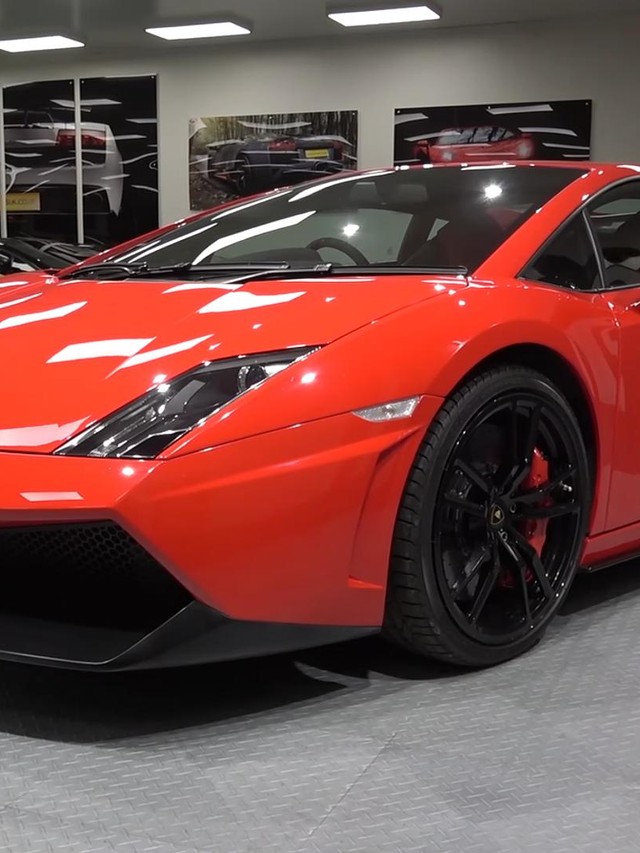
Sebring Hosts Lamborghini’s Largest Super Trofeo Grid in History
A record 66 cars and more than 100 drivers from three continental championships descended on Florida’s Sebring International Raceway for the November 20 to 22 weekend in 2015, producing the largest Lamborghini Blancpain Super Trofeo World Final the series had ever staged. The event doubled as the season finale for the European, North American, and Asian series and the decisive battle for world championship honors, concentrating an entire year of one-make competition into a single weekend on one of America’s most punishing circuits.
The timing made this edition especially significant. The Huracán Super Trofeo was completing its inaugural racing season, having replaced the Gallardo-based machine that launched the series in 2009. That the grid swelled to a record rather than contracting during a platform transition told a clear story: the new car had not merely sustained interest but accelerated it. For a series that began with just eleven entries, one of them piloted by Blancpain CEO Marc Hayek in a detail that says something about the intimacy of the early program, reaching 66 cars in its seventh year represented a sixfold expansion few customer racing programs can match.
Stephan Winkelmann, then President and CEO of Automobili Lamborghini, framed the season bluntly: the Huracán Super Trofeo had launched on tracks worldwide, the Huracán GT3 had proven itself in the Blancpain Endurance Series in Europe, and the record grid was the payoff. Lamborghini positioned the World Final as validation of the entire Squadra Corse operation, not merely a race weekend.
The Owner Experience Lamborghini Was Really Selling
Strip away the timing sheets and trophy ceremonies and the World Final reveals itself as something closer to a curated brand experience than a conventional race meeting. Lamborghini offered complimentary hospitality for participating drivers and a $499 package for guests that included food, beverages, coral parking, pit passes, a grid walk, and a parade lap. That price point identifies the target audience immediately: owners, prospective buyers, and brand loyalists who want proximity to the racing program without necessarily strapping into a car themselves.
This dimension of customer racing rarely gets analyzed, yet it matters enormously. A World Final weekend at Sebring puts Lamborghini owners shoulder to shoulder with the cars, the engineers, and the drivers who compete in them. An owner who walks the grid is more likely to spec a Super Trofeo, more likely to attend Lamborghini track days, and more likely to remain within the brand ecosystem when the next purchase decision arrives. Lamborghini does not publish conversion numbers from these events, but the logic is self-evident: the series functions as a loyalty engine dressed in carbon fiber.
For prospective participants, the practical question remains cost. Lamborghini has not publicly disclosed a comprehensive season budget for the Super Trofeo, and the figures vary significantly depending on team support, travel, and consumables. What the series does offer is a controlled environment: identical cars, structured regulations, and factory-backed technical support through Squadra Corse, lowering the barrier for gentleman drivers who want competitive racing without the complexity of managing a bespoke GT program.
The Huracán’s Dual Identity: Super Trofeo and GT3
Lamborghini fielded two distinct Huracán race cars during the 2015 season, and understanding the difference between them clarifies the company’s broader motorsport architecture. The Huracán LP620-2 Super Trofeo is the one-make series car: a rear-wheel-drive, 620-horsepower machine with a dry weight of 1,270 kg, built around the road car’s 5.2-liter naturally aspirated V10. It runs a six-speed sequential gearbox, 12-position racing ABS, and 9-position traction control. Every car on the Super Trofeo grid is mechanically identical, placing the emphasis squarely on driver skill and team preparation.
The Huracán GT3, by contrast, competes in multi-manufacturer endurance and sprint series governed by FIA Balance of Performance regulations. Its power output is adjusted to equalize competition across brands, which typically means a lower effective horsepower figure than the unrestricted Super Trofeo car. The GT3 also carries more advanced aerodynamic development and chassis modifications to meet homologation requirements.
The critical engineering decision linking both cars is the switch from the road-going Huracán’s all-wheel-drive system to rear-wheel drive. This was not arbitrary. Rear-wheel drive aligns with GT racing standards globally and transforms the Super Trofeo into a genuine development platform: a driver who masters the LP620-2’s rear-driven dynamics builds skills directly transferable to GT3 and GT4 competition. The series was designed as a ladder, and the Huracán’s configuration made that ladder functional rather than symbolic.
Why Racing Anchors Lamborghini’s Brand Strategy
Lamborghini describes motorsport as a fundamental pillar of its corporate strategy, and the 2015 World Final illustrated what that commitment looks like in practice. The Super Trofeo series had expanded from its European origins to Asia in 2012 and North America in 2013, creating a genuinely global championship structure that few supercar manufacturers replicate at this scale with a single-make format.
The inaugural world championships were held at Italy’s Autodromo Vallelunga, a fitting starting point for a company rooted in Sant’Agata Bolognese. By 2015, the World Final had migrated to Sebring, a circuit whose bumpy, abrasive surface and demanding layout provide a very different test from the smooth European tracks where many of these drivers built their seasons. Moving the finale to North America sent a deliberate signal: Lamborghini wanted its customer racing program to carry weight in the American market, where Ferrari and Porsche had long-established customer competition ecosystems.
The Huracán GT3’s concurrent success in the Blancpain Endurance Series added another dimension. While the Super Trofeo operates as a controlled, brand-exclusive environment, the GT3 program puts Lamborghini into direct combat with Ferrari, Porsche, Audi, McLaren, and Mercedes-AMG on the same circuits, under the same regulations. Strong showings in both arenas let Lamborghini claim credibility at two levels simultaneously: the accessible entry point and the elite multi-manufacturer battlefield.
Lamborghini’s Customer Racing Against the Competition
By 2015, the customer racing landscape for supercar manufacturers had become a serious competitive front. Ferrari’s Challenge series, Porsche’s Carrera Cup and GT3 Cup programs, and various GT3 homologation efforts from McLaren and Mercedes-AMG all targeted the same pool of wealthy amateur and semi-professional drivers. What differentiated these programs was not just the car but the experience surrounding it: the hospitality, the technical support, the sense of belonging to a factory-backed effort.
Lamborghini’s approach with the Super Trofeo offered something distinctive. The series was promoted from its inception as the world’s fastest one-make series, a claim rooted in the Gallardo’s and later the Huracán’s raw performance figures. The rear-wheel-drive configuration gave the series a pedagogical edge that all-wheel-drive one-make cars could not replicate: drivers were learning racecraft in a chassis configuration that prepared them for the broader GT racing world.
Grid size matters because it signals commercial health and driver confidence. A manufacturer can build the fastest one-make car in the world, but if only twenty teams show up, the series lacks the critical mass that attracts sponsors, media attention, and new participants. The 66-car field at Sebring demonstrated that the Huracán transition had not only retained the existing customer base but expanded it substantially. For prospective participants weighing a Super Trofeo commitment against a Ferrari Challenge or Porsche Cup entry, the practical calculus involves more than lap times. It includes the quality of the factory support structure, the cost of consumables, the resale value of the race car, and the social ecosystem around the series. Lamborghini has historically kept its customer racing community tight-knit, and the World Final format, where drivers from three continents converge for a single decisive event, creates a competitive intensity and social dynamic that spread-out championship formats cannot easily replicate.
Inside the Huracán Super Trofeo: What Makes It a Race Car
The Huracán LP620-2 Super Trofeo was revealed at Monterey Car Week in 2014 and arrived on track the following season as a comprehensive reimagining of the road car’s architecture. The naturally aspirated 5.2-liter V10 produces 620 horsepower at 8,250 RPM and 570 Nm of torque at 6,500 RPM, figures that represent a modest bump over the road car’s output but, more importantly, are delivered through a drivetrain stripped of the all-wheel-drive system’s weight and mechanical complexity.
At 1,270 kg dry, the Super Trofeo sheds significant mass compared to the road-going LP610-4. The carbon fiber aerodynamic package, including the prominent rear wing visible on every car in the Sebring grid, generates downforce levels that the road car’s design brief never contemplated. The Xtrac six-speed sequential gearbox replaces the road car’s dual-clutch unit, offering the kind of brutal, near-instantaneous shifts that define purpose-built race machinery.
The driver interface reflects the car’s role as a development tool. The 12-position ABS and 9-position traction control systems give drivers granular control over the car’s electronic safety nets, allowing them to progressively reduce intervention as their skill and confidence grow. A gentleman driver in the Am class can run higher intervention settings for safety, while a Pro-class competitor can dial the systems back to extract maximum performance. The same car serves both audiences, which is the fundamental elegance of the one-make concept.
Low-mileage Super Trofeo cars now appear periodically on the collector market. According to Autoblog, an 84-mile Huracán Super Trofeo EVO Collector 2019 recently surfaced on Bring a Trailer, described as embodying Lamborghini’s golden era of pure, naturally aspirated racing. These cars are finding a second life as collectibles, a trajectory that validates the engineering investment and suggests the Huracán racing platform will hold cultural significance well beyond its competitive lifespan.
What the 2015 World Final Set in Motion
The Sebring weekend marked a turning point that extended well beyond the 2015 season. The Huracán Super Trofeo platform would evolve through subsequent Evo and EVO2 iterations, each refining the aerodynamics, driver aids, and chassis setup while preserving the core formula of a naturally aspirated V10 in a rear-wheel-drive chassis. The series eventually outgrew the Blancpain naming partnership and now operates simply as the Lamborghini Super Trofeo under Squadra Corse’s direct management.
The competitive infrastructure built during this era also laid the groundwork for Lamborghini’s next chapter in GT racing. According to Autoblog, the Temerario GT3, which debuted at the 2025 Goodwood Festival of Speed, represents Lamborghini’s first competition car fully designed, developed, and built in-house. That milestone would not have been possible without the institutional knowledge, team relationships, and driver development pipeline that the Super Trofeo program created over the preceding decade.
For current and prospective Lamborghini owners, the practical takeaway from the 2015 World Final remains relevant: the Super Trofeo series offers a structured, factory-supported path into competitive motorsport with a car that teaches transferable racing skills. The record grid at Sebring proved the concept worked commercially. Everything Lamborghini has built in customer racing since, from the EVO2 to the Temerario GT3 program, traces a direct line back to that 66-car grid in Florida.
Gallery


