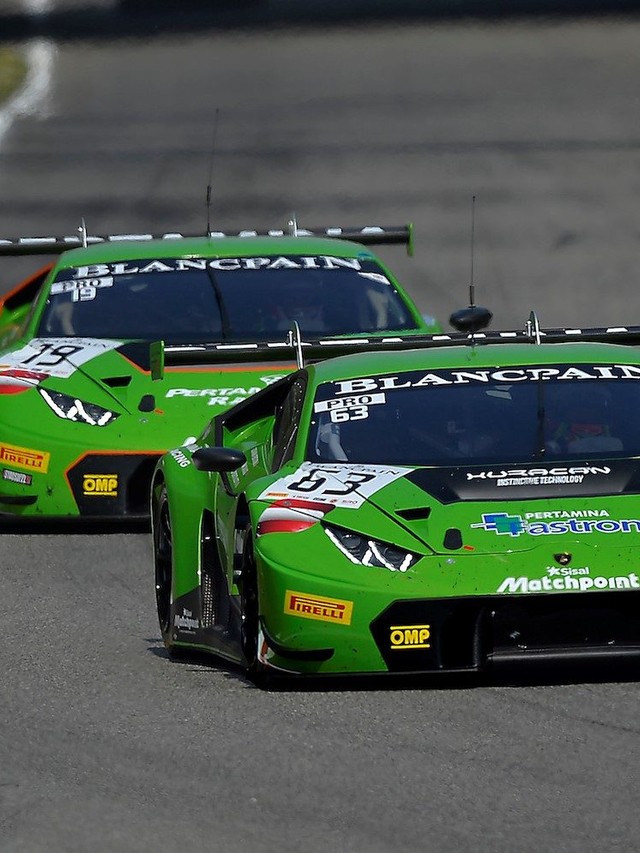
From Eight to Nineteen: Squadra Corse’s 2016 Talent Surge
When Lamborghini Squadra Corse launched its GT3 Junior Program in 2015, the intake was modest: eight drivers getting their first structured exposure to the Huracán GT3. One year later, that number jumped to 19, and the reason had less to do with marketing than with engineering ambition. Lamborghini says the Huracán GT3’s strong commercial sales created the budget and operational bandwidth to bring more young drivers into the fold, and the company intended to put every one of them to work, not just on track but inside the development loop.
Thirteen of those 19 participants progressed directly from the Lamborghini Blancpain Super Trofeo series, making the leap from the Huracán LP 620-2 Super Trofeo to the full GT3 specification car. All 19 were scheduled to compete in major GT championships worldwide during the 2016 season. Yet what set this program apart was what Squadra Corse asked of them beyond race weekends: dedicated test sessions aimed at refining the very car they raced.
Giorgio Sanna, then Head of Motorsport, framed the growth bluntly. The GT3’s commercial success gave Squadra Corse the resources to support more drivers, and the 13 Super Trofeo graduates entering top-level GT racing proved the youth pipeline was delivering exactly what it was designed to deliver. The 2016 expansion turned a promising pilot scheme into genuine infrastructure, one that tied driver development and car development into a single, self-reinforcing process.
The Super Trofeo Ladder: A Deliberate Career Architecture
The GT3 Junior Program did not exist in isolation. Below it, Lamborghini Squadra Corse‘s Young Drivers’ Program targeted drivers under 26 who wanted to build a professional motorsport career. The Super Trofeo one-make series served as the proving ground, a controlled environment where young racers could learn car control, racecraft, and the rhythms of professional competition in identical machinery before stepping up to the more complex GT3 world.
That structured pathway matters more than it might seem on paper. A driver jumping straight from karting or formula cars into a GT3 cockpit faces an enormous adjustment: heavier cars, longer races, multiclass traffic, tire management over stints, and the dynamics of sharing a car with a co-driver. Lamborghini’s approach gave its young talent a year or more of Super Trofeo mileage before exposing them to those pressures. The 2016 program’s shortlist for the Young Drivers’ intake was slated for announcement in May of that year, keeping the pipeline continuously fed.
Lamborghini consistently renews these programs annually, including end-of-year assessments and shootouts for driver selection. For the 2026 intake, the program reportedly expanded to 30 drivers across both Super Trofeo and GT3 tiers, a clear sign that the 2016 template proved durable. But durability alone does not explain why the program worked. That answer lies in what the junior drivers actually did at the test track.
Development Drivers, Not Just Race Entries
The detail that separates the 2016 GT3 Junior Program from a simple sponsorship arrangement is the development mandate. Lamborghini says all program drivers were committed to participating in the Huracán GT3’s ongoing technical refinement, not as a vague obligation but through dedicated test sessions at Vallelunga. During those sessions, the young drivers worked directly alongside Squadra Corse technicians and a roster of GT3 factory drivers that included Fabio Babini, Mirko Bortolotti, Giovanni Venturini, and Adrian Zaugg.
In practice, a junior driver would run laps, then debrief with engineers on car balance, braking stability, traction behavior, and tire degradation. A factory professional like Bortolotti would drive the same car on the same circuit and produce a different set of observations. The factory driver’s benchmark gave the engineers a calibration point; the junior’s feedback revealed how the car behaved in less experienced hands. That second data stream is precisely what a manufacturer needs when selling GT3 cars to privateer teams staffed by gentlemen drivers and bronze-rated amateurs. Both perspectives fed directly into setup refinement and, over time, homologation updates.
This dual role gave the 2016 program its distinctive character. Manufacturer junior programs typically focus on identifying future factory talent. Lamborghini’s structure explicitly tied driver development to car development, making the young racers part of the engineering loop rather than passengers in it. With the Huracán GT3 still a relatively new platform, 19 additional sets of hands on the wheel meant 19 additional sources of real-world data flowing back to Sant’Agata Bolognese.
Competitive Context: Lamborghini’s Position Among Rival Programs
Ferrari’s Driver Academy and Porsche’s Junior Programme are the obvious comparison points, and both are formidable. Ferrari’s system is primarily oriented toward single-seater racing and Formula 1 talent identification, with GT racing serving as a secondary track. Porsche’s Supercup ladder feeds directly into factory GT programs with deep institutional support and decades of refinement.
Lamborghini’s program operated at a smaller scale, but the integration of car development work gave it a distinctive edge. Where Porsche and Ferrari could rely on enormous existing customer racing ecosystems and decades of GT3 platform knowledge, Lamborghini in 2016 was still building that institutional depth. Using junior drivers as a development resource was a pragmatic way to accelerate learning while simultaneously training the next generation, turning a potential disadvantage into a structural advantage.
The Temerario GT3, slated to replace the Huracán GT3 Evo 2 as Lamborghini’s factory-backed GT3 effort, will inherit this same philosophy. According to Car and Driver, the Temerario GT3 is the first race car entirely designed and developed by Lamborghini at its Sant’Agata Bolognese facility. That in-house capability owes something to the institutional knowledge built through a decade of programs like the one announced in 2016.
A Template That Survived a Decade
Ten years after the 2016 expansion, the basic architecture of Lamborghini’s talent pipeline remains recognizable: Super Trofeo as the entry point, GT3 Junior status as the proving ground, factory driver contracts as the prize. The numbers grew. The assessment criteria evolved, reportedly shifting from age-based selection toward performance-driven coefficient rankings across continental championships. A strategic partnership with Formula Medicine for 2026 added structured physical and mental preparation to the mix.
For anyone watching Lamborghini’s motorsport trajectory, the 2016 GT3 Junior Program marked the moment Squadra Corse stopped treating driver development as an afterthought and started treating it as infrastructure. The Huracán GT3 benefited directly from that decision, shaped in part by the feedback of young drivers who were still learning its limits. The Temerario GT3 program will inherit the same feedback loop when it begins competition. And buyers considering a Lamborghini GT3 customer car can look at this pipeline and see something concrete: the car they purchase was refined, in part, by the same young drivers they will race alongside.
Gallery


