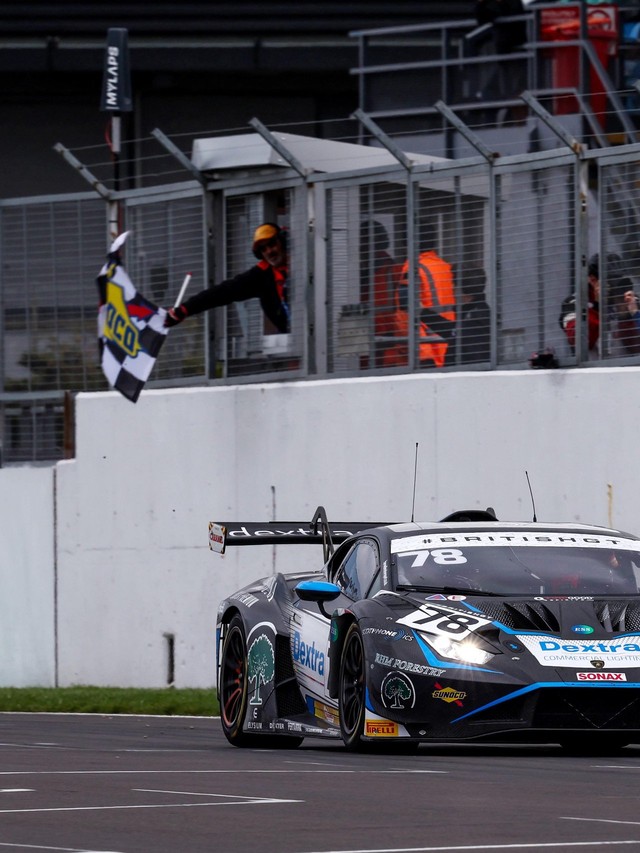
Six Drivers, Two Days, One GT3: The Monza Shakedown
Lamborghini Squadra Corse brought all six of its factory drivers to Monza for a concentrated two-day test of the Huracán GT3, running the car through its paces alongside more than 45 other machines in preparation for the 2015 Blancpain Endurance Series. Fabio Babini, Jeroen Mul, and Andrew Palmer split the first day’s running, while Adrian Zaugg, Mirko Bortolotti, and Giovanni Venturini took over on day two. The purpose was straightforward: validate the new GT3 car’s reliability and pace in a dense, competitive traffic environment before the season opener, scheduled for the same Monza circuit on April 12.
Lamborghini says the car covered a significant number of laps across both days, though the company stopped short of publishing specific times or lap counts. One more pre-season outing remains on the calendar, a final shakedown at Vallelunga on April 1-2 before the real racing begins. What makes this particular test worth paying attention to is less about the lap sheets and more about what it represents: Lamborghini committing factory resources, factory drivers, and factory engineering to a top-tier GT endurance championship in a way the brand simply did not do a decade earlier.
Why Factory Racing Matters for Lamborghini Now
For most of its history, Lamborghini sold the dream of speed without needing a racing program to prove it. Ferruccio Lamborghini famously wanted nothing to do with motorsport, preferring to let the road cars speak for themselves through styling and raw performance. Ferrari, by contrast, built its entire identity on racing and treated road cars as a funding mechanism for the Scuderia. Porsche occupied a middle ground, with customer racing deeply embedded in its business model for decades.
The Huracán GT3 program marks a clear departure from that old philosophy. Squadra Corse, established in 2009, evolved from running one-make trophy series (the Super Trofeo) into fielding a proper GT3 contender designed to compete against Ferrari 458 GT3s, Porsche 911 GT3 Rs, Audi R8 LMS cars, and McLaren 650S GT3s in the same races, at the same tracks, under the same regulations. The Blancpain Endurance Series is one of the most visible GT racing platforms in Europe, and showing up with a full roster of factory drivers is a statement that Lamborghini intends to be measured against those rivals on lap time, reliability, and race strategy, not just poster appeal.
The timing reinforces the point. The Huracán GT3 replaced the aging Gallardo FL2 race car, which had been competitive but lacked the engineering sophistication of its newer rivals. Moving to the Huracán platform gave Squadra Corse a more advanced starting point: a stiffer aluminum-carbon hybrid chassis, more refined aerodynamics, and a naturally aspirated V10 that could be tuned within GT3 balance-of-performance windows without losing its character.
Engineering the Edge: Dallara’s Fingerprints and the GT3’s Technical Architecture
The Huracán GT3 shares its basic engine and chassis architecture with the road car, but nearly everything around those core elements was reworked for endurance racing. Lamborghini says the car features an aluminum-carbon chassis paired with a full FIA-compliant roll cage, and the subframe was modified to accommodate a high-performance radiator up front and optimize gearbox positioning at the rear. The result, according to Lamborghini, is a curb weight of 2,731 pounds, roughly 400 pounds lighter than the street Huracán.
The aerodynamic package is where the collaboration with Dallara Engineering becomes most significant. Dallara, the Italian chassis specialist responsible for building Indycar monocoques and contributing to numerous Le Mans prototypes, helped develop the GT3’s bodywork. The adjustable rear wing and front diffuser are tuned for maximum mechanical grip on asphalt, with particular attention paid to brake cooling, a critical factor in endurance races where brake temperatures can determine whether a car finishes or retires.
Power comes from the road car’s direct-injection 5.2-liter V10, managed by a Bosch Motorsport control box that also oversees traction control, transmission mapping, and dashboard functions. A six-speed sequential gearbox sends power exclusively to the rear wheels, a fundamental change from the road car’s all-wheel-drive system and a requirement of GT3 regulations. Lamborghini has not revealed exact output figures, which is standard practice in GT3 racing since power levels are adjusted by series organizers through balance-of-performance regulations to keep competition close.
Braking is handled by 15-inch discs with six-piston calipers at the front and 14-inch discs with four-piston calipers at the rear. Inside the cockpit, carbon frame seats, OMP seatbelts, adjustable pedals, a fire extinguisher system, and a removable roof hatch for medical emergencies complete the race-ready interior. Full LED lighting front and rear carries over from the road car, and OMP redesigned the multifunction steering wheel specifically for racing use. A pneumatic lift system, borrowed from the world of prototype racing, allows the car to clear pit lane speed bumps and curbing without damaging the splitter.
One report indicates the Huracán GT3 carried a price tag of 369,000 euros, or approximately $427,000. For context, that buys a turnkey GT3 race car from a factory with a full driver support program, which is the real product Squadra Corse sells: not just a car, but an ecosystem of engineering support, spare parts logistics, and factory driver coaching.
Squadra Corse’s Driver Roster: Who Is Behind the Development
The six drivers Lamborghini fielded at Monza represent a deliberate mix of experience profiles. Mirko Bortolotti was already emerging as the anchor of the program, a driver whose feedback would prove instrumental in refining the car’s setup over subsequent seasons. Adrian Zaugg brought single-seater experience and a methodical approach to data analysis. Fabio Babini, a veteran of Italian GT racing, provided the kind of institutional knowledge that helps a new car avoid the mistakes teams typically make in a debut season.
Jeroen Mul, Andrew Palmer, and Giovanni Venturini rounded out the roster, each contributing different driving styles and track knowledge. In GT3 endurance racing, where three drivers share a car over race distances that can stretch to 24 hours, driver consistency matters as much as outright pace. Having all six cycle through the same car over two days at Monza allowed the engineering team to compare setup preferences, identify compromises, and build a baseline that would work across the diverse circuits on the Blancpain calendar.
Bortolotti’s involvement is worth highlighting for readers following the longer arc of Lamborghini’s racing story. He went on to become one of the most successful GT3 drivers of his generation, and the 2017 Blancpain GT Series triumph, secured by the Austrian Grasser Racing team with Bortolotti, Christian Engelhart, and Andrea Caldarelli driving, validated the development work that started in sessions exactly like this one at Monza.
From Track to Road: What GT3 Racing Teaches Lamborghini’s Engineers
The technology transfer argument in motorsport can sometimes feel like marketing language stretched thin. In Lamborghini’s case, though, the GT3 program produced tangible results that showed up in the showroom. The Huracán Performante and later the Huracán STO (Super Trofeo Omologata, a name that literally references the racing series) borrowed aerodynamic concepts, cooling strategies, and chassis tuning philosophies directly from Squadra Corse’s racing program.
The STO’s active aerodynamics, its cofango (a single-piece front clamshell combining hood and fenders for reduced weight and improved airflow management), and its rear-wheel-drive bias all trace conceptual lineage back to the GT3 platform. When Lamborghini’s engineers needed to understand how a naturally aspirated V10 behaves under sustained high-load conditions, how brake cooling affects lap-to-lap consistency, or how rear-biased weight distribution changes corner-entry behavior, the GT3 program provided thousands of hours of real-world data that no amount of simulation could replicate.
For prospective buyers, this connection matters practically. A Huracán STO or Performante owner benefits from engineering decisions that were stress-tested in 24-hour races, not just validated on a dynamometer. The GT3 program also established the credibility Lamborghini needed to pursue its current LMDh effort with the SC63 prototype, a car that competes at Le Mans and in IMSA’s top class. Without the institutional knowledge built through years of GT3 endurance racing, that jump to prototype competition would have been far more difficult to execute.
Multiple owners on enthusiast forums describe the Huracán GT3 as a well-balanced car, though some racing teams noted that factory support quality varied in the early years. The car’s reputation for being competitive but occasionally fragile in contact situations is a common thread in community discussions, a characteristic that Squadra Corse addressed progressively through the EVO and EVO2 updates.
The 2015 Blancpain Endurance Calendar: Five Rounds, Five Different Challenges
The season that this Monza test prepared for would take the Huracán GT3 across five of Europe’s most demanding circuits, each presenting a distinct engineering challenge:
| Date | Circuit | Country | Notable Challenge |
|---|---|---|---|
| April 11-12 | Monza | Italy | High-speed straights, low downforce demand |
| May 23-24 | Silverstone | Great Britain | Fast, flowing corners, variable weather |
| June 19-20 | Paul Ricard | France | Abrasive surface, high tire degradation |
| July 23-26 | Spa-Francorchamps (24 hrs) | Belgium | The ultimate endurance test, elevation changes, weather |
| September 19-20 | Nürburgring | Germany | Technical layout, heavy braking zones |
The crown jewel is obvious. The Spa 24 Hours is one of the most prestigious endurance races in GT racing, a grueling test of car reliability, driver stamina, and team strategy that separates serious factory programs from weekend efforts. For Lamborghini, finishing well at Spa with a brand-new car in its debut season would send a stronger message than any marketing campaign.
Monza itself, where the season opener would take place on the same asphalt the Huracán GT3 tested on, rewards low-drag efficiency and straight-line speed. Silverstone and Paul Ricard demand aerodynamic balance and tire management. The Nürburgring GP circuit (not the Nordschleife) requires strong braking performance and mechanical grip through its technical sections. Each round would expose different strengths and weaknesses in the new car, feeding data back to Sant’Agata Bolognese for continuous development.
For anyone following Lamborghini’s racing trajectory, the broader significance of this Monza test is best understood through what came after. The Huracán GT3 went on to win at the Blancpain series in its debut season at Monza, and subsequent evolutions of the platform accumulated victories at the 24 Hours of Daytona, the 12 Hours of Sebring, and eventually a Blancpain championship title with the GT3 EVO in 2019. All of that started here, with six drivers cycling through a green number-63 car on a cold March day at Monza, building the foundation for what became one of the most successful GT3 platforms of its era.
Gallery


