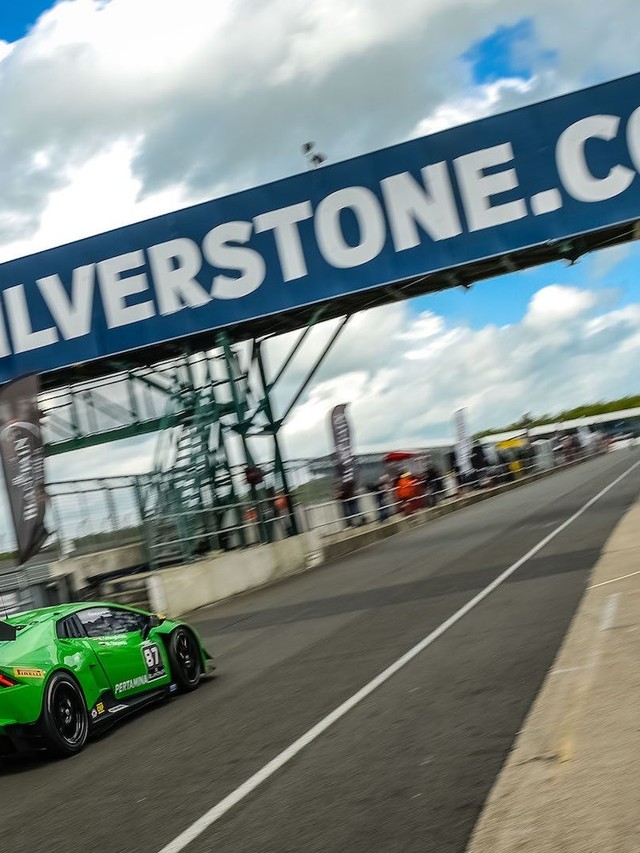
Silverstone Beckons: A Full Grid and Rising Stakes
Forty-seven cars, 22 teams, and 70 drivers crammed the Monza grid for the opening round of the Lamborghini Blancpain Super Trofeo Europe. Lamborghini says the Silverstone weekend should match that density, making round two of six double-header weekends one of the most populated single-marque grids in European motorsport.
Organized by Lamborghini’s Squadra Corse division, the series puts identical Huracán LP 620-2 Super Trofeos on track and strips competition down to driver skill, team strategy, and setup choices. Launched in 2009 with Gallardo LP560-4 Super Trofeos, the championship quickly positioned itself as the fastest one-make series in the world. Silverstone, with its high-speed sweeps through Maggotts, Becketts, and Chapel, rewards exactly the kind of aerodynamic confidence and driver commitment the Huracán race car was built to exploit.
What makes this particular round worth watching goes beyond the spectacle of a packed grid. PRO class standings are tight enough that a single bad qualifying session could reshuffle the entire top five, and several drivers here are building résumés aimed at seats in GT3 machinery. For Lamborghini, a full Silverstone entry list validates the commercial model behind the entire program: teams keep buying cars, sponsors keep writing checks, and the pipeline of talent feeding into higher-level racing efforts stays healthy.
The Huracán LP 620-2: A Race Car That Earns Its Name
The naming convention tells you almost everything. LP 620-2 means 620 horsepower from the naturally aspirated 5.2-liter V10, sent exclusively to the rear wheels. Strip the all-wheel-drive system from the road car, cage the cockpit, bolt on a carbon-fiber aerodynamic package with a substantial rear wing, fit Öhlins dampers and an X-Trac sequential gearbox, and you arrive at a machine purpose-built for close racing on circuits like Silverstone.
These cars are not street-legal. They exist in a narrow, beautiful space between customer accessibility and genuine competitive hardware. The rear-wheel-drive layout is a deliberate pedagogical choice: sending all 620 horsepower through two contact patches forces drivers to manage traction, throttle application, and weight transfer with precision. Those who master the fundamentals here graduate to GT3 with a toolkit that translates directly, which is precisely the point of the entire ladder.
In race trim, the V10 delivers power with an immediacy that turbocharged alternatives struggle to replicate, and its exhaust note at 8,000-plus rpm is a legitimate recruiting tool for the series. Spectators at Silverstone will hear the grid before they see it. For a brand built on sensory excess, that matters more than any press kit statistic.
Stars on the Rise: Driver Drama and the Path to GT Glory
Danish driver Dennis Lind, racing with Raton Racing, opened the season with a victory at Monza and immediately established himself as the PRO class benchmark. A young rookie who adapted to the Huracán’s rear-drive character quickly enough to win on his first outing, Lind’s debut speaks both to his talent and to the car’s ability to reward clean driving rather than brute aggression.
The championship lead, however, belongs to the Italian pairing of Nicola De Marco and Fabrizio Del Monte, running under the Orange 1 Team Lazarus banner. Consistency at Monza, with two second-place finishes and a class victory in Race 2 at their home circuit, gave them the points advantage heading into Silverstone. Five points behind sits Latvian Harald Schlegelmilch of Artline Team Georgia, who claimed a podium in Race 1 at Monza.
Those tight margins at the top illustrate why the Super Trofeo format works so well as a talent filter. When every car on the grid produces the same power and runs the same tire compound, gaps between drivers shrink to fractions of a second. Consistency, racecraft, and the ability to extract performance from setup adjustments become the differentiators. Teams and talent scouts pay attention to who thrives under those constraints, because the skills translate directly into the more complex world of GT3 endurance racing, where drivers share seats and manage tire degradation over multi-hour stints.
Lind’s form at Silverstone will be particularly telling. The British circuit rewards a different skill set than Monza’s long straights and heavy braking zones. Drivers who can carry speed through the fast corners of the old airfield layout tend to separate themselves from the pack in ways that Monza’s slipstream battles sometimes obscure.
Lamborghini’s Motorsport Vision: Why Super Trofeo Matters
One-make series can look, from the outside, like expensive brand exercises: identical cars, sponsor logos, champagne on the podium. But the Lamborghini Blancpain Super Trofeo functions as something more strategic. It is the bottom rung of a motorsport ladder that Squadra Corse uses to develop drivers, refine engineering processes, and sustain a commercial ecosystem of customer racing teams.
The series operates across three continental championships (Europe, Asia, and North America), each feeding into an annual World Finals event that crowns a global champion. Drivers who perform well earn consideration for GT3 programs, where Lamborghini competes against Ferrari, Porsche, McLaren, and Mercedes-AMG in some of the most visible endurance racing on the planet. The recently debuted Temerario GT3, Lamborghini’s first competition car fully designed and built in-house, represents the next chapter of that ladder. Drivers cutting their teeth on the Huracán LP 620-2 today may well be the ones piloting Temerario GT3 machinery in international endurance events within a few seasons.
This pipeline approach mirrors what rival manufacturers operate through their own customer racing programs. Ferrari runs its Challenge series on a similar model; Porsche fields the Carrera Cup as a feeder for its extensive GT program. Lamborghini’s version is smaller in absolute grid numbers than Porsche’s global operation, but the intensity of competition per grid slot is arguably higher, partly because the rear-wheel-drive Huracán demands more from its drivers than some all-wheel-drive alternatives.
The commercial math reinforces the sporting logic. Every team that buys a Super Trofeo car also buys spare parts, tires, transport logistics, and engineering support throughout the season. That revenue stream helps fund Squadra Corse’s broader ambitions, including the Temerario GT3 development program. A record 47-car grid at Monza means the financial engine behind Lamborghini’s racing division is running at capacity.
Competitive Edge: How Lamborghini’s Series Stacks Against Rivals
The supercar one-make series landscape is crowded. Ferrari Challenge, Porsche’s various Cup championships, and McLaren’s Trophy series all compete for the same pool of wealthy amateur drivers and aspiring professionals. Lamborghini’s differentiator is the car itself.
With its naturally aspirated V10 and rear-wheel-drive layout, the Huracán LP 620-2 Super Trofeo occupies a philosophical position that few competitors match. It rewards throttle sensitivity and driver finesse in a way that all-wheel-drive platforms can mask. For aspiring professionals, that makes it a better teaching tool. For gentleman drivers, it makes for a more exciting, and occasionally more humbling, weekend.
The Blancpain title partnership, linking Lamborghini with the Swiss watchmaker, also positions the series in a luxury context that resonates with the brand’s customer base. Enthusiast forums and owner communities consistently note that the Super Trofeo paddock feels more intimate and more distinctly Lamborghini than the larger, more corporate GT3 paddock. That atmosphere is part of the product.
Looking forward, the transition from the Huracán to whatever platform succeeds it in the Super Trofeo role will be one of the most closely watched developments in customer racing. Lamborghini confirmed the Temerario GT3 as its next-generation GT3 contender, but the company has not announced what will replace the Huracán in the one-make series. Whether a turbocharged, hybrid-assisted Super Trofeo car can deliver the same raw, naturally aspirated experience that defines the current championship remains an open and genuinely fascinating question.
What to Watch For at Silverstone
The practical storylines for this weekend come down to three threads, all tied to the same question: how healthy is Lamborghini’s racing ladder? First, whether De Marco and Del Monte can defend their points lead on a circuit that plays to different strengths than their home track at Monza. Second, whether Lind’s early-season form translates to a high-speed layout where aerodynamic confidence through fast corners matters more than late-braking heroics. Third, whether Schlegelmilch, trailing by just five points, can use Silverstone to close the gap.
For anyone following Lamborghini’s motorsport trajectory, the grid count itself is the most important data point. A full Silverstone entry list, matching or approaching the Monza record, signals that customer demand for the Huracán Super Trofeo platform remains strong even as the road car it derives from exits production. That commercial health gives Squadra Corse the resources and the credibility to push forward with the Temerario GT3 program and, eventually, whatever replaces the Huracán in one-make competition.
Buyers considering entry into Lamborghini’s customer racing ecosystem should note that the current Huracán Super Trofeo represents the final generation of naturally aspirated V10 race cars the company will produce. According to Autoblog, low-mileage examples of the EVO Collector edition already attract serious collector interest. The combination of a proven racing platform, a legendary engine, and a finite production window makes these cars increasingly compelling as both competition tools and future collectibles.
Races at Silverstone run as two 50-minute sprints across the weekend. For those who cannot attend, Lamborghini typically streams the events through its Squadra Corse channels. Given the tight championship standings and the quality of the grid, this round could set the tone for the entire European season.
Gallery


