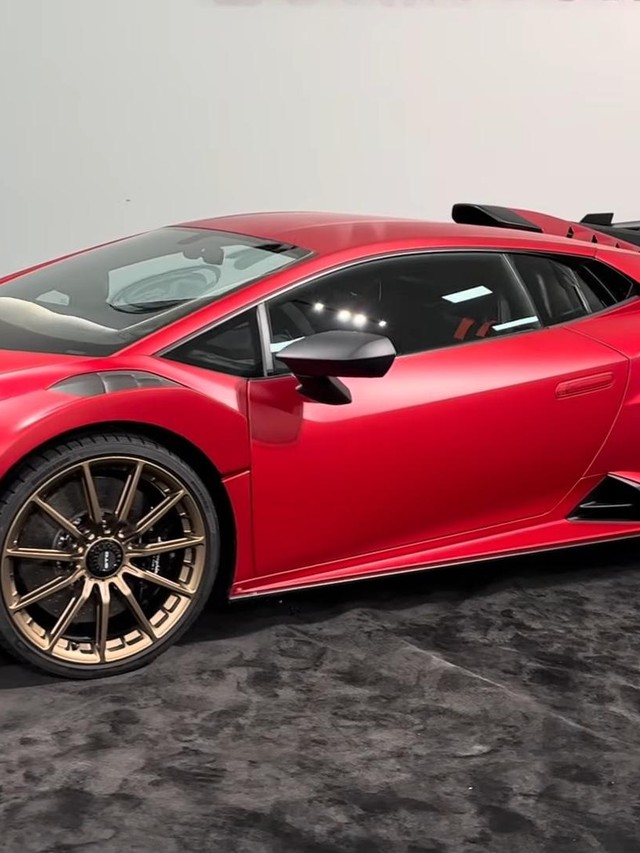
GTP on Hold, Temerario GT3 Takes Center Stage
Lamborghini’s SC63 LMDh prototype will not race in 2026. The company confirmed the pause in early August 2025, and in the same breath announced where the freed resources are going: two new racing platforms, the Temerario GT3 and the Temerario Super Trofeo, both developed entirely in-house by Squadra Corse for the first time in the brand’s history.
The Temerario GT3 already broke cover at the Goodwood Festival of Speed in July 2025 and is currently grinding through development testing on European circuits. Its competitive debut is locked in for the 2026 12 Hours of Sebring, meaning the car that replaces the legendary Huracán GT3 will face one of endurance racing’s most grueling tests as its very first outing. The Temerario Super Trofeo, meanwhile, is slated for a reveal before the end of this year.
Strip away the corporate language and the story is clear: Lamborghini looked at the escalating cost of prototype racing, looked at the commercial engine that GT3 has always been, and chose to pour its engineering talent into the program that pays for itself through customer car sales rather than the one that consumes a marketing budget. Everything that follows, the in-house development philosophy, the Sebring timeline, the Super Trofeo’s tantalizing rear-drive layout, flows from that single strategic decision.
Reading Between the Lines on the GTP Pause
Lamborghini’s official explanation cites “changed conditions” and resource demands that “grew beyond original projections,” both in budget and technical complexity. The language is diplomatic, but the underlying pressures are not difficult to identify.
The Hypercar/GTP class exploded in popularity after convergence rules brought LMDh and Le Mans Hypercar under one roof. More manufacturers piled in, costs escalated, and the FIA and ACO raised the bar by requiring a minimum of two entries in the World Endurance Championship from 2025 onward. For a company Lamborghini’s size, fielding two prototypes across two global championships is a fundamentally different financial proposition than running a single car in IMSA. Reporting indicates that Lamborghini’s partnership with Iron Lynx, its initial factory team, ended after the 2024 season, compounding the logistical challenge. The company has indicated openness to resuming the project in 2027 or beyond if a suitable factory partner materializes.
This does not read as a failure of ambition. It reads as a company recognizing that the economics of prototype racing shifted underneath it and choosing to redirect investment where the return, commercially and in engineering development, is more predictable. That distinction matters because it frames everything Squadra Corse is doing with the Temerario not as a consolation prize, but as the main event.
What ‘Developed Entirely In-House’ Actually Means
The phrase “entirely in-house” appears repeatedly in Lamborghini’s announcement, and it deserves more than a passing glance. Previous Lamborghini race cars, including the various Huracán GT3 iterations, relied heavily on external engineering partners for chassis development, aerodynamic packaging, and race-specific systems integration. The Temerario GT3 and Super Trofeo break that pattern completely.
Building a GT3 car internally means Squadra Corse controls the entire intellectual property chain: aerodynamic philosophy, cooling architecture, structural integration of the roll cage with the road car’s aluminum chassis, and calibration of the powertrain for endurance reliability. That control loop creates a direct feedback path between the racing program and road car development. Lessons learned at Sebring or Spa can inform the next road-going Temerario variant without the friction of coordinating across separate engineering organizations.
For a brand that now builds every road car with some form of electrification, the decision to keep the GT3 non-hybrid is also telling. CarBuzz reports that the Temerario GT3 will run without a hybrid powertrain, stripping the road car’s three electric motors and plug-in system in favor of pure internal-combustion focus. GT3 regulations generally mandate this simplification, but the contrast with the road car’s 907-horsepower hybrid architecture remains striking. Lamborghini views the GT3 platform as a proving ground for the combustion side of its powertrain, not a showcase for electrification, and that clarity of purpose is precisely what in-house development enables.

The iconic Lamborghini shield logo is presented with the 'Squadra Corse' designation on a sleek black background.
Filling the Huracán GT3’s Shoes
The car the Temerario GT3 replaces compiled one of the most impressive records in modern GT racing. Lamborghini says the Huracán GT3 accumulated 96 titles and 192 race victories worldwide across a decade of competition. That kind of longevity is unusual in a class where homologation cycles typically run five to seven years, and it speaks to how well the original V10 platform adapted to evolving Balance of Performance regulations.
Surpassing that legacy is the stated goal, and the ambition makes commercial sense. GT3 cars are sold to privateer teams and gentleman drivers around the world. Each unit generates direct revenue, parts sales, and trackside brand visibility in a way that a factory prototype program never can. When a GT3 car wins at Bathurst or Daytona, the customer who bought it becomes a brand ambassador in the most literal sense. That self-sustaining economic model, where racing pays for itself through car sales, is the core logic behind Lamborghini’s concentration of resources.
For teams currently running Huracán GT3 Evos, the transition timeline is critical. The Sebring debut in March 2026 will be the first real data point on how the new car performs against established competitors from Porsche, Ferrari, Mercedes-AMG, and Aston Martin. Anyone considering a GT3 purchase in the next twelve months will be watching that race closely.
The Super Trofeo Question: Could It Preview a Road Car?
The Temerario Super Trofeo, expected to be revealed before the end of 2025, feeds Lamborghini’s one-make racing series, which functions as both a driver development ladder and a gateway for customers who want track time in a controlled, brand-immersive environment. Road & Track confirmed the Super Trofeo is rear-wheel drive, a notable departure from the road car’s all-wheel-drive hybrid layout.
One report suggests the rear-drive Super Trofeo could preview a future road-going Temerario variant in the mold of the beloved Huracán STO. Lamborghini has not confirmed any such plan, but the pattern is well established: the Huracán STO drew directly from Super Trofeo and GT3 development, and enthusiasts who loved that car’s raw, rear-drive character will be reading the Super Trofeo’s spec sheet as a roadmap. Confirmed or not, the Super Trofeo platform gives Lamborghini a live testing environment for the kind of stripped-back, driver-focused variant that generates enormous enthusiast loyalty, and it does so under the same in-house engineering umbrella that now governs the GT3.
Where This Leaves Lamborghini Against Ferrari and Porsche
Ferrari and Porsche both maintain sprawling motorsport portfolios that span prototype racing, GT3, and one-make series simultaneously. Lamborghini’s decision to concentrate on GT3 and Super Trofeo rather than spread itself across categories is a different strategic posture, but not necessarily a weaker one.
GT3 is, by most measures, the healthiest and most globally relevant category in production-based racing. Grids are full, television coverage is growing, and the cars are close enough to their road-going counterparts that marketing departments can draw a straight line from the podium to the showroom. Lamborghini’s bet is that owning this space with a competitive, in-house developed car delivers more brand value per dollar than a prototype program that consumed escalating budgets while struggling to find a stable team partnership.
The practical takeaway for buyers and fans: Lamborghini’s racing presence is not shrinking. It is concentrating. Sebring in March 2026 will be the first competitive test of whether Squadra Corse’s new in-house capability can match the results the Huracán delivered with external partners. A strong debut validates the entire pivot. A difficult one will make the questions about the GTP pause considerably louder. Either way, the Temerario GT3 carries more strategic weight than any Lamborghini race car in recent memory, because it is no longer just a product. It is the proof that Sant’Agata can build a world-class racing car on its own terms.


