Lamborghini Squadra Corse Signs CSR Racing 2 as Official Partner for SC63 Debut Season
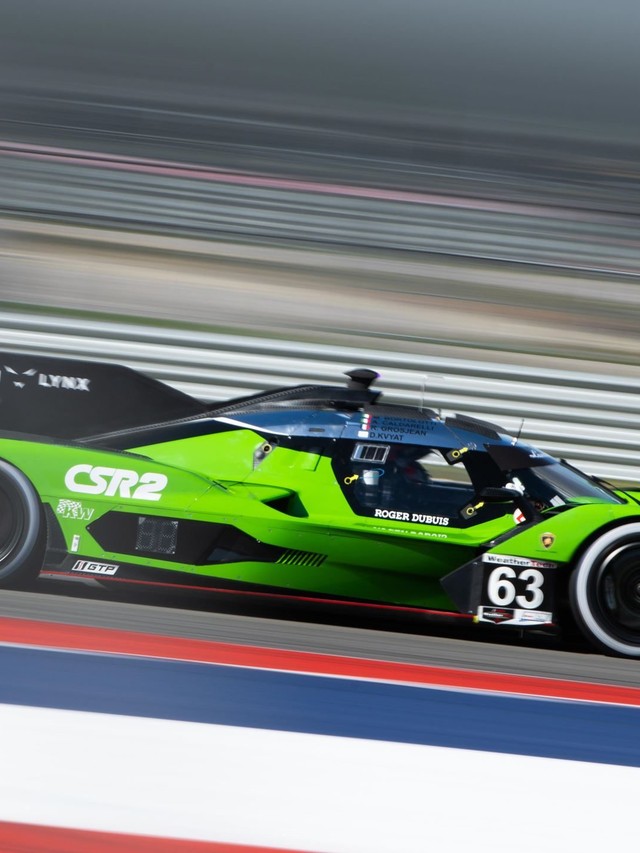
Lamborghini Squadra Corse and Zynga Inc. have formalized a multi-year agreement that makes the mobile racing game CSR Racing 2 an official partner of Lamborghini’s factory endurance racing program. Announced as Squadra Corse prepares for its historic first season competing in the top classes of both the FIA World Endurance Championship and the IMSA WeatherTech SportsCar Championship, the deal places the SC63 LMDh prototype directly into the hands of mobile gamers while embedding CSR2 branding onto the real Iron Lynx race cars, driver overalls, and team uniforms.
Both the SC63 and its Iron Lynx drivers are officially licensed for the game, so players race lifelike versions of the same prototype contesting the Daytona 24 Hours and the 24 Hours of Le Mans. CSR2 branding, in turn, rides on the physical cars throughout the 2024 season and beyond. Digital content flows into the game; real-world visibility flows back onto the track.
Julian Widdows, Senior Vice President of Racing at NaturalMotion (the Zynga subsidiary that develops CSR2), described this as the franchise’s first official, multi-year partnership encompassing both in-game and real-world activations with a top-tier automotive brand. For a free-to-play mobile title available on the App Store and Google Play, landing a factory LMDh program as a launch partner is a notable commercial win.

The Lamborghini SC63, number 63, races with incredible speed, showcasing its aerodynamic design and vibrant green livery.
Why a Mobile Game Matters to Lamborghini’s Biggest Racing Bet
A partnership between a boutique Italian supercar manufacturer and a mobile drag-racing game might sound like corporate box-ticking. The logic, though, is sharper than it first appears.
Lamborghini is spending heavily to compete at the pinnacle of global endurance racing for the first time. The SC63 is a hybrid race car built to LMDh regulations, fielded against programs from manufacturers with decades of prototype experience. Awareness is the core challenge. The WEC and IMSA paddocks are crowded with factory efforts, and Lamborghini needs its new prototype to register with audiences who may never attend a race in person. CSR2, whatever its limitations as a simulation, reaches a global mobile audience that skews younger and more digitally engaged than a typical motorsport broadcast.
Christian Mastro, Automobili Lamborghini’s Marketing Director, framed the partnership as a way to enlarge the brand’s “continually expanding fanbase” during what he called the most exciting year in Squadra Corse‘s history. He also noted that the SC63 follows the in-game success of models like the Aventador and Huracán, suggesting Lamborghini sees CSR2 as a proven channel rather than an experiment.
The practical calculus is straightforward. Every major rival in the Hypercar class already invests in console and PC sim-racing partnerships, esports leagues, and social media content pipelines. Arriving late to top-tier prototypes, Lamborghini cannot afford to rely solely on traditional motorsport media to build recognition for the SC63. A mobile game with a massive install base offers reach at a fraction of the cost of a global advertising campaign.
What the SC63 in CSR2 Actually Offers Enthusiasts
Inside the game, the SC63 is positioned as a top-tier vehicle. One source indicates it sits in CSR2’s Tier 5 category, ranking among the fastest cars available, and that a special event tied to the 24 Hours of Le Mans accompanied its introduction. An Augmented Reality mode reportedly lets players examine the car’s details through their phone’s camera.
More interesting is what Lamborghini says about fidelity. The partnership was built around giving players “life-like versions” of the LMDh prototypes, and the in-game SC63 reportedly rewards precision over aggressive inputs, a characteristic described as reflecting the actual car’s composed nature at speed. For a mobile title, that level of behavioral intent is unusual. Whether the handling model genuinely mirrors an LMDh prototype’s grip-dependent character or simply approximates it for a casual audience is a question only extended play can answer, but the aspiration itself reveals how seriously Lamborghini treats the representation of its cars, even on a phone screen.
For enthusiasts who follow the real racing program, the licensed Iron Lynx drivers add a layer of authenticity. Romain Grosjean, Matteo Cairoli, and Andrea Caldarelli are names familiar to anyone tracking Lamborghini’s endurance effort. Seeing them licensed into a mobile game alongside the car they actually race separates this from a generic car-pack addition.

The Lamborghini SC63, number 63, speeds down the track, showcasing its powerful rear design and racing livery.
How Lamborghini’s Digital Play Compares to Its Hypercar Rivals
Ferrari and Porsche both entered the Hypercar class with enormous digital infrastructure already in place. Ferrari operates its own esports series through Assetto Corsa and maintains deep integrations across multiple AAA console titles. Porsche runs a global esports program and partners with iRacing, Gran Turismo, and Forza. Both brands treat digital racing as a permanent arm of their motorsport operations, not a seasonal marketing add-on.
Lamborghini’s CSR2 partnership is a different animal entirely. It targets a casual mobile audience rather than the dedicated sim-racing community, emphasizing brand exposure and accessibility over competitive esports credibility. That is not necessarily a weakness. The sim-racing space is saturated with Ferrari and Porsche content, so choosing a platform where Lamborghini can be the headline automotive partner, rather than one of many licensed marques, is a shrewd allocation of attention.
The risk lies in perception among core enthusiasts. Lamborghini owners and serious fans tend to care about authenticity and exclusivity. A free-to-play mobile game, no matter how well executed, occupies a different cultural register than a Polyphony Digital collaboration or a factory-backed iRacing series. Lamborghini has not disclosed whether deeper sim-racing integrations are planned alongside the CSR2 deal, and that gap is worth watching. If the SC63 eventually appears in titles like Gran Turismo or Le Mans Virtual, the mobile partnership becomes one layer of a broader strategy. If it remains the primary digital touchpoint, it may feel insufficient to the audience that cares most.
The Bigger Picture for Lamborghini Fans
The SC63 made its U.S. racing debut at the 12 Hours of Sebring and participated in qualifying at Le Mans, milestones that would have been unthinkable for Lamborghini a decade ago. The CSR2 partnership is best understood as the marketing complement to that on-track ambition: a way to make the SC63 visible to millions of people who will never see it in person at Circuit de la Sarthe or Daytona.
For existing Lamborghini owners, this deal probably registers as background noise. The buyer who just took delivery of a Revuelto is unlikely to spend meaningful time in a mobile drag racer. Lamborghini, however, is playing a longer game. The teenager who races a virtual SC63 today is, in theory, the Huracán or Temerario buyer of 2035. Ferrari understood this calculus years ago, which is why its digital presence is so aggressive. Lamborghini is catching up, and CSR2 is the most accessible rung on that ladder.
One practical takeaway for anyone following Squadra Corse’s endurance program: the multi-year nature of this agreement signals that Lamborghini is building infrastructure around the SC63, not treating it as a one-season experiment. The branding commitments, driver licensing, and game-event tie-ins all require sustained investment. Whether the car’s on-track results justify that investment is a separate question entirely, but the commercial scaffolding is being assembled with visible intent.

The Lamborghini SC63, number 63, blazes past with incredible speed, a testament to its racing prowess.
Gallery


