
In automotive design, few names carry as much weight as Ken Okuyama. This legendary designer has left his mark on some of the most iconic supercars of the modern era, including the Ferrari Enzo and the Maserati Birdcage 75th Concept. In 2017, Okuyama unveiled his latest creation: the stunning Kode 0, a one-off supercar that pays homage to the wedge-shaped concept cars of the 1970s while incorporating cutting-edge technology and materials.

 lancia stratos hf zero concept car of 1970
Ken Okuyama’s inspiration for the Kode 0 came from the iconic Lancia Stratos HF Zero concept car of 1970, designed by the renowned Marcello Gandini at Bertone. This groundbreaking design, with its razor-sharp wedge profile and forward-thinking styling, left an indelible mark on the young Okuyama. The Stratos HF Zero stood just 33 inches tall and featured a unique entrance, requiring the driver to open the windshield and step over the front bodywork to enter the cabin. Decades later, Okuyama set out to create a modern interpretation of this classic design, using the latest materials and technology.
To bring his vision to life, Okuyama chose the Lamborghini Aventador as the basis for the Kode 0. The Aventador, with its naturally aspirated 6.5-liter V12 engine producing 690 horsepower and 507 pound-feet of torque, and advanced all-wheel-drive system, provided the perfect platform for Okuyama’s unique creation. The Kode 0’s carbon fiber bodywork was meticulously crafted using Okuyama’s signature “one motion” design language, creating a seamless flow from the front to the rear of the vehicle.
The Kode 0 made its world debut at the prestigious Pebble Beach Concours d’Elegance in 2017, where it captured the attention of automotive enthusiasts and design aficionados alike. With a price tag of $1.5 million, in addition to the cost of the donor Aventador, the Kode 0 is a true collector’s item, representing the pinnacle of modern automotive design and engineering.
Ken Okuyama Kode 0: The Design Process
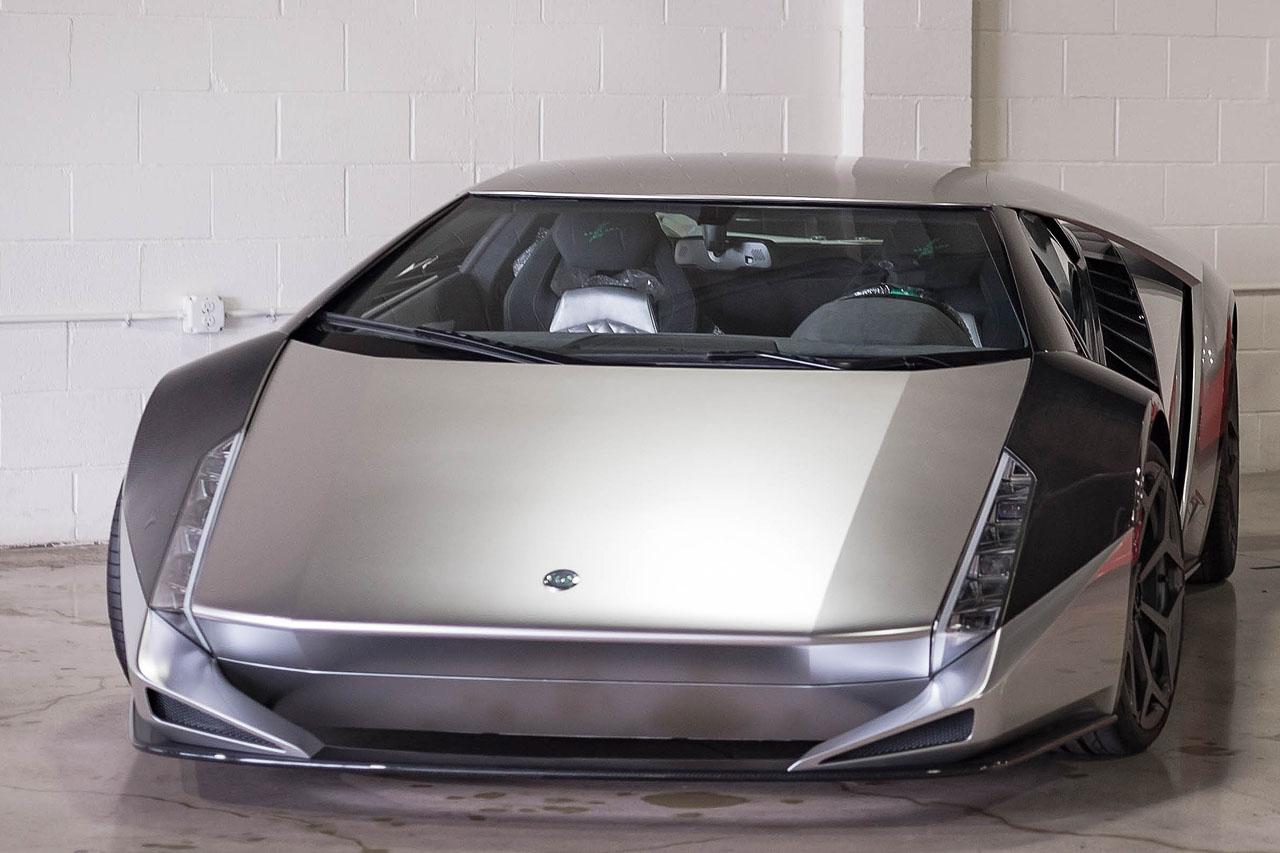
Ken Okuyama employed his signature “one-motion” design philosophy to craft the sleek, seamless shape of the Kode 0. His approach involved uniting the car’s entire body with a single, continuous line that flows smoothly from the front to the A-pillar, C-pillar, and rear.
To bring this concept to life, Okuyama and his team began by creating a small-scale clay model, allowing them to meticulously fine-tune the car’s proportions and surfaces for the ideal aesthetic. Designed at Ken Okuyama Design’s Aoyama studio in Tokyo, the Kode 0 was later constructed at the Ken Okuyama Cars factory in Yamagata, using advanced NC machine cutting technology to precisely shape the carbon fiber body panels.
Once the clay model met Okuyama’s standards, it was then rendered in 3D computer modeling software. This digital model was used to create a full-size design buck at the Ken Okuyama Design Yamagata Factory in Japan, which is the only “carrozzeria” in the country.
The aggressive new carbon fiber bodywork was predominantly finished in silver, with some panels left exposed for visual effect.
Notable design elements include:
- A low, pointed nose with a dramatic front splitter integrated into the front fenders
- Vertically mounted LED headlights flush with the bodywork
- An unbroken front-end wedge integrating the windshield
- A dramatic Z-shaped side profile following the lines of the splitter
- Exposed carbon fiber panels on the front fenders and doors
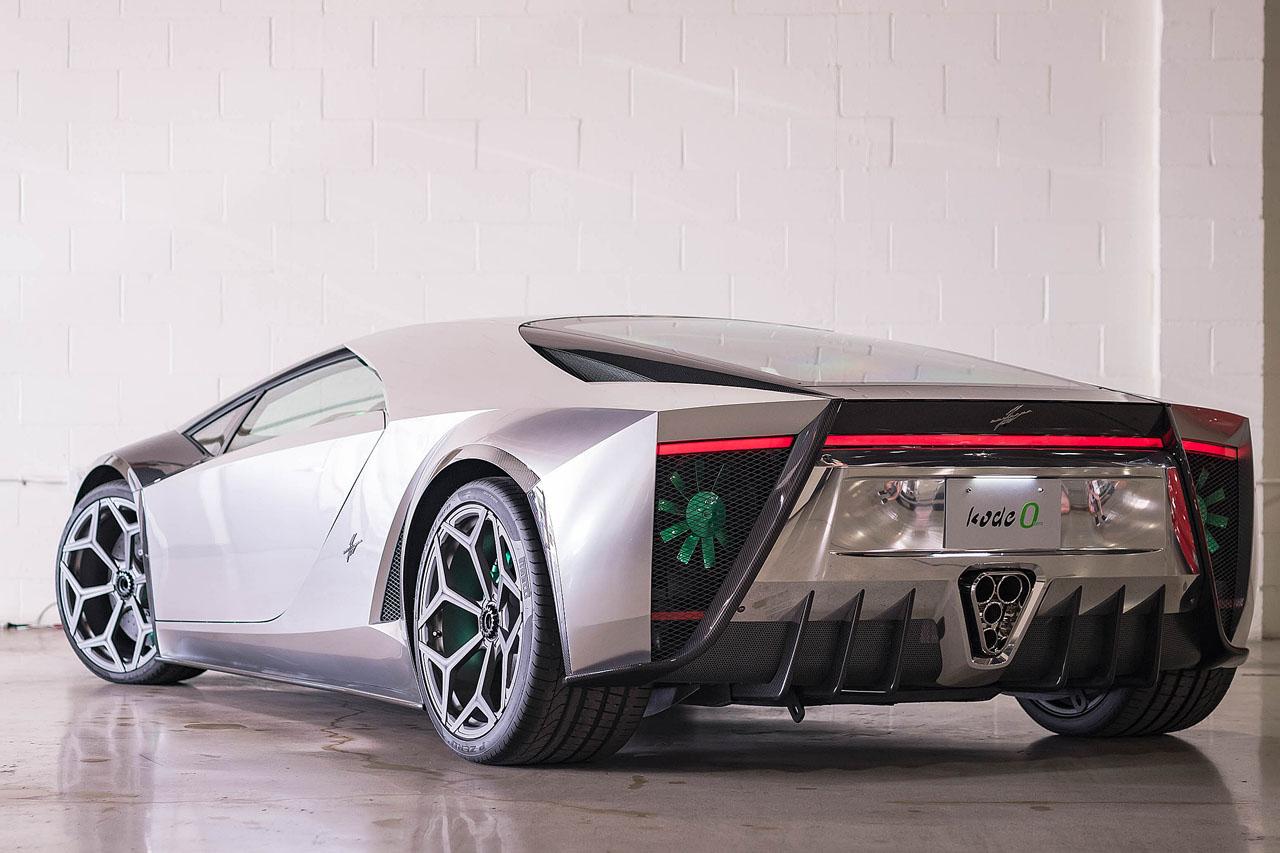
- Large rear grilles with eye-catching green cooling fans
- A chrome rear section with quad exhaust pipes in an “inverse arrowhead” surround
- Carbon fiber rear diffuser fins
At 4,635mm in length, the Kode 0 is about 145mm shorter than the Aventador while a width of 2,125mm adds 95mm to the overall width of the Aventador … height is only 1 mm lower at 1,135mm.
Ken Okuyama Kode 0’s Stunning Bodywork: Exposed Custom Fibre Panels and More..
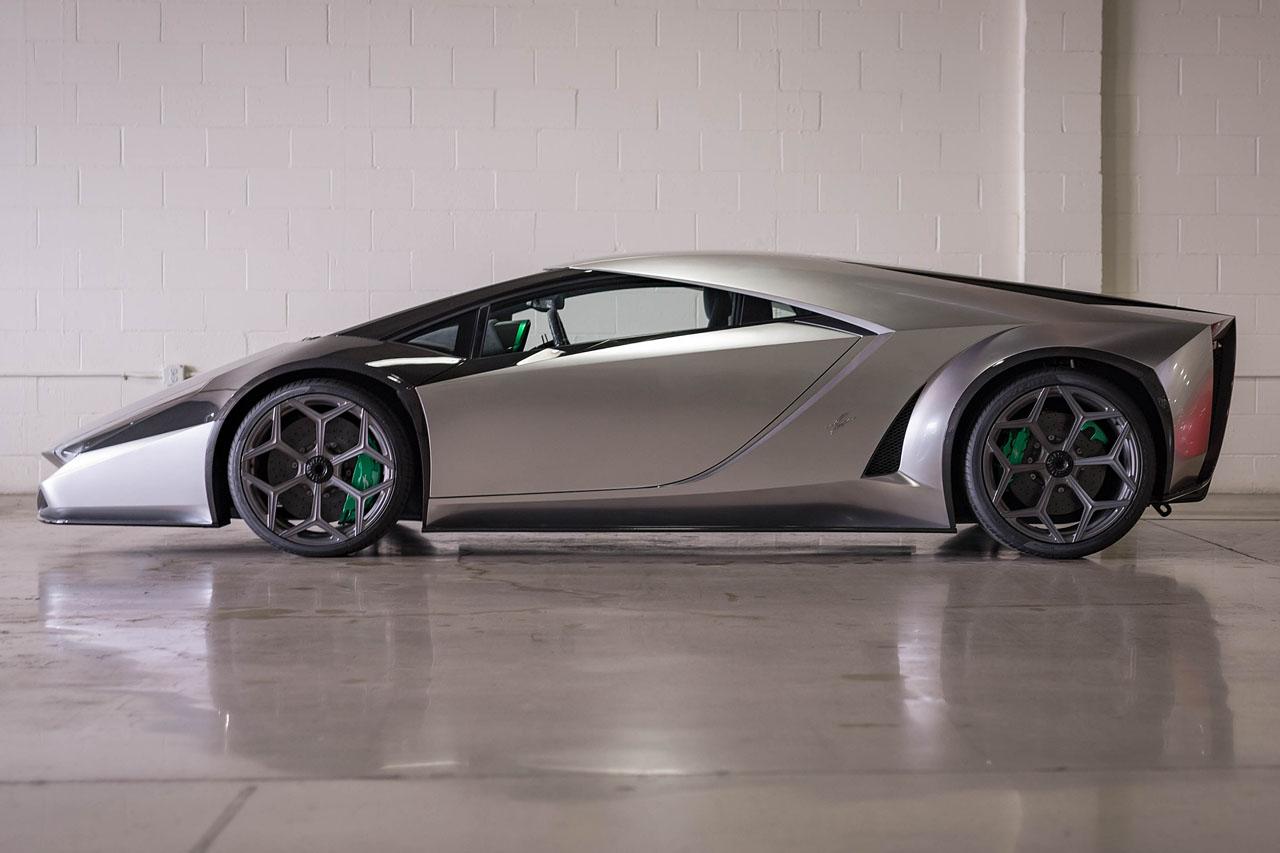
The Kode 0’s aggressive new bodyshell was meticulously crafted using custom carbon fiber panels. Most of the body was finished in silver, but some components were deliberately left bare to showcase the intricate weave of the carbon fiber for a striking visual effect.
The front end features a low, pointed nose with a dramatic front splitter. Interestingly, the splitter is separate from the nose cone itself, but integrates into the front fenders via mandible-like extensions. This creates a sharp, blade-like appearance. Vertically mounted LED headlights sit flush with the bodywork on either side.
Along the side, the Kode 0 has a distinctive Z-shaped profile that follows the lines of the front splitter and sweeps toward the rear before slashing forward over the cabin. Exposed carbon fiber panels along the top of the front fenders aid in breaking up the lines of the car. These bare panels run into sculpted sections on the upper part of the doors, adding visual depth.
At the rear, eye-catching details abound. There are two large grilles with bright “Okuyama Green” cooling fans visible behind them. A chrome central section houses quad exhaust pipes in a striking “inverse arrowhead” surround. Carbon fiber trim lines start on either side of the active rear spoiler and sweep down to form canards over the rear wheel arches. Dramatic carbon fiber rear diffuser fins flank the exhaust.
The extensive use of custom, exposed carbon fiber is made possible by the Kode 0’s bespoke bodywork. Every panel was custom-made for this one-off car, allowing Okuyama to carefully choose where to showcase the bare carbon weave for maximum visual impact alongside the sleek silver paint. Carbon fiber’s unique properties make it ideal for supercars like the Kode 0. It offers high strength and stiffness but with very low weight. By utilizing carbon fiber, Okuyama was able to create the Kode 0’s complex, aggressive surfaces while keeping the car extremely lightweight at just 3,417 lbs – 55 lbs less than the Aventador on which it’s based.
A Lamborghini Heart
Underneath its stunning bodywork, the Kode 0 is pure Lamborghini. The car is powered by the same 6.5-liter V12 engine found in the Aventador, which produces 690 horsepower and 509 lb-ft of torque. This powerplant is mated to a seven-speed automated manual transmission, which sends power to all four wheels via Lamborghini’s advanced all-wheel-drive system.
Thanks to its lightweight carbon fiber construction, the Ken Okuyama Kode 0’s aggressive new bodyshell was meticulously crafted using custom carbon fiber panels. Most of the body was finished in silver, but some components were deliberately left bare to showcase the intricate weave of the carbon fiber for a striking visual effect.Kode 0 weighs just 3,417 pounds. That’s 55 pounds lighter than a standard Aventador S, despite the Kode 0’s unique bodywork. This impressive power-to-weight ratio allows the Kode 0 to deliver blistering performance, with a top speed that is likely well in excess of 200 mph.
Talking about performance the Kode 0 can probably beat the Aventador she is based on when competing … Ken Okuyama states an overall weight of 1,550kg (against 1575 for the LP700-4) and with that wedge design, the drag could be less on the Kode 0. However, larger, center lock, NL3 Forged wheels from Novitec in 9×20 and 13×21 with Pirelli P Zero 255/30 ZR 20 and 355/25 ZR 21 might work against the Kode 0 as no engine tuning has been performed.
However, if you are asking yourself about cooling with that glass panel … take a look at the doors … on top of the doors you’ll notice a multitude of carbon fiber air intakes, and when you open the doors you’ll see a vent cut inside them to allow air into the engine compartment and probably also some on the rear disk brakes … it seems like Ken Okuyama did think this through as there are also vents next to the glass panel.
The Interior: A Blend of Luxury and Performance
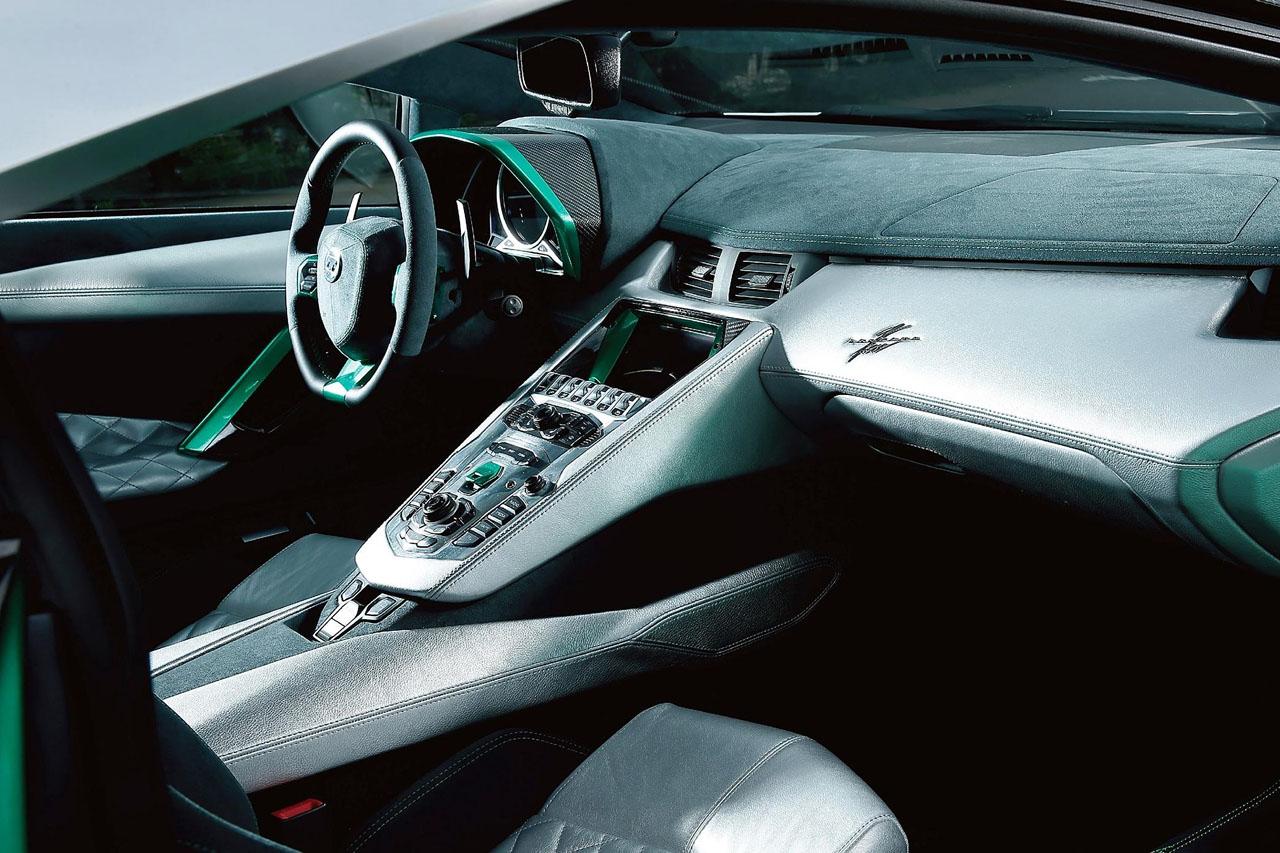
The Kode 0’s cabin seamlessly blends high-end materials and sporty design elements. The seats are upholstered in quilted silver leather with gray Alcantara inserts, providing comfort and support during spirited driving. Eye-catching metallic green stitching adds a pop of color that ties in with the car’s exterior accents. This green theme continues on the steering wheel, dashboard, and instrument binnacle, creating a cohesive look. The inner door skins and sills also feature this striking “Okuyama Green” hue, which matches the car’s distinctive rear cooling fans visible through the mesh grilles.
The polished aluminum trim on the center console adds a touch of modern elegance. The console houses controls for the car’s climate control system, infotainment, and other functions. While based on the Lamborghini Aventador’s interior layout, the Kode 0’s cabin has been thoroughly customized to give it a unique feel befitting its bespoke nature. Despite the focus on weight savings, the Kode 0 doesn’t sacrifice luxury amenities. It comes equipped with features like automatic climate control to keep occupants comfortable, as well as a premium sound system for audiophile-quality music playback.
The infotainment system is the same unit as seen on the Aventador featuring a large touchscreen display, navigation, smartphone integration, and more. Keyless entry and start, power windows and mirrors, and other modern conveniences are expected in a supercar of this caliber. Driver-focused elements include a flat-bottomed steering wheel for enhanced leg clearance, as well as paddle shifters for manual control of the 7-speed automated manual gearbox. Aluminum pedals add a sporty touch.
Digital instrumentation provides vital vehicle information with modern graphics. Supercars often include features like a G-force meter, lap timer, and more to enhance the driving experience.
A One-Off Creation with a Sky-High Price Tag

As a one-off creation, the Kode 0 was never intended for mass production. The car was commissioned by a private client, who reportedly paid $1.5 million for the privilege of owning this unique supercar. That figure is in addition to the cost of the donor Aventador, which would have set the buyer back several hundred thousand dollars on its own.
Despite its astronomical price tag, the Ken Okuyama Kode 0 has proven to be a hit with collectors and enthusiasts alike. The car made its public debut at the 2017 Pebble Beach Concours d’Elegance, where it received widespread acclaim for its stunning design and impeccable craftsmanship.
The Ken Okuyama Kode 0 Today
Since its debut, the Kode 0 has made several high-profile appearances, including being featured on Jay Leno’s Garage. The car has also been showcased at numerous other events, such as the 2018 Geneva Motor Show, the 2019 Goodwood Festival of Speed, and most recently, at the 2024 Pebble Beach Concours d’Elegance.
Currently, the Kode 0 remains in immaculate condition, with only 1,367 miles on the odometer. The car was previously offered for sale by a Japanese dealership called TPE Ltd, with an asking price of $1.34 million. Although this figure may appear steep, it is a relatively small price to pay for the chance to own one of the most unique and stunning supercars ever created.
After thorough research, we discovered that the Kode 0 now resides in Harrogate, having been sold to a private collector by GC Motors UK.
Ken Okuyama Kode 0: Specifications

| Specifications | Measurement |
|---|---|
| Length | 4635 mm |
| Width | 2125 mm |
| Height | 1135 mm |
| Wheelbase | 2700 mm |
| Front Tread | 1810 mm |
| Rear Tread | 1760 mm |
| Dry Vehicle Weight | 1550 Kg |
Ken Okuyama Kode 0 Image Gallery


