Espresso Meets Exhaust Notes at Sant’Agata Bolognese
Automobili Lamborghini and Lavazza, the Turin-based coffee company founded in 1895, formalized an exclusive partnership at Lamborghini’s headquarters in Sant’Agata Bolognese in June 2024. The deal places Lavazza coffee at Lamborghini events worldwide, inside the Automobili Lamborghini Museum, and in a dedicated break area for the company’s own employees.
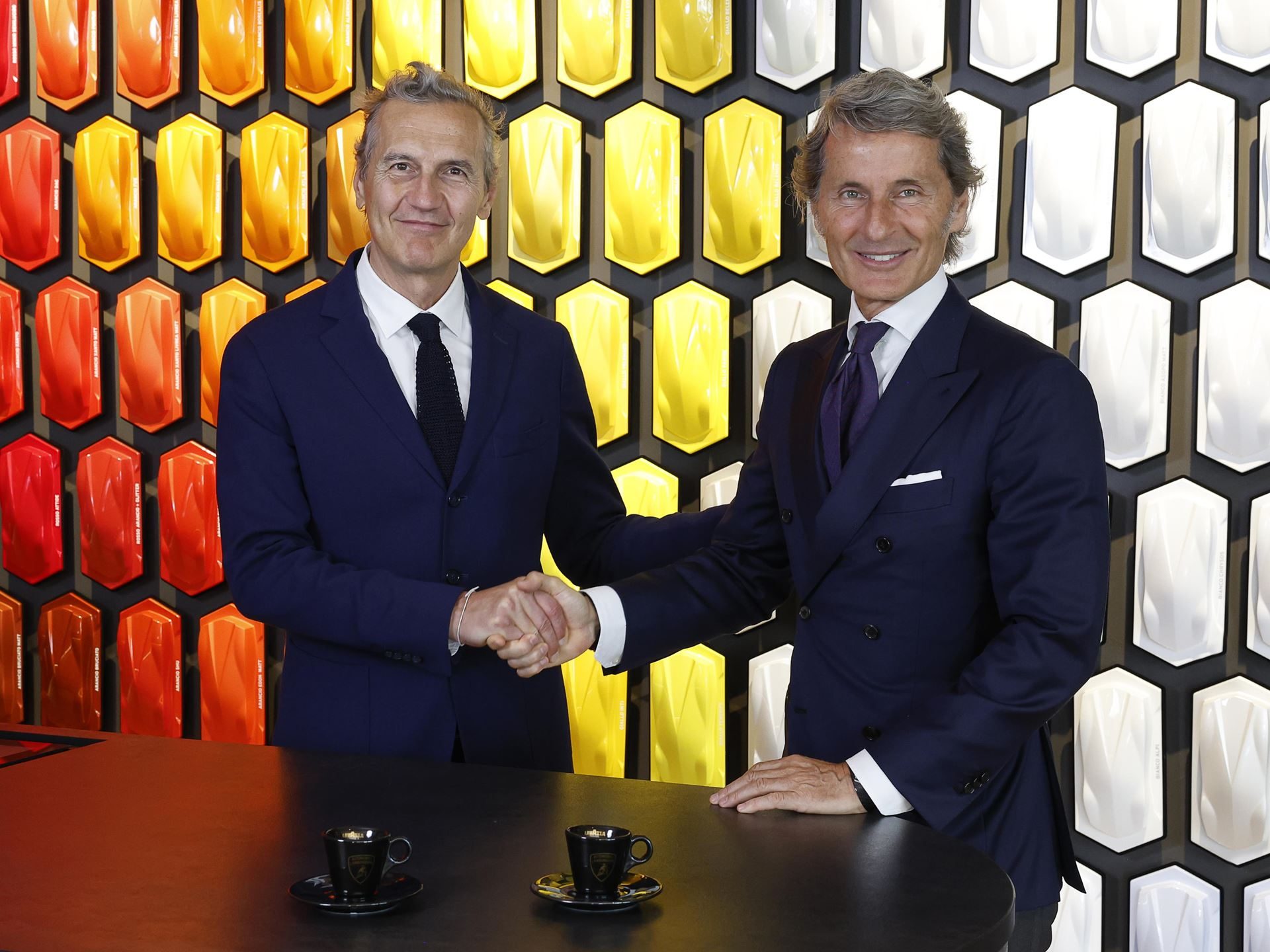
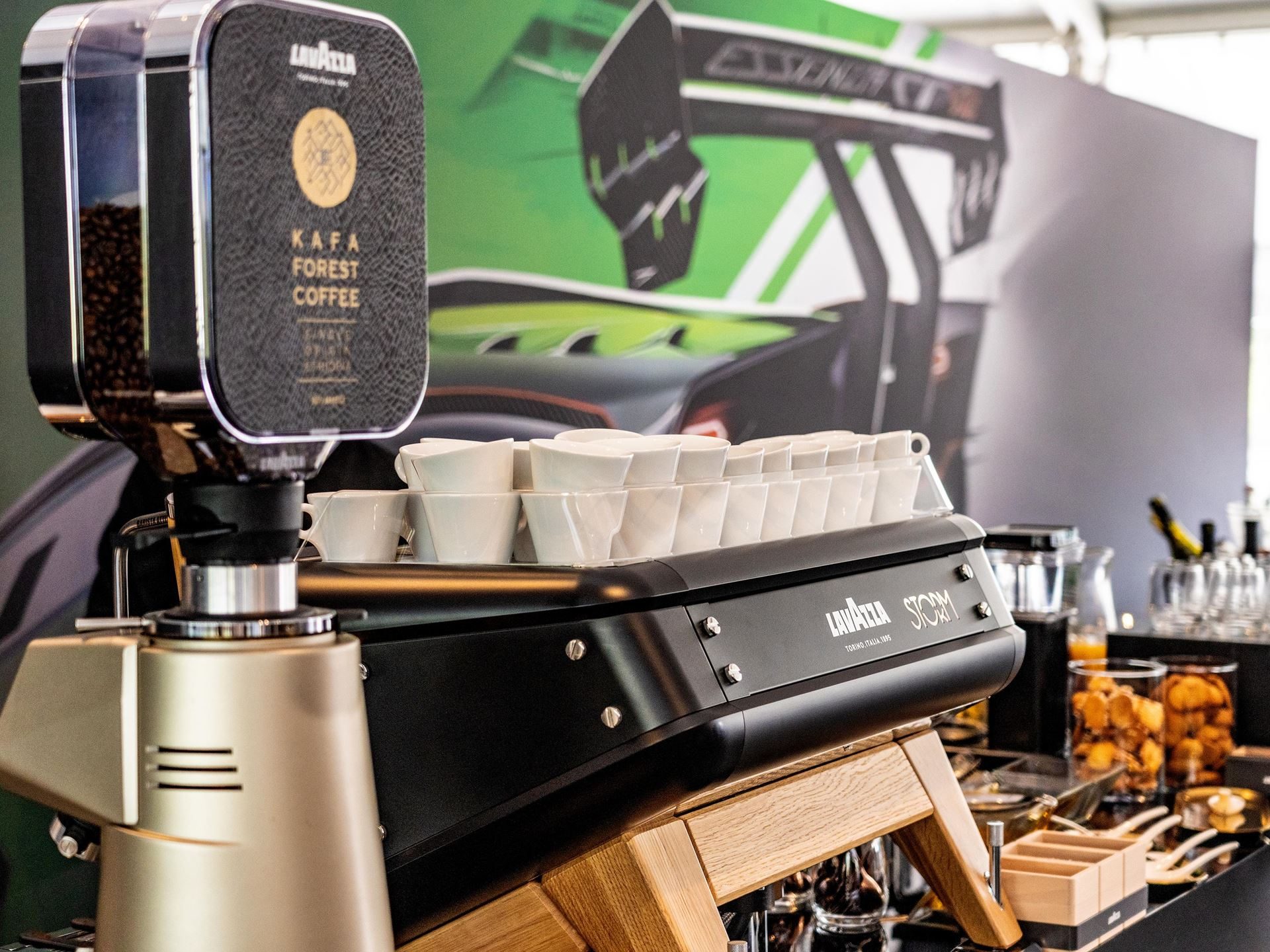
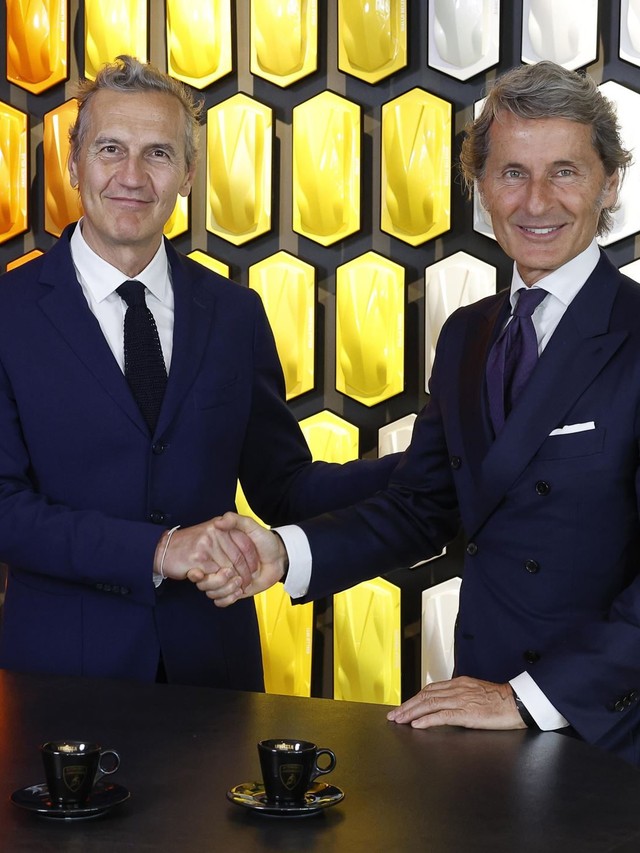
A supercar manufacturer teaming up with a coffee roaster sounds like the kind of marketing synergy that generates a nice photo opportunity and little else. The official imagery certainly delivers on that front: Lamborghini-branded espresso cups arranged on tables, a Lavazza machine stationed near a Lamborghini racing graphic, and a handshake sealed in front of the paint-sample wall where customers choose their car’s color. Yet the partnership signals something more deliberate about how Lamborghini wants people to experience its brand when they are nowhere near a steering wheel. In a market where the company competes against rivals from Stuttgart, Maranello, and Woking, Italian identity is a genuine differentiator, and controlling the sensory details around the brand is one way to protect it.
Lamborghini CEO Stephan Winkelmann framed the collaboration as an opportunity to bring what he called the “Italian experience” to customers, visitors, and fans around the world. Lavazza CEO Antonio Baravalle echoed the sentiment, pointing to shared values of excellence, Italian style, and commitment to quality. The language is predictably polished, but the operational footprint is concrete: coffee at events, coffee in the museum, coffee for the workforce.

Why a Coffee Partnership Matters for a Supercar Brand
Luxury automakers sell more than metal and carbon fiber. They sell membership in a world, and every touchpoint, from the dealer lounge to the factory tour, reinforces or undermines the perception that owning one of these cars places you inside something rarefied. The Lavazza partnership reads as a calculated effort to control the quality of peripheral experiences that surround the Lamborghini brand, keeping the atmosphere unmistakably Italian even as the global audience grows.
Consider the museum. Visitors walk past Miuras, Countachs, and Revueltos, absorbing six decades of design history. The quality of the coffee they drink while doing so might seem trivial, but hospitality details accumulate. A mediocre vending-machine espresso after staring at a Sesto Elemento is a jarring tonal shift. A proper Lavazza cup, served in branded ceramic, keeps the atmosphere intact. The same logic applies at global events, where Lamborghini gathers owners, prospective buyers, and media. Every sensory detail at those gatherings contributes to whether attendees leave feeling like they touched something genuinely Italian or merely attended a corporate function with expensive cars parked outside.
Extending Lavazza access to Lamborghini’s own employees is a subtler but interesting move. It signals internally that the company takes its “Italian excellence” positioning seriously enough to invest in it at the break-room level, not just the customer-facing one. Whether that translates into measurable morale or retention benefits is impossible to say, but the gesture aligns the internal culture with the external brand promise.
Lamborghini traces its founding to 1963 in Sant’Agata Bolognese. Lavazza predates it by nearly seven decades. Both companies lean heavily on their Italian heritage as a differentiator, and both operate globally while keeping their identities rooted in specific Italian cities. The partnership packages that shared narrative into something visitors and event attendees can literally taste.

How Lamborghini’s Approach Compares to Rivals
Luxury automotive brand extensions are nothing new, but the strategies vary enormously, and the Lavazza deal reveals where Lamborghini wants to sit on that spectrum. Ferrari operates what amounts to a lifestyle empire: fashion lines, restaurants, a theme park in Abu Dhabi, and licensing deals that put the prancing horse on everything from sunglasses to laptop cases. Porsche took a different route with Porsche Design, building a standalone product company that sells watches, luggage, and electronics under tight design control. Both approaches generate revenue and brand visibility, but they also carry risk. Stretch too far and the badge loses its exclusivity. Stay too conservative and you cede lifestyle territory to competitors who are happy to fill it.
Lamborghini’s partnership occupies a more restrained position. Rather than launching a consumer product line or licensing the shield for retail goods, the collaboration focuses on enhancing experiences that already exist: events Lamborghini already hosts, a museum Lamborghini already operates, a headquarters Lamborghini already staffs. The coffee becomes an ingredient in the existing recipe rather than a new dish entirely.
That restraint carries less commercial ambition but also less dilution risk. Nobody will confuse a Lavazza cup at a Lamborghini event with a mass-market licensing play. The brand stays anchored to its core activities while quietly upgrading the sensory environment around them. For a company that delivered more than 10,000 vehicles in 2023 and continues to expand its global footprint, maintaining that sense of exclusivity at every customer interaction becomes harder, not easier. Partnerships like this one are one way to keep the atmosphere tight even as the audience grows.
Lamborghini itself is no stranger to collaborations outside the automotive world. The Tecnomar for Lamborghini 63 yacht, covered extensively by outlets including Car and Driver, demonstrated the company’s willingness to extend its design language into marine luxury. Fashion collaborations and even a streaming app, Lamborghini TV, as reported by Road & Track, show a brand that experiments with lifestyle touchpoints while keeping the core product, the car, at the center of gravity. The Lavazza partnership fits neatly into that pattern: adjacent, complementary, and deliberately Italian.

What Owners and Enthusiasts Actually Get
For anyone who owns a Lamborghini or attends brand events regularly, the practical impact is straightforward: better coffee at gatherings you already attend. Lamborghini says Lavazza will participate in events both in Italy and internationally, which suggests the partnership extends to major owner experiences, regional launches, and track days. Museum integration means anyone visiting Sant’Agata Bolognese, whether on a factory tour or a pilgrimage to see the heritage collection, encounters the collaboration firsthand.
For prospective buyers, the signal is more atmospheric than transactional. Walking into a Lamborghini-hosted environment and finding a curated Italian coffee experience reinforces the idea that this company sweats the details beyond the car itself. It is the automotive equivalent of a luxury hotel choosing its lobby scent carefully. You may not consciously register it, but the cumulative effect shapes how premium the experience feels, and that cumulative effect is precisely how Lamborghini protects its Italian identity across an expanding global footprint.
Several questions remain unanswered. Lamborghini has not disclosed the duration of the partnership, whether co-branded retail products will follow, or which specific events will feature Lavazza first. The announcement also does not clarify whether the museum coffee offering launched immediately or will roll out over time. For now, the confirmed scope is events, museum, and employee areas, a focused footprint that avoids overcommitting before the collaboration proves its value.
One thing worth noting for anyone who follows Lamborghini’s brand moves closely: the company tends to start partnerships with a modest public footprint and then expand them if the fit works. The Tecnomar yacht collaboration began as a single model and grew into a larger vessel. If the Lavazza relationship follows that trajectory, expect the coffee to show up in more places over time, potentially including dealer lounges or owner-exclusive merchandise. Lamborghini has not announced any of that, but the pattern is consistent.

Italian Identity as a Competitive Asset
Lamborghini’s current range, the Huracán, Urus, and Revuelto, spans naturally aspirated V10 fury, super-SUV versatility, and hybrid V12 technology. The cars themselves make the engineering argument. Partnerships like the Lavazza deal make the cultural one, and in the long run, the cultural argument may prove just as important to the brand’s staying power.
German rivals sell precision. British rivals sell bespoke tailoring. Lamborghini sells drama, emotion, and a particular strain of Italian confidence that extends from the way its cars look to the way its events feel. Pairing with a 129-year-old Italian coffee institution reinforces that identity at a sensory level no spec sheet can replicate. It is a small gesture with a clear strategic purpose: as Lamborghini’s global presence expands, every curated detail that ties the experience back to Italy makes the brand harder to imitate.
The practical takeaway is this: if you are spending time in Lamborghini’s orbit, whether at an event, in the museum, or even working at the factory, the company wants every detail to feel intentionally, unapologetically Italian. The Lavazza partnership will not make your Revuelto faster or your Urus more practical. But it might make the next owners’ dinner feel a little more like Sant’Agata Bolognese, even if it takes place in Dubai or Miami.

Gallery