Sixty Years Old, and More People Drive It Now Than Ever
Most cars that turn 60 exist only in museums, private collections, and the fading memories of concours regulars. The Lamborghini Miura occupies a different category entirely. For its 60th anniversary in 2026, Lamborghini is not simply staging the usual heritage retrospective. The company is drawing attention to something genuinely unusual: the Miura is driven more often today, by more people, than at any point in its six decades of existence. The catch is that almost none of those drivers will ever touch a real one.
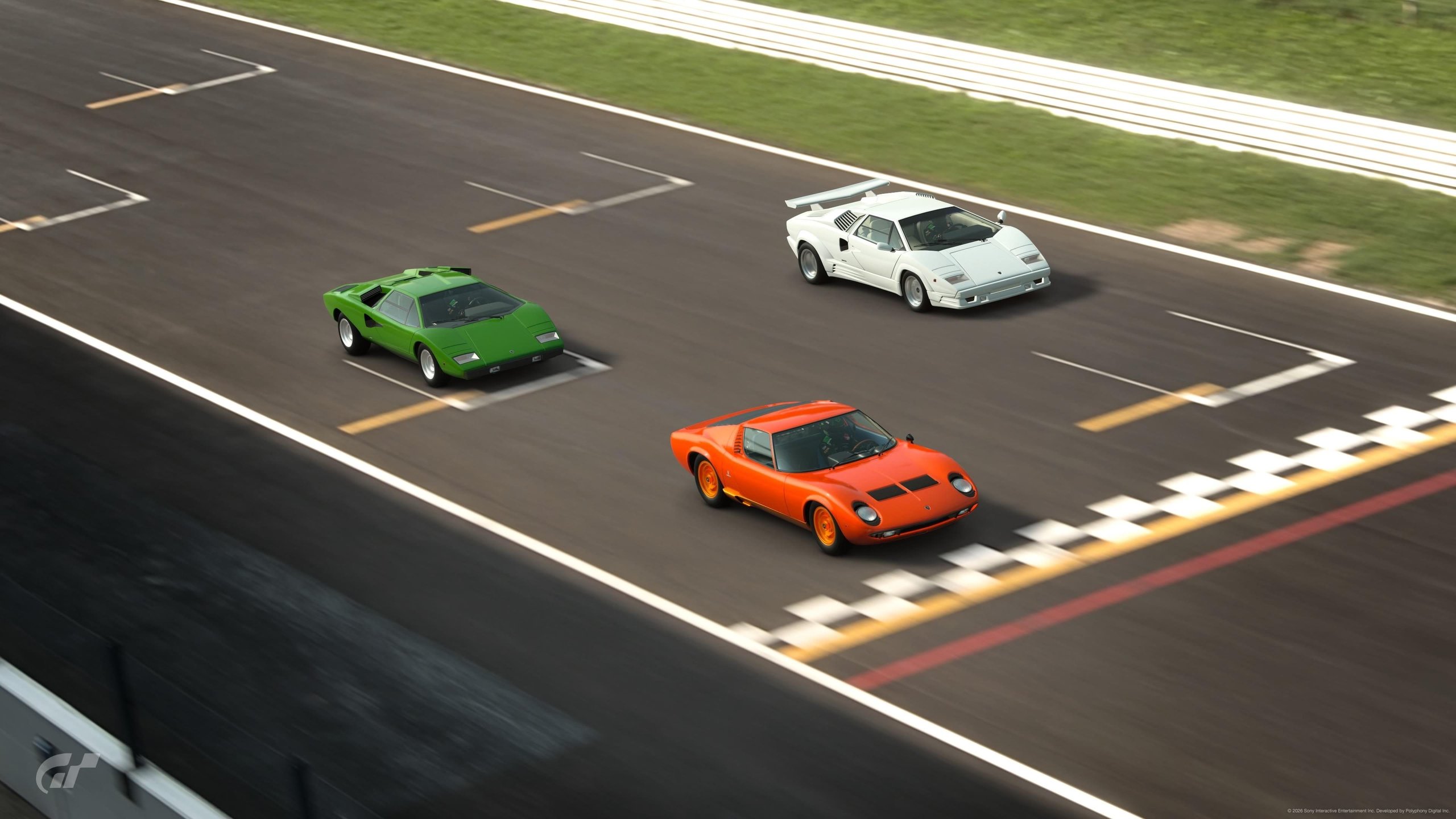
Gaming sits at the center of this anniversary message. Titles spanning the Forza series, Gran Turismo, Assetto Corsa, the Asphalt franchise, The Crew 2, The Crew Motorfest, and the entire CSR Racing lineup all feature the car. According to Lamborghini, this virtual footprint reinforces the Miura’s value and cements its heritage in collective memory. That framing reveals something important about how Lamborghini thinks about brand building in 2026, and it says even more about why the Miura specifically, among all vintage supercars, translates so well to a screen.
For anyone who grew up unlocking a Miura SV in Gran Turismo or drifting a P400 through Edinburgh in Forza Horizon, the car occupies a mental category that no amount of auction-house reporting can replicate. Lamborghini seems to understand this, and the anniversary messaging leans into it deliberately.

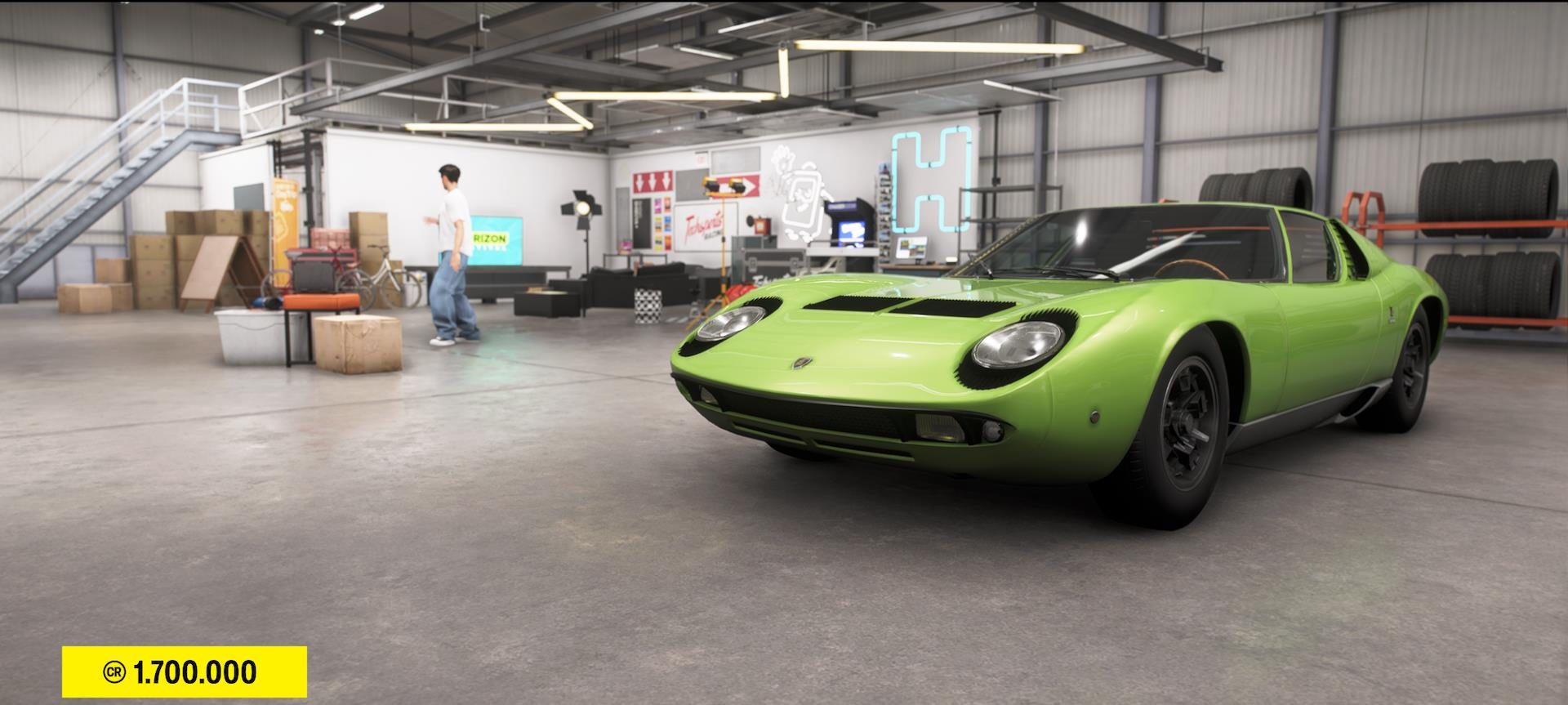
A stunning magenta Lamborghini Miura is showcased in a modern virtual showroom, priced at 1,000,000 credits. Image: Automobili Lamborghini.
Geneva 1966: The Car That Invented Its Own Category
To understand why the Miura works so well as a digital icon, you need to understand why it worked so well as a physical one. The car debuted on March 10, 1966, at the Geneva Motor Show, and the automotive world genuinely did not know what to do with it. Ferruccio Lamborghini‘s company was still young, focused on refined grand tourers meant to compete with Ferrari on comfort rather than outright speed. The Miura was a mutiny from within.
A trio of young engineers, Gian Paolo Dallara, Paolo Stanzani, and Bob Wallace, developed a mid-engine chassis layout inspired by racing prototypes. The transversely mounted 3.9-liter V12, sitting behind the cockpit, was a layout no production road car had attempted. One source notes that Marcello Gandini, the Bertone designer who penned the body, was just 27 years old when he created what many still consider the most beautiful car ever built. The result looked like nothing on the road and performed like nothing available to civilians.
The P400 SV, the ultimate evolution, produced up to 385 hp and could exceed 290 km/h. Only 763 Miuras were built across all variants between 1966 and 1973. That scarcity, combined with the car’s cinematic presence (it famously opened The Italian Job in 1969), turned the Miura into something more than a collector car. It became a cultural object, recognized even by people who could not name another Lamborghini model. And that cultural weight is precisely what makes it so potent in a gaming context: a car that already lives in the popular imagination requires no introduction when it appears on a loading screen.

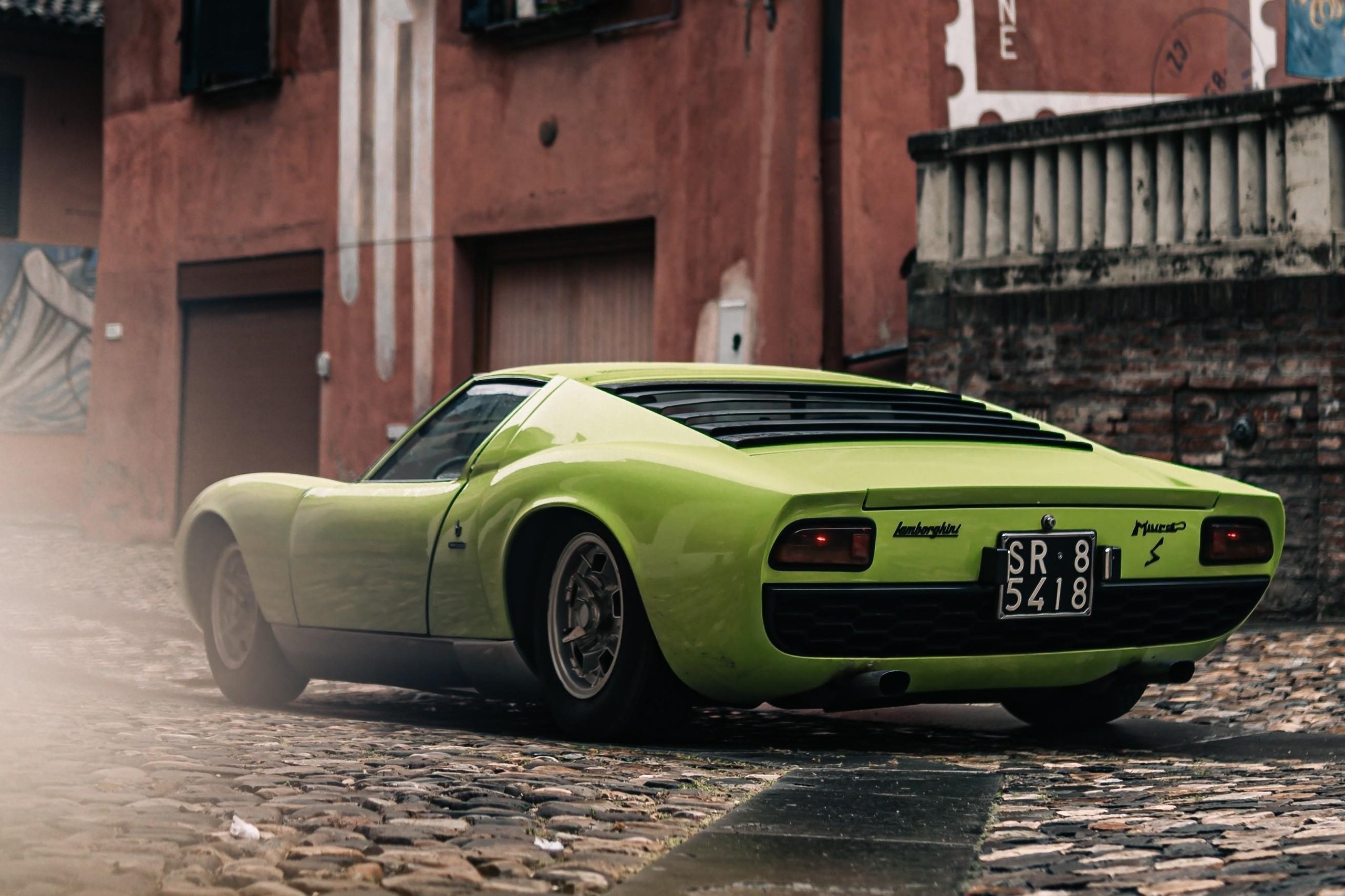
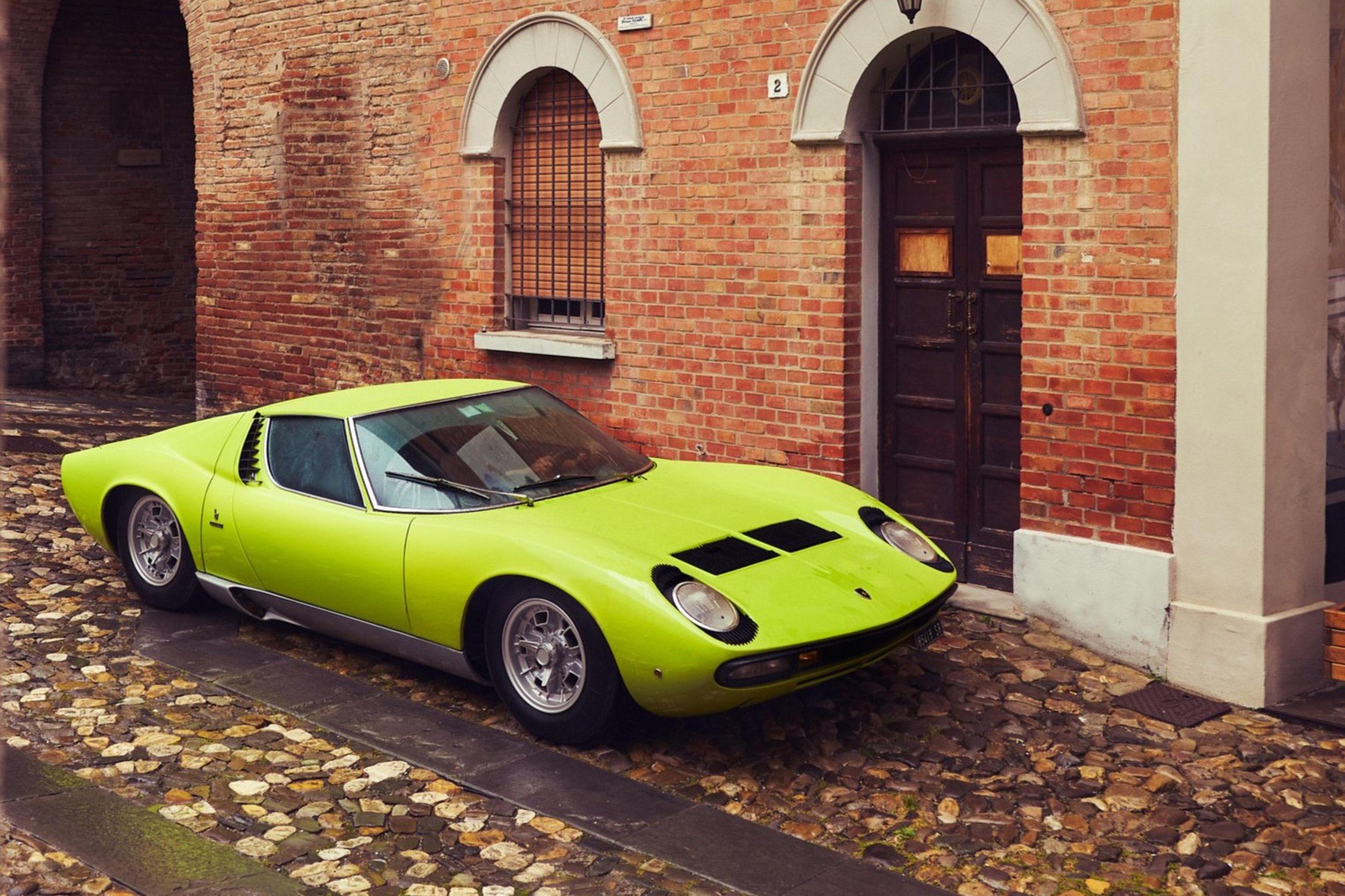
A stunning lime green Lamborghini Miura P400 sits on a wet cobblestone street in a charming European alley. Image: Automobili Lamborghini.
The Virtual Garage: Where the Miura Actually Lives Now
Lamborghini confirms that multiple Miura variants populate these game worlds: the original P400, the Miura S (produced between 1968 and 1971), the Miura SV (which the company describes as the most sought-after production classic Lamborghini on the market), and even the Miura Concept, a show car built to celebrate the model’s 40th anniversary. That range matters. A player in Forza Motorsport can experience the raw original, step into the refined SV, then see what a modern reinterpretation might look like, all within a single game session.
The breadth of titles is equally telling. Sim-racing purists get Assetto Corsa’s physics-driven interpretation. Casual players encounter the car in Asphalt Legends Unite or CSR Racing on their phones. Gran Turismo and Forza split the difference between accessibility and simulation depth. The Miura is not confined to a single gaming demographic; it spans the entire spectrum, from mobile time-killers to serious sim rigs with direct-drive wheels.
Visual distinctiveness explains why the Miura holds this ground so effectively. Those Gandini curves, the eyelash headlights, the rear louvers covering the V12: they read instantly at any resolution, on any screen size. The Miura is one of perhaps five cars in history that a non-enthusiast could identify from a silhouette alone. Game developers know this, which explains why the car keeps appearing in new titles decades after production ended, while other vintage exotics rotate in and out of franchise rosters.
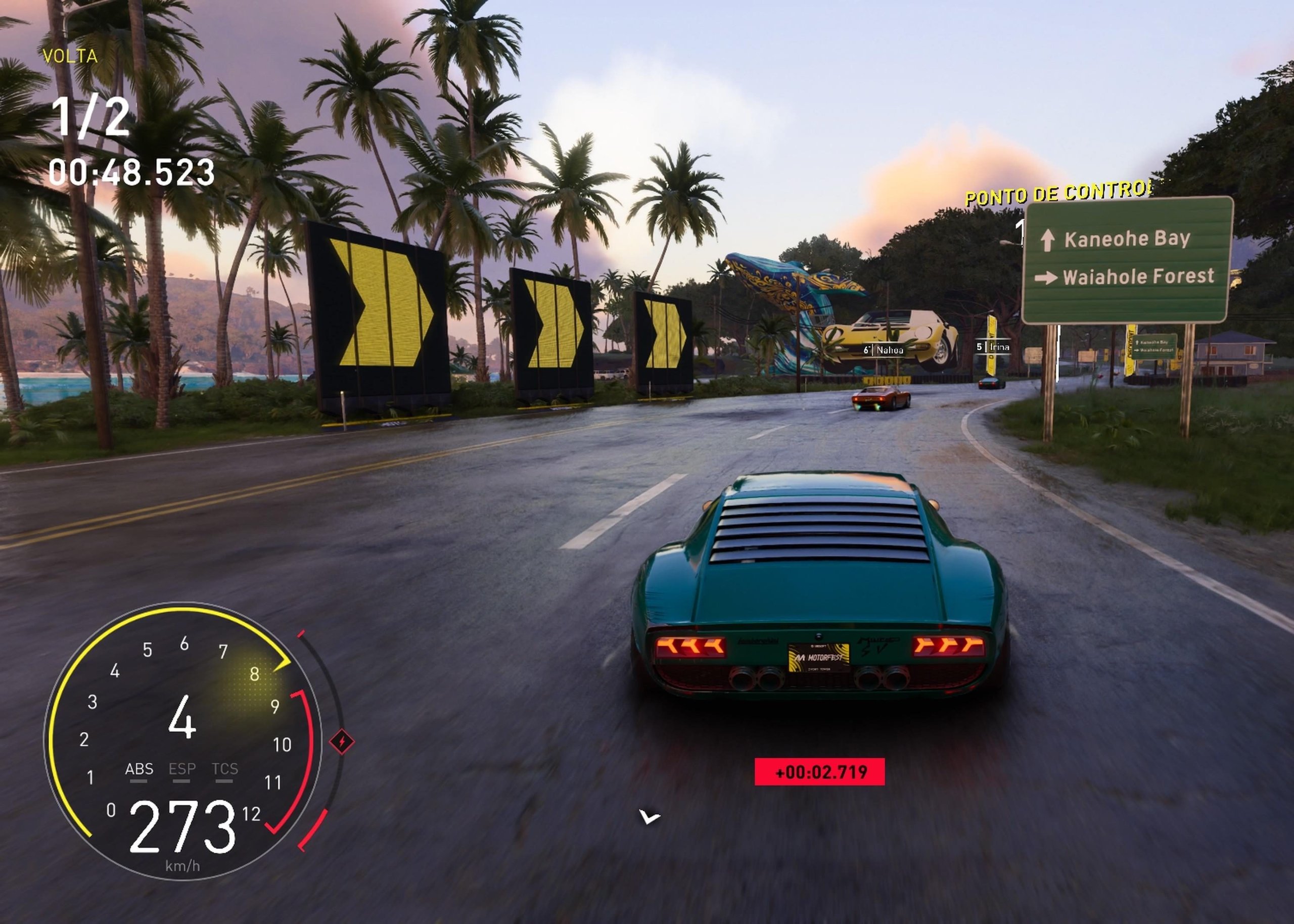
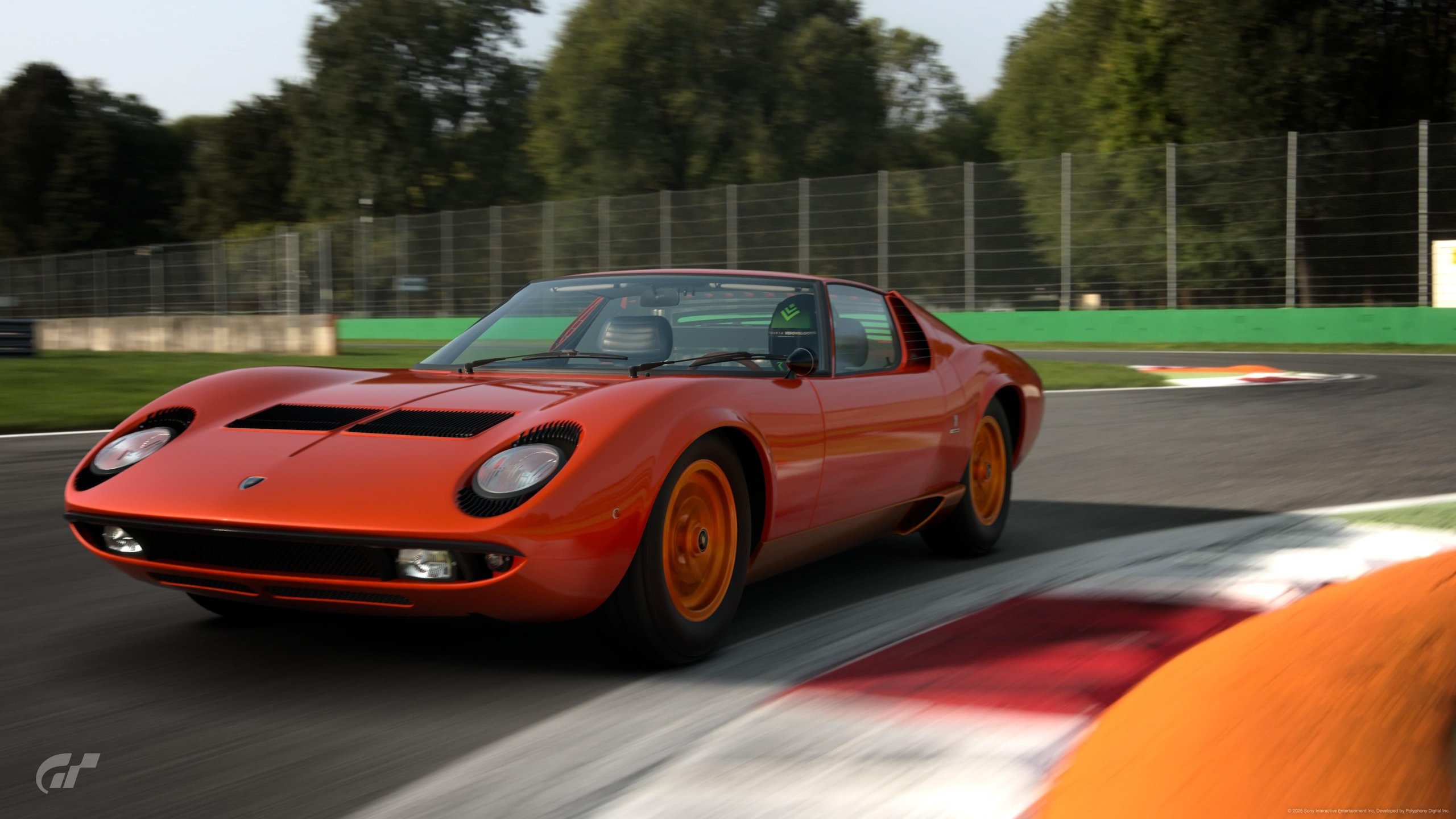
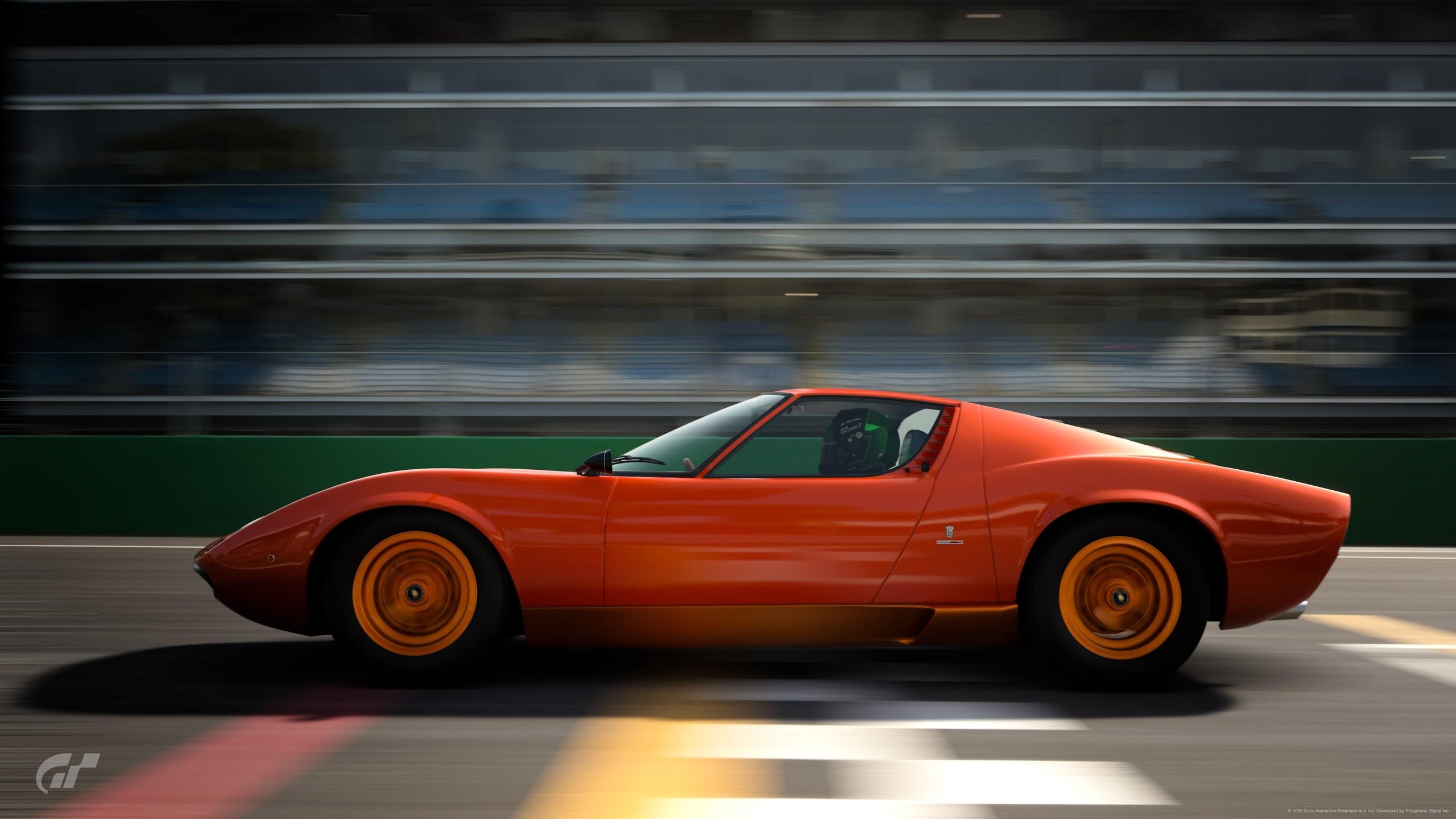
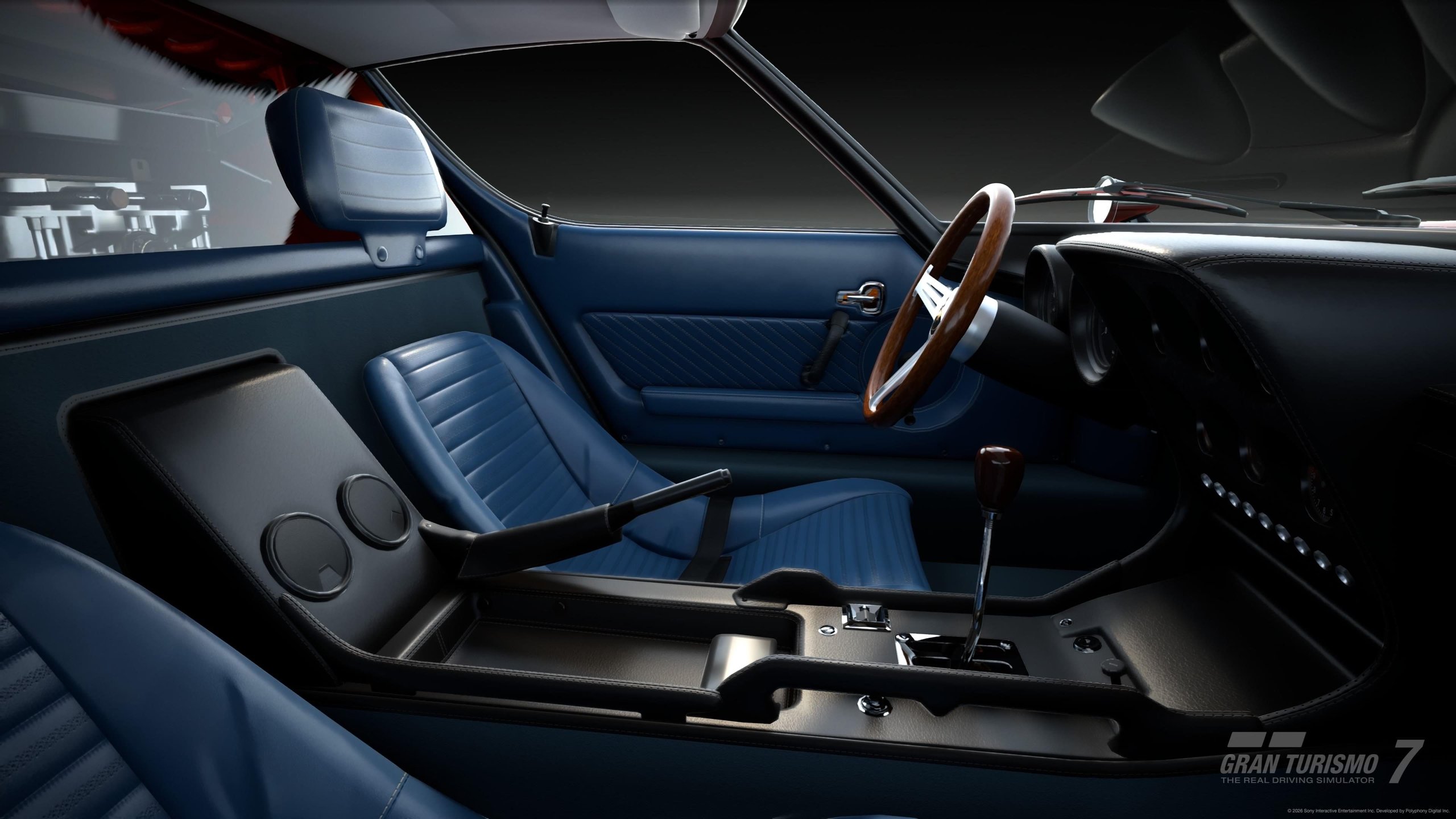
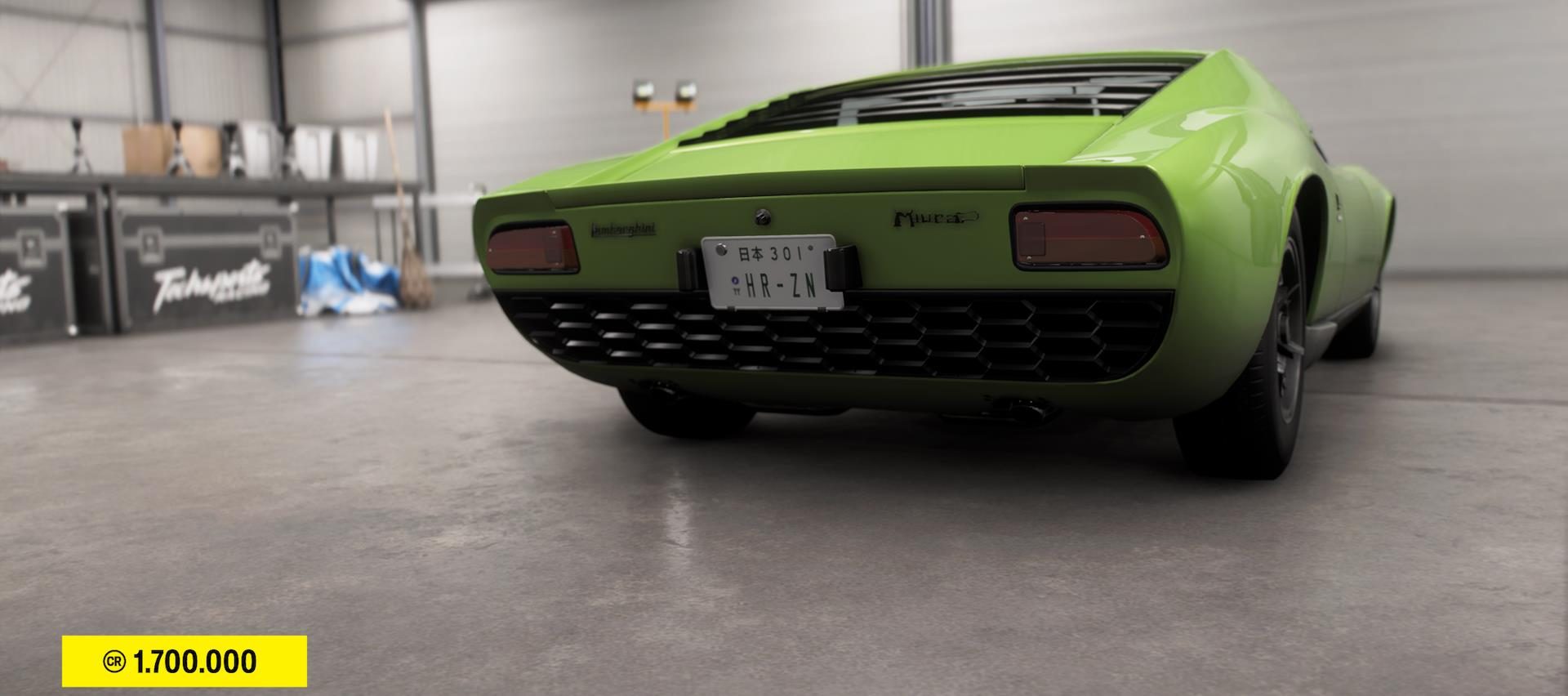
Lamborghini’s official imagery for this anniversary reinforces the point. Screenshots show the Miura rendered in virtual showrooms, competing on digital circuits, and viewed from cockpit-perspective racing angles that let players study the classic dashboard layout mid-corner. The fidelity of modern game engines means that for many enthusiasts, these digital versions represent the closest they will ever get to examining a Miura’s details up close.

Experience the thrill of racing a Lamborghini Miura P400 from the driver's seat on a vibrant track. Image: Automobili Lamborghini.
What Digital Immortality Actually Buys Lamborghini
The strategic calculation is straightforward, even if Lamborghini wraps it in heritage language. A brand whose entry-level product costs well north of $200,000 cannot rely on showroom foot traffic to build its next generation of buyers. Gaming solves a specific problem: it creates emotional attachment years, sometimes decades, before a potential customer can afford the real thing.
Enthusiasts in Reddit communities celebrating the Miura’s 60th anniversary offer a window into how this pipeline works. Members routinely describe the Miura as their dream car, their lottery-win purchase, the model that first made them care about Lamborghini. Multiple forum contributors trace that attachment directly to childhood encounters with the car in video games or scale models. The path from virtual Miura to real-world brand loyalty is not something Lamborghini invented, but the company appears to be cultivating it more deliberately than before.
Ferrari and Porsche pursue similar strategies with their heritage models in gaming. Lamborghini’s decision to make gaming a headline feature of the Miura’s 60th anniversary, rather than treating it as a footnote beneath museum exhibitions and heritage tours, signals a different emphasis. The company is not just licensing its cars to game studios; it is publicly arguing that virtual presence constitutes a meaningful form of heritage preservation.
Whether gaming exposure translates into measurable effects on the physical Miura market remains an open question. Lamborghini does not make that claim directly, and no reliable data connects game appearances to auction results. What the company does argue is that gaming allows new generations to appreciate qualities like exclusivity and craftsmanship, values that track closely with what drives collector-car demand. The implication is there, even if the company stops short of stating it outright. For current Miura owners and prospective collectors, the practical takeaway is clear: Lamborghini is actively investing in keeping the Miura’s name in circulation among audiences who will shape the collector market in 20 years. That kind of sustained cultural relevance tends to support long-term values, though the mechanism is cultural rather than mechanical.

A striking lime green Lamborghini Miura concept, featuring modern wheels, is showcased in a virtual showroom. Image: Automobili Lamborghini.
Heritage as a Living Strategy, Not a Museum Piece
Lamborghini’s broader 60th-anniversary program for the Miura extends beyond gaming. Web reports indicate the company is hosting a “Born Incomparable” exhibition at the Automobili Lamborghini Museum, running from March 2026 through January 2027, alongside a dedicated Polo Storico heritage tour through Northern Italy. Gaming sits alongside these physical celebrations rather than replacing them, but its prominence in Lamborghini’s public messaging is new.
The approach mirrors something Lamborghini does well across its current lineup: connecting past and present without treating heritage as a closed chapter. The Miura’s transverse V12 layout established a template that ran through the Countach, Diablo, Murcielago, and Aventador. The Revuelto, Lamborghini’s current V12 flagship, carries a hybrid powertrain that would have been unimaginable in 1966, but its mid-engine architecture traces a direct line back to Dallara, Stanzani, and Wallace’s original concept. Gaming extends that lineage into a medium where the car can be experienced rather than merely admired.
A teenager playing Forza Horizon who discovers the Miura P400 and then reads about its connection to the Revuelto is following exactly the path Lamborghini wants them on. The company is building a funnel, from pixels to poster to, eventually, a configurator session. Among the enthusiast community on forums like Lamborghini-Talk and FerrarChat’s Lamborghini section, the Miura inspires the kind of reverence usually reserved for race cars. Owners discuss the minutiae of serial numbers, interior trim variations, and factory air-conditioning retrofits with the intensity of archivists. The gaming audience engages with the same car through an entirely different vocabulary: lap times, livery editors, drift angles. Both groups are preserving the Miura’s legacy. Lamborghini’s anniversary messaging is the first time the company has publicly treated both forms of engagement as equally valid, and that shift in tone may prove more significant than any single celebration event.

An iconic orange Lamborghini Miura, driven by a helmeted racer, navigates a turn on the track with another Miura in pursuit. Image: Automobili Lamborghini.
Gallery