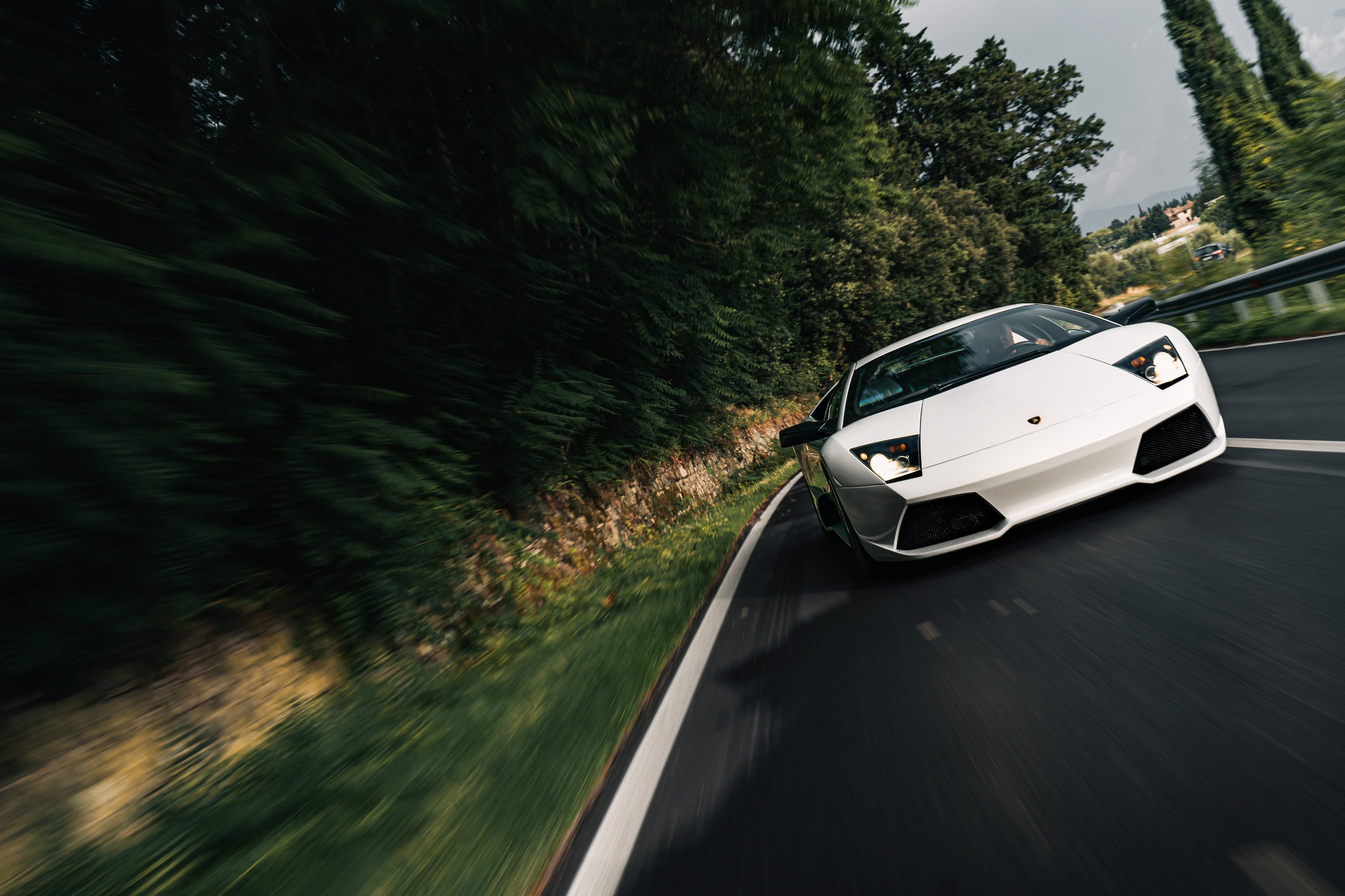
Lamborghini’s V12 Farewell Tour Puts the Murciélago Center Stage
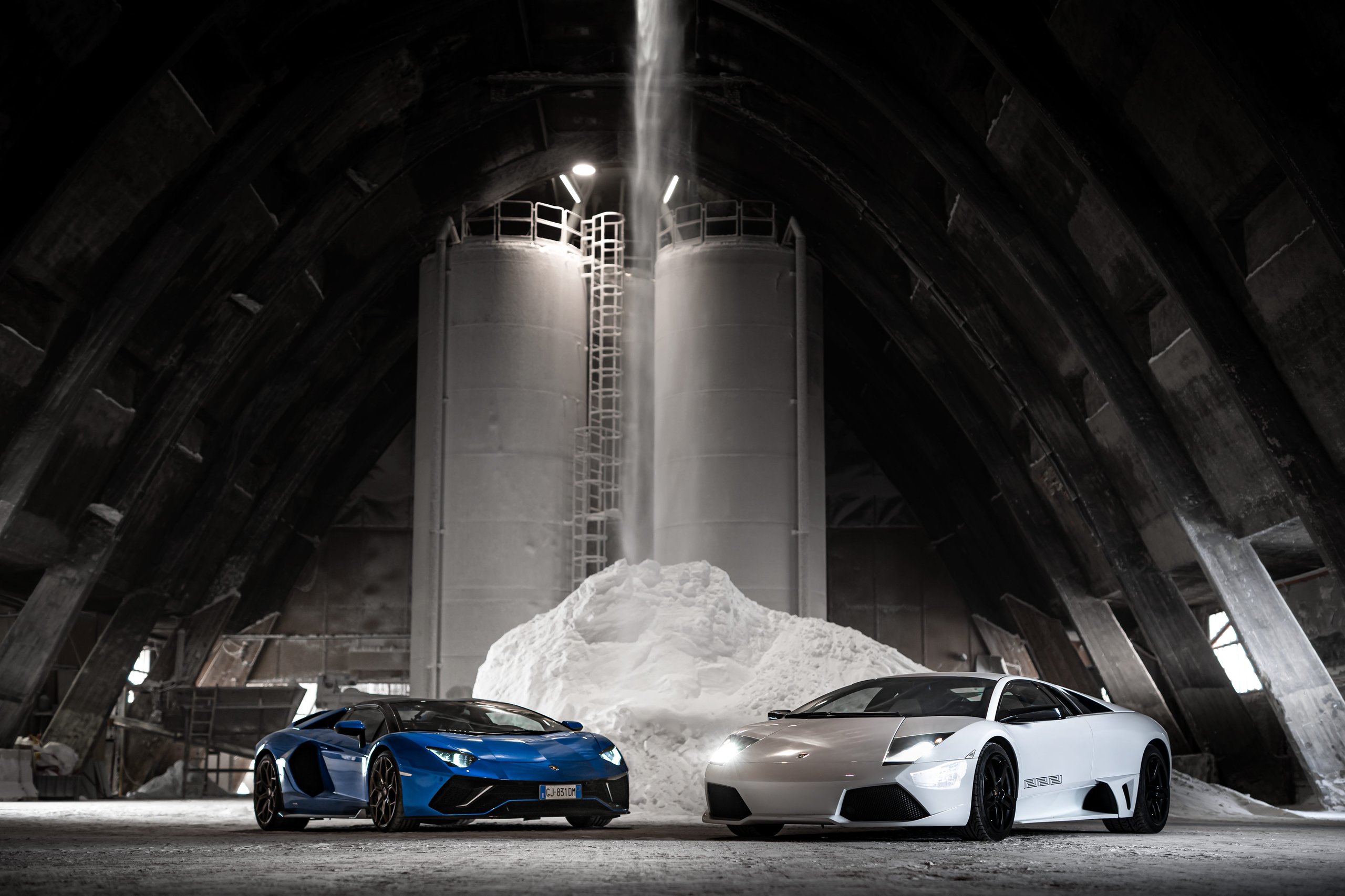
Lamborghini devoted 2022 to honoring its V12 engine before the naturally aspirated version ceased production with the final Aventador Ultimae. The company could have centered that tribute on the Aventador, the more recent and more powerful car. Instead, it singled out the Murciélago, and the reasoning cuts to the heart of what makes a Lamborghini a Lamborghini: this was the car that carried the twelve-cylinder engine from the 20th century into the 21st, and it was the last V12 flagship you could buy with a proper mechanical gearbox.
The Aventador that followed offered only a single-clutch automated unit. The Revuelto that succeeded the Aventador pairs its V12 with three electric motors. Lamborghini confirmed that the Aventador’s successor would feature a plug-in hybrid V12 powertrain, a direction that makes the Murciélago’s analog character feel increasingly distant. For collectors and driving purists, this retrospective amounts to more than corporate nostalgia. It frames the Murciélago as the last moment when Lamborghini’s ultimate expression of power came with a clutch pedal and a gated six-speed lever, a combination the brand will almost certainly never offer again.
How the Murciélago Dragged Lamborghini’s V12 Into the Modern Era
When the Murciélago debuted at the Frankfurt Motor Show in September 2001, it replaced the Diablo and became the first entirely new Lamborghini design in over a decade. It was also the first model developed fully under Audi’s ownership within the Volkswagen Group, a fact that shaped its engineering ambitions considerably.
Lamborghini says the Murciélago was the first model entirely designed using the CAD-CAM system, a shift that improved assembly tolerances and surface quality beyond what the Diablo could achieve. The design took shape within the newly established Lamborghini Centro Stile, directed by Luc Donckerwolke, who approached the project with a blank sheet for both exterior and interior. Donckerwolke kept the scissor doors, a non-negotiable piece of Lamborghini theater, while lowering the car’s total height to a mere 120 centimeters.
Beneath the bodywork, dry-sump lubrication allowed Lamborghini to mount the V12 five centimeters lower than the Diablo’s engine, improving the center of gravity and drivability in equal measure. The carbon fiber undercarriage with its mixed-structure aluminum floor panel was, according to the company, the most rigid supporting structure Lamborghini had produced to that point. A completely revised chassis, new suspension geometry, and all-wheel drive using the Diablo’s Ferguson viscous coupling differential (distributing torque up to 70 percent rear, 30 percent front) completed the mechanical picture. All of it served one purpose: giving the V12 a chassis worthy of its output, so the driver could actually exploit the engine rather than merely survive it.

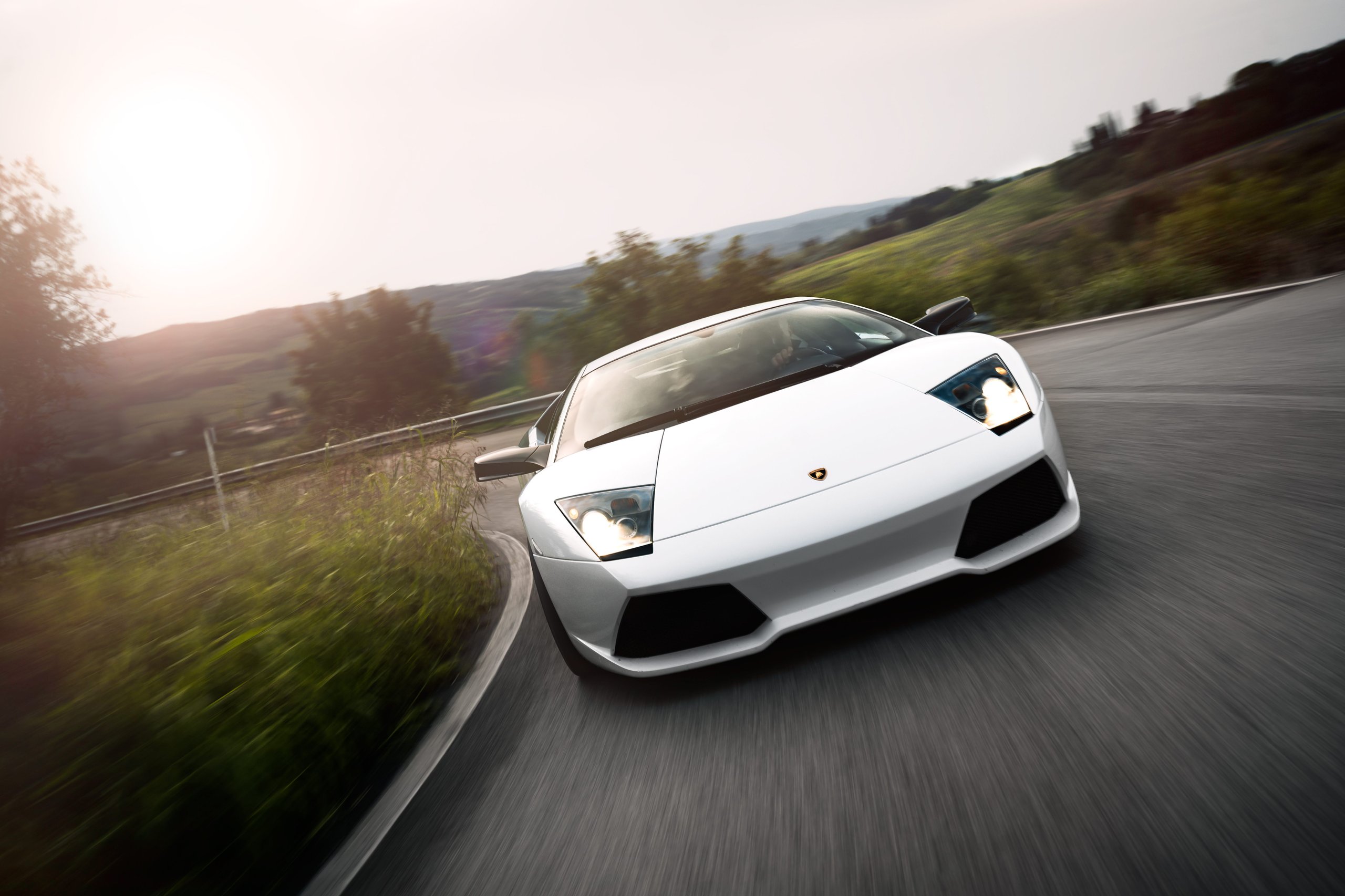
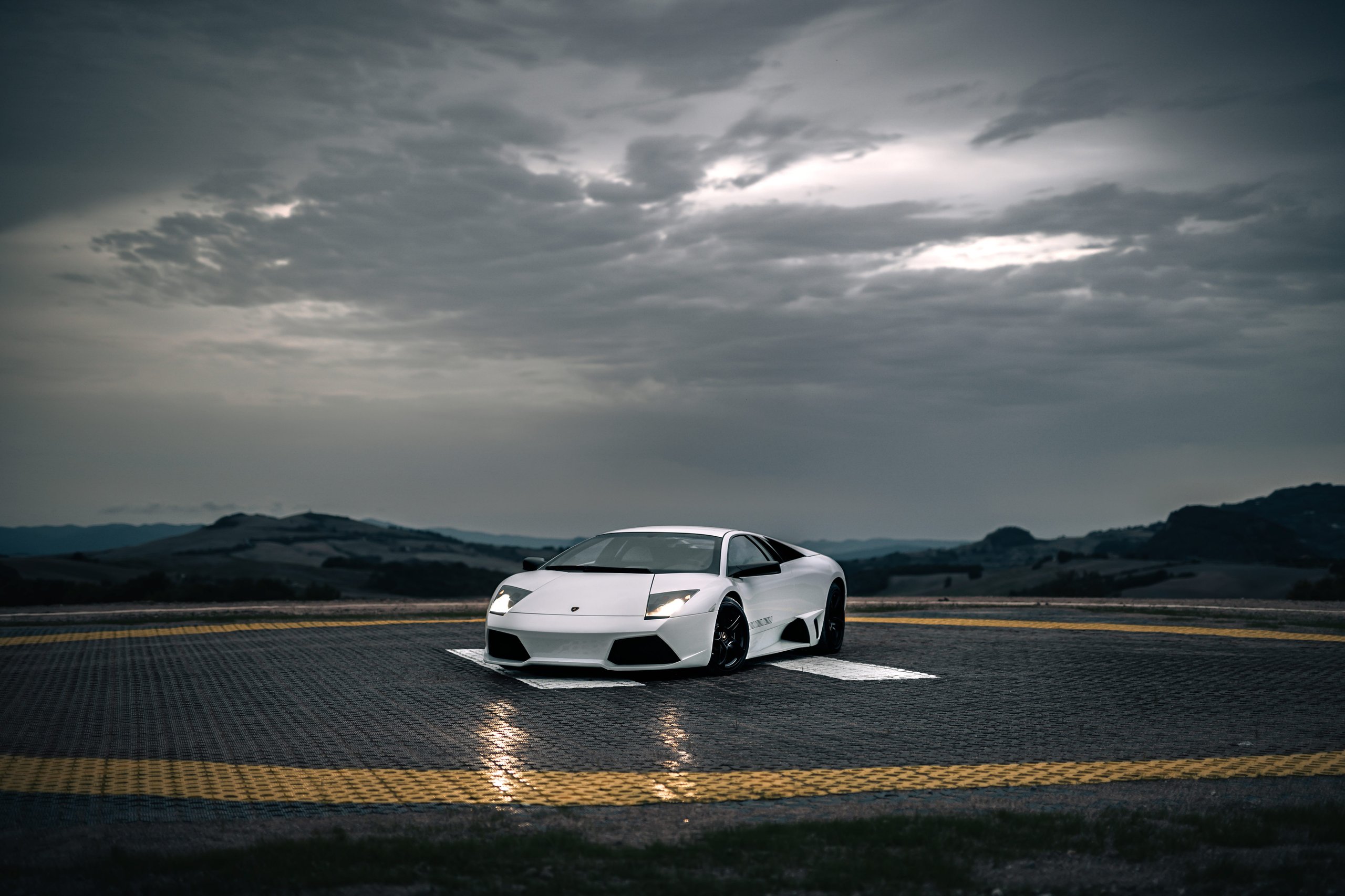
The white Murciélago makes a striking statement against the unique striped facade of a historic European building.
From 580 HP to the LP 670-4 SV: A Decade of Escalation
The original 6.2-liter V12 produced 580 HP at 7,200 rpm, enough for a claimed top speed of 330 km/h and a 0-100 km/h sprint in 3.8 seconds. Those figures arrived despite the large catalytic converters required for global emissions compliance, a constraint that forced Lamborghini’s engineers to extract power through breathing efficiency rather than simply adding displacement.
A roadster version joined the coupe in 2004. The second-generation LP 640-4, debuting in 2007, enlarged the engine to 6.5 liters and pushed output to 640 HP at 8,000 rpm. The LP 650-4 Roadster followed in 2010 with 650 HP. Then came the model collectors now chase most aggressively: the LP 670-4 SV (Super Veloce), produced between 2009 and 2010, delivering 670 HP while shedding 100 kg through extensive carbon fiber use. Its top speed climbed to 341 km/h.
Across the entire production run, 4,099 Murciélagos left Sant’Agata Bolognese. Transmission options included a six-speed manual and a six-speed e-gear automated manual with steering column paddles. The e-gear received revised software for the LP 640, but among enthusiasts, the gated manual remains the definitive choice. Multiple owners on enthusiast forums describe the manual’s engagement as deeply satisfying, with a clutch that, contrary to reputation, feels manageable rather than punishing in daily use. That tactile connection to the V12 is precisely what separates the Murciélago from every Lamborghini flagship that followed.

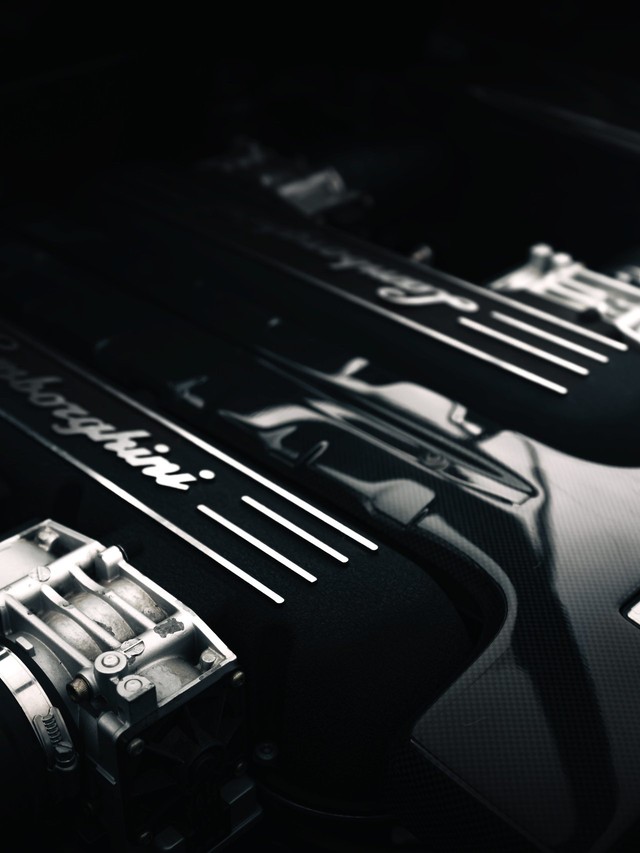
The powerful V12 engine of the Lamborghini Murciélago is elegantly showcased with its carbon fiber cover.
The Manual Gearbox: Why It Defines the Murciélago’s Collector Story
That the Murciélago was the final Lamborghini V12 offered with a mechanical transmission now dominates its collector narrative. The Aventador moved to a robotized single-clutch unit. The Revuelto uses an eight-speed dual-clutch. Neither offers a clutch pedal. For a certain kind of buyer, the Murciélago is the last stop.
Forum discussion around gated-manual Murciélagos reflects genuine emotional attachment, not just speculative market interest. Owners describe the mechanical feedback of slotting gears through the open gate as central to the car’s identity, something no paddle-shift system can replicate regardless of speed advantages. The steering, by several accounts, communicates road texture with an immediacy that later Lamborghini flagships traded for electronic assistance.
Lamborghini did not announce specific collector valuations as part of its retrospective, and the company would have no reason to. What the market signals independently, however, is clear enough: manual-equipped V12 supercars from this era, across all Italian marques, command premiums that continue to widen against their automated counterparts. One Lamborghini-Talk listing for an LP 640 with a six-speed manual and full carbon fiber interior, located in Dubai with 28,000 km, carried an asking price of $200,000. Whether that figure represents fair value or aspirational pricing depends on condition and provenance, but the direction of demand is not ambiguous.

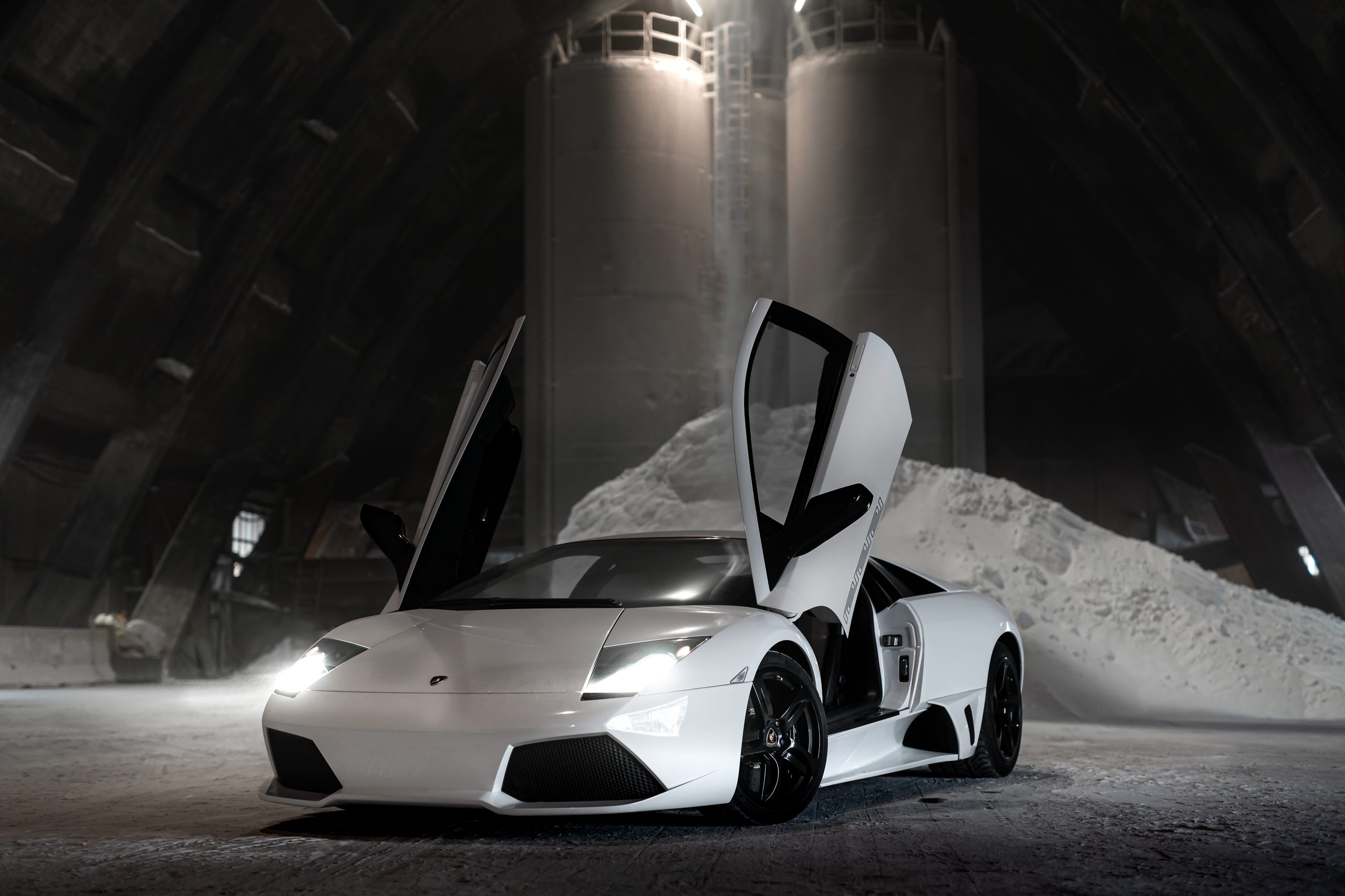
The 'Murciélago' script on the door sill highlights the luxurious and detailed interior of the supercar.
Racing, Batman, and the Murciélago’s Cultural Footprint
The Murciélago R-GT debuted on the racing circuit in 2004, developed for the GT World Championship under FIA and ACO regulations, as well as the Japanese championship. Nine cars were assembled, all converted to rear-wheel drive, stripped of weight through near-total carbon fiber construction, and fitted with larger tires and brakes. The R-GT program never achieved the sustained competitive success of Lamborghini’s later Huracan Super Trofeo and GT3 efforts, but it planted the seed for what became a serious factory motorsport commitment.
Off the track, the Murciélago became a pop culture fixture. Its most famous role was Bruce Wayne’s personal car in Batman Begins (2005), a casting choice that cemented the scissor-doored silhouette in mainstream consciousness. The car also appeared across major video game franchises including Gran Turismo 7, multiple Forza Horizon titles, and DriveClub.
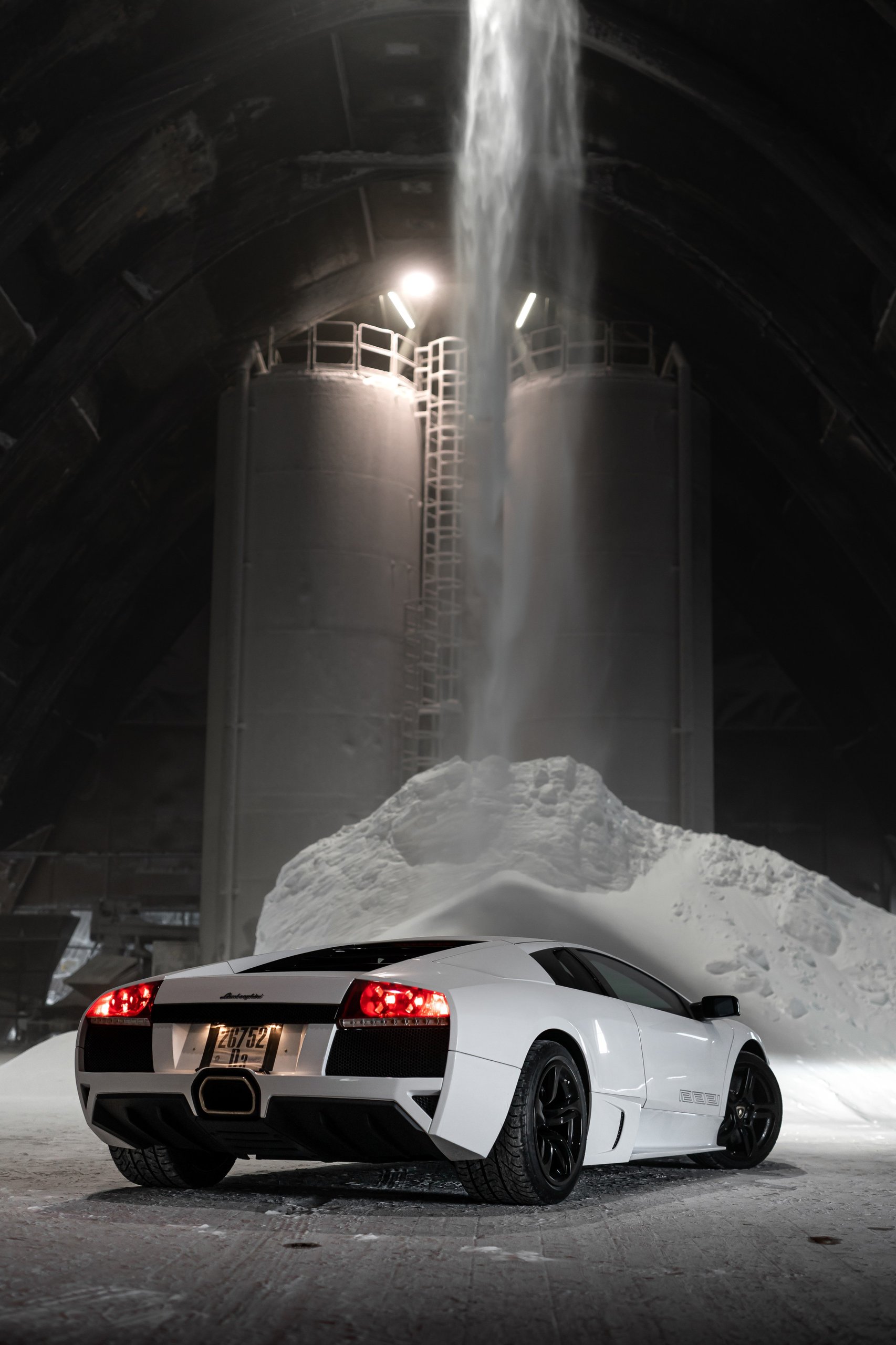
Before any of that, in February 2002, test driver Giorgio Sanna (now Head of Lamborghini Squadra Corse) took a Murciélago to the Nardo test track and covered 305.048 km in one hour, setting a speed record for a standard production car. The fastest lap averaged 325.98 km/h. Limited editions further burnished the car’s exclusivity: 50 units of the 40th Anniversary model in Verde Artemis, the LP 640 Versace collaboration in black and white with matching luggage, and just ten units of the 670-4 SV China Limited Edition. Each of these variants reinforced the same truth: the Murciélago was special enough to warrant celebration while it was still in production, not only in retrospect.

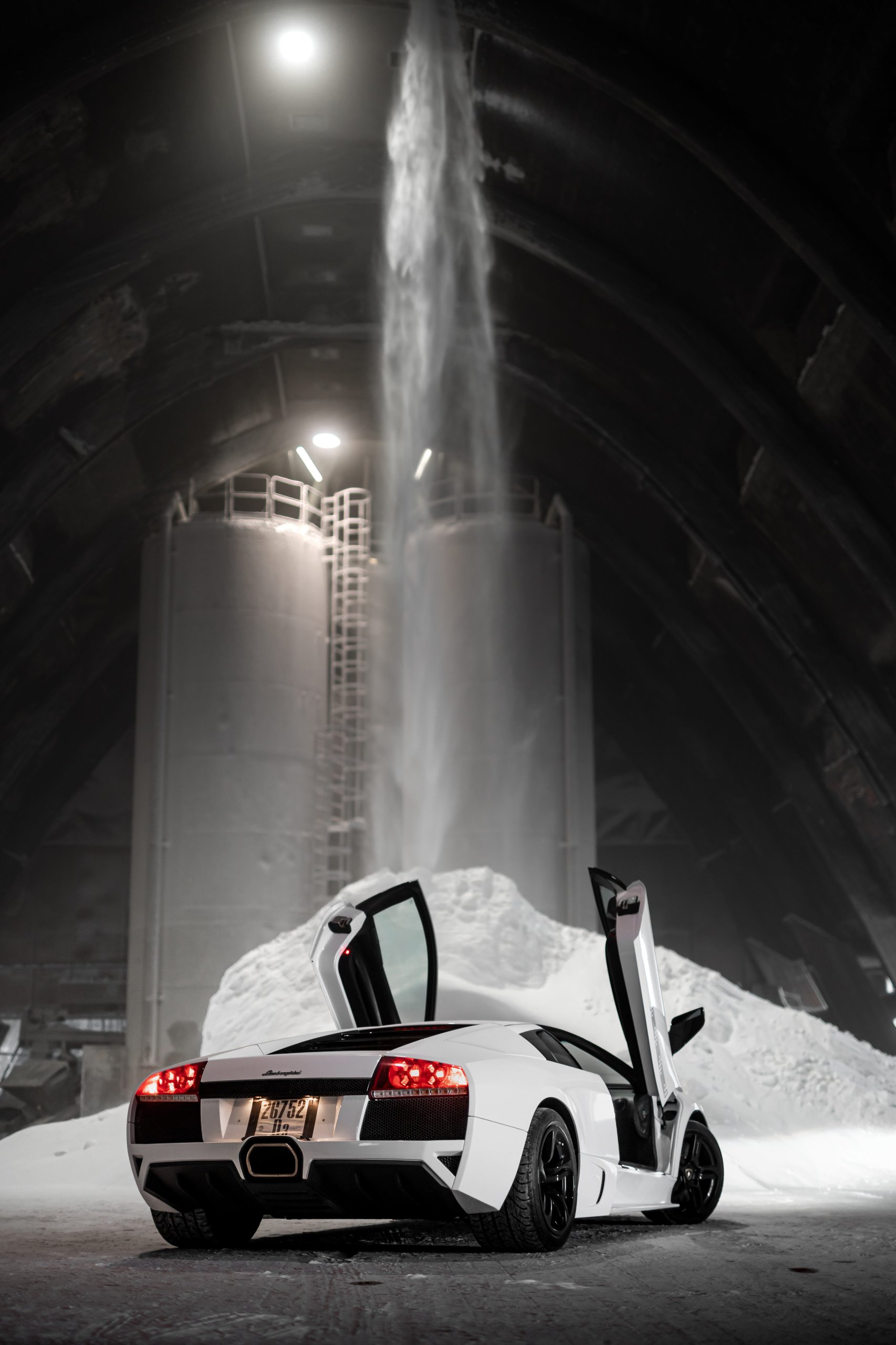
The Lamborghini Murciélago proudly displays its signature scissor doors open against a dramatic sky.
What the Murciélago’s Legacy Means for Lamborghini’s Hybrid V12 Future
The name Murciélago, Spanish for “bat,” follows Lamborghini’s tradition of drawing from bullfighting lore. Legend connects it to a bull that survived the ring and was gifted to Don Antonio Miura, though Lamborghini itself acknowledges the historical evidence for this story is thin. The mythology suits the car regardless: something fierce that refused to go down easily.
For prospective buyers considering a Murciélago today, the practical calculus is relatively simple. Manual cars command the strongest interest. The e-gear, while functional, carries long-term reliability questions that forum communities discuss extensively. The LP 670-4 SV sits at the top of the desirability hierarchy, but any well-sorted manual car from the production run occupies increasingly rare territory in the supercar market. Ferrari’s contemporary V12 offerings from the same era, the 575M Maranello and 599 GTB Fiorano, were more refined grand tourers; the Murciélago was always the wilder, more visceral alternative, and that contrast only sharpens with time.
The Revuelto now carries Lamborghini’s V12 banner with 1,015 combined horsepower and three electric motors. It is, by every measurable standard, a superior machine. But it does not offer what the Murciélago offered: a direct, unassisted, mechanically linked conversation between a naturally aspirated twelve-cylinder engine and the person holding the gear lever. That conversation ended with the Murciélago, and Lamborghini’s decision to spotlight this car during its V12 farewell year suggests the company understands exactly how much weight that carries.

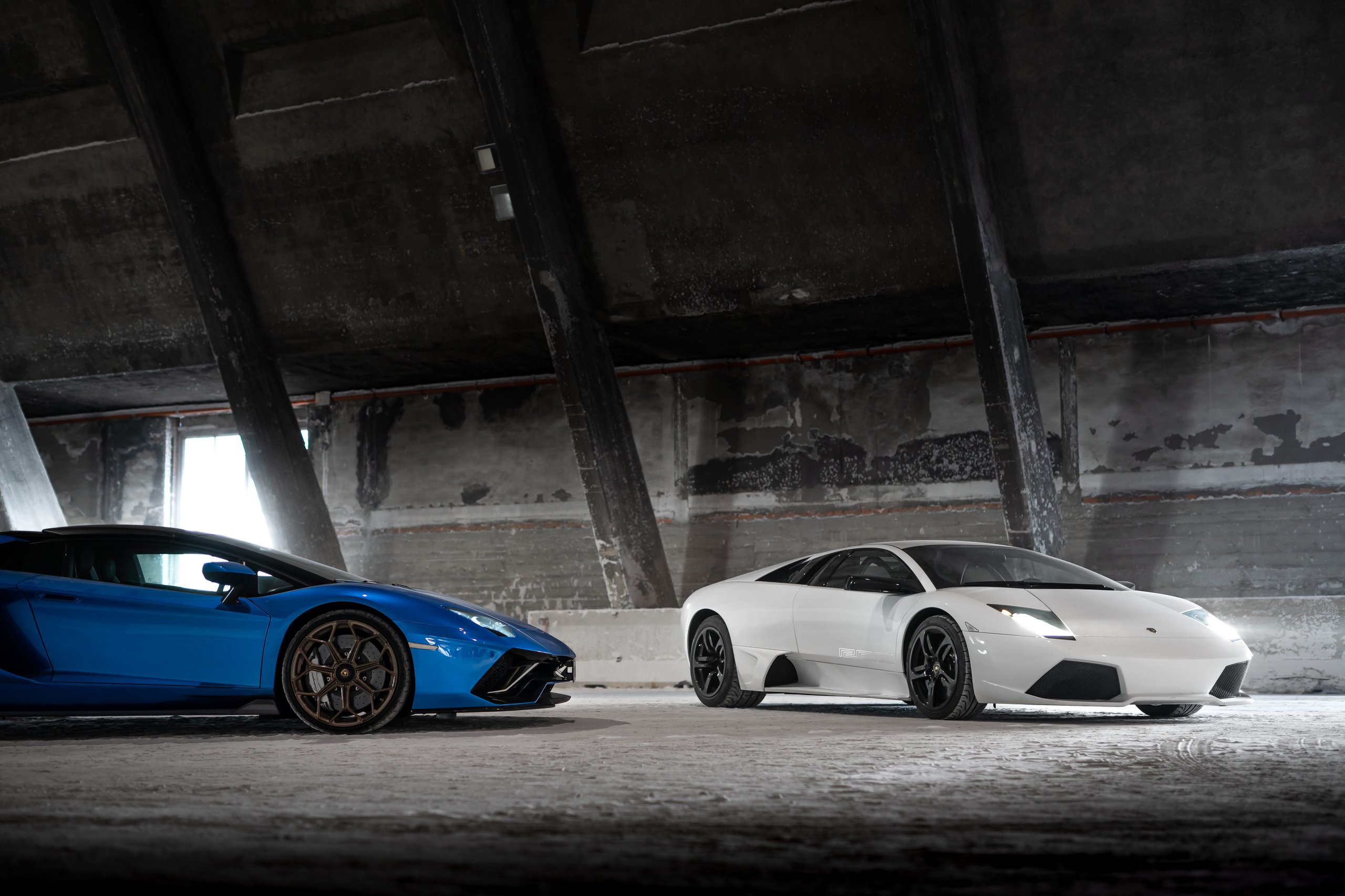
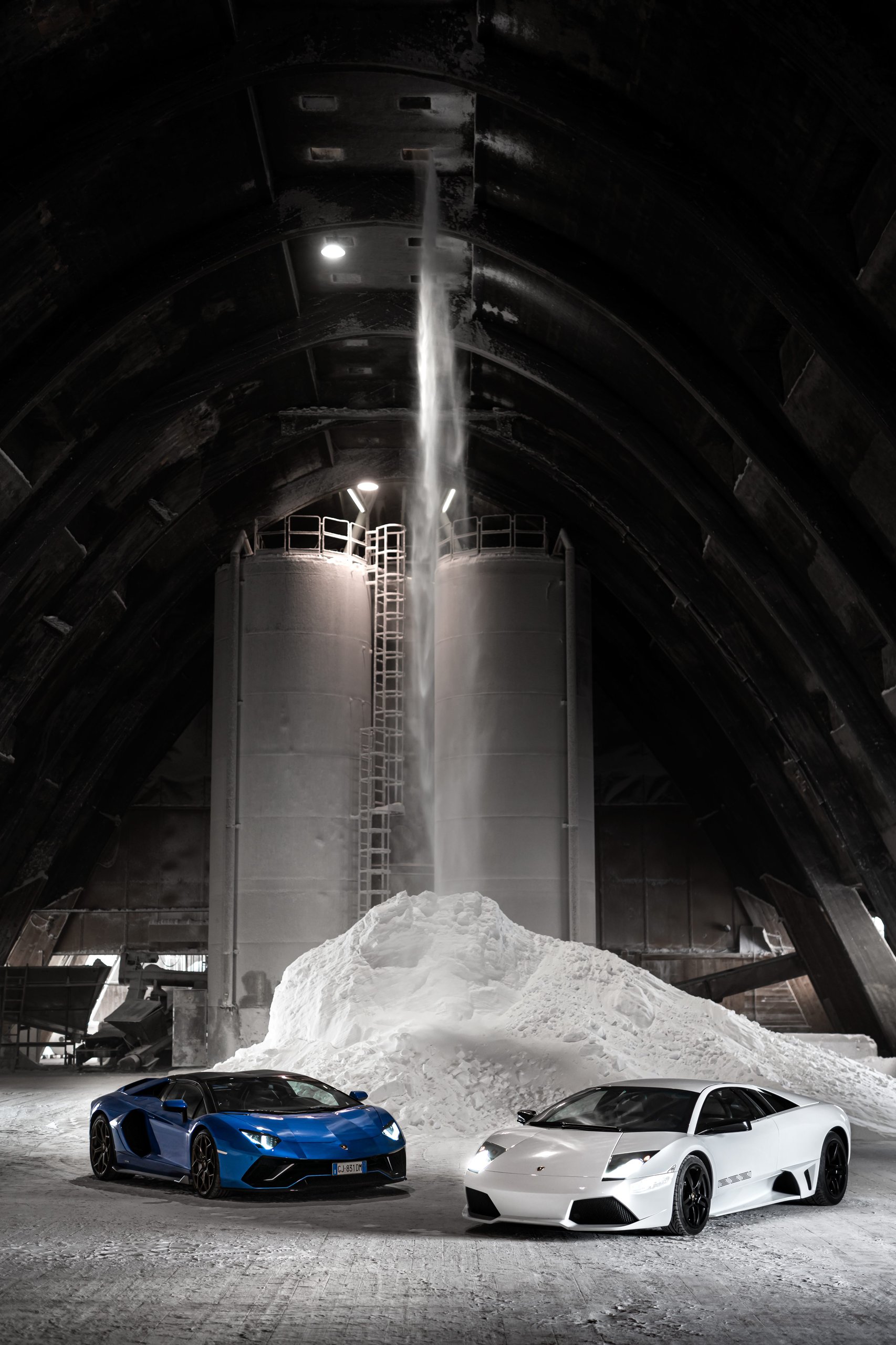
Two generations of Lamborghini V12 power, the Murciélago and Aventador, stand together in a vast industrial space.
Gallery