Every Major Indicator at Record Levels
Lamborghini closed the first quarter of 2022 with its strongest financial performance ever recorded for the period. Turnover reached €592 million, a 13.3% climb over Q1 2021. Operating profit jumped 25%, rising from €142 million to €178 million. Between January and March, the company delivered 2,539 cars worldwide, a 4.8% increase that also set a quarterly delivery record.
Those numbers tell a story that goes well beyond a good sales quarter. Turnover grew at roughly 13%, but operating profit grew nearly twice as fast. That widening gap between revenue growth and profit growth points to improving margins per car, not just more cars leaving Sant’Agata Bolognese. Lamborghini says favorable exchange rates contributed, but the real lever is something more deliberate: the company is extracting more value from each unit it builds, and doing so on purpose.
Paolo Poma, Managing Director and CFO, framed the results in the context of broader economic volatility, expressing confidence that the company could sustain its trajectory through the rest of the year. Given what followed, with 2022 ending as another record year and Lamborghini breaking the 10,000-unit barrier for the first time in 2023, that confidence turned out to be well placed.
The Discipline of Artificial Scarcity
Stephan Winkelmann, Chairman and CEO, identified the engine behind these results in characteristically blunt terms: a strategy that “aims to deliver less supply than demand to keep desirability high.” It sounds simple. In practice, it requires a kind of corporate discipline that most automakers, even luxury ones, find difficult to sustain when order books are overflowing.
When a manufacturer caps production below the number of buyers willing to write checks, several things happen simultaneously. Waiting lists lengthen, creating social proof of desirability. Residual values stay elevated because the secondary market never gets flooded. Dealers gain leverage on pricing and options, pushing average transaction values upward. And customers, knowing they cannot simply walk in and buy, become more willing to invest in personalization through programs like Ad Personam, further inflating per-unit revenue.
One report from Motor1.com indicated that Lamborghini carried an 18-month waiting list for orders during this period. For context, an 18-month backlog on a product line that deliberately produces fewer than 10,000 units per year is not a supply chain problem. It is a business model.
Ferrari operates with a broadly similar philosophy, and both Italian brands posted record earnings through 2022 according to industry reporting. The critical difference is scale. Ferrari delivered roughly 13,200 cars in 2022; Lamborghini delivered about 9,200. Lamborghini runs a tighter constraint relative to its addressable market, which arguably makes the scarcity effect more potent per unit. Whether that tighter cap is a strategic choice or a capacity limitation is a fair question, but the financial outcome speaks for itself: operating margins that most volume manufacturers would find implausible.

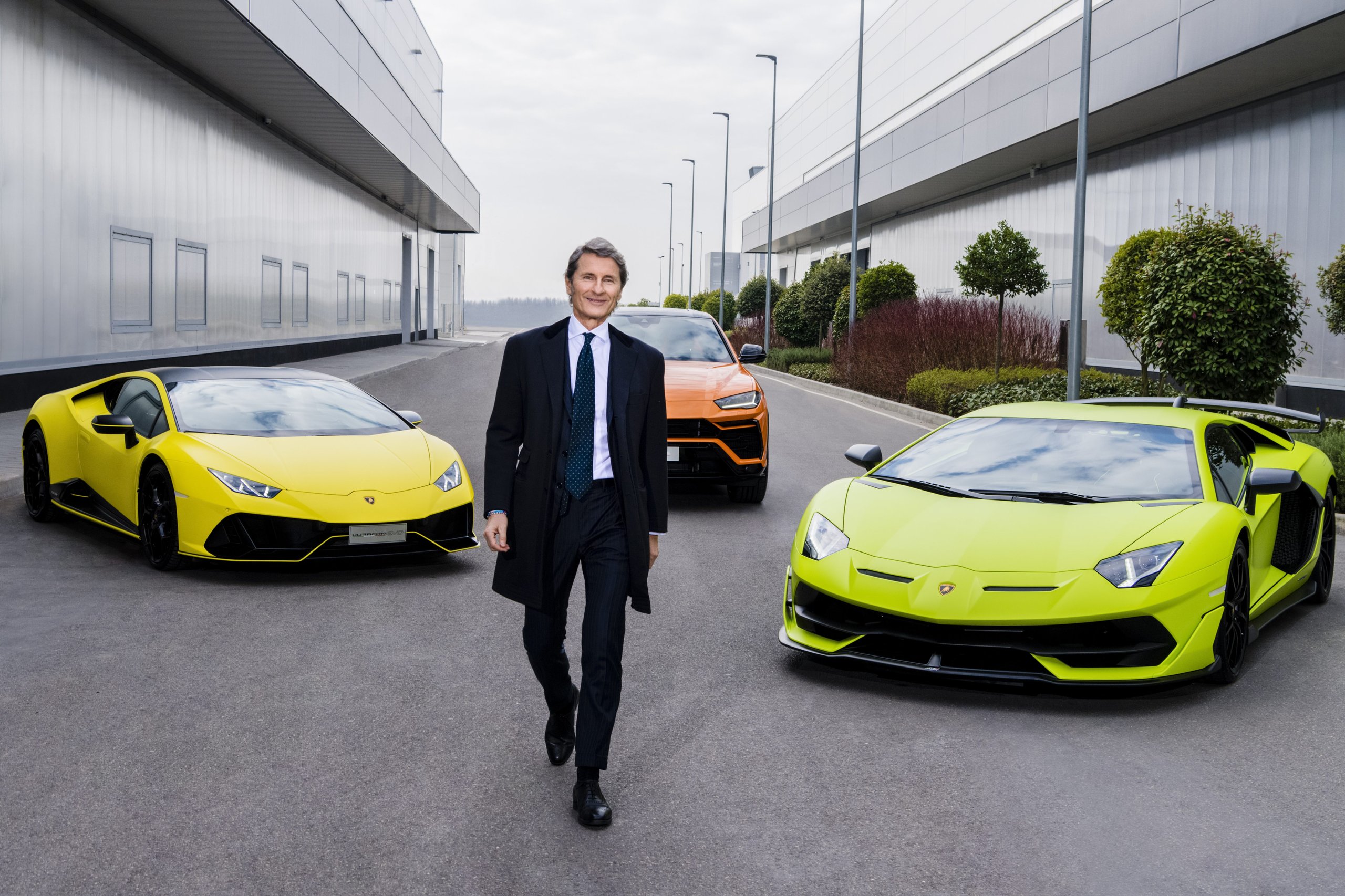
Stephan Winkelmann, CEO of Lamborghini, stands proudly in front of an orange Urus. Image: Automobili Lamborghini.
The Portfolio That Funds Everything
Balanced sales distribution across EMEA (40%), the Americas (32%), and Asia Pacific (28%) reveals a brand not overly dependent on any single region. That geographic spread acts as a natural hedge against localized economic downturns, and it explains why Winkelmann emphasized it alongside the supply strategy.
The Urus continued to account for roughly half of all deliveries, a proportion that surprises nobody who follows the brand but still warrants attention. The super SUV effectively doubled Lamborghini’s addressable market when it launched, and its contribution to the bottom line funds the kind of engineering that produces cars like the Aventador Ultimae, the Countach LPI 800-4, and eventually the Revuelto. Enthusiasts who grumble about the Urus should understand this clearly: without the SUV’s volume and margins, the V12 supercar program would operate under very different financial constraints.
The Huracán, meanwhile, reached a milestone at the start of Q2 2022 with its 20,000th unit sold. For a naturally aspirated V10 supercar, that production number is remarkable, positioning the Huracán as one of the most commercially successful mid-engine supercars ever built. It gave Lamborghini considerable momentum heading into the model’s final chapter. The Huracán Tecnica, unveiled at the New York Auto Show on April 12, represented the first new product of the year, and Lamborghini confirmed that three more were on the way: two Urus variants and one additional Huracán model.

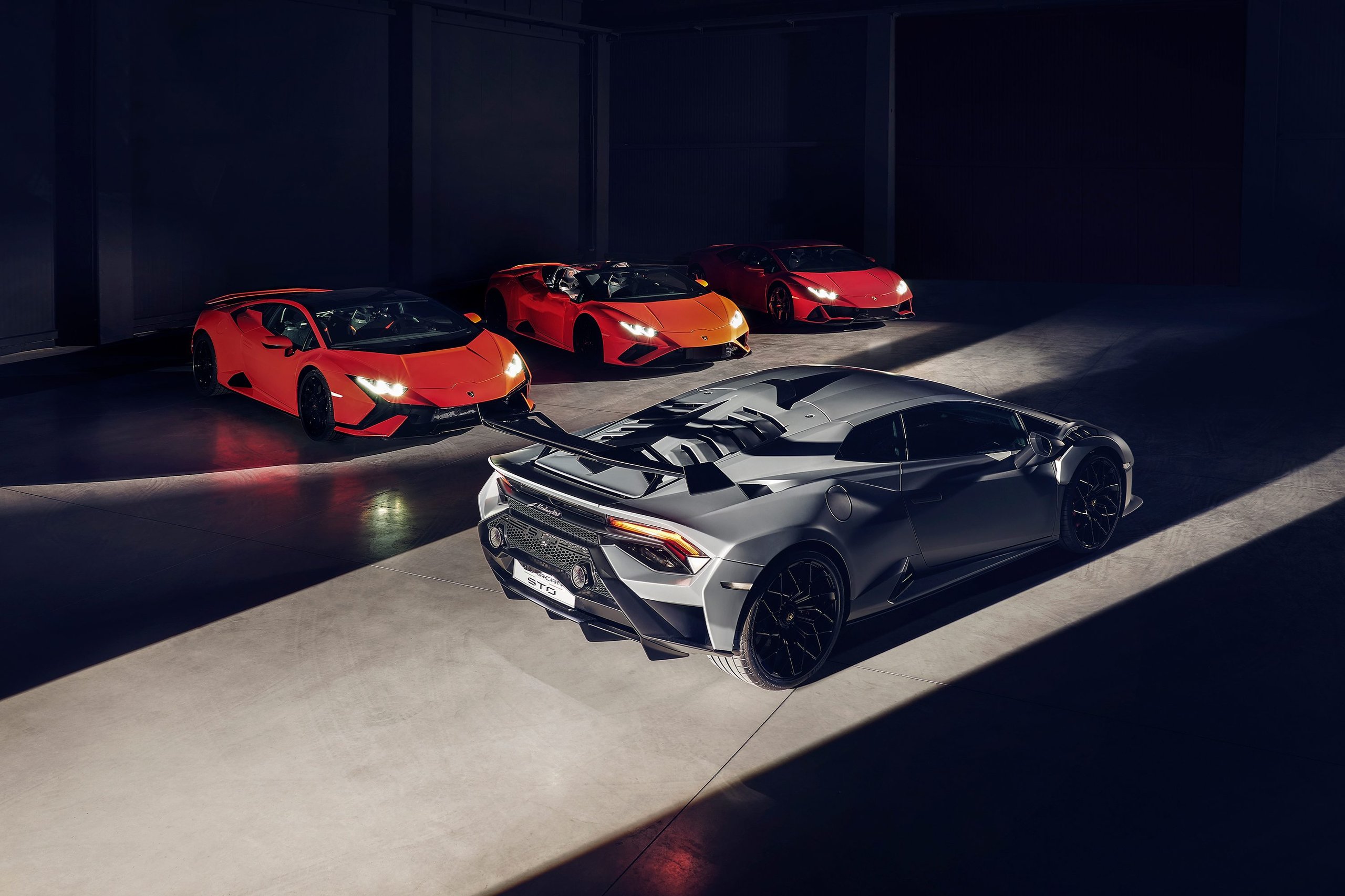
Four Lamborghini Huracán models, including the STO, EVO, and EVO Spyder, are displayed in a dark studio setting with '20.000' on the floor. Image: Automobili Lamborghini.
A Four-Product Year and the Scarcity Cadence
Lamborghini did not specify exactly which Urus and Huracán variants were in the pipeline, but enthusiasts following the brand closely could make educated guesses. The two Urus models likely pointed toward the Performante and the plug-in hybrid S, both of which eventually materialized. The additional Huracán could have been the Sterrato, the off-road variant that would arrive later and carve out an entirely new niche for the V10 platform.
More important than guessing model names is understanding what a four-product year signals about operating cadence under a scarcity regime. Launching four new variants while maintaining deliberate production caps means each variant gets a relatively short window of exclusivity before the next one arrives. That rhythm keeps the brand in constant editorial and social media circulation, refreshes the configurator for existing customers considering their second or third Lamborghini, and creates collector pressure around limited-run models.
For buyers on the waiting list in mid-2022, the practical takeaway was straightforward: patience would be rewarded with more choices, but the scarcity strategy meant that specific allocations for high-demand variants would remain tight. Dealers with strong relationships and customers willing to spec generously through Ad Personam tended to move up the queue faster, a dynamic that remains true today across the Revuelto and Temerario order books.

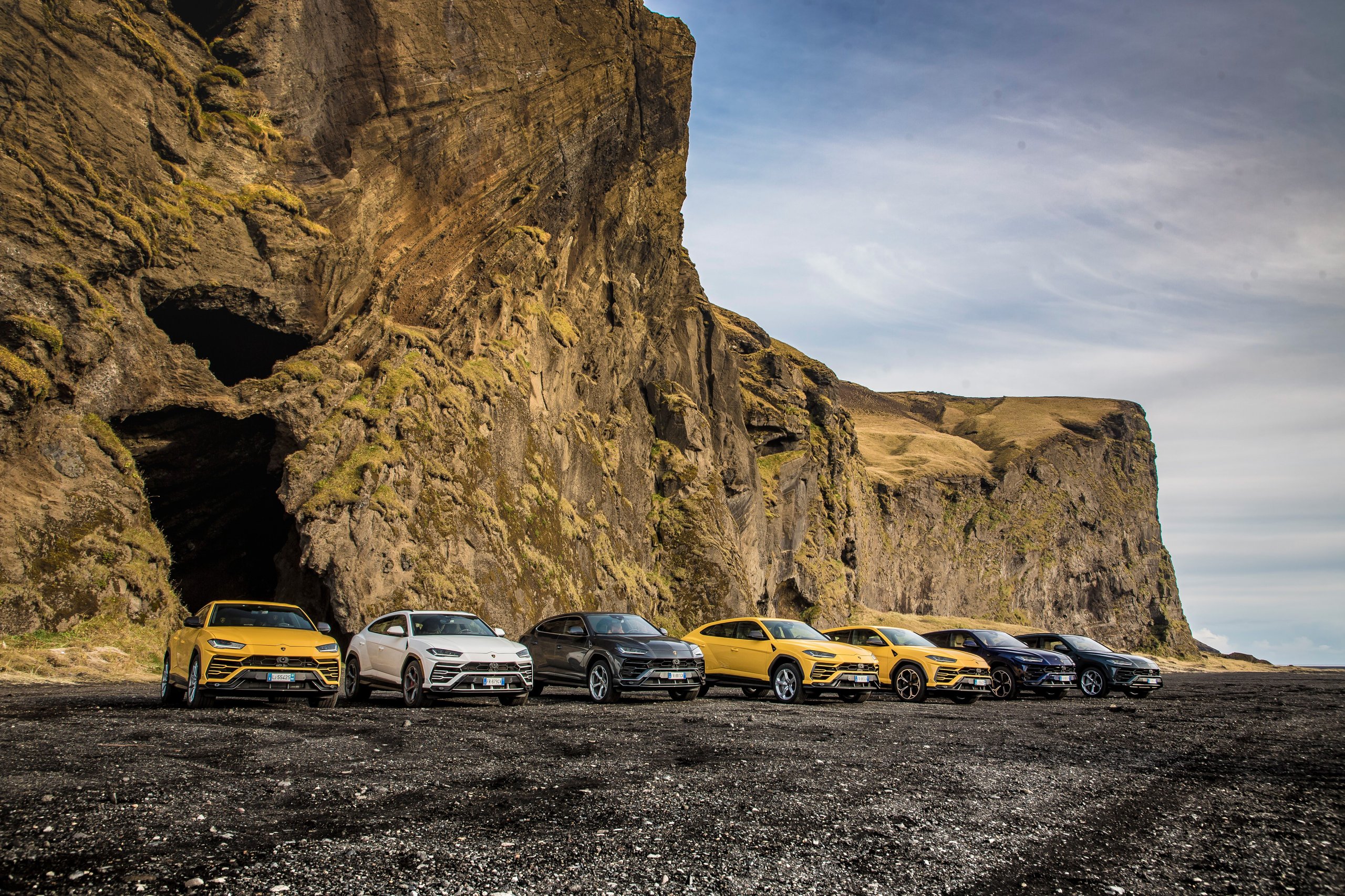
The powerful yellow Lamborghini Urus kicks up dust while confidently navigating a rugged dirt track. Image: Automobili Lamborghini.
Awards, NFTs, and the Brand Halo
Lamborghini received its ninth consecutive Top Employer certification and its second Green Star Award, recognizing sustainability initiatives dating back to 2009. These accolades rarely excite enthusiasts, but they serve a specific commercial function. Top Employer status helps Lamborghini recruit engineering talent in a competitive Italian labor market where Ferrari, Ducati, Pagani, and Dallara all fish from the same pool. The Green Star Award provides corporate cover within the Volkswagen Group structure, where sustainability metrics influence capital allocation decisions.
The company also entered the NFT space for the first time during Q1 2022. In the broader context of luxury brands experimenting with digital collectibles during the crypto boom, this was a low-risk brand extension. Lamborghini committed minimal resources relative to its core business, and the initiative generated press coverage disproportionate to its investment. Whether NFTs represent a lasting revenue stream for automotive brands remains doubtful, but in early 2022 the experiment cost little and signaled digital relevance to a younger demographic.
What Q1 2022 Told Us About Lamborghini’s Trajectory
Viewed in isolation, a single quarter of strong earnings is a data point. Viewed in the context of what came after, Q1 2022 looks like the moment Lamborghini’s financial flywheel reached full speed. The company went on to post record full-year results in 2022, then broke 10,000 annual deliveries for the first time in 2023 with revenues of €2.66 billion and operating income exceeding €700 million. By 2024, Car and Driver reported revenues surpassing €3 billion.
These results confirmed that Lamborghini’s financial architecture could absorb macroeconomic shocks, from pandemic recovery to supply chain disruption to currency volatility, without sacrificing profitability. The scarcity model insulates the brand from the volume pressures that punish mainstream manufacturers during downturns. When you sell fewer cars than people want to buy, a dip in demand still leaves you with a full order book.
For LamboCars readers, the practical implication remains relevant today. Lamborghini’s financial strength directly funds the engineering ambitions that produce cars like the Revuelto and Temerario. The company’s ability to invest in hybrid V12 and twin-turbo V8 architectures, in carbon fiber monocoque construction, in motorsport programs, all of it traces back to the margin discipline visible in quarters like this one. The bull charges forward because somebody in Sant’Agata Bolognese keeps saying no to building one more car than the market can absorb at full price.

A man in a suit walks through the Lamborghini factory, passing a line of Huracán supercars in production. Image: Automobili Lamborghini.
Gallery